
As fascinating as this docudrama about the legendary London-based indie label is, it necessarily leaves a whole lot out of the history of Jamaican music, which was the specialty of Trojan Records. Director Nicolas Jack Davies, a music video producer, presents a chronologically fastidious but skeletal explanation of the influx of Carribean immigrants to the UK in the late 50s and early 60s and how the music and culture they brought with them affected the massive pop contours of the 60s and early 70s. For sure, this story hasn’t been told with any kind of formality on film before, and Trojan was seminal in molding a youth environment that came to accept Black music for what it was. (Though Trojan was not, as one commenter put it, “the Motown” of British pop. Motown was the Motown of British pop.) But a whole movie about reggae that doesn’t touch upon Bob Marley and the roots/Rastafarian movement, or the eventual dominance of dub and dancehall, isn’t going to tell anywhere near the whole story.
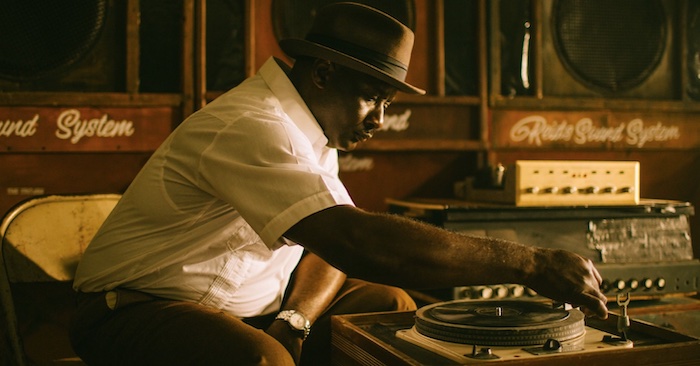
That’s because Davies wants to focus on the UK, where Jamaicans were “encouraged” to immigrate but weren’t really welcome. He delves momentarily into the NCP problem (“no colored people”) and interviews several old-timers who admit to not wanting to leave Jamaica in the first place but had to for economic reasons. Consequently, they longed for a connection to home, and that was mostly music. Davies does a good job of explaining the sound system concept, wherein DJs built formidable audio setups and hired themselves out for dance parties, where they played records. In the beginning, the music was standard R&B from the U.S. south, which Jamaicans could pick up on their radios, but these heavily bass and beat-driven singles (Louis Jordan’s “Caldonia” is cited as a representative favorite) eventually were translated by local artists into ska, with that insistent off-beat syncopation driven by the rhythm guitar. It’s what gave ska and rocksteady its distinctive bounce, which had its first big hit with Millie Small’s “My Boy Lollipop” in 1964.
Trojan was started by an Indian immigrant from Jamaica, Lee Gopthal, who parlayed a side job as an agent for Jamaican producers into a distribution gig. One of the labels he represented was Island, whose founder Chris Blackwell partnered with Gopthal on a retail shop specializing in Jamaican records. In 1967, the two men started Trojan (as in the horse), which not only licensed Jamaican musicians but eventually started producing their own records made by reggae and ska artists resident in the UK. What Davies gets right and what makes the documentary more than just a history lesson is the way he dovetails the fortunes of Trojan with the emerging English youth culture of the late 60s. Trojan’s brief was dance music with attitude (rude boys were essentially well-dressed gangster types), and besides serving the urban Black community of immigrants and their children, it also attracted the attention of “skinheads”—white kids who weren’t into the standard pop and hippie-identified rock music that dominated radio and media, and therefore should be distinguished from late-70s skinheads who tended to lean white supremacist. This was, for all intents and purposes, the start of the two-tone movement that would coalesce in the late 70s as the ska revival, which piggy-backed on punk with bands containing Black and white members in equal portions.
Davies gets some fine talking head remarks from Derrick Morgan, Lee “Scratch” Perry, Bunny Lee, Marcia Griffiths, Don Letts and a dozen more originals from the scene, but has to rely on dramatizations for most of the illustrative footage, since he doesn’t seem to have access to much archival material. And since this is about Trojan rather than music in general, it ends in 1975 when, tragically, the label was put out of business by partners who believed the reggae/ska movement had passed, and didn’t really trust Gopthal in the first place. (One told him, with perfect racist glibness, that if he wanted to own a business he should have become a “greengrocer.”) Of course they were wrong, as evidenced by the rise of Bob Marley around the same time, but Trojan did delineate a distinctive era, and the music here alone is worth the price of admission.
Now playing in Tokyo at Theater Image Forum Aoyama (03-5766-0114).
Rudeboy home page in Japanese
 philipbrasor.com