
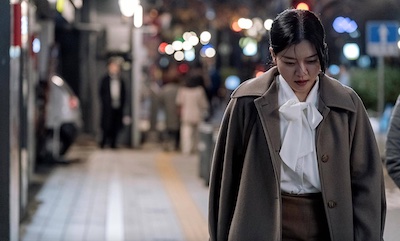
Due to computer troubles I didn’t post my usual diary while I attended the Busan International Film Festival, which ends today. It was a fairly low-key year, and as usual there were a number of movies I wanted to see but couldn’t due to scheduling conflicts and ticket availability. But I did attend the Opening Ceremony. Usually I don’t because the flight I normally take arrives in the late afternoon, but Air Busan changed its schedule this year so I was in Haeundae by mid-afternoon. The ceremony was appropriately flashy but unstimulating, even with Song Kang-ho acting as the official “host” of the festival, a job that usually goes to the festival director. However, because of the scandal that resulted in the previous director resigning, there is only an interim festival director, Nam Dong-chul, also the head programmer, who implied to me when I interviewed him last week that he doesn’t want the job. Song covers up for the break in protocol with star power.
He did what he was supposed to do, but since he’s also the most famous Korean actor in the world, it was easy to believe that his enthusiasm was forced. Certainly when he greeted Asian Filmmaker of the Year Chow Yun Fat on the red carpet, acting as if they were old pals, it felt phony, but appearances are everything in such matters. I was mostly hanging around to see the Opening Film, Because I Hate Korea, and felt like the only person who cared, since about 3/4 of the audience left after the Opening Ceremony was over. Maybe they knew something I didn’t. The film was earnest and well-made, but rather unoriginal in its portrait of a young woman who, already disillusioned with her job and what it pointed to for her future, decamps to New Zealand, hoping the change of scene will give her some kind of reason to appreciate life. Of course, it doesn’t, but the humor was colorless and the story never seemed to go anywhere. It’s based on a novel and felt like it.
Next Thursday The Japan Times will publish my formal coverage of the festival, which will discuss the scandal, the financial crises that impacted the festival, the changes that have been implemented since the end of the pandemic, and whether the festival still best represents the hopes and dreams of Asian cinema.
In the meantime, here’s a rundown of all the movies I saw in the order I saw them.

Green Night (Hong Kong/China): It’s unusual that a director’s second feature is highlighted in BIFF’s prestigious Gala Presentation section, but Han Shuai’s first movie, 2020’s coming-of-age story, Summer Blur, was such a huge worldwide festival hit that programmers and distributors have been jockeying for position to be there when it finally dropped. It’s certainly a surprise. A kind of surreal gangster tale set in Korea, the movie’s whole vibe implies that Han was determined not to repeat herself. The casting alone rewarded the long wait: Chinese star Fan Bingbing making her own long-awaited return to the screen as an Incheon Port security guard married to a violent Korean man of faith, and rising Korean actor Lee Joo-young as a punky female drug mule who seems to have the hots for Fan. The movie has miles of transgressive potential, including copious violence, harrowing medical emergencies, and nasty language, but Han never gets a purchase on the underlying plot and settles on artsy narrative ambivalence, which just comes off as being coy.

The Voices of the Silenced (Korea/Japan): Park Maeui worked with her veteran documentarian mother, Park Soo-nam, on this detailed review of the latter’s life and work as the former digitizes that work, which was originally shot on 16mm. Both Parks are Japan-resident Koreans who speak Japanese throughout the film. Soo-nam, second generation zainichi, switched from writing (inspired by the case of a Korean man falsely accused of murder) to filmmaking in the 70s and has almost exclusively covered the zainichi experience, focusing on historical crises—the 1923 Kanto earthquake, the Battle of Okinawa, the coal mine of Gunkanjima, the atomic bombing of Hiroshima, the “comfort women” issue—where the involvement of Korean residents and immigrants has been avoided by Japanese historians. Along the way the elder Park discusses her own crises, as when she felt rejected by both North and South Korea, her fear of “turning Japanese,” and her fierce feminist beliefs, which angered Koreans as much as the Japanese (she has never married). The doc is in turns melanchollically nostalgic and bitter, and could use some editing as the Parks tend to go over the same material several times.

Soulmate (Korea): Based on a Chinese film, this mainstream Korean melodrama, featured in this year’s comparatively thin Panorama section, chronicles the decades-long relationship between two women from adolescence. The story’s spark is in the difference in personality between the relatively stable Hae-un (Jeon So-nee) and the self-destructively dour Mi-so (Kim Da-mi), who has to support herself after transferring to Jeju Island. The fact that Mi-so identifies with Janis Joplin hints at her romantic nature, but it takes a while for the two to hash out their mutual resentments born of platonic love that knows no limits. There’s a boy of no real consequence between them, and when the two virtually switch places after having to reboot their lives following college and marriage, the other shoe drops. It’s clever without being particularly credible, or, for that matter, affecting. The fact that it was made in 2020 and not released until this spring probably means something.
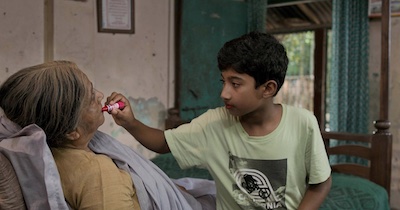
The Stranger (Bangladesh): One of three Bangladesh features at the festival this year—the most ever—Biblop Sarkar’s New Curents entry tries to come off as a coming-of-age story but doesn’t have the fullness of feeling that such a tale requires. Kajal’s (Salman Rahman) inner life is opaque, the way an adolescent’s usually is. He is the object of abuse by his so-called friends, but seems to take it in stride. In the gossipy village where he lives with his put-upon mother (Sahana Rahman Sumi) and terminally ill grandmother he is an odd bird whose passions aren’t aroused until the sudden arrival of his long-absent father, who is there to watch his mother die and cause pain to a wife who would likely prefer he stay away. In any case, he rubs Kajal the wrong way, causing him to fantasize about his violent death. Though there are suggestions that Kajal struggles with his sexual identity and that his father may notice this, the action is so low-key as to render the few scenes of cross-dressing as nothing more than child’s play. Still, Sarkar has a knack for blocking scenes that stay in the memory.
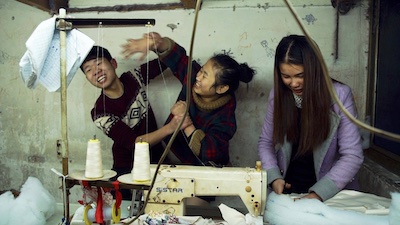
Youth (Spring) (China): Wang Bing’s 215-minute documentary may be his most vivid work yet. He apparently spent 6 years recording the lives of young textile workers in the town of Zhili—from job actions to romances to fist fights, all done up-close and extremely personal. Though Wang’s epics can be a slog, this one just ripped right along thanks to the undeniable energy of the young people he studied. These are not worker ants but fully expressive individuals with character and verve who dressed well, loved as heartily as they could, and made every attempt to enjoy themselves, even if it killed them. They even enjoy their work, of which they are justifiably proud. One of the most revealing movies ever made about the men and women who know they are the future of China. And this is only the first of a four-part series.
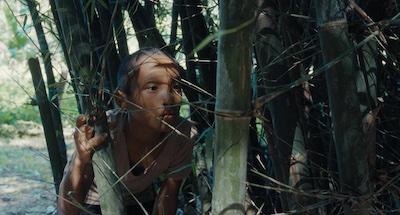
Rapture (India): Another village on the subcontinent, but this one is on the other side of the border from Bangladesh, a place where fervent millennial Christians and those of a more ambiguous spiritual bent coexist uncomfortably. The movie opens with the disappearance of a villager while gathering cicadas, thus prompting rumors of mysterious outsiders abducting locals for organ transplants. As the rumors accelerate toward a deadly reckoning, the local church pastor prepares his flock for their inevitable ascent to heaven, which, according to the signs in Revelations, will be sooner rather than later. Both impulses are spurred by superstition and the director, Dominic Sangma, skillfully alternates them in a spiralling drama of irrationality and deceit.

In Water (Korea): The less funny of the two Hong Sangsoo movies at this year’s festival, In Water is dominated by a gimmick that only Hong would think is viable for a feature, even one that’s only 61 minutes long. The characteristically ad hoc plot involves a small-time actor (Shin Seok-ho) treating his college chum (Ha Seong-guk) and another small-time actor (Seung-yun) to a holiday on an unnamed windy island with the intent of using them to make a movie he hasn’t written a script for. That, of course, sounds like what Hong himself does twice a year, and this meta-situation, exacerbated by frequent scenes of eating and drinking while the would-be director stews in his indecision, could have been quite hilarious if the gimmick weren’t so distracting. The fact that I have no intention of giving it away doesn’t necessarily mean I think you’ll appreciate it.

In Our Time (Korea): The much funnier Hong selection has a classic parallel plot structure in which the two stories only intermittently seem to have anything to do with each other. In one, a former actress (Kim Minhee), who has recently returned from overseas and is staying at the home of an old friend (Song Sun-mi), agrees to meet a young cousin who wants advice about pursuing an acting career herself. In the other, an elderly poet (Ki Joo-bong), who, due to a heart condition, has sworn off alcohol and cigarettes, is visited by a young admirer in the presence of the poet’s “adopted daughter,” a filmmaker who records the encounter. It’s useless to chart the points of intersection in the two stories. Better to simply go with the flow, as both the retired actress and the old poet go off the rails in their own ways. Added value: the first story has one of the best cat performances of this year or any year.

Talking to Rivers/The List (Iran/UK): This year has been rather bleak for Iranian cinema, and of the three entries with the national label attached, two are documentaries from the Makhmalbaf family, who now live in London in what can only be described as exile. Head-of-household Mohsen’s Talking to Rivers is a typically poetic survey of the history shared by Iran and Afghanistan, chronicling in the form of a dialogue the latter’s near constant destruction at the hands of outsiders. Daughter Hana’s The List is a harrowing, real-time recording of the effort made by Mohsen and his family to extract some 800 artists from Kabul at the end of August 2021 before the Taliban take full control and arrest these artists, or worse. The tension as Mohsen argues with officials from France and the UK (the US, which controls most of the flights, is uncooperative from the beginning) never lets up and the weeping and literal gnashing of teeth that attends every heartbreaking development is presented without comment or embellishment. The two docs perfectly complement each other in that the first sets up the background of this tragedy and the second shows it in graphic terms. Riveting.
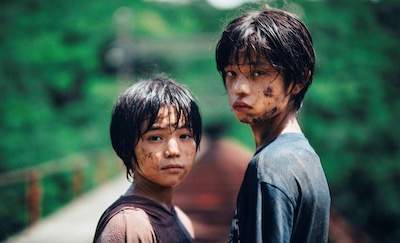
Monster (Japan): Having missed Hirokazu Kore’eda’s latest when it was released in Japan earlier this year, I knew it would play at BIFF, since Kore’eda is a past Asian Filmmaker of the Year. Predictably, Monster was one of the 3 Gala Presentation films, which means it got its own press conference. Though I like Kore’eda in social issue mode, his metier, as far as most people are concerned, is the emotional contours of the Japanese family, so I wasn’t sure what to expect here even though I had read some reviews. The story, about an elementary school teacher who is accused of abuse by a fifth grade boy and his mother, is actually quite good—vivid and engaging—and I wonder if it’s because Kore’eda for once didn’t write it. However, I didn’t believe any of the characters for a minute. The behavior was all shaped for maximum dramatic effect, and the pointedly surprise developments of the Rashomon-like plot fell flat as a result.

It’s Okay! (Korea): As with Because I Hate Korea, the protagonist of this Panorama offering is a female iconoclast who purposely gets on people’s nerves. High school student In-young (Lee Re) loses her single mother in an accident and successfully dodges social services in order to live by herself at home—until the landlord kicks her out, whereupon she decamps secretly to her school, where she is a member of a nationally prestigious dance ensemble. Tension is provided by her relationship with the director of the ensemble (Jin Seo-yeon), a sourpuss stickler for propriety and discipline, as well as with her fellow dancers, who look down on her because she is a charity case. What’s refreshing about this cliche-driven film is In-young, who stands up to her bullies with a genuine don’t-give-a-shit attitude that works. What’s not refreshing is the parade of musical montages set to limp-dick jazzy R&B. The audience I saw it with adored it. I couldn’t leave fast enough.

Moro (Philippines): Brillante Mendoza, an annual presence who usually world premieres his latest at BIFF, revisits the war-torn Muslim region of Mindanao, taking the viewpoint of anti-government forces. At its core, the movie is about the Caine-Abel relationship between two brothers whose dispute over a piece of land inherited from their father has been going on for years. Though one is portrayed as responsible and the other less so, when their enclave is invaded by soldiers they take up arms with their comrades and fight to the death. The spiritual thread running through the whole movie is their mother, who envisions terrible things happening to her sons, just as they happened to her husband. For Mendoza, it’s quite straightforward, a tale about attachment to the land of your birth and how family equals the people you are willing to die for. In the post-screening Q&A he didn’t discuss the origins of the conflict, but explained that he wanted to present the side that most people are conditioned to believe is the bad one. The fact that he used, in his own words, “heartthrobs” for his two lead actors will certainly convince viewers in the Philippines that the Muslim minority deserves some sympathy.

FAQ (Korea): One of those quirky Korean indies that seems to have sprung fully formed from an over-active imagination, this colorful movie about an elementary school girl who is constantly frustrated by the lack of credible answers to her questions about life defies analysis but never fails to entertain. Though Dong-chun is obviously very intelligent, she can’t adjust to conventional school, thus forcing her mother, who channels her own ambitions into her daughter, to continually transfer her to different schools and sign her up for any after-school activity that might increase her chances. Dong-chun adjusts the only way she can, by contorting her imagination to fit her circumstances, thus resulting in a uniquely inventive approach to addressing life. Part sci-fi fantasy, part domestic comedy, all weirdness, FAQ is so spirited and aggressively offbeat that you may have trouble keeping up with it, but its pleasures are distinctive and indelible.

Evil Does Not Exist (Japan): At BIFF I discovered that more people than I would expect didn’t care for Drive My Car. Though I had problems with it myself (that trip to Hokkaido), like most cinephiles I saw it as a hopeful sign for Japanese films. Ryusuke Hamaguchi’s latest is very different, a conventional story about a big, bad corporation invading a rustic village for profit. The simplicity of the premise is what works for me, since I love plots that explain in detail common situations surrounding labor and commerce. Here we have a talent agency exploiting COVID subsidies to set up a rental campsite for rich Tokyoites in the mountains of Yamanashi, where the locals live in relative harmony with the land. As part of the subsidy deal the company has to gain the trust of these locals, who don’t go for it at all. For the most part, the development is unexciting though punctuated by several dialogue-driven set pieces that prove Hamaguchi’s genius in creating tension through character interactions. It’s actually very entertaining—that is, until the very end, when it goes bonkers in a way that would be impossible to describe even if I wanted to.

The Shadowless Tower (China): Though this movie is in the Icons section, I am unfamiliar with the work of Zhang Lu, who has set at least one of his films in Japan. This one, however, is planted in Beijing so deeply that it practically drips nostalgic longing for an era that wasn’t so long ago. Gu is a poet at heart who makes his living as a food writer. Divorced due to his excessive “politeness,” he takes up with a younger, ostentatiously assertive photographer, Wenhui, in a sexless relationship where either tests the emotional wherewithal of the other by probing their pasts. As we learn about Gu’s we realize the reasons for his reticence. Wenhui’s motivations are more difficult to suss, but that may be due to Zhang’s focus on the man, who he obviously feels more comfortable following. If the movie is a bit amorphous in shape and intent, the conversations are stimulating, funny, and often quite heartbreaking in their directness.
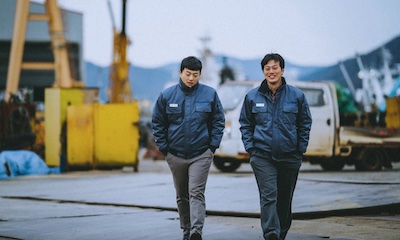
Work To Do (Korea): Another wonky film, this one about a struggling Korean shipbuilding company that’s being hounded by its creditors to restructure and lay off a good portion of its work force. The central character has just been transferred from accounting to human resources when the order comes down, and using his native skills with spreadsheets, he comes up with what he thinks is a fair and accurate method for determining which employees should be encouraged to retire early and which should be let go. Hailed as a minor savior by his superiors, he sees how his handiwork plays out over time and is horrified by what he has set in motion simply by being good at his job. Director Park Hong-jun, working with some of Korea’s finest character actors, paints a convincing portrait of the organizational mindset in crisis mode, and the recriminations, pleas, and deflections that result ring so true as to be unavoidable. He dares you to imagine that you would act any differently under these circumstances, regardless of your perceived ethical rigor.

Critical Zone (Iran): The third Iranian film at the festival and the only fiction feature from the country, Critical Zone has been condemned by the regime and its director, Ali Ahmadzadeh, prohibited from leaving the country. It’s easy to see why. In a nutshell it’s the dark night of the soul for a Tehran drug dealer-cum-taxi driver whose customers range from punky teen boys to trans prostitutes to elderly inhabitants of a nursing home. Everything is lit in the most garish way possible, and the action scenes have a hyper-real immediacy that make the viewer feel as high as the bearish protagonist, who is as fearless as only a true doper could be. By far, the most exhilirating movie scene of the year is a 20-minute sequence where the dealer picks up a flight attendant who exchanges money for some hashish, does some coke with her, and then is pursued by shadowy figures of authority through the streets of Tehran in a high speed chase that has to be seen to be believed, the flight attendant howling and cursing at the top of her lungs the whole time. And it’s all shot from within the car, as if in perverted homage to Kiarostami. The chaos is in the sound design.

Guras (India/Nepal): Like The Stranger, this Indian film attempts to address the traumatic moments of childhood. The title character is a nine-year-old girl living in the mountains of Darjeeling. Most of the plot has to do with Guras trying to find her beloved dog, Tinkle, who has gone missing during a storm. Against the backdrop of her search, which she conducts willfully against the orders of her parents and teachers, the villagers deal with a drop in the price of cardomam caused partly by the storm. On the margins, Guras’s parents do parent-like things, but as the movie develops and Guras succumbs to her vivid imagination, it becomes difficult to distinguish between magical realism and the very real troubles that the adults in the film face. The dramatic lynchpin of the film, indicated right at the beginning as a forewarning, doesn’t really make sense within the context that follows.

Something Like an Autobiography (Bangladesh): The title reminds you that the main couple on screen are a couple in real life and wrote the script together. At first it comes across as a standard domestic drama: Tithi, a female star on the subcontinent, and her husband, director Farhan, decide after years of hesitation to have a baby, even though Tithi is well into her 30s. By a seeming miracle, she conceives, and Farhan, overjoyed but nervous, makes sure his rather over-emotional wife is calm and relaxed for the remainder of her pregnancy, and one night a nearby private fireworks display sets him on a warpath with dire consequences. Not sure if I buy this as a true story, since the plot’s sudden lurch into political melodrama has a desperate, over-determined feel to it. What’s most interesting is how the celebrity class in Dhaka is depicted as having just as sheltered a life as their counterparts in the decadent West. Since I’m not sure if this effect was intended, I can’t say whether I completely got the movie’s point.
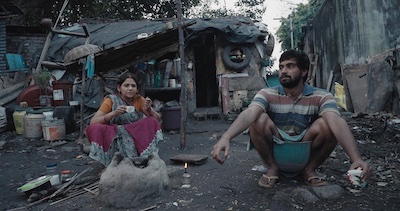
The Scavenger of Dreams (India): Here we have the (implied) social dynamic in the above-reviewed Bangladesh movie reversed. Told from the standpoint of a couple who pound the pavement all day collecting trash from families in well-to-do neighborhoods, this fine drama shows how citizens we would normally identify as the poorest in resources still have a chance to improve their lot. Birju and Shona live in a makeshift shack on the banks of a Calcutta river, saving their money and making sure their daughter goes to school. Birju’s quick temper often gets him in hot water with the city administration that assigns him his trash-collecting route, which he patrols with a pushcart though his supervisor would prefer he use one of the new motorized carts. During their rounds, the couple come in contact with their economic betters, and while often the exchanges are civilized and void of class resentments, when there are problems those resentments pop up to the surface with a passion. Birju eventually cracks when he believes a colleague is being unfairly treated by the administration, and he can’t hold back. Steeped in the kind of sweaty neo-realism that tends to characterize Indian films about the urban lower depths, the production values and, especially, the acting are first-class.

Paradise (Sri Lanka/India): An Ugly American story for the 21st century, except in this case it’s an Ugly Indian. A young well-to-do married couple from Delhi are spending their anniversary touring the mountains of Sri Lanka in the spring of 2022 when the country is plunged into an economic crisis that renders most workers’ paychecks worthless. Because Sri Lanka relies so heavily on tourism, the couple is spared the roadblocks and public demonstrations being carried out by the hoi polloi, but one night their mountaintop resort idyll is shattered by a pair of thieves who steal their cash, phones, and laptop. The husband, who is in the middle of a big business deal while on vacation, demands the police find the perpetrators and his devices, and in what feels like local custom, the head officer beats a suspect to death with consequences that rebounds on the couple. Though there’s a certain hackneyed quality to the storytelling and the characters adhere a little too closely to dramatic stereotypes, the movie is very interesting in the way it resolves its various issues, though you may end up wondering exactly what Indians and Sri Lankans think of each other.

Blesser (Korea): Korean social issue movies come in a wide variety of styles; so varied, in fact, that sometimes the social issue feels beside the point. This indie melodrama is based on a memoir by a former political reporter who had to give up her career when one of the twins she gave birth to was diagnosed with severe autism. For the bulk of the running time, the woman, Sang-yeon, grapples with the burden of raising a child who is basically unresponsive to normal human contact. Each challenge is dissected in almost excruciating detail, showing how Sang-yeon cannot escape her responsibility no matter how she really feels about the boy. It’s not just the world’s withering gaze at her desperation; it’s her own sense of worth, which is denied whenever a scheme to recalibrate her life in accordance with her son’s existence fails to work out. Though the movie isn’t long, it feels like a never-ending struggle, because Sang-yeon will have to change since her son won’t. The movie’s strength is its honesty, but it’s also not a varied movie in terms of tone. You suffer along with her and then the movies ends.
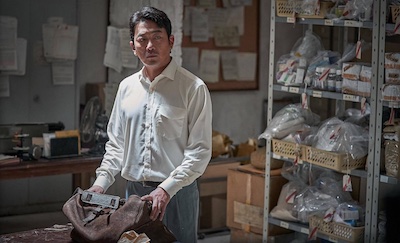
Ransomed (Korea): This might seem to be the main commercial movie in the Korean Cinema Today Panorama section this year, and it does have its big budget pleasures, but it seems like a retread of every other Korean action movie that takes place in another country. After a Korean diplomat is mistakenly kidnapped in Beirut in 1987 (the kidnappers thought he was Japanese), he is sold to another local gang who demand more than $2 million for his return. Middle East expert Min-joon (Ha Jung-woo) volunteers to deliver the cash in exchange for a nice posting in the U.S., and, of course, the plan he devises to free the diplomat relies on the help of some shady characters, including an expat Korean taxi driver (Ju Ji-hoon) who is hanging out in Beirut because he’s a scoundrel—but a nice scoundrel. All the requisite elements are here, including a car chase through some of the narrowest alleys in town, and the script maintains a modicum of credibility despite the tired comic buddy shenanigans of the two principals. But in the end it feels parochial, diminished by its effort to step out into the world.
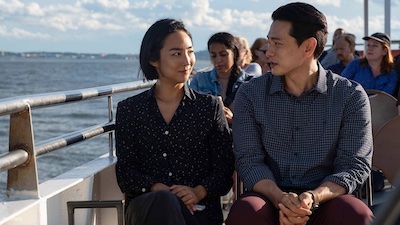
Past Lives (US/Korea): If BIFF hadn’t snagged this movie for 2023 I would never have forgiven them. As it happens, the programmers devised a Special Program in Focus around movies of the Korean Diaspora, meaning films made by Korean-Americans, and Celine Song’s debut feature, already touted as an Oscar contender, may be the clearest distillation of the Korean emigrant experience. Centered on a woman whose family moved from Seoul to Canada when she was twelve, Past Lives explores the sense of disconnection that fades over time only to be pulled back into emotional purview when a figure from the past returns. Nora, a playwright living in New York with her white novelist husband, finds her first girlhood crush from Seoul seeking her out online, and they embark on a long-distance fling that eventually becomes overwhelming, at least for Nora. Years later, the crush, now a handsome young man named Hae-sung, comes to visit her in NYC after breaking up with his girlfriend, and the encounter is as fraught as a loaded container ship. To see this movie in Korea with a Korean audience was educational. There but for the grace of God, everyone seemed to be moaning during the quiet, devastating climax.
all photos (c) BIFF
 philipbrasor.com