
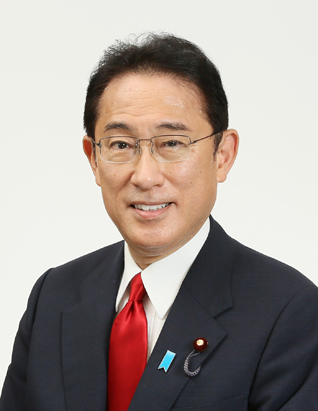
As Prime Minister Fumio Kishida’s support numbers continue to drop, the Diet on Nov. 17 approved an increase in pay for him and the rest of the cabinet, not to mention a select group of bureaucrats who perform “special work,” whatever that means. As one would expect, the increase was met with criticism, since the consumer price index continues to rise while the wages of mere mortals remain stagnant. The increase amounts to an extra ¥460,000 a year for Kishida and ¥320,000 for each member of the cabinet, and the prime minister obviously realizes the optics are not good here since he’s already announced he will return his increase to the treasury.
Nikkan Gendai Digital, in an article posted Nov. 15, before the Upper House passed the related bill, wants everyone to know that this won’t be the end of the matter. Gendai asserts that the mainstream media isn’t reporting the true significance of the increase: According to the law, when pay for cabinet members is raised, then bonuses for all members of the Diet must also be raised. The reason most media outlets didn’t mention this in their coverage is probably because the pay increase for MPs wasn’t included in the bill, and while the cabinet members can return their pay increases if they want to, MPs cannot return bonuses or any portion thereof.
The main opposition camp, the Constitutional Democratic Party, submitted a bill to freeze the pay of cabinet ministers and other Diet members, but three parties, the ruling Liberal Democratic Party, their coalition partner Komeito, and the Democratic Party for the People, rejected it. The CDP’s Akira Nagatsuma pointed out that net wages in Japan have actually been declining for the last 18 months, so increasing politicians’ pay is just plain wrong. Kishida insists that the average worker’s pay will magically increase in April, so Nagatsuma thinks any pay increases for the government should be postponed until after that dream comes true. There’s absolutely no justification for raising pay at this particular point in time, and to add insult to injury the bill that was passed also includes a line that guarantees a pay increase for government officials working on the 2025 Osaka Expo, which is turning into a huge fiscal embarassment for everyone involved. As for what the CDP will do with the extra bonus pay they will receive against their will, Nagatsuma says they will collect the “difference” from all party members and donate it to charity.
It’s thus worth examining Kishida’s promises to increase wages. As reported by the Tokyo Shimbun, on Aug. 31, the prime minister attended a conference hosted by his office on “the new capitalism” where he announced the LDP’s aim of achieving a nationwide average minimum wage of ¥1,500 by “the mid-2030s.” Given that the nationwide average minimum wage projected for fiscal 2023 is ¥1,004, that could prove to be a difficult undertaking. The operative word here is “average,” since minimum wages are set by each prefecture, so it’s not something the central government can determine on its own. (Or maybe we should say it isn’t something they want to determine on their own.)
A ¥1,500 minimum wage has been a goal for labor advocates at least since 2010, when some opposition parties first floated the number. In 2014, one union representing workers in the Kanto region concluded that ¥1,500 an hour was the bare minimum necessary to make a living in the area, and that was almost ten years ago. Tokyo Shimbun theorizes that Kishida made the pledge on Aug. 31 as a gambit for the next general election, whenever that might be, but he has already undermined the effectiveness of such a statement by saying it won’t happen for yet another ten years. During the early days of his administration, Kishida said he would double wages, an impossible pledge that he has now effectively disowned, so the newspaper wonders if this latest promise is just as empty.
The problem is systemic, since government policy after the end of the bubble economy in the early 90s was to increase the portion of non-regular employees who are breadwinners. Such a policy, however, depends on an hourly wage that is high enough to make a living and, presumably, to raise a family, and that hasn’t happened for most non-regular employees. In 2013, the average minimum wage was ¥764. In 2022 it was ¥961, and this year it finally breached the ¥1,000 line. One economist told Tokyo Shimbun that ¥1,500 can be achieved even before 2039 if the minimum wage rises by 3 percent every year, which has been the case since 2016. But it all depends on “the business world,” which is constitutionally averse to such increases, regardless of labor demand, which is quite acute right now. And if there’s one thing you can count on with the LDP it’s that they don’t like to ask businesses to do what they don’t want to do.
A financial reporter told the newspaper that Japan is the only so-called developed country in the world where real wages right now are dropping. Many people who work full-time jobs are suffering, and so announcing that a wage that might help them escape this suffering won’t be available for another ten years is not only politically dumb, but cruel. The responsible thing would be to explain in detail how such a goal can be realistically reached, but it seems to be the habit of the prime minister, if not his party, to remain as vague as possible so as not to reveal that he doesn’t really know what he’s doing.
 philipbrasor.com