
It’s commonly thought that Japan is run by its bureaucracy and that politicians don’t have much to do with shaping and moving policy. Though it’s an over-simplification this belief still has merit. All you have to do is look at the ruling Liberal Democratic Party’s current widespread campaign funds scandal to realize that raising money is the over-riding concern for its members, who seem to have no time or interest to do anything else.
Even the prime minister spends more energy just holding on to power than he does steering the country. The current premier, Fumio Kishida, is a perfect example. He’s been in the post for two years and done nothing memorable. In fact, what he’s best known for is keeping the job while his public support sinks lower and lower. Even his plan for a tax cut was met with disapproval.
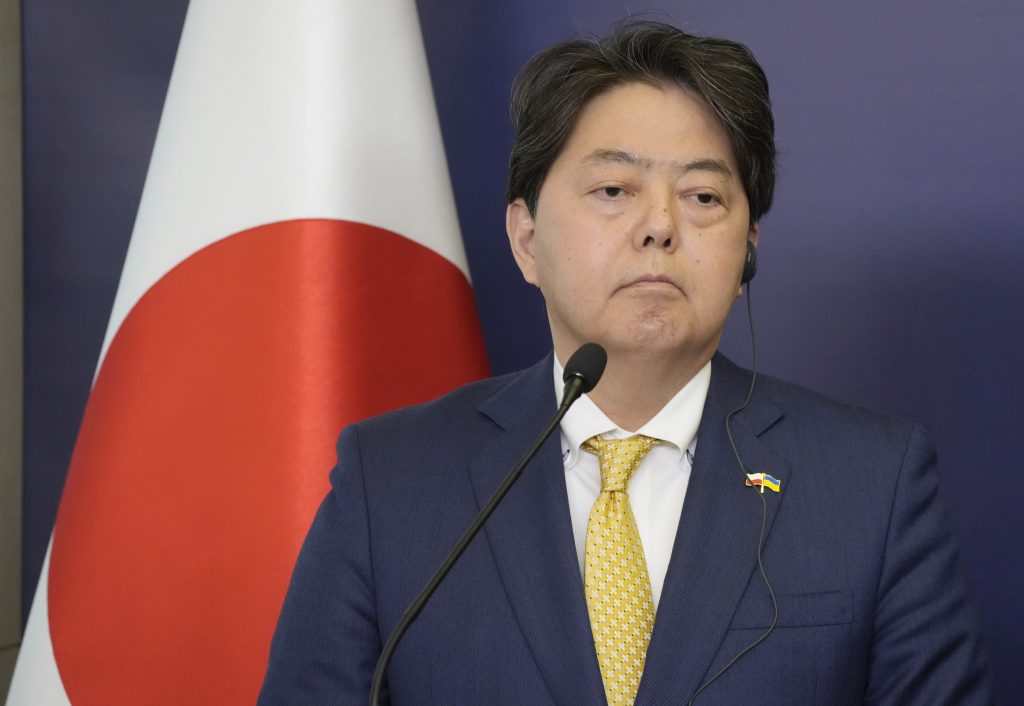
According to former Asahi Shimbun reporter Hiroshi Samejima on his website, Samejima Times, Kishida’s obsession with remaining in his position at any cost, even if it hurts his party, springs from an inferiority complex related to his educational history. Kishida graduated from Waseda University, which is a fine school but not the University of Tokyo, which his father and grandfather attended. Kishida, in fact, tried to get into Todai three times and each time failed to score high enough on the entrance test. In real terms, it hardly makes a difference. Only one prime minister has graduated from Todai since it changed its name from Tokyo Imperial University—Yukio Hatoyama, and he graduated with an engineering degree. Real elites get into the Law Faculty, like Yoshimasa Hayashi, who belongs to the same LDP faction that Kishida heads. Kishida has received criticism from fellow party member for maintaining leadership of his faction, called Kochikai, after he became prime minister, especially from his predecessor in that seat, Yoshihide Suga. Samejima believes that Kishida is holding on to both positions for dear life because he is thinking about his “legacy.” He has no real accomplishments to show for his time in power, so he means to make his mark as a so-called kingmaker, but to do that he thinks he has to remain at the head of his faction until he is no longer prime minister. That’s because the second in line for faction head is Hayashi, who he thinks would quickly eclipse him in terms of influence, especially since he is the very definition of an elite politician: graduate of Todai’s Law Department, post-graduate degree from Harvard, fluent English speaker. Moreover, he has been ministers of defense, agriculture, education and foreign affairs, a resume that is much more “decorative,” in Samejima’s view, than Kishida’s. Samejima says Hayashi is being called the “new hope” within Kochikai, which worries Kishida to no end.
The rivalry between Kishida and Hayashi isn’t new. Hayashi, four years younger and a fourth generation seshu (dynastic) Diet MP—Kishida is third generation—vied against Kishida once before for the LDP presidency, in 2012, and though neither prevailed Hayashi definitely got in Kishida’s way. Moreover, Samejima says Hayashi’s “presence” in Kochikai is more prominent, despite the fact that Kishida is its nominal chief. That’s because Hayashi only recently became a member of the more powerful Lower House, having been an Upper House member since he first ran for the Diet. *Hayashi’s Yamaguchi constituency overlapped with that of the late Shinzo Abe, and he couldn’t run against Abe for a Lower House seat and expect to win, even though Hayashi actually grew up in Yamaguchi. Abe lived his whole life in Tokyo. But since prime ministers almost never come from the Upper House and Hayashi still has ambitions to that end, in 2021 he ran for the Lower house in a different Yamaguchi constituency and won. Nevertheless, Kishida still was seen to have a slight advantage, because he formed a tight relationship with Abe after the latter regained the prime minister’s office in 2012.
But since Abe is gone and Kishida is nominally at the top, he has nowhere to go but down—or maybe sideways. Hayashi’s credentials are more impressive, at least on the surface, than Kishida’s. When Kishida was foreign minister under Abe he made no impression because Abe took the diplomacy reins himself, leaving Kishida with nothing important to do. Hayashi, on the other hand, distinguished himself more as Kishida’s first foreign minister, maintaining a close relationship with China in his role as chairman of the Diet friendship federation with China and a fairly close relationship with US President Joe Biden. Where Kishida could reserve some reassurance is in the notion that US ambassador to Japan Rahm Emmanuel doesn’t seem to be taken with Hayashi, mainly because of that close relationship to China. Anecdotally, Kishida reportedly felt left out during the recent Camp David summit between Japan, Korea, and the U.S., where everybody else except Kishida, including Hayashi and acting deputy chief cabinet secretary Seiji Kihara (who is the LDP member closest to Emmanuel) chatted casually in English between working sessions. Samejima seems to believe that this incident prompted Kishida to remove Hayashi from the foreign minister post in the September cabinet reshuffle and replace him with Yoko Kamikawa, a diplomatic lightweight who could never overshadow Kishida. In any case, Hayashi himself isn’t much good at political maneuvering, so he didn’t complain.
Hayashi could come into his own within Kochikai, which, in terms of LDP influence, lags behind three other factions. Kochikai, in fact, seems to be losing influence since “it isn’t getting any bigger” despite its relationship to the sitting prime minister. And while Kishida has reportedly put Hayashi in charge of “restructuring” Kochikai, it seems to be more or less a holding strategy. His biggest fear is that Hayashi will become the leader of the faction, so his main task is to hold onto his position, at least until he’s no longer prime minister. Such a strategy, Samejima thinks, would prevent Hayashi from gaining ground for the LDP presidency.
The outcome of these intrigues depends on other matters and players in the LDP, including former prime minister Taro Aso, who seems bent on holding an emergency LDP presidential election next fall. Meanwhile, Suga, who is inherently opposed to all the mainstream factions, is looking for someone outside the party “mainstream” to be the next president, either Shinjiro Koizumi, Taro Kono, or Shigeru Ishiba, so whatever the game that Kishida and Hayashi are playing it will affect the future of the party, perhaps significantly.
If all this sounds more like gaming a horse race, that’s pretty much what it is. As already mentioned above, none of it is really going to have much effect on economic, defense, or social policies. It will simply determine who gets power, which, for the LDP, equates to money. Samejima can usually be counted on to deliver the goods when it comes to politics, but even he can get carried away. He himself graduated from Kyoto University, second only to Todai in terms of prestige, and he’s never been shy about boosting his accomplishments. He quit Asahi Shimbun before he was 50, confident he could make a go of it as an independent reporter, though so far all he has to show for it is a book slamming his old employer and the Samejima Times, which gets by on subscriptions. He’s no longer one of the most in-demand pundits, but that may be his choice. In any case, he more than anyone knows a horse race when he sees one and can’t resist parsing the odds.
*Correction: Originally, the post said that Hayashi won his Lower House seat after Abe died, but he actually won it the year before Abe died.
Update (Dec. 7): Kishida has announced he will step down as the head of Kochikai to take responsibility for the fundraising scandal currently roiling the LDP.
 philipbrasor.com