
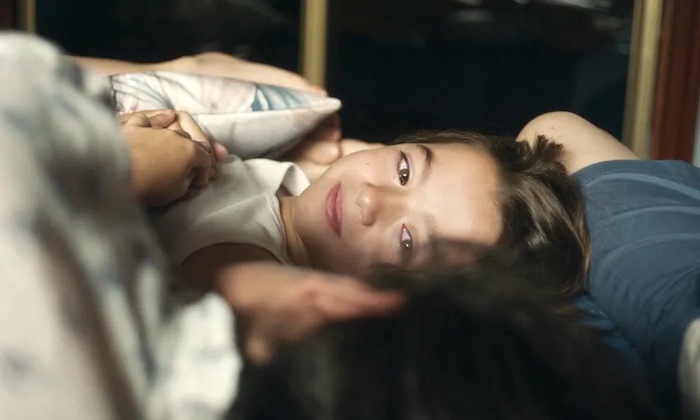
The topicality of the Spanish film 20,000 Species of Bees is its main selling point, but focusing on its LGBTQ themes does it a disservice. Set in the Basque Country during the summer, the story centers on 8-year-old Aitor (Sofía Otero), whose struggles with identity issues have come to a boil as he leaves his home in southern France with his mother, Ane (Patricia López Arnaiz), and two siblings for Ane’s childhood home in northern Spain. It’s clear from the fraught opening scene that some minor scandal has occurred between Aitor and a female classmate, and also that Ane’s relationship with her husband, Gorka (Martxelo Rubio), is going through a bad patch. (Gorka elects to join his family later for reasons not explained) Aitor’s sullen demeanor waxes and wanes after he arrives at his grandmother Lita’s (Itziar Lazkano) house, where all his relatives comment on his long hair and sudden insistence that he be called Cocó rather than Aitor. This fluid attitude toward names will continue, as Cocó decides to adopt the more resolutely feminine moniker Lucia after he hears the story of St. Lucia, the patron saint of poor people.
But Aitor’s gender confusion is embedded in a larger tale about transformation as a normal part of life. As Aitor addresses that confusion, maintained by the acceptance of his choices by his great-aunt Lourdes (Ane Gabarain), a beekeeper who encourages him to talk about his feelings and says he can be anything he wants (“What do you want to be called,” he asks Aitor, who replies, “Nothing.”), and the rejection of those choices by Lita, who blames Ane’s constant state of distraction for Aitor’s situation, we also see Ane rekindle her student love of art, as she attempts to commandeer her late sculptor father’s workshop in order to re-enter a field she gave up when she became a wife and mother. Her own transformation is met with similar resistance, though of a more passive-aggressive type, and the two conflicts come to a head in the final reel. Writer-director Estibaliz Urresola Solaguren, whose first feature this is, adds just enough backstory to clarify Ane’s choices as a means of explaining her seeming ambivalence toward Aitor’s. Though she is willing to allow her child to follow his own impulses until it feels right, she thinks she needs the approval of others in order to fulfill her own needs. Lourdes recognizes this ambivalence and chides Ane for it, saying that it is her lack of attention to Aitor’s dilemma that exacerbates Aitor’s stuggle, but to Ane it’s a lose-lose situation.
Aitor sees no way out of this struggle—which is more about not wanting to be a boy than wanting to be a girl—except transformation, though he is too young to understand exactly what that entails. After Lourdes explains a local custom of striking a beehive several times with a stick when someone is born, Aitor asks her if it would be easier for him to just be “reborn” as a girl. Lourdes answers that there is “no need to die” in order to become a girl, which is probably the first statement from an adult regarding his struggle that Aitor can work with. 20,000 Species of Bees is one of those rare movies that actually offers a resolution to the specific personal conflict depicted, even if it isn’t necessarily a resolution to the more general conflict the story symbolizes. It has a lesson for everyone.
In Spanish, Basque and French. Now playing in Tokyo at Shinjuku Musashinokan (03-3354-5670), Human Trust Cinema Shibuya (03-5468-5551).
20,000 Species of Bees home page in Japanese
photo (c) 2023 Gariza Films Inicia Films Sirimiri Films Especies de Abejas AIE
 philipbrasor.com