
Most businesses that survived the pandemic are now doing well owing to something called “revenge” spending, which is essentially a reflexive action by consumers after they’ve been liberated from reduced spending due to restrictions, whether mandated or market-driven. At the same time, many of these businesses have increased prices due to a number of factors, and in that regard some are doing better than others.
One who is not doing better is McDonald’s Japan, which has lost customers in the past year. According to a Dec. 20 report in Gendai Business, the Japan arm of the world’s most famous fast food company posted a 5.3 percent decrease in patrons last June compared to June 2022. Like all retail businesses McDonald’s lost a lot of customers starting in March 2020 when COVID took hold, and a year later those customers started to return. The numbers improved steadily thereafter until last January, when the trend reversed.
Gendai asked an analyst why this was happening, and he gave several reasons, the main one being price increases on McDonald’s part. The first was implemented in March 2022, but seemed to have little effect. The second came about in Sept. 2022 and affected 60 percent of the menu items with increases ranging from ¥10 to ¥30. Then in Jan. 2023 there was another price hike on 80 percent of the menu items that resulted in a maximum increase of ¥150. To put this into perspective, a regular hamburger went from ¥100 to ¥130 in March 2022; from ¥130 to ¥150 in Sept. 2022; and from ¥150 to ¥170 in Jan. 2023. The price increase for a Big Mac was even more pronounced in Tokyo (Tokyo prices tend to be higher than in other regions): ¥390 to ¥450. A small order of fries increased from ¥150 to ¥190. The expert gave various reasons for the hike: higher cost of ingredients, exchange rate fluctuations (McDonald’s imports almost all its ingredients), and higher wages. The latter reason especially affected McDonald’s, which tends to hire almost exclusively part-time staff, and in order to ensure full crews at all times they have to offer higher pay than what part-timers usually earn.
The analyst theorizes, however, that it wasn’t just the higher prices that discouraged some customers, but rather the fact that there was no attendant increase in cost effectiveness. He points out that, in fact, McDonald’s was more expensive in the past. A hamburger was ¥210 in 1985, when the exchange rate was almost ¥200 to the dollar. In 1990, a Big Mac was ¥380, meaning the price had barely gone up in 30 years. He observed on social media that many consumers knew about these price differences over the years. While increasing prices, McDonald’s Japan also eliminated or curtailed some of its more popular campaigns, thus effectively driving up the price even more in the minds of regular customers. They cut back on the distribution of coupons, which save customers money on certain items like coffee and side orders. The set menus were changed. In the past, hamburger sets included a drink and a side order, but now they no longer include the side order; whereas the Big Mac set used to include only a drink for ¥400, but now the set also includes a side order and is ¥750, which most customers will think is too expensive if the drink-only set option is unavailable.
McDonald’s is doing away with bargain options because it wants to get more money out of each customer visit. But as the analyst points out, if this strategy was implemented to address declining patronage, it will only make the matter worse, meaning McDonald’s would theoretically have to keep increasing prices to bring in the same amount of revenue, and that would be self-defeating.
Some other fast food operators have addressed inflation with more imagination. Coco Ichiban, which runs a vast nationwide chain of fast food curry restaurants, has also increased prices in recent years and actually seen patronage grow. An Oct. 10 article that appeared on the website IT Media Business Online said that revenue projections for fiscal 2023 had recently been adjusted upwards by ¥2.1 billion to ¥55.1 billion., a record high for the company. Coco Ichiban had increased prices twice during the previous 12 months, and at first regular customers were discouraged, saying that the company seemed to be aspiring to something more lofty than being a “restaurant for the average person.” Coco’s president told the press he had no intention of targeting higher income people.
The most important dish at Coco has traditionally been pork curry with 300 grams of rice, which until 2021 was only ¥500. Customers then add “toppings,” like hard-boiled egg. On average, people tend to buy two toppings, and in 1983 the average sale per visit was ¥983. In 2022, Coco increased prices twice for “core dishes,” driving the average sale per visit over the magic ¥1,000 line, which is why hardcore regulars were complaining. According to Asahi Shimbun, the price increases did lead to a sudden drop in patronage in the short term, but during 2023 the number of customers rebounded to its former level while the sale per visit increased, thus leading to its present upbeat revenue projection. The main reason, says Asahi, is that while the price of core dishes went up, Coco added more toppings at lower prices (because the volume of each topping was reduced) as well as a larger variety of core dishes. For instance, Coco also offers spicier curry dishes, and while these dishes are more expensive than others, they are less expensive than comparable curry dishes in high-end restaurants. Between March and August of 2023, the number of customers increased by 2.5 percent, and the average sale per customer was ¥1,094.
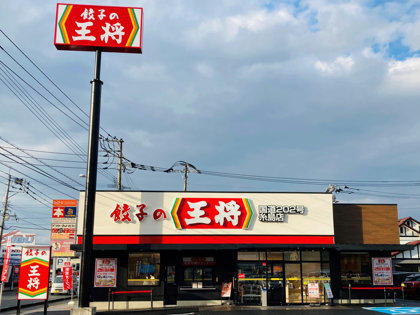
Another chain that has triumphed over inflation is Gyoza no Osho, which serves Japanized Chinese food like gyoza (pot stickers) and ramen. Another Asahi article explained how the company raised prices twice in 2022 without any discernible loss in customers. Through November of last year, Gyoza no Osho enjoyed 21 consecutive months of record high monthly revenue. The main reason for their success was close attention to quality as they planned for the price increases. They did this by unifying the standard for griddles (teppan) in all their restaurants. Before the price increase, in-house inspectors noticed that the gyoza did not brown uniformly from one outlet to another and concluded that it had to do with the uneven quality of the griddles being used. Experimenting with different gas burners and thicknesses of the metal griddle, not to mention the weight of the dome lid used to cover the gyoza while it cooked, researchers eventually hit on an optimum type of griddle for cooking gyoza. Each one cost the company up to ¥400,000, and every griddle in the chain of 545 company-owned outlets and 186 franchise outlets was replaced by March of 2023. In addition, all the cooks were re-educated on how to use the new griddles in order to provide uniform quality throughout the chain.
The proof of the effectiveness of this strategy is in the numbers. Sales increased from April to September by 10.2 percent over the same period in 2022 for a total of ¥49.7 billion. That translates as ¥4.9 billion in profit, a 30.6 percent increase over the previous year. Consequently, the company felt bold enough to increase prices again in October.
Another difference between McDonald’s and the two fast food chains cited is employee pay. As mentioned above, McDonald’s pays better than minimum wage for part-timers because it has to guarantee staff at all times, but Coco Ichiban and Gyoza no Osho pay even better. They’re famous for it. Management gurus will usually tell you that keeping costs down is the secret to success, but these two chains seem to think that having satisfied workers is the real secret to success, because customers notice and appreciate those things as much as they appreciate the quality of the food.
 philipbrasor.com