
On July 3, the Bank of Japan will start circulating new paper currency, which is something it does every 20 years or so. The ostensible reason is to check counterfeiting, a Sisyphean task since the fact that the bank has to redesign the notes every two decades automatically indicates that counterfeiters eventually learn how to work with the new design and its attendant technology—in this case, holographic images incorporated into the paper. We can assume that North Korea is already on it.
However, if you read various business-oriented media there are other purposes this time around: reducing cash hoarding and promoting cashless payments. At first blush, this latter purpose sounds odd. How would printing shiny new bills push people into using e-money and credit/debit cards? More to the point, why go to all the trouble and enormous expense of circulating new bills if the endgame is not to use them?
A relevant newsletter from the Nomura Research Institute, which is attached to Nomura Securities, explained the basics of the new bills, including the holograms and their use of “universal design,” meaning that they are easier to use for “everyone” because vision-impaired people can recognize the bills by touch and the numbers are printed larger than they were in the past.
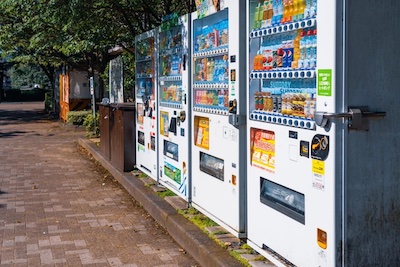
The newsletter also says that the new bills will boost the economy, though one has to wonder at whose expense. As has already been reported by many mainstream media outlets, including the New York Times, companies that rely on vending machines as well as ATMs and ticketing machines will need to spend a lot of money either adapting their current devices for the new bills or buying all new machines. The fortunes this change will boost is that of companies that make and service these machines, but it may be a significant tradeoff. We’ve already seen how users of such machines mostly put off updating them when new ¥500 coins were circulated in 2021. Because many companies decided the expense wasn’t worth it at the time, they didn’t adapt their existing machines for the new coin’s changed material and design since they were aware that new bills would be coming in 2024, so it would be cheaper to make both changes at the same time. According to NRI, only 70 percent of all machines that accepted cash at the time were adapted or changed for the new coins. Of course, ATMs couldn’t refuse the new coins, so banks had to swallow the expense, not to mention public transportation companies, but you still come across many vending machines and stand-alone change-making machines that don’t accept the new coins. A 2021 article in the Minami Nippon Shimbun reported that it cost between ¥30,000 and ¥40,000 to adapt a machine to accept both the old and new ¥500 coins, which sounds reasonable until you realize that companies that use vending machines tend to use a lot of them. Particularly problematic is beverage retailers. Of the 2.2 million drink vending machines in Japan, only 30 percent had made the change after the new coins came into use. In contrast, changing a machine to accept the new bills will cost about ¥100,000 per machine.
To put the expected boost into numbers, the Japan Vending Systems Manufactures Association calculated that it would cost ¥770 billion to create the technology needed to accept the new bills, compared to ¥490 billion already spent to design the tech needed for new coins. Changing ATMs to handle new bills will cost ¥371 billion. Nomura estimates that all this spending will add 0.27 percentage points to Japan’s nominal GDP.
Another hoped-for effect of the new bills is that they will reduce the amount of cash that Japanese people keep at home. This phenomenon has always been a problem for the BOJ, which would prefer that people keep their money in a financial institution or, even better, invest it. So far, they’ve been unsuccessful in getting the public to trust fully in such institutions and practices. In 2004, the BOJ estimated that households held about ¥44 trillion in cash. This amount grew to ¥78 trillion by 2014 and ¥109 trillion by the end of last year. It’s not clear from the various media how the new bills will persuade people to either spend their cash or put it in a bank, but the most likely idea is that people might mistakenly think the paper money they keep in their wardrobes or underneath the tatami is no good any more, but even in that case there’s no reason to think they wouldn’t just do the same thing with the new bills.
Then there’s the purpose of spurring a cashless society, and the media that has explained this idea the best is the home page of office automation manufacturer Ricoh, which thinks that companies presently using machines to handle cash may ponder the above-mentioned cost of changing over and decide it might be cheaper to adopt a cashless system. For instance, many retailers now, especially supermarkets, use self-checkout systems to deal with the labor shortage, so rather than adapt all their checkout machines for the new bills, they just adapt one or two of them and make the rest cashless. The same could eventually happen with ticketing machines and even vending machines, many of which already handle cashless payments. Though retailers would still have to bear the fees that credit card companies and other cashless payment systems charge, this solution to the expense of adapting machines to accept the new bills could still be a nudge toward a cashless society. The real issue is whether the Japanese public would think it’s a nudge or a shove.
 philipbrasor.com