
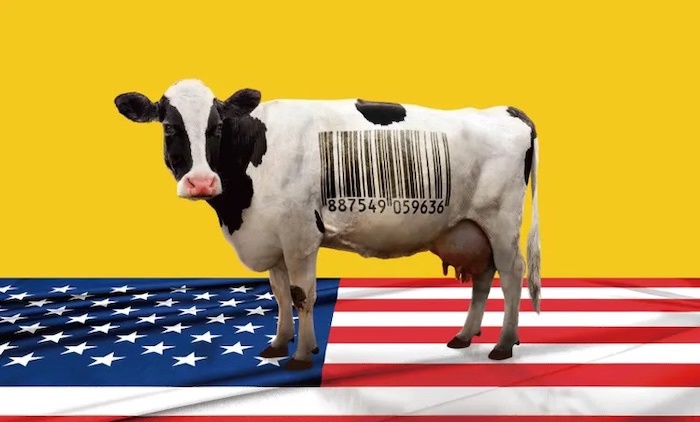
Robert Kenner and Melissa Robledo’s sequel to Kenner’s 2011 documentary Food, Inc. covers much the same territory, but the filmmakers obviously felt that in the wake of the pandemic some issues needed reiteration and clarification. Eric Schlosser, who wrote Fast Food Nation, produces again, and he and Michael Pollan, the author of The Omnivore’s Dilemma, are the main talking heads. Technology is their chief bugaboo as it applies to agriculture and food processing, but this time they go a little further into the economics of food production and food service, including the low wages paid to both farmworkers and fast food employees. Thus, the movie seems particularly timely in the wake of Trump’s victory (he makes an appearance here because as president he signed a bill that made it possible for meatpackers to avoid intrusive inspections) since Trump’s vow to deport millions of undocumented foreigners will have a huge impact on the prices of produce and meat, though the film doesn’t mention that. What it stresses is the weakening of antitrust legislation that has reduced competition, thus empowering a few corporations to dominate the food sector. From there, Schlosser and Pollan discuss a variety of bad outcomes, including the mass introduction of additives that make unnutritious processed food more addictive, the destruction of farmland dedicated to single crops, and the bankrupting of small farmers to the benefit of corporate mega-farms.
Among the new issues that the doc attempts to tackle, meat substitutes are the most interesting. So-called plant-based “meats” are shown to be not much better than ultra-processed foods (“it’s not health food”); and cultured meat, while now being promoted as a solution to the greater environmental and ethical problems of livestock raising, isn’t as feasible as its boosters claim, so Schlosser, who is nothing if not a realist, says the only solution is to cut back on meat consumption in order to rid the industry of animal cruelty and save the environment, a move that would undoubtedly make meat more expensive, though the movie doesn’t say that explicitly. It does talk at length about how lower income people have become obese due to buying cheaper processed foods rather than fresh foods, but it doesn’t really talk about the so-called developed world’s demand for low prices, which is really the reason Big Agriculture has succeeded.
As with the first Food, Inc., the sequel gives the impression that there’s almost nothing you can do on a micro level to make things better. Even limiting one’s animal-based protein intake to seafood is shown to be debilitating, but at least the filmmakers show solutions that are doable (kelp farms that double as shellfish farms). Though Schlosser is more optimistic than Pollan, the movie in general tries not to be too despairing about the future of food, but with Trump coming back in a few months ready to trash any regulations that rein in Big Ag and the major food producers, there will probably be plenty of material to make an even scarier Food, Inc. 3 sometime down the line.
In English and Portuguese. Now playing in Tokyo at Shinjuku Cinema Qualite (03-3352-5645), Human Trust Cinema Shibuya (03-5468-5551).
Food, Inc. 2 home page in Japanese
photo (c) 2023 Another Perfect Meal, LLC
 philipbrasor.com