

The three people who follow my movie reviewing exploits will notice an odd difference in this year’s best-of list: two-count-’em-two Japanese films. As I’ve written before, though I live in Japan I don’t see as many Japanese films as I should, mainly because I find most Japanese filmmakers today uninteresting and big budget Japanese studio films are basically showcases for idols, which I know doesn’t make them unique in the world but Japanese idols seem to have learned their craft at the same school for overactors. The real main reason I mostly review non-Japanese movies is because I think of this vocation as being a public service. There are no longer any Japan-based publications or websites in English that introduce foreign movies at the time they are released theatrically in Japan—which in many cases is much later than the respective release dates in their countries of origin. The movie writers at the Japan Times do an excellent job of covering new Japanese releases, so those films don’t need me. And since I don’t get paid for my efforts (any more), I’m free to speak my mind, which, if I were writing in Japanese, might get me into trouble with the publicists and distributors who keep me on their mailing lists, but they seem fine with my opinions; that is, if they actually read and understand them. In any case, the ones representing the movies mentioned below should be happy, but they probably won’t know unless I tell them, and I don’t plan to do that. That’s a task too far for someone who doesn’t get paid.

1. Evil Does Not Exist (Japan): Ryusuke Hamaguchi’s strongest suit as a narrative filmmaker is creating tension with dialogue-driven set pieces, and his story about a Tokyo talent agency exploiting COVID-related government subsidies to invade a rustic mountain village with a rental campsite for rich folks has some doozies. A reticent handyman exemplifies the suspicions the locals harbor toward the sincere but clueless company reps whose mission is to win them over. The handyman is basically unknowable, and his behavior dominates the action, which becomes weird and scary in ways you can’t predict or readily process. Woe be to those who go into the forest unprepared. (review)

2. May December (US): Pride is the home wrecker in Todd Haynes’ bitter comedy about American-style notoriety based on the true story of a woman who went to prison after sleeping with a teenage boy, and then bore his child. An ambitious actor endeavors to play the woman on screen and spends time with her now settled family to study her habits and sensibility, and the woman obviously sees her as an interloper. Haynes gets at the heart of our tabloid-ready obsession with celebrity by sketching a portrait of middle class comfort that eats at the soul, especially that of the boy forced to become a man without the chance to navigate a conventional path to maturity. This is the movie about two women that should have been titled “Wicked.” (review)

3. Youth (Spring) (China/France/Netherlands): Unlike most of Wang Bing’s typically long films, this first installment of an already completed three-part series about young textile workers in the Chinese city of Zhili rips along at a frantic pace, zooming from romantic intrigues to drag-out fist fights to concerted labor actions all within the purview of the workers and their aloof management. Wang spent 6 years recording this footage, and he enjoys an easy rapport with his subjects, who allow him to get up-close-and-personal without betraying self-consciousness. Less interested in the plight of skilled, low-paid workers than how those workers see themselves as part of the system, Wang has done more for the art of the fly-on-the-wall, institution-probing documentary than anyone since Wiseman. (review)

4. Joyland (Pakistan): The ringer in this comedy about a traditional Muslim family in Lahore is the trans cabaret singer Biba, but the central character and real misfit is the youngest son, Haider, whose arranged marriage to an independent-minded woman is characterized by mutual love and respect that has little need for sexual gratification. Once certain domestic prerogatives come to the fore, however, Haider is compelled to fulfill his responsibilities by his ailing father and domineering older brother, and while he gains emotional succor from Biba, his employer, he knows his place and accepts his destiny. Saim Sadiq’s debut feature is funny and confounding, a multi-pronged love story set in a milieu where transgressions against social norms receive immediate pushback. (review)

5. The Zone of Interest (UK/Poland): If the Holocaust’s most horrifying attribute was its efficiency, then Jonathan Glazer’s adaptation of a novel about the commandant of Auschwitz contends as the most piercing film about the atrocities, even if it doesn’t show a single killing. Rudolf Höss and his family live in a well-appointed house right next to the death camp, and all we know about the actual machinery of murder is delivered through sound. But it’s the attitudes that are truly chilling: the casual mocking of Jews who were once neighbors and servants; the entitled sorting of confiscated valuables; the meetings of Nazi officers who plan ever more effective methods of disposal with executive aplomb. The gag reflex is constantly on alert. (review)

6. Oppenheimer (US): A biopic about hubris and the arrogance of human enterprise bulked up as a blockbuster, Christopher Nolan’s Oscar-winning feature about Robert Oppenheimer and the birth of the atomic bomb is undeniably great without necessarily furnishing the kind of satisfactions blockbusters are known for. That’s partly due to the conciliation to period sensibilities that keep the female characters at arm’s length and the American perspective central, but it also has to do with Nolan’s command of atmosphere through visual overload. Whether he’s filming rain drops in a puddle or recreating the utter destruction of the first Los Alamos test there’s no mistaking his priorities as an entertainer, even if the mission is edification. He aestheticizes the most devastating deed in history, making it even more terrifying in the process. (review)
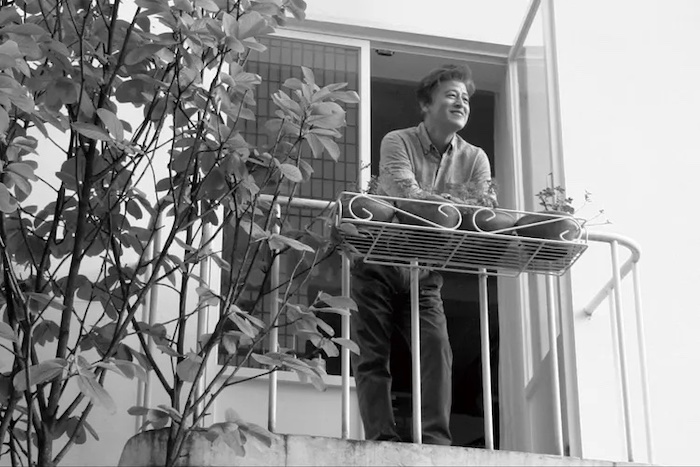
7. Walk Up (Korea): For once a Hong Sangsoo movie prioritizes dramatic theme over form and style, even if the theme is pretty standard for Hong, namely the act of giving up. Set in the titular three-story apartment building, the story centers on an art house movie director who fortifies his disillusionment with the creative industry by involuntarily drawing out similar disillusionments in others. The movie charts an ellipitical journey whose temporal particulars don’t interest Hong, and thus the viewer is forced to make leaps of logic that often defy logic, with vital incidents taking place offscreen. We’re left with the emotional fallout of bad decisions; or, if not bad decisions, then certainly ones whose effects aren’t appreciated by those who made them. Life is in the details you miss, and Hong rubs your face in them. (review)
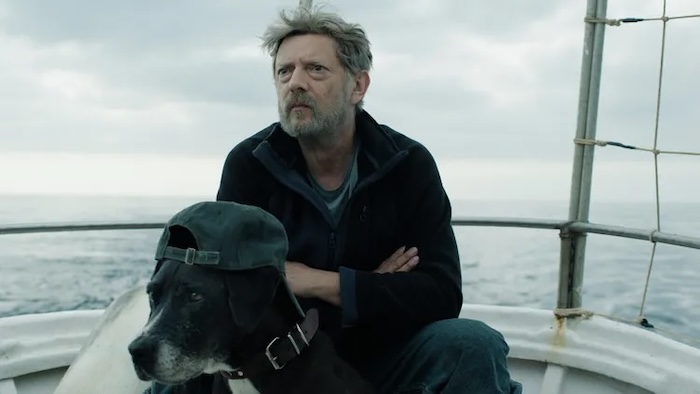
8. Close Your Eyes (Spain): Victor Erice’s first new feature in 30 years is an intellectual detective story that fans of the genre may not enjoy. Like Erice, the movie director protagonist, Garay, hasn’t made a film in decades, though for Garay the obstacle is a trauma inflicted when the lead actor in his last movie just up and disappeared during shooting. Years later, provoked by a TV host who insists he spill his guts about the disappearance on air, he attempts to find out what he never wanted to know. Erice instills the search with such an intense sense of misplaced nostalgia that the imagined past feels more real that the present we’re watching unfold. Even as Garay dreads digging up old pain, he succumbs to the seduction of his misspent youth, which sort of describes all of us. (review)

9. Between the Temples (US): No one does self-deprecation better than Jewish comedians and writers, and while Nathan Silver’s movie about a cantor suffering from acute, debilitating depression doesn’t come close to the existential farces of Philip Roth, it manages to push the envelope. Unable to get past the death of his alcoholic novelist wife, Ben acts out his anxieties in public but is allowed psychic space by his two stereotypical Jewish mothers (even if one was born in Manila) and the carefree rabbi of his upstate New York synagogue, but that dispensation is challenged when he takes up with his widowed elementary school music teacher, who has decided to cash in her unexamined Jewish heritage by imploring Ben to prepare her for her bat mitzvah. It’s a totally different May-December story than the one described above, but no less wild, woolly, and cringeworthy in the telling. (review)

10. All the Beauty and the Bloodshed (US): Ostensibly, Laura Poitras’s documentary is about the work of photographer Nan Goldin, with much of it focused on the pictures she took of the east coast demimonde in the 1980s that made Goldin world famous. But since the artist suffers from a mental illness precipitated by addiction to opioids that almost killed her, that part of her bio is indispensable to the story, which can’t be told without interrogating Goldin’s obsession with the Sacklers, the family that owned the pharmaceutical company found legally liable for millions of addictions and attendant deaths. Goldin’s organized prosecution of the family takes center stage, mainly because the Sacklers are major art patrons and Goldin has close connections with some of the most powerful galleries and museums in the world. It’s literally art versus commerce. (review)
Runners-up (in order)
–My Sunshine (Japan): In his second feature, Hiroshi Okuyama upends various genre conventions to celebrate 3 characters whose dedication to figure skating is about creative rather than competitive impulses. Just because two of these characters are children doesn’t mean they can’t express their feelings at a deeper level. (review)
–Dune: Part 2 (US): Having loved the book as a 12-year-old and forgotten it completely in the meantime, I found the sci-fi elements less central to my enjoyment of the film adaptation than the basic story and interaction of its characters, both of which are rarely presented so coherently any more in cinematic epics like this. (no review)
–20 Days in Mariupol (Ukraine): “We keep filming” is the credo of video journalist Mstyslav Chernov as he covers the first 20 days of Putin’s invasion of the titular Ukrainian city in 2022 for AP. The carnage and naked fear are as real as can be, as is the everyday working struggle of a news crew in the middle of a war zone. (review)
–Hit Man (US): The “based on a true story” conceit about a psychology professor impersonating a hired assassin to entrap criminals for the New Orleans police is actually accurate in this instance, though it feels like a joke thanks to Glen Powell’s sly performance and director Richard Linklater’s predilection for moral ambivalence. (review)
–Sages-femmes (France)/De Humani Corporis Fabrica (France): Both of these movies, the former a soap opera about novice midwives, the latter a documentary about what really takes place during invasive surgery, are set in French hospitals and present the national healthcare system as being barely functional due to lack of resources and personnel. As harrowing as a premature birth, which is depicted in both films. (review) (review)
Honorable mentions: Little Richard: I Am Everything (US); Here (Belgium); Manticore (Spain); Teachers’ Lounge (Germany); La Chimera (Italy); Totem (Mexico); Exterior Night (Italy)
 philipbrasor.com