
In June 2021, Katsuyuki Kawai was sentenced to three years in prison and fined ¥1.3 million for violating the Fair Elections Law after a judge determined he had bought votes for his wife, Anri, when she was running in the 2019 upper house election in Hiroshima as a member of the ruling Liberal Democratic Party, a seat she won. At the time, Kawai, also an LDP member, was not only a sitting lawmaker himself, but the Minister of Justice, having been appointed to the post by then-Prime Minister Shinzo Abe. Following the vote-buying allegations he resigned as justice minister, and in June 2020 was arrested along with his wife, who quit the Diet in February 2021. Katsuyuki quit two months later.
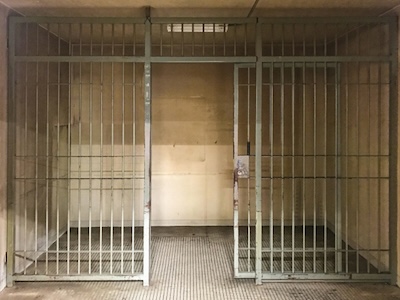
On Nov. 29, 2023, Kawai was released on parole. He recently published a book about his time at Sakura Prison in Tochigi Prefecture, making the most of the fact that he is the first justice minister to ever be locked up. In recent weeks, he’s been making the media rounds to promote Prison Diary: The Justice Minister Who Went to Jail, and the coverage has not only been non-judgmental, it’s often been light and lively. A good example is his appearance on Abema TV’s “Abema Teki News Show,” which went as far as dramatizing several prison anecdotes described in the book. What was different, even refreshing, about the presentation is that Kawai seemed to have learned a lot about prison life that most politicians, including those interested in legal matters, would probably prefer not to have to talk about, and that such knowledge should be standard for the person who is essentially the highest ranking law enforcement official in the country, even if, practically speaking, most of the people appointed to that job aren’t really qualified to do anything except rubber stamp pronouncements from the bureaucracy or the ruling party’s leadership.
Even Kawai’s overall assessment of the purpose of his imprisonment was startling, given that he was once a firebrand for the LDP and martyred himself for the sake of the party: It’s generally believed that the crime for which he was convicted amounted to following orders from his superiors, including Abe. At the beginning of his interview on Abema TV, he said that the facility where he was incarcerated is not referred to officially as a “prison,” but rather as a “center to promote rehabilitation,” a term that made him laugh since he received absolutely no instruction that could help him “reenter society.”
Most of the assigned work, for instance, was pointless in that no skills were transferred that might be useful on the outside. His first job was folding origami cranes (orizuru) for some private company, a task he never got the hang of. He was then sent to the prison library, where his main job was to inspect books donated for the prisoners’ use. Most were old and damaged, so he repaired them with glue and cellophane tape. He worked eight-hour days, Monday through Thursday. Friday was “instruction day,” when he was supposed to learn about the errors of his ways and how to be a good citizen, but most of it involved watching boilerplate videos, usually NHK programs. He then was told to write about the instruction as it applied to his own situation, an assignment that never made sense to him. Saturdays, Sundays, and holidays were free days during which he could do anything he wanted, but as he pointed out, most prisoners just slept because there were few options available and it was always cold, so instead of sitting around on the frigid floor (there were no chairs or beds) it was easier and more comfortable to just wrap up as best you could in the futon.
However, the aspect of jail that made the greatest impression on Kawai was the attitude of the guards. Even when he was in his cell doing nothing, he was constantly observed. If he stood up to move his body in order to get his blood circulating and ward off the cold, the guard would tell him sharply to sit down. When he was with other inmates and wanted to say something to those inmates, he first had to gain permission from the guard; and after he was finished saying what he had to say, he then had to get permission from the guard to stop talking. This kind of robotic ritual applied to other functions. If he had to use the toilet while outside his cell, he had to bow to the guard and ask for permission using a pre-determined phrase. Then, while he was using the toilet he had to inform the guard, who had accompanied him, of each step of his relieving himself and get permission for each one. (“I will now flush.” “You may now flush.”) Moreover, many of the guard’s instructions seemed gratuitous at best. If he was walking down the hall, the guard would scold him for not looking straight ahead.
Medical care was tricky and confusing. Prior to his incarceration Kawai injured his knee and had been given a supporter to wrap around his leg, but the guards took it away and denied him the opportunity to do rehabilitative exercises, so the knee never healed properly. At one point, he was in great pain because of an ingrown eyelash, but the prison doctor refused to treat it because he had never heard of such a condition, so Kawai had to extract the offensive hair himself, which was very difficult to do. Also, Kawai was in prison during the pandemic, and many prisoners came down with COVID, including Kawai. All were placed in isolation, but since the cells had no heating and the food served to them was cold, most couldn’t recover quickly. Baths were only permitted once a week, so in the meantime Kawai would use a damp cloth to clean himself. He would wear the same underwear for 10 days straight because of laundry restrictions.
Then there was the matter of how guards addressed inmates, a matter that has since gained traction after new rules were instituted last February that guards use honorifics such as -san and -kun when talking to inmates. Previously, inmates were called by their prison numbers or using derogatory terms. Kawai mentions that it was impossible to have anything approaching a civil conversation with a guard because the inmates were treated as if they were the lowest form of life. “I felt truly ashamed for the first time in my life,” he said, and because he was considered an “elite” on the outside, his treatment was even more condescending than it was for other inmates.
Despite his situation, it appears Kawai didn’t lose his ideological disposition or loyalty to the LDP. After he learned that Abe had been assassinated, he “secretly prayed” to his benefactor’s spirit during the time when his state funeral was being held. He also published installments of his diary while in prison in the staunchly right-wing publication Hanada, though the prison only allowed him to post four letters a month, each one limited to seven pages written in longhand.
On the positive side he was able to study English on his own and reckons he improved markedly. He also read 870 books in stir. Most importantly, he came to understand the “prison mentality” and what it does to inmates, and now wants more people to understand the reality of life inside. Since being released he has turned to journalism, though he also obtained a caregiving license, having looked after elderly prisoners during his final months in Sakura.
It should be noted that Kawai isn’t the first Japanese politician who has published a book about his time in the slammer. In fact, it’s something of a custom. Joji Yamamoto, a former Democratic Party lawmaker who spent a year in prison, not only wrote a bestseller, but had it made into a popular TV drama, which only goes to show that crime does pay for some people.
 philipbrasor.com