

The Iranian government issued a warrant for the arrest of filmmaker Mohammad Rasoulof while he was at Cannes last year, effectively making him another exiled Iranian director, and I imagine he expected such a reaction considering the purport of his latest film. The Seed of the Sacred Fig, which screened at Cannes, addresses the recent protest movement in Iran sparked by the death of a woman in police custody for violating the head-covering law with actual footage of police violence. But that element is basically a subplot. The main action centers on Iman (Missagh Zareh), a civil servant who has gotten a dream promotion to Judicial Investigator, the step right before becoming a full-fledged judge. However, Iman quickly learns that he is expected to do little investigating and just rubber stamp the prosecutors’ indictments, including those for capital crimes. When the hijab protests explode, he is swamped by cases, a situation that complicates his home life, since he has two daughters, university student Rezvan (Mahsa Rostami) and high schooler Sana (Setareh Maleki), who get caught up in the protests, mostly as sympathetic bystanders, but it makes them wonder about their father’s role in these horrors.
The Maguffin is a pistol that Iman has been given by the court for protection, since judges are often the targets of public enmity. One day, the gun goes missing, and Iman, who has become increasingly paranoid, believes Rezvan has stolen it. It’s an extremely serious problem, because the gun’s disapperance will not only destroy Iman’s career, but could land him in jail, and so he’s determined to get to the bottom of things. His means of doing so is to treat Rezvan as just another suspect of a state crime, with all the unpleasantries such a situation brings with it. And he becomes increasingly less hesitant to resort to Draconian measures, since Rezvan, with the help of her sister and even her mother, Najmeh (Soheila Golestani), has aided a friend who was injured by police during the demonstrations, an act that itself could be considered a crime. So what at first seems like good fortune—Iman’s promotion—unleashes a crossfire of conflicting moral reckonings that tear the family apart.
The premise is brilliant, but Rasoulof gets carried away with it. The film works itself into a thick lather over the course of its nearly 3-hour runtime, and the final section, which some say mimics the dynamic overdrive of The Shining, is extreme in a pulpy sort of way. Still, Rasoulof’s rage is both genuine and comprehensible, and his willingness to hold nothing back in his indictment of the Iranian judiciary is what gives the movie its power. Normally, intentions aren’t enough to make a movie great, but I might make an exception with this one, because Rasoulof had to know that once they realized what he had created, those in charge would never be satisfied until he was buried.
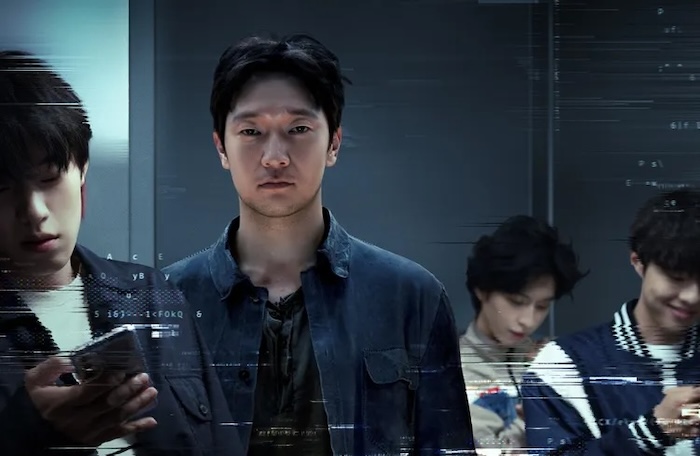
In the Korean movie Troll Factory, the overarching authoritarianism is not public, as in The Seed of the Sacred Fig, but private, which makes it feel even more insidious, since it isn’t readily apparent as being purposely oppressive. A newspaper reporter, Im Sang-jin (Kim Dong-hwi), has written a story about a tech company that invented a new transponder whose test goes awry in ways that can’t be explained, and the company loses out on market penetration to a competitor. The CEO thinks the competitor sabotaged the test, and Im writes a story that is later blasted as fake news by the internet. Suspecting he’s the target of a concerted effort by the same corporation that ruined the tech company, Im investigates further and comes in contact with a trio of young gamers who are experts in manipulating comments on social media, and one of them tells him how they came to be recruited by the biggest corporation in Korea to help that corporation stave off competition and nosy reporters like Im.
Supposedly based on a true story (the big corporation in the film, Manjun, is based on Samsung), Troll Factory is densely plotted by director Ahn Gooc-jin, and while a lot of the computerese is left untranslated for the layman, he makes it easy to follow the intrigues to their natural ends. However, the nature of the danger being posed by these large, invincible conglomerates is that they can effectively render any negative intelligence as mere hearsay or worse, so the viewer is constantly bombarded with plot developments that they can’t really trust, and by the time you get to what could be understood as the denouement, you wonder if you’re headed for a Usual Suspects kind of twist ending. It’s not that pat, but because it’s a true story the screenplay is open-ended, which can be frustrating for people who demand that the forces of evil receive their just due. Unlike the Iranian government, Manjun/Samsung doesn’t really have a human dimension, which makes the conflict even more frustrating, but Troll Factory is engrossingly tense and believable.
The Seed of the Sacred Fig, in Persian, opens Feb. 14 in Tokyo at Toho Cinemas Chanter Hibiya (050-6868-5001), Human Trust Cinema Shibuya (03-5468-5551), Kino Cinema Shinjuku (03-5315-0978).
Troll Factory, in Korean, opens Feb. 14 in Tokyo at Cinemart Shinjuku (03-5369-2831).
The Seed of the Sacred Fig home page in Japanese
Troll Factory home page in Japanese
The Seed of the Sacred Fig photo (c) Films Boutique
Troll Factory photo (c) 2024 Acemaker Movieworks & KC Ventures & Cinematic Moment
 philipbrasor.com