
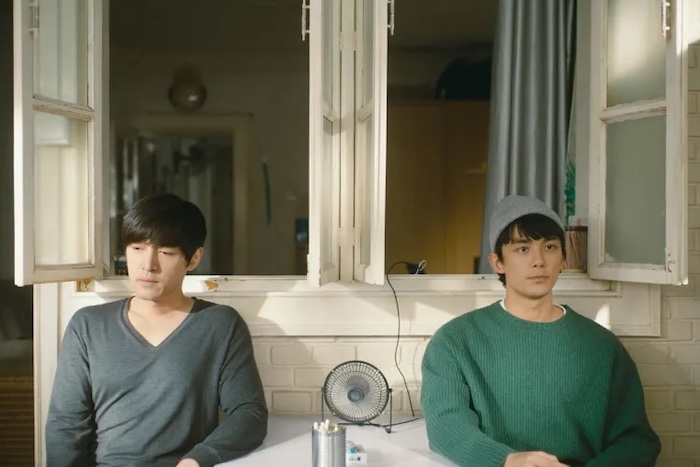
For a communist country, the Peoples’ Republic of China produces relatively few non-documentary feature films that focus on work. The theme that has dominated post-Sixth Generation cinema is the personal and psychological costs of a social system that has been in turbulent flux since the economy was liberalized in the 1980s. Director Liu Jiayin’s bittersweet comedy All Ears follows this trend but seems more concerned with how a career defines one’s worth, and since reports claim that the movie is at least partially autobiographical, I paid close attention to how the protagonist approached the idea of creativity. Apparently, Liu, a respected filmmaker in China, hasn’t made a movie in some time, and it’s easy to glean from the spiritual self-examination that the central character, wannabe screenwriter Wen Shan (Hu Ge), undergoes over the course of the story that Liu has been questioning her purpose as an artist.
Wen, who will turn 40 soon, has yet to have any of his scripts produced, though his old writing professor says he was his most promising student, even if the style and topics that matter most to Wen are not the kind of things that will interest TV producers. “You are good at realistic subjects,” says his teacher admiringly after lamenting how incurious his current crop of pupils are. The implication is that realism doesn’t sell. Nevertheless, Wen makes a pretty good living as a writer. He pens eulogies on a freelance basis, and through an established Beijing funeral home has garnered a reputation for moving, effective tributes. The recently bereaved seek him out. Wen’s methodology, however, often has an unsettling effect on his clients. A successful businessman hires Wen to write a eulogy for his father, and Wen spends an inordinate amount of time interviewing family members, including the client’s elementary school-age son, who is obviously neglected by his very busy parents. Wen’s eulogy tacitly contrasts this neglect with the how the client himself never really knew his father. If it seems a bridge too far for what Wen is being paid for, Liu suggests that this is how Wen justifies himself as a writer-for-hire. However, when this dedication to “truth,” as he calls it, is applied to another client, a restaurant owner whose brother has just died, a preliminary draft is read by the brothers’ sister who disagrees strongly with Wen’s assessment. The writer then finds himself in the middle of a family drama that has been simmering for years. Wen’s own life is ascetic and undramatic. His parents, who live far away, think he’s a successful TV writer, and he spends most of his free time tinkering with a script that he knows will never be seen by anyone. It takes the viewer a while to realize that his roommate, the affectless, seemingly unemployed Xiaoyin (We Lei), is one of Wen’s characters, a figure constantly in the process of being rewritten.
Liu’s humanistic bent can sometimes feel precious, especially when Wen is called upon to elaborate on his philosophy of life, which he does rather awkwardly with a woman who travels a great distance to argue about his depiction of a man she knew who committed suicide, even though they never met in person. But Liu also avoids the kind of sticky sentiments that this kind of material usually yields, particularly in Asian cinema. Nothing is solved in All Ears, but everything is laid out for easy inspection.
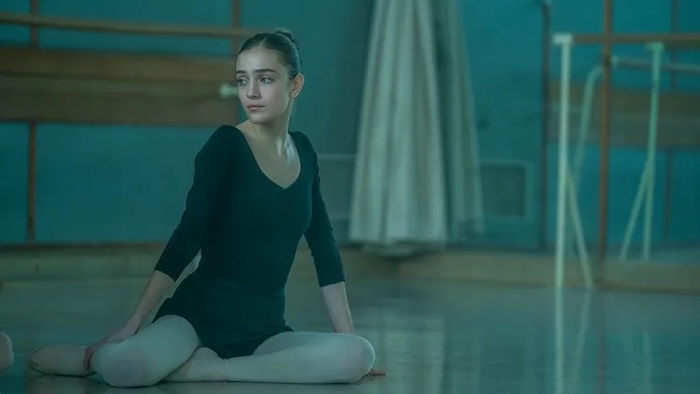
The creative work of the titular character in Joika (titled The American in some markets) is exclusively physical, often brutal, and therein lies the drama. Based on the experiences of ballet dancer Joy Womack, the first American to ever be accepted at the Bolshoi Academy in Russia, the movie interprets the school’s infamous work ethic as xenophobia, though the way this conflict is framed by the director, James Napier Robertson, it’s often difficult to determine if Womack, as played by Talia Ryder, is a victim of the school’s anti-Yankee prejudices or her own self-doubt. The cruelty is at large in the academy but mainly personified by the fiercely sibilant chief instructor, Tatiyana Volkova (Diane Kruger). Womack claims that the persecution she receives is “not about ballet, but about politics,” as her obvious talent is considered second-rate to her Russian classmates’; the implication being that Volkova has to bend over backwards, literally, to deny that talent. In the end, of course, Womack makes it into the Bolshoi company, practically killing herself in the process, and even gets a chance to solo, which, if you know anything about the world of professional ballet, is almost impossible to achieve in any world class ballet company.
Joika romanticizes the physical and emotional struggle that’s expected of a great ballerina while neglecting whatever happiness the dancer might derive from that struggle. The name of the main character, who left the Bolshoi some time ago and was a consultant for the film, is sadly ironic since the movie exhibits almost no joy in its depiction of artistic endeavor.
All Ears, in Mandarin, opens April 25 in Tokyo at Shinjukuu Musashinokan (03-3354-5670), Cine Switch Ginza (03-3561-0707).
Joika, in English and Russian, opens April 25 in Tokyo at Toho Cinemas Chanter Hibiya (050-6868-5001), Kino Cinema Shinjuku (03-5315-0978), Human Trust Cinema Shibuya (03-5468-5551).
All Ears home page in Japanese
Joika home page in Japanese
All Ears photo (c) Beijing Benchmark Pictures Co., Ltd.
Joika photo (c) Joika NZ Limited/Madants Sp. z o.o. 2023
 philipbrasor.com