
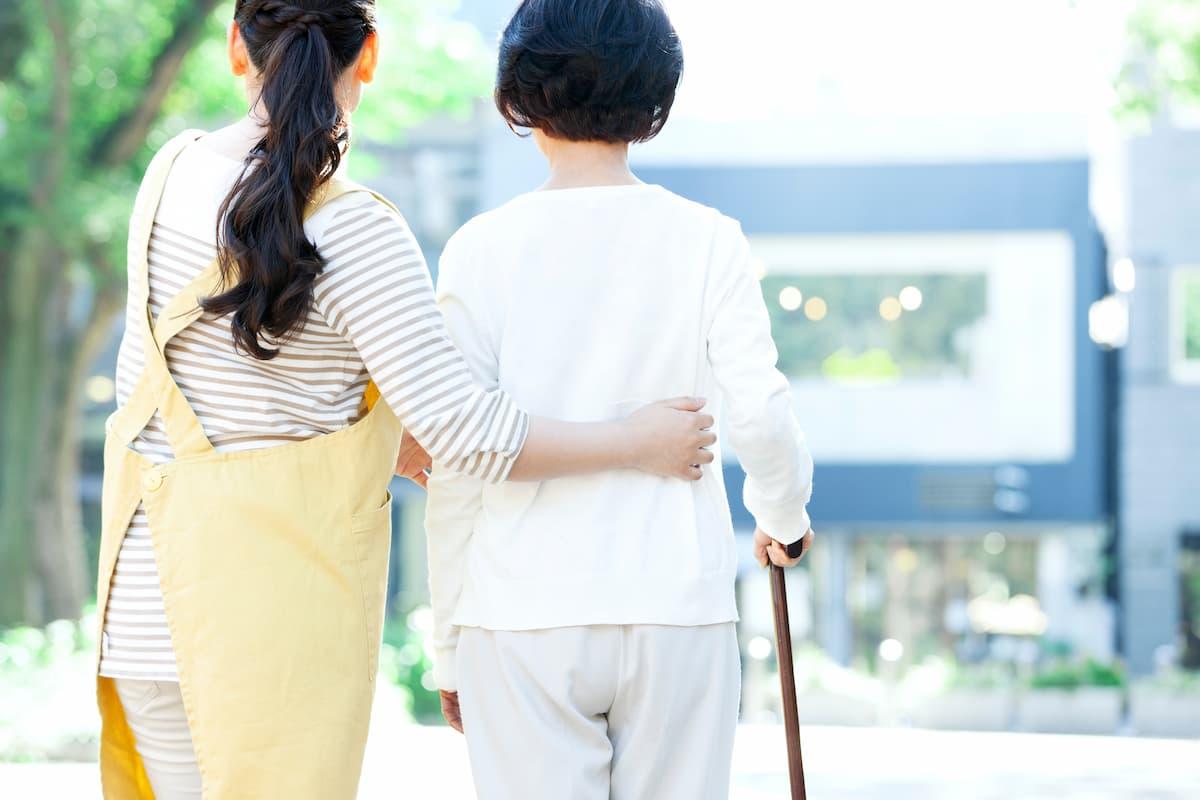
Right now the issue gaining the most media attention leading up to the Upper House election later this month is the status of foreigners in Japan, owing mainly to controversial remarks made by the new opposition party Sanseito. It’s hard to know how much of the talk is bluster and how much is sincere because most of the candidates are avoiding the most obvious reason why so many foreigners are coming to Japan to live, which is Japan’s employment situation. The sector where the problem is most acute is elder caregiving. The government, meaning the ruling coalition led by the Liberal Democratic Party (LDP), has exacerbated the problem by cutting pay for caregivers who provide services under the kaigo (caregiving) insurance system, which is paid for by everyone in Japan once they turn 40. Due to the reduction in pay, it has become even more difficult to attract workers, and thus a vicious cycle has been generated: fewer caregivers means a loss of services that leads to more restrictive conditions for elegibility. In the meantime, costs are constantly rising.
As a result, the kaigo insurance system hardly accomplishes what it was designed to do. It was started 25 years ago as the government acknowledged that Japan’s rapidly aging population had to be addressed in the long term, but over the years the system has had to charge more money while cutting services. Half of the funds are derived from premiums and the other half from taxes, specifically 25 percent from the central government, 12.5 percent from prefectures, and 12.5 percent from local governments. About 29 percent of funds from premiums are paid by contributors between the ages of 40 and 65, and 21 percent by people over 65. As of last year, the monthly premium for people over 65 averaged ¥6,014. People who fall behind on their payments are denied access to caregiving services.
When it was launched in 2000, the kaigo system cost ¥3.6 trillion a year. As of three years ago, that amount had risen to ¥11.9 trillion. Medical costs in general, not counting those related to kaigo, amounted to ¥47.3 trillion in 2023. The average age of a kaigo caregiver is 44 and the average income ¥256,000 a month with two bonuses of ¥539,000 a year. After taxes and other deductions, the workers take home 70-80 percent of this amount. The turnover rate isn’t as high as it might seem—14.3 percent, which isn’t much higher than the general turnover rate—but there has always been a serious shortage of caregivers so the loss of manpower is more deeply felt.
It’s generally assumed that the reason for the unpopularity of kaigo caregiving as a profession is not only the low pay but the difficulty of the job. Though caregivers receive some training, most are not prepared for the sheer physicality of the work, not to mention the mental strain of dealing with elderly people who may be suffering severe health problems. By cutting salaries, the LDP not only made caregivers’ lives more difficult, but indirectly told them that their work was not really that important.
A recent broadcast of the web TV program Democracy Times covered a questionnaire distributed in April by several groups that support caregivers to the political parties who are running candidates in the Upper House election. The survey assumes that the kaigo situation is bad and getting worse, and essentially asks the parties what they plan to do about it if anything. Among the questions were those asking if the party would “rescind” the wage cuts recently implemented and raise pay; whether the portion of caregiving services paid directly by users would be increased from 10 percent to 20 percent, which is the current plan; whether the party would agree to change the categorization of caregiving—essentially tightening restrictions—in order to reduce necessary staff; and whether the tax portion that goes to kaigo services should be increased.
According to Democracy Times, the LDP essentially ignored the survey, which makes sense since they’re responsible for the state the system is in and won’t admit that they’ve destroyed it. They’re following a cost-cutting strategy that takes in all medical services. One of the goals is to reduce the number of hospital beds, since Japan has the most per capita in the world and doctors and hospitals take advantage of it by having patients stay longer than they might need to and then charging the government. A result of this strategy is that older people are being encouraged to stay at home when they’re sick, thus putting an extra strain on visiting caregivers without any commensurate increase in compensation for them.
This recover-at-home strategy has also affected the specification of care, which has five categories, with 1 being the least serious and 5 the most serious, meaning the patient is often bedridden and needs assistance all the time. Apparently, the government is trying to redefine what the categories mean, so, for instance, some patients suffering from dementia will be moved from category 3 to category 2, where they receive less care—many of the workers in this category are non-professionals in that they have not been trained to work with cognitively-impaired patients. I also means they can be paid less. Even lower priority care is being eliminated. Usually, most of the care afforded to categories 1 and 2 is household tasks, like shopping and cleaning and cooking. There is no physical contact with users. But the government now wants to limit even those tasks.
In general, the responses were predictable. The LDP and its coalition partner, Komeito, pretty much said they would not alter the current system. However, even the opposition parties were less than forthcoming. The Democratic Party of the People, Nippon Ishin no Kai (Japan Innovation Party), and Sanseito didn’t answer any of the questions.
The stakes are high and the probable outcome bleak. Currently there are 120,000 elderly people waiting to be accepted to “special” (tokuyo) nursing homes, meaning care facilities that accept kaigo insurance. Basically, these people cannot afford private assisted living facilities and thus have to rely on the safety net, which isn’t there for them. So they languish in crowded public facilities run by local governments. But even if they do get in they may, in the long run, not be able to afford it. Kaigo does not pay for so-called hotel costs, meaning housekeeping and meals, and these costs are continually increasing.
Of course, most people would rather stay at home than live in an institution, and the government would prefer that as well, since it would remove some of the financial burden from their shoulders, but the whole visiting caregiving system is in shambles because of the employment crunch. Now it’s estimated that the system is short some 320,000 caregivers. Moreover, kaigo dispatch offices are managed by local governments, and according to another survey, 21.8 percent of local governments have either only one or no dispatch offices, which means some elderly people requiring care are receiving none at all, despite the fact that they’ve been paying a good amount of money for this service since they were 40. And from now on they’re going to have to pay more.
 philipbrasor.com