July 31, 2025 12:06 pm
One of the aspects of the Johnny & Associates sexual abuse scandal that made it even more disturbing was the notion that the media knew for years about the abuse and said nothing. It almost seemed as if most media outlets almost expected the abuse. That’s because the entertainment world is rife with it, and not just in Japan. The #MeToo movement, after all, pretty much emerged from Hollywood, where women were expected to offer themselves as sexual objects in order to get ahead in show business. It’s a tradition, you might say, and in Japan that tradition goes back centuries with many types of gei (art forms).
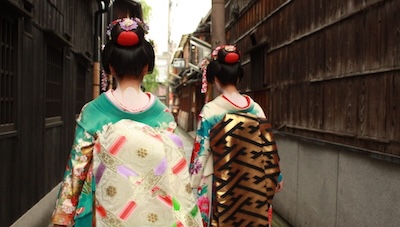
It therefore should not have been surprising at all when a 26-year-old former maiko submitted a report to the UN Convention on the Elimination of All Forms of Discrimination Against Women in January outlining the “slave-like” working conditions of her profession, mainly in terms of providing intimate services to customers. Maiko practice traditional Japanese performance arts such as dancing, singing, and playing instruments for private customers. Some people refer to them as “apprentice geisha,” since maiko are typically very young. In her report, the woman, Kiyoha Kiritaka, described some of the tasks she was given by her superiors that should be considered illegal since she was a minor at the time.
An interview with Kiritaka appeared in the July 8 digital edition of the weekly magazine Aera. She explained how when she started junior high school, her dream was to someday become involved in the theater. Hearing this, an acquaintance of her mother, who often visited the entertainment districts of Kyoto called hanamachi, suggested she become a maiko and said she could make a recommendation with one of the “houses” (okiya) that trained maiko. Her mother thought it was a good idea and, wanting to please her, Kiritaka took up the offer.
She then essentially went through an interview process with the head mistress of the okiya. There are no contracts in the maiko world. You are simply accepted and then given an allowance during the training period, which is followed by a kind of internship. Kiritaka made her debut as a maiko when she was 16.
When asked by Aera what her biggest impression was after making her debut, Kiritaka said it was the sexual harassment, which was rampant in the ozashiki, or venues where maiko entertain guests, usually in exclusive restaurants or Japanese inns. Customers, almost always males, regularly touched her breasts and buttocks and placed their hands inside her kimono. Though it made her uncomfortable, there was nothing she could do, since the mistress of her okiya told her that the customer is king. She was essentially told to get over it if she didn’t like, because the touching is part of the job. But it got worse.
She had to drink alcohol with the customers, even though she was underage. Every night. She found that she could hold her liquor, but other maiko were constantly sick from all the drinking. When Aera asked if the customers knew she was a minor, she said, of course they do. In fact, that’s what they’re paying for. Hiring a maiko allows them to treat adolescent girls in ways that would get them arrested otherwise. Moreover, the men she entertained were from the highest tiers of society: judges, university professors, veteran politicians.
Working hours were brutal. Supposedly, minors cannot be out after 11:00 pm. The curfew for maiko was midnight, but it usually wasn’t until 2 or 3 in the morning when they went to bed. At most, she’d get 5 hours of sleep a night. And, again, there was no salary, just a training allowance from which she had to buy cosmetics, food, and female sanitary products. It was impossible to save money, but there would have been no time to spend it anyway since she only had two days off a month.
There was no one to whom she could confide her fears and disappointments since maiko are practically locked away in the okiya and are forbidden to have cell phones. In the beginning, the mistress and other senior staff were very kind, but once she made her debut they became very strict. Any complaint would be met with accusations of being ungrateful and lazy. So she internalized the criticism and eventually developed a speech impediment.
She quit less than a year after making her debut, citing as the last straw requests from customers that she take spring baths with them. She said she had heard of this custom when she first joined the okiya but hadn’t taken it seriously. The point is to get into the water with only a towel wrapped around you and wash the back of the customer, who is usually naked. Her first bath gig, so to speak, came four months after her debut, when she was told to accompany a customer to a hot spring resort. The customer booked an expensive room with its own outdoor bath. She knew she was expected to bathe with the customer and told her older colleague she didn’t want to. The colleague pretended to be drunk and made a fuss and the bath was called off, but how could Kiritaka get out of such requests in the future? She decided then that she would quit.
She soon became aware that bathing with customers went beyond washing backs. Girls and women were sometimes raped by customers. She heard of several who became pregnant and had to undergo abortions. She also soon learned about danna-san seido, or the “patron system,” where maiko essentially become the property of certain customers, who are then free to have sex with them anytime they want. When Kiritaka told her mistress she was going to quit, the mistress said she would have to pay ¥30 million in compensation. Since she didn’t have that kind of money, the mistress suggested getting into a danna-san arrangement, at least temporarily, to settle the matter. Apparently, patrons pay between ¥3 million and ¥60 million to make maikos into their personal concubines. The mistress told Kiritaka that three customers were interested in her. Typically, patrons pay more for virgins, so Kiritaka was worth money to her okiya.
She got out by simply becoming a pain in the neck—a troublemaker and a loudmouth. Basically she was fired. When the interviewer mentions that what she described sounded like trafficking of minors, Kiritaka took it a step further and said it was more like child slavery. Kyoto, where she worked, has five hanamachi, and now she hears only three of them offer bath encounters as services. In addition, the curfew has been moved up to 10 pm and forcing minor maiko to drink has become “less widespread.” But danna-san seido is still a custom.
Kiritaka has since formed a kind of network with the help of lawyers which is trying to enforce rights for maiko, with the UN report being the first step. The network’s goal is to allow maiko to improve their artistic skills without having to submit to what would normally be considered illegal activities. She has already received extensive criticism from traditionalists on social media, including death threats.
“I love Kyoto,” she told Aera, “and I think maiko are an important part of Kyoto’s unique entertainment features. Japanese dance and samisen are skills that should be cultivated forever, but at the same time the rights of maiko must be guaranteed and respected by removing the forced sexual and trafficking aspects.”
Posted by philipbrasor
Categories: Media
Tags: Kyoto, traditional Japanese arts
Mobile Site | Full Site
Get a free blog at WordPress.com Theme: WordPress Mobile Edition by Alex King.