
In June the Supreme Court ruled that government cuts to welfare carried out between 2013 and 2015 were unlawful in a decision that undermined much of the welfare ministry’s rationale for how it determines benefits. The court ruled in favor of the plaintiffs, meaning welfare recipients who’d had their benefits reduced, in two cases. Another two dozen suits against the government are still being heard and it’s assumed the court’s decision will have a significant impact. The ministry argued that the cuts in question, which totaled about ¥300 billion, reflected a decrease in the cost of living, but the court found that the ministry had “exceeded and abused [its] discretionary power” in arriving at the cuts, which went as high as 10 percent for some welfare recipients. As it happens, 10 percent is the exact portion by which the ruling Liberal Democratic Party in 2012 pledged to reduce government assistance. In essence, the ministry had come up with a calculus that would make the LDP’s wishes come true, and had less to do with deflation. It remains to be seen if any of the plaintiffs are compensated for the cuts.
It also remains to be seen if the Supreme Court ruling will have any effect on the welfare policies of the new administration of Sanae Takaichi, who, according to Reuters, has advocated for a “stricter ability-to-pay principle” that could adversely impact single parents and low-income earners, many of whom are dependent on public assistance to make ends meet. The LDP’s general approach to welfare is that it is something that needs to be reined in as much as possible, as illustrated by an article published by Asahi Shimbun in early October.
A single mother with four children who lives in “northeastern Japan” applied for public assistance in 2024, since she couldn’t raise her kids on the money she earned from her full-time job. The woman had divorced her husband early in January of that year because of his “reckless” attitude toward money, which made it difficult for her to plan for her family’s future. As is often the case with such stories, the reporter neglects to discuss anything related to the ex-husband’s responsibilities in supporting his ex-wife, who appears to be raising their four children, including an infant, alone. She made the best of her situation for as long as she could and found her living expenses exceeded her pay, so “as a last resort” went to city hall and applied for government assistance to make up the difference.
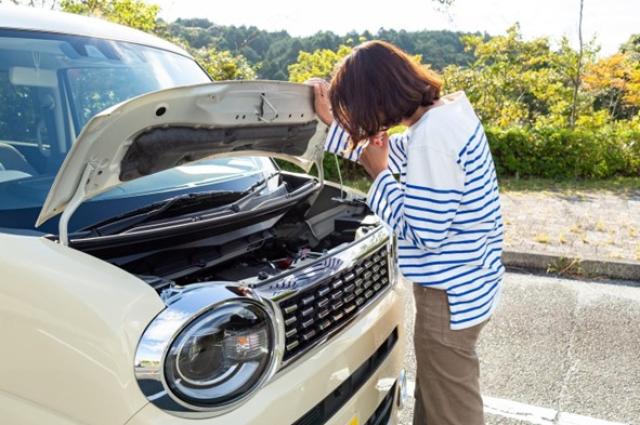
During the application process, she was asked if she had a car, and she said that she did since she needs it to shuttle her kids to daycare and to commute to her job. Her assistance was approved, but in the fall of 2024 she received a phone call from the official who had taken her application. He told her she would have to get rid of her car by the end of the year or forfeit her benefits. The welfare office had determined that her car was an “asset,” so, according to the rules, she was not allowed to own one.
The daycare facility where the woman brings her children is a 15-minute walk from her house. Without the use of a car she has to walk three of her children to the facility while also carrying futons and changes of clothing for them. As for her commute, she returned to her job after maternity leave, and it takes 20 minutes to get to her work place by car. If she uses public transportation, it takes an hour and 20 minutes each way. More significantly, if any of her children fall ill at daycare, she would be unable to get to the facility quickly without a car. She told the official at city hall that she needs her car in order to keep her full-time job. Without it, she would probably have to reduce her hours, meaning she would then have to apply for more benefits. With the car, her benefits can be reduced. The official said there was nothing he could do since he was just following the law.
Eventually, the woman hired a lawyer who argued her case with the pertinent officials, and last March the welfare department relented and allowed her to keep her car and her benefits.
But as Asahi learned while reporting the story, many single mothers in Japan are faced with the same dilemma, and most, it seems, have had to give up benefits because they can’t live without an automobile. Since the stated purpose of government assistance is to “guarantee that people have a healthy living situation,” the strict prohibition against cars, regardless of the situation of the user, would seem to be counter-productive. The reporter reels off some anecdotes, including one about a divorced woman in Hokkaido who lives with two daughters, one of whom had a chronic health condition. The nearest hospital is 40 minutes by car from her home. When her financial circumstances became difficult, she applied for welfare repeatedly and was constantly turned down because of her car. She couldn’t rely on ambulances or taxis in case of emergencies, so she gave up on welfare, which meant she had to cut back on utilities and food. In time, a non-profit group came to her rescue and advocated on her behalf with city hall, which finally granted benefits, but on the condition that she used her car only for taking her daughter to the hospital.
As Chieko Akaishi, the former director of the non-profit organization Single Mothers Forum, told Asahi, the no-car policy is the same nationwide, but all welfare applicants with cars do not have the same living situations, and approval for keeping a car depends greatly on location. Welfare recipients who live in large cities with extensive public transportation systems are less likely to be able to keep their cars. But it still depends on the official who accepts the application. Many tend to follow the rules to the letter, even in rural areas where public transportation is scarce and unreliable. Akaishi says that her group tends to use children when they argue with welfare officials, saying that maintaining a private vehicle should be allowed for the sake of raising kids, which tends to sway officials more than the argument that a car is needed for commuting.
However, even within the purview of raising children some officials are stubborn. One case worker in Sapporo spoke to Asahi about welfare recipients with children who said they needed a car for shopping because they did not live near any stores. In order to feed their children they needed a car. In many such cases the request was turned down. At one time the Sapporo welfare office put a statement on their website saying that disabled persons on welfare could keep a car for the purpose of commuting and accessing health care, but eventually took it down because they were afraid it would give the wrong impression.
In May 2022, the welfare ministry sent a notice to local governments saying that it “had not yet reached the stage where we can allow welfare recipients to keep cars, even though some local governments have been positive about recipients having cars for purposes that fall outside the need to maintain a stable living situation.”
So what constitutes a stable living situation? A single mother in Suzuka, Mie Prefecture, said she needed a car because her child was disabled, and the local welfare official mandated that she submit a “driving record” every month showing that she didn’t use her car for anything other than transporting her child to the hospital. This became too much for the women and she eventually stopped submitting the reports and was thus dropped from the welfare rolls. She sued, and the court found in her favor. As a result the welfare ministry notified local governments that “permission to use cars” would be “broadened” for welfare recipients to include “shopping for everyday necessities,” but only for recipients with disabilities.
Behind the banning of automobile use for welfare recipients lies the concept of the moral hazard, which holds that when a higher power allows the individuals under its authority some freedom of choice, there is the danger that the individuals will use that freedom to pursue activities that go against the authority’s purposes. In this case, allowing welfare recipients to have a car might mean that the recipient uses the car for activities the authorities deem unnecessary or frivolous, like going to the store to buy beer. God forbid welfare recipients enjoy themselves. (At one time, even owning a TV disqualified a person for welfare.)
At the heart of the problem is the ministry classifying an automobile as an asset. Welfare officials assess an applicant’s eligibility by looking at their assets. If there is a substantial savings account or property that can be liquidated, then the application will be rejected. So automobiles are considered assets. However, over time, some items once considered assets have moved over into the “necessity” column. The ministry designates “an item needed for living” after surveying the population of a given region. If at least 70 percent of the population possesses the item, it is deemed a necessity “unless it is otherwise designated as an asset.” Refrigerators and air conditioners were once considered assets. More than 20 years ago, having an air conditioner would disqualify someone from receiving assistance, but now, especially with the onset of global warming and more old people dying of heat stroke while at home, air conditioners are very much necessary for survival.
For that reason, some experts say that cars will eventually be moved out of the asset column, especially as rural communities and regional cities hollow out and automobiles become even more vital for everyday survival. Being dependent on an automobile for survival is not really a good thing, especially for the elderly, but until Japan can guarantee ready access to transportation for everyone, any time, and anywhere, cars will be a necessity for many. In fact, the Japan Bar Association has asked the government to grant supplemental assistance to welfare recipients in order to maintain their automobiles, including the purchase of insurance. As one professor of public policy asked the Asahi: Shouldn’t mobility be considered a constitutional right?
 philipbrasor.com