
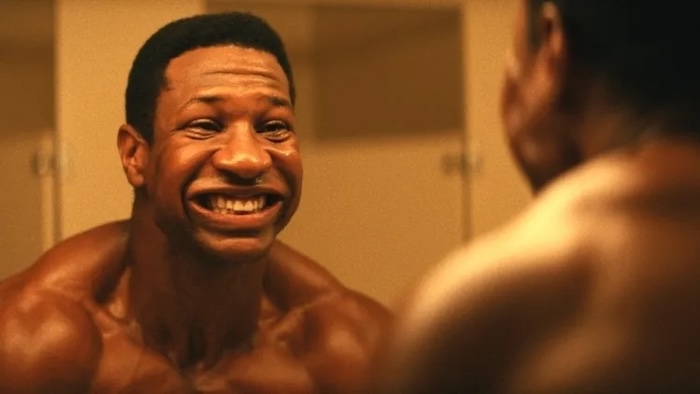
Though a bona fide indie, this sophomore feature by Elijah Bynum comes across as a fairly big production owing to its star, Jonathan Majors, who at the time it was made was riding high as box office contender, having scored critical raves in various features and a central ongoing role in the MCU. Since then, Majors has been accused of domestic abuse and his light has gone out, so Magazine Dreams could be his last leading part for a while—or forever. Since subtext is everything these days, it’s impossible not to read what happened to him (or what he did to himself) into this tale of a bodybuilder with self-image problems who explodes into violence when pressure gets to be too much. Story-wise, it sticks conventionally to movies about self-absorbed men who live on the margins, the kind of thing that Paul Schrader has made into a cottage industry, and Byrum often seems to be checking the boxes along the way, as if there were a manual for this kind of theme. But he’s got one element that distinguishes the film from its ilk: Killian Maddox’s race, which Byrum incorporates skillfully and, at first, subtly into the development.
The movie starts full bore, with Maddox already manifesting violent tendencies as his state-ordered therapist/social worker (Harriet Sansom Harris) tries to get him to admit to his darker impulses. Like a petulant child, he refuses to acknowledge them. At home he is obsessed with bodybuilding, his walls festooned with the magazine cover photos of his hero, a white guy named Brad Vanderhorn (real-life bodybuilder Mike O’Hearn). He lives with his grandfather, a retired, disabled Vietnam veteran (Harrison Page) who needs a certain level of care that only adds to Maddox’s guilt trip. He works at a supermarket where he scares the customers, though at one point he makes a date with a shy, white cashier, whom he later freaks out when they go out to dinner and he orders about 6,000 calories worth of food. The idea is that he’s just being himself, but being himself is off-putting to others, especially if they’re white. The first instance of acting out is a doozy. He calls a company that painted his grandfather’s house to complain that they did a bad job, and when they blow him off unceremoniously, he stomps down to the store and trashes the place. Later, of course, the store manager and some goons show up to give Maddox a proper beating, yelling racial slurs in the process. Byrum suggests that Maddox’s liberal steroid use only adds to his rage, but Majors is very good at telegraphing Maddox’s inherent insecurities through vocal inflections and changes in posture.
Magazine Dreams is a very difficult movie to watch, since Maddox’s self-induced humiliations are so relentless and inevitable. No one, not even his therapist, attempts to connect with him on his level, and he picks up on these slights with the sensitivity of an exposed nerve ending. The cognitive dissonance remains intense because of Majors’ incredible physique, which adds immeasurably to the unfortunate subtext: another actor who went through a lot of pain just for a movie (though he reportedly was already bulked up, having just completed one of the Creed sequels). It takes nothing away from the performance, but in the end it takes something away from the movie, which is accomplished and dramatically affecting but depressing without being redemptive.
Now playing in Tokyo at Human Trust Cinema Shibuya (03-5468-5551), Cinemart Shinjuku (03-5369-2831).
Magazine Dreams home page in Japanese
photo (c) 2023 LAMF Magazine Dreams LLC
 philipbrasor.com