
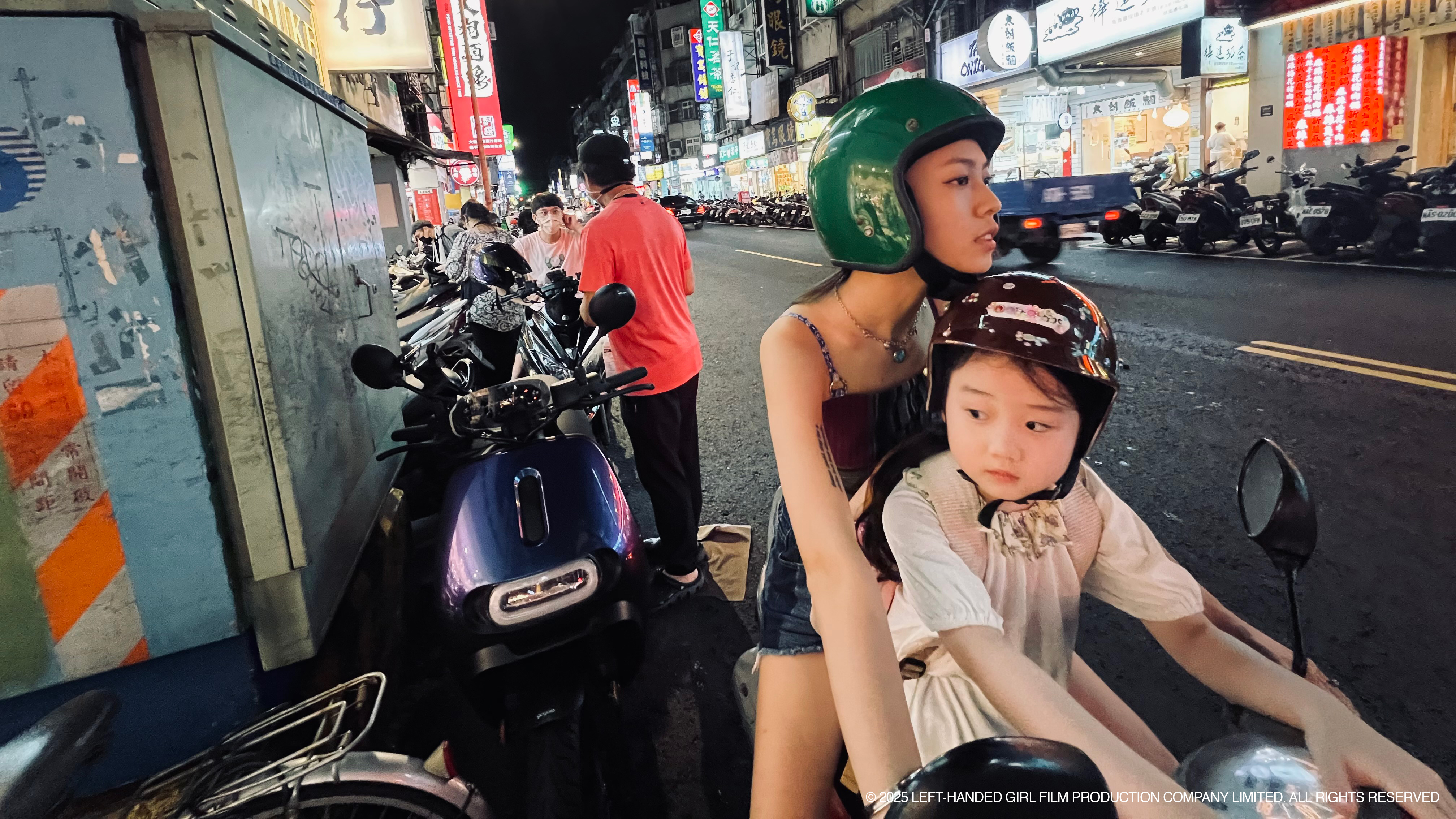
With each passing year it gets more difficult to adhere to the qualifications for this list. It used to be simple: Any movie released theatrically in Japan for the first time. At some point I started eliminating films that were released for the first time in Japan but released elsewhere a long time ago. Japan tends to have a long lag time for releasing foreign films compared to other countries, so if a movie was released elsewhere two or even three years before, it qualified, but if it was, like, more than ten years it didn’t. That wasn’t a difficult change to make. But when streaming went big, some major motion pictures started being released simultaneously in theaters and online—and then later online almost exclusively. That’s not the part that made it difficult. What made it difficult is the combination of the above two exceptions to the original rule. If all new movies produced by streamers were released everywhere in the world at the same time, that would be fine, but they aren’t, owing to different licensing deals for different territories. What brought this awkward development to my attention this year was the Taiwanese movie Left-handed Girl, which I saw at the Busan International Film Festival in October and was one of the best things I saw this year. It was also screened at Tokyo Filmex in November, and has won a number of awards at other festivals, but film festival appearances don’t qualify for this list. When I searched around for a Japanese distributor, I discovered that Left-handed Girl was already being streamed overseas in some markets on Netflix. Since it was not being streamed by Netflix in Japan I assumed it would be picked up for theatrical release by a local distributor—after all, it was made by the same team that produced the most recent Best Picture Oscar winner, Anora. No luck. According to the rules, I shouldn’t include it on this year’s list, but I’m not sure when it will be released in Japan and if it goes straight to streaming instead, what should I do? In any case, if you get a chance to see it, do. It’s better than Anora.
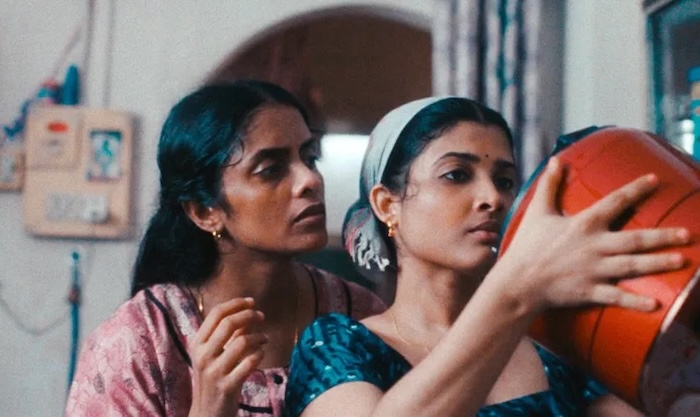
1. All We Imagine as Light (India): In Payal Kapadia’s Palme d’Or-winning fiction feature debut, Mumbai is a swirling carnival of contradictions, especially for three female hospital workers, who barely get by, financially and emotionally, in a kind of existential limbo owing to how the system, which includes the culture, treats their sex. Among these women, the social is the personal, so Kapadia is as sensitive to her characters’ inner musings as she is to the forces that over-complicate their waking lives. Their struggles, as well as their epiphanies, become ours. (review)
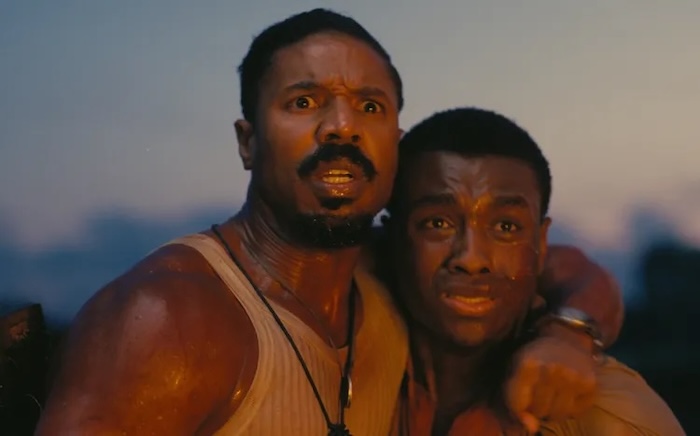
2. Sinners (US): The white man is literally the Devil in this vampire movie set in the deep American South at the height of Jim Crow, and director Ryan Coogler goes all-in on the genre fixings in a way that makes this a much more powerful and satisfying race-issue allegory than Jordan Peele’s Get Out. It’s also more accomplished, both technically and narratively. There’s a sophistication to the storytelling that transcends those genre fixings, thus rendering the allegory less allusive and more in-your-face. It’s pure entertainment that edifies without fear or apology. (review)
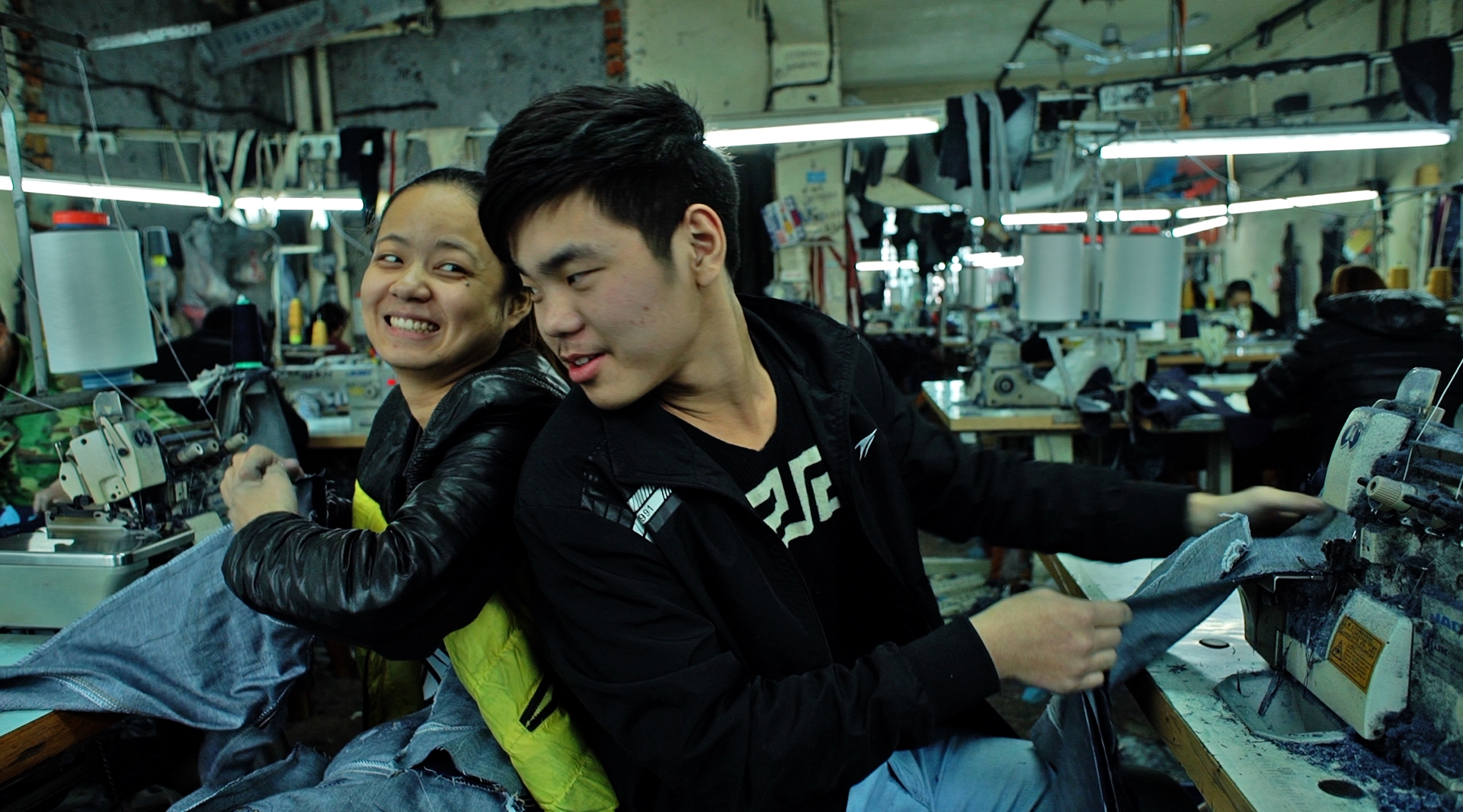
3. Youth (Hard Times) (China): The most politically charged installment of Wang Bing’s 8-hour trilogy of documentaries about textile workers in the city of Zhili, Youth (Hard Times) will tell you probably more than you’d ever want to know about the current labor situation in China. Almost all the conflicts in this relentlessly contentious movie have to do with compensation or lack of it, from over-extended employers disappearing in the middle of the night to workers desperately trying to organize, an enterprise that usually leads to incoherent collective bargaining. Wang gives you plenty of time to know the people he covers, and you can’t help but feel something for all of them. (review)
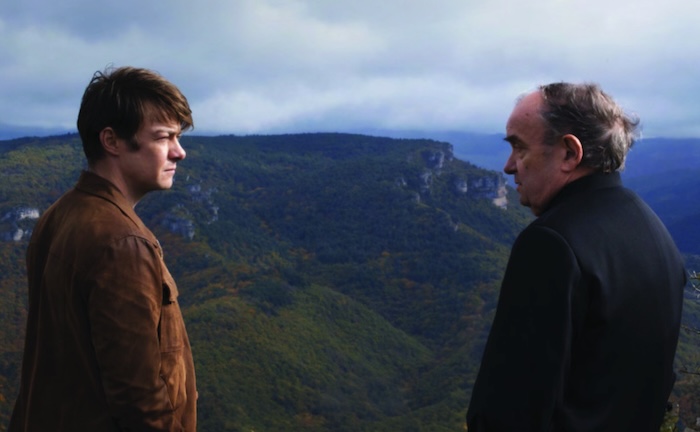
4. Misericordia (France): Alain Guiraudie’s cynical sense of humor gets literally worked to death in this tale of a morally complacent baker who returns to his rural home town to attend the funeral of his mentor only to upset the lives of various parties whose interest in him is far from wholesome—as is his interest in them. Not only is no character particularly likable, they’re all intended to be unattractive physically, the better to set up situations that are as likely to turn your stomach as tickle your funny bone. Even the local priest has an agenda that might shock you, though it really shouldn’t given what we know about the Catholic Church and what it puts up with. (review)
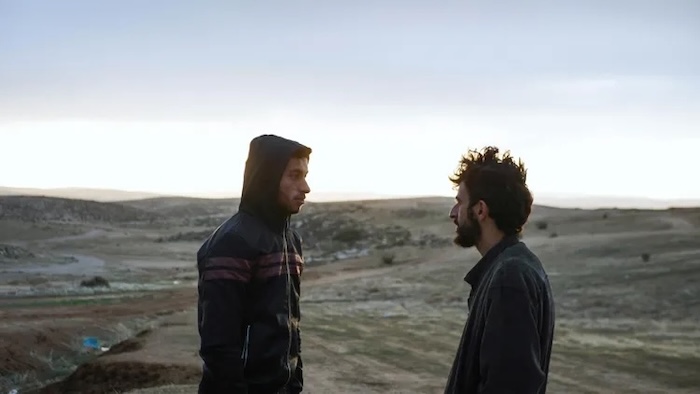
5. No Other Land (Palestine/Israel) and Put Your Soul on Your Hand and Walk (France/Palestine/Iran): Two documentaries that directly address the world’s most urgent regional problem at the moment. The former, which rightly won an Oscar for its depiction of the Israeli Army’s methodical and violent removal of Palestinian farmers from their land in the West Bank, is unimpeachable in its presentation of injustice and yet couldn’t find a theatrical distributor in the U.S. The latter, basically a months-long cell phone conversation between a Paris-based Iranian expat filmmaker and a Palestinian photographer under siege in Gaza, takes the human view of the war to its most heartbreaking conclusion. (review)(review)

6. The Beast (France): Bertrand Bonello refigures Henry James’ The Beast in the Jungle by not only switching the gender of the protagonist, but iterating the tale three times in different time periods, paying careful attention to the sensibilities that rule the respective eras. Even those unfamiliar with the original novella will wait with rising anticipation for the metaphorical beast, essentially an inchoate fear of unspecified doom, and may be surprised not only at its manifestation—be it a flood or an earthquake, incel misogyny or A.I. indifference—but the emotional devastation it wreaks. I’ve read the story more than once, and even I was shocked. (review)
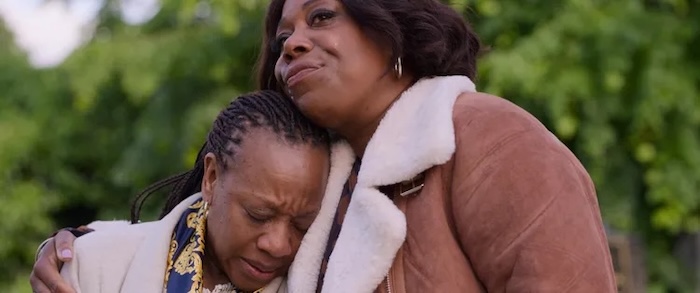
7. Hard Truths (UK): Mike Leigh returns to his greatest subject, the domestic tribulations of Britain’s middle class, in this case represented by two Black sisters with very different household situations. The younger one is a single mother who enjoys the unconditional love of her two adult daughters, while the older one stews in her roiling depression, lashing out at her husband and son, as well as anyone else who crosses her path, with Old Testament-grade anger. Her beefs are unassailable and pointless, and it’s Leigh’s job to get at the source of her unhappiness. He arrives there in due time, but you may not like what he finds, a hard truth that is difficult for anyone to refute, no matter how deep your sympathies. (review)
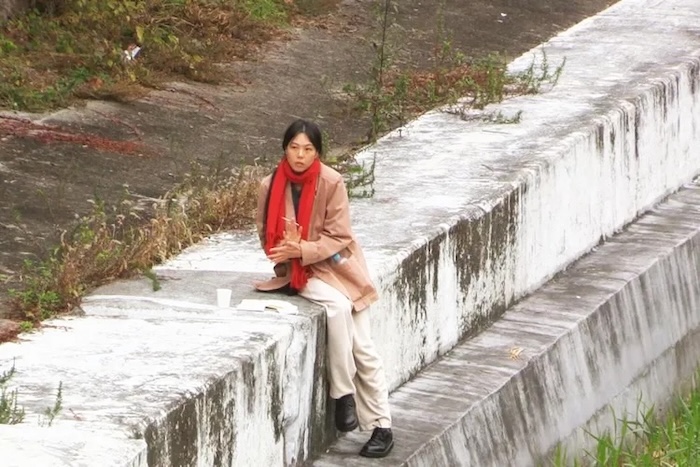
8. By the Stream (Korea): For once a Hong Sangsoo movie driven more by plot than by character peccadillo, though the characters here do have their distinctive foibles. A long-time cancelled actor rushes to the aid of his college intructor niece, who’s been charged with preparing several students for a drama festival, and the niece quickly comes to regret asking for assistance, but not for reasons that would seem to be most obvious. What isn’t out of the ordinary is Hong’s boundless facility with rambling, disjointed conversation that reveals a lot more than it should be expected to reveal, especially with regards to men who are clueless about the reactions of their female interlocutors. (review)

9. Eephus (US): This odd movie charts the long day’s journey into night of the last game that two amateur baseball teams of mostly over-the-hill suburban men play on a field that will soon be torn up to make way for a new public school. The subtext is the death of a certain strain of American masculinity, and director Carson Lund is careful without being too anal about depicting both the time (the 90s) and the place (New England) with loving accuracy. The laughs are predicated on jokes without punch lines and an almost constant barrage of beer-fueled insults that just bounce off their intended targets. It’s really funny and really sad, meaning it potently delivers nostalgia for a milieu that you might not think deserves it. (review)

10. Caught by the Tides (China): Stymied by the COVID pandemic’s limitations on extensive shooting, Jia Zhangke created a full-length feature out of used and unused footage from previous productions. Fortunately, all those films starred his life partner Zhao Tao and many also included Li Zhubin, so he was able to fashion a kind of through-story about two lovers losing touch over the course of more than two decades. With its loose structure and mix of journalistic observation and dramatic recreation, the movie cuts a path through China’s fitful experiment with material growth, right up to the virus-addled present, when both love and the spirit of possibility have lost to exhaustion. (review)
Runners-up
–Tatami (Iran/Israel/Georgia/US): As much a political thriller as it is a sports movie, this international co-production, directed by an Iranian and an Israeli, takes place at the World Judo Championships in Tbilisi, where an Iranian judo-ka is ordered to lose a match by the regime so that she doesn’t go up against an Israeli. Edge-of-the-seat stuff for an edge-of-the-seat age. (review)
–One Battle After Another (US): The most acclaimed movie of the year definitely would have been higher on this list if Paul Thomas Anderson had lost the totally useless coda. (review)
–Twilight of the Warriors: Walled In (Hong Kong): More than just a return to the great production values that ruled Hong Kong action cinema during its golden age, Soi Cheang’s gangland epic, the first of a series, is monumental melodrama, with a compelling pauper-hero and an over-arching rivalry that continually pays emotional dividends, all set in a maze-like demimonde where loyalties are set in stone. (review)
–Four Daughters (Tunisia): A documentary about a Tunisian family torn apart in the aftermath of the Arab Spring. Director Kaouther Ben Hania employs professional actors to recreate those scenes that were too painful for the subjects to talk about, and somewhere in the process of becoming, the movie says a lot about a woman’s position in the Arab-Muslim world. (review)
–Memoir of a Snail (Australia): More melodrama. More veiled autobiography, but this time in the form of stop-motion animation with a black comic edge. Creator Adam Elliott isn’t afraid to go gross in chronicling the tale of twins separated by circumstance and the rank cruelty of the world. (review)
–Teki Cometh (Japan): Dementia as end-of-life art project. The septuagenerian French literature professor at the center of this hauntingly unhinged film is the kind of pretentious old fart you love to make fun of, until his deterioration turns him into a sort of everyman. I plan to go out kicking and screaming myself, but I get where he’s coming from. (review)
 philipbrasor.com