
According to psychologist Abraham Maslow, human behavior is motivated by a “hierarchy of needs” that start at the bottom with physiological needs and then proceeds up in pyramid fashion to “esteem” and “self-actualization,” meaning psychological needs that must be met in order for us to feel comfortable with ourselves. To an extent, these psychological needs are governed by social mores that help us create a place for ourselves within the larger society. One of the arguments about Maslov’s theory, which was formulated in the 1940s, is how much of one’s esteem and self-actualization is fortified by one’s own efforts. Good looks, for example, can do wonders for one’s ego but are dictated by luck as well as arbitrary social and cultural forces. One can, of course, actively adjust these determinants through efforts such as a strict exercise regimen and seeking plastic surgery, but it’s also a matter of genes
In modern capitalist society, the surest route to the top of the pyramid is wealth, which we are taught is earned through hard work; but not necessarily. Some people are born into wealth while others get there through good fortune and unique qualities (talent, intelligence, ambition) that obviate the need for hard work. Then there are people who self-actualize by simply taking on the trappings of wealth. It’s these people who are often the victims of other people who use that need to make money themselves.
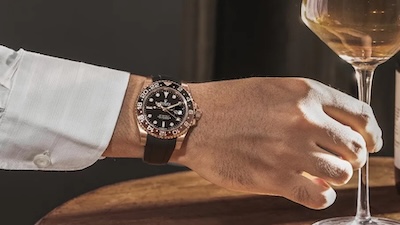
A recent article in the Tokyo Shimbun described a special kind of “sharing service” where companies connect people with expensive watch collections to people who need expensive watches for some kind of function, be it a specific occasion or something more long-term. The service pays a kind of rental fee for the use of the owner’s expensive watch and in turn rents it out to users while taking a cut for itself.
The former president of a company that runs one such service called Toke Match—”toke,” pronounced “toh-keh,” being a shortened form of the Japanese word “tokei,” meaning clock or watch—was arrested by Tokyo police for fraud on Dec. 26 after being extradited from Dubai. The suspect, Takazumi Fukuhara, is charged with defrauding 650 owners comprising 1,700 luxury watches valued at ¥2.8 billion by allegedly selling 1,300 of these watches to dealers, thus violating the agreements he had with the owners. Reportedly, he used the money from the sale to gamble online and buy crypto assets.
Fukuhara’s company, Neo Reverse, launched Toke Match in March 2021 by soliciting owners of collections of expensive watches—Rolex, Omega, what have you—to entrust New Reverse with their property so that the company could rent them out to people who might need those time pieces in order to meet their own esteem and self-actualization needs. Neo Reverse even took out print and broadcast ads to not only solicit owners but attract users. And while the company did well in getting owners to lend them their valuables, there weren’t quite as many users as they needed. The police told the media that they suspect it was always Fukuhara’s intention to sell the watches and take off with the money, and one former employee of New Reverse told Tokyo Shimbun that Fukuhara and an associate who was also arrested “fooled owners” by promising limitless returns for the rental of their watches.
Regardless of the original purpose, New Reverse went out of business in Jan. 2024, at which time Fukuhara fled to the UAE, which has an extradition treaty with Japan. Tokyo police sent out a bulletin via Interpol and UAE police eventually located him.
Tokyo Shimbun also talked to one victim, a man in his 30s who leased 15 Rolexes to Toke Match in the fall of 2022. According to the agreement, the company would keep the watches for at least 6 months after which the owner could ask for their return if he wasn’t satisfied with the arrangement. The owner would receive between ¥5,000 and ¥70,000 per watch per month, depending on the value of the watch. For a while, the money was paid, and then it wasn’t, so the owner asked Toke Match to return his property. At first they said it would take time, and then they just stopped responding. Later the victim found that at least one of his watches was discovered at a pawn shop in Osaka.
One of the reasons so many watch owners entrusted their watches to Toke Match is that Neo Reverse was a member of the Sharing Economy Association, a business group that authorized retailers who connected owners of goods with potential users of those goods. Another victim of Fukuhara’s scheme, a Tokyo man in his 50s who lost several million yen’s worth of watches, told Tokyo Shimbun that he explicitly believed the company was on the up-and-up, not only because of the association certification, but because the government has lately promoted sharing services like Toke Match. “Now I think I was wrong to trust them,” he says, “because I didn’t really understand the business.”
The most interesting fallout from the incident has been the reaction of social media, which instead of blasting apparent crooks like Fukuhara have taken aim at his victims. Do people really rent out their watches? What is it in their personalities that make them think they can make money off of other people’s misplaced sense of vanity? Some of the victims said they had to shut down their social media accounts because they were getting so many hate messages. Just possessing such expensive watches invites derision. “Maybe it’s jealousy,” said one victim.
Watches aren’t the only luxury item that are lent out on a temporary basis. It’s very common for women to rent expensive handbags, jewelry, and clothing for special occasions. But watches are one of the few items that are worn that are shared, meaning that rental services don’t buy them outright but lease them from owners, and for two reasons. One is the exorbitant price of high-end watches, which can reach as high as tens of millions of yen. The other is the relatively large number of watch collectors, who don’t necessarily wear the watches but like to have them around. They are a kind of investment, because unlike other wearables, they increase in value with, excuse the pun, time.
In Japan, expensive watches are especially valued because they are the ultimate expression of a concept called “kodawaru,” meaning a scrupulous attention to quality, because they are the original precision instrument. They come with an automatic “ownership effect,” attributing a desired quality to people who possessed the wherewithal to somehow attain them. Such a watch is more than just an impressive piece of merchandise, it is an indicator of the owner’s identity, so the more watches you own, the greater your self-actualization. It is said that in the business world in Japan, a watch is the most immediate sign of one’s status and high-end models are considered required accessories for sales reps.
In fact, the value of luxury watches has only increased in a world where most people no longer wear time pieces at all due to the ubiquity of smart phones. Even the government recognizes this reality. Expensive watches still must be declared at customs whenever the owner brings one into the country, regardless of whether he obtained it before or after he left Japan. And “he” in this case is not the default third person pronoun. All the people victimized by Fukuhara appear to be male. For men, self-actualization, not to mention esteem, is a bitch.
 philipbrasor.com