
Celebrated for his meticulous, almost stately mise en scene, and noted for his often extreme use of violence, Park Chan-wook is rarely lauded for his visual jokes. In his last movie, the mystery thriller Decision to Leave, I smiled almost reflexively when the detective hero insouciantly pulled out a chain mail glove after confronting a knife-wielding suspect on a roof, the better to grab that knife during hand-to-hand combat. Park’s humor doesn’t announce itself, it simply shows up and fits in.
In his latest, the humor is blatant to the point of slapstick, which is not only totally intentional but expressive of the anti-capitalist themes at work in the story. Based on a fairly conventional thriller novel by the American writer Donald Westlake, No Other Choice adapts the 1997 story for 2025 Korea, where our hero, Yoo Man-su (Lee Byung-hun), lives the good life in a nice, big suburban house with his beautiful wife and kids and dogs. Less than five minutes into the film, Man-su is laid off by the American fund that has bought his paper company and he quickly enters into a state of denial followed by acute panic. He has been working for Solar Paper for 25 years, ever since graduating from high school, and knows nothing else. The term “no other choice” passes various characters’ lips along the way to justify all the terrible things they are about to do, whether it’s the anonymous American executive downsizing the employees he’s acquired or Man-su deciding he has to kill, literally, the competition for a job opening he envisions. The overriding joke in the latter case is that Man-su and the other men who have also been made redundant in the shrinking world of paper manufacture cannot possibly see themselves working in any other industry. The story is filled with beautifully rendered rhapsodies to paper and pulp that call attention to the fact that the medium is no longer practical—like these men. As Man-su embarks on his mission to murder people he has determined are his chief obstacles to getting back into the paper game, the viewer invariably empathizes with his predicament, because Park and Lee have so successfully shaped him as a victim of the system who had no choice; though, when you think about it, he has plenty of options, most of which are elaborated upon by his more sensible wife, Miri (Son Yejin). Park thrusts us so deeply into Man-su’s psyche that even his worse attributes—he’s a recovering alcoholic who falls off the wagon and it’s implied he was once an abusive husband and step-father—seem forgivable. And once he starts earnestly down the path to homicide you understand, not by rooting for him, but by trying hard to see the matter through his eyes.
As always, Park’s set pieces are tutorials in narrative concision. The various killings are blocked for maximum Loony Tunes effect, stemming from the idea that for all Man-su’s ingenious planning, he doesn’t possess the nerve needed to be a serial killer. The encounters between him and his victims (and in one scene, the victim’s wife as well) never proceed the way you expect them to. In fact, Park’s plot rationale is such that you can never predict from one moment to the next what might happen, which only makes the humor that much blacker, that much more uncomfortably hilarious.
In Korean. Now playing in Tokyo at Toho Cinemas Nihonbashi (050-6868-5060), Toho Cinemas Hibiya (050-6868-5068), Toho Cinemas Shinjuku (050-6868-5063), Kino Cinema Shinjuku (03-5315-0978), Bunkamura Le Cinema Shibuya Miyashita (0570-6875-5280), Toho Cinemas Roppongi Hills (050-6868-5024).
No Other Choice home page in Japanese
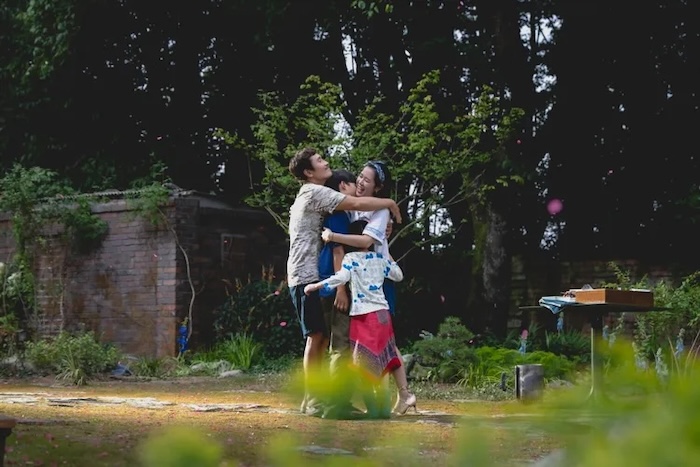
photo (c) 2025 CJ ENM Co., Ltd., Moho Film
 philipbrasor.com