Media Mix, Feb. 16, 2014

japanese-beethoven-mamoru-samuragochi-not-deaf-but-used-to-beHere’s this week’s Media Mix about the Samuragochi scandal. In the past week all the media that covered the fraud composer have issued apologies, including NHK, which made a fawning documentary about him. As I said in the column people like a good story, but media outlets are expected to be a little more discerning, a bit more skeptical about such things; and while that doesn’t necessitate an apology in this case, you wonder how many people thought the story was phony in the first place. Apparently, Makoto Yamagata at Aera had his suspicions, according to an article he wrote for the magazine last week. He describes how he met with Samuragochi to write a feature about him and all the weird little demands the composer made. During the interview Samuragochi explained how he communed with the spirit of Beethoven at the latter’s grave in Vienna, and how the music he wrote for victims of the 3.11 earthquake and tsunami “came pouring down from heaven” when he visited the area. Yamagata admitted to being suspicious about his hearing problems since Samuragochi often started answering his questions even before the sign translator finished interpreting. But one of the main aspects of the composer that prompted the reporter to abandon the article was his “inordinate concern about money.”

In hindsight, of course, it’s easy to write such an article, and you wonder if, as a reporter, Yamagata didn’t think about changing the original piece into an expose if he was really that suspicious. The thing is, there apparently were people in the music business who wondered about Samuragochi openly. According to the article in Bunshun I cited in the column, Takeo Noguchi, a musician, wrote an article for the monthly Shincho 45 a while ago questioning whether or not Samuragochi really wrote the pieces he claimed he wrote, and then practically eviscerated his body of work, calling some works faux-Bach or faux-Mahler. Even if he had written the pieces, they weren’t any more worthy of a serious music lover’s attention than some composition project by a college student. Or, at least, that’s the impression the article gave. Frauds like this are not uncommon, and certainly aren’t limited to Japan; but usually they are exposed by journalists. Here, they didn’t come to light until one of the principals involved spilled the beans because he just couldn’t stand the guilt any more. It might have helped if some serious journalists had had training in music, but, again in hindsight, you would think reporters are naturally cynical enough to think that Samurgochi’s story was just too good to be true.


Posted in Media | Tagged | Leave a comment

February 2014 albums

Here are the album reviews I wrote for the Feb. issue of EL Magazine, which was distributed in Tokyo on Jan. 25.

malkmus14dumdum14Wig Out at Jagbags
-Stephen Malkmus & the Jicks (Matador/P-Vine)
Too True
-Dum Dum Girls (Sub Pop/Traffic)
A hallmark of the 90s indie rock movement was a take-it-or-leave-it attitude that implied an aversion to music careerism—or careers in general. This attitude mostly translated as humor at the expense of other musicians who were serious about making it, commercially and culturally. Most prominent among these goofballs was Pavement, since they actually produced a body of work that justified a career, meaning they could afford to be goofballs because they were artistically consistent. Since going solo leader Stephen Malkmus has maintained that integrity, though the landscape has changed. Indie means little any more in terms of real attitude, and as it turns out Malkmus was never anti-career. That was just a misconception of the music media. On his sixth album he sounds more like Pavement than he has in a long time, jettisoning some of the jammy tendencies of his last few records, where he indulged his early love of the Grateful Dead. The tongue-in-cheek jokiness is back in full, telegraphed by the nonsenical album title and a willingness to trade in short, unserious songs. What made Pavement great was the fact that Malkmus did not release anything that felt even slightly below par, a determination that relaxed after he disbanded the group. But sometimes pecadillos become habit, and even when the songs here sound light in execution, like the easygoing “The Janitor Revealed” or the self-consciously derivative “Lariat,” they connect immediately in that old Pavement way, noodling their way into your pleasure center while also, pardon the mixed metaphor, tickling your funny bone. I’m not entirely sure that the line “the 80s were the best decade for music evah” is meant to be a gag, but I have the right to think so. Speaking of careerism, Dee Dee, of the West Coast guitar pop project Dum Dum Girls, seems poised for stardom, and that’s a subjective observation, not an objective one. Her third full album is so far from the lo-fi murk of her 60s girl-group-obsessed debut that it qualifies as a different band, in my opinion, but, of course, there never was a “band” in the first place, just Dee Dee’s ambitions, which started simple through mimickry and pastiche. Too True is not only handsomely produced and proficiently sung, it takes in a broad range of modern rock styles, from the lush romanticism of Stevie Nicks to the monumental prog hooks of Florence + the Machine. Though the reverb that covered up her flaws on past records is still in evidence, it’s applied mainly to the ringing Edge-like guitars that tumble into place throughout the album. As the cover makes explicit, Dee Dee is positioning herself as a rock femme fatale in the classic sense, with all the appropriate vocal posturings that go with the role. Playing the part of the sultry rocker is a sure sign of careerist intentions, and if that means more music at this level of quality, I say go for it. Continue reading

Posted in Music | Tagged , , , , , , , , , , , , | Leave a comment

February 2014 movies

Here are the movie reviews I wrote for the February issue of EL Magazine, which was distributed in Tokyo on January 25.

935381 - AMERICAN HUSTLEAmerican Hustle
If you didn’t actually live through the 70s, you probably think it was all about hair, especially if you have David O. Russell’s clever movie to go by. In the opening scene, con man Irving Rosenfeld (Christian Bale) goes to great lengths to turn his combover into a passable coif with the help of some glue and a couple of hairpieces. The fact that it ends up looking as it should but still like shit gives you some idea of the disco era’s priorities. Though Russell uses the infamous Abscam scandal as the template for his very well developed story, he intensifies those components of the FBI’s scheme to entrap prominent New York area politicians that stress misguided ambition and false appearances. Truth be told, everyone’s hair is outrageous, as illustrated hilariously in a scene where the fed who is orchestrating the sting, Richie DiMaso (Bradley Cooper), and Rosenfeld’s mistress/partner-in-crime, Sydney Prosser (Amy Adams), talk on the phone while both are ensconced in curlers. Still, as Sydney professes in one of the film’s many wry voiceovers, Irving was “not in the best of shape,” though that doesn’t mean she can’t love him. When he is smitten and tries to impress her by revealing the source of his income—a racket that cheats “investors” with the help of a fake Middle Eastern sheik—her disgust at the notion of larceny is overcome by her admiration for not only his chutzpah, but his candor. Only someone in love would do such a thing. Unfortunately, Irv is already married, to a loud-mouthed New Jersey shrew named Rosalyn (Jennifer Lawrence), whose son by a previous marriage Irv adores. In fact, he seems to adore Rosalyn, too, but he would never tell her the real source of his income (he also legitimately owns a chain of dry cleaners). After Irv’s fortunes skyrocket thanks to Sydney’s assistance impersonating English nobility to goose the scam, they’re busted by Richie, who offers them a deal: Help him get some pols he thinks are taking bribes and he’ll cut them some slack. Their first target is the mayor of a New Jersey town, Carmine Polito (Jeremy Renner), with his own extreme hairstyle. Hizzoner, as the viewer can rightly tell, is not a dishonest man. He just knows some dishonest people, and Irv isn’t comfortable entrapping him, especially as the two become close through the process of the operation. Meanwhile, Richie is hitting on Sydney and Rosalyn is sticking her nose everywhere. For once, Russell’s rambunctious style fits the tenor of the story, so you’ve no right to complain when everything lines up perfectly in the end. What d’ya want? A true story? (photo: CTMG) Continue reading

Posted in Movies | Tagged , , , , , , , , , , , , , , , | Leave a comment

Media Mix, Jan. 5, 2014

imagesHere’s this week’s Media Mix about the influence of money on issues related to Abe’s Yasukuni visit and the announcement by Okinawa governor Hirokazu Nakaima that he will approve the application to start the proposed air base in Nago. There’s one more money connection that I didn’t mention, which has to do with the so-called bereaved families who urge Japanese politicians to go to Yasukuni and pray for the souls of their loved ones who died in the war. Not all people who lost relatives in the war support the Yasukuni visits, but those who do formed the Japan War-Bereaved Families Association, which is a de facto lobby, and besides advocating for support for Yasukuni the association also has made sure that survivors of soldiers who died during the war receive pensions. “Survivors” means not only the wives and children of dead soldiers, but their siblings if the soldiers were not married. In some cases, it’s not a lot of money—maybe ¥40,000 a year for the purpose of tending the deceased’s grave—but the government continues to pay it out regardless of how old the survivors are, so we can assume that the association will continue to stump for state recognition of their loss until they die. What happens after that? Though a recent Kyodo News Service survey about political attitudes found that younger voters were less likely to view the Liberal Democratic Party as “right-wing,” it seems to be mainly a function of historical ignorance. Does that mean young people are more likely to become right-wing in the future? Of those who said that Japan’s stance during the war was “not aggressive,” the largest age group was 20-30 year olds, but this age group was also the smallest of those who thought that patriotism should be taught in public schools. More significantly, only 13 percent of 20-30 year olds said they would be willing to fight in a war for Japan. So while they may have conservative tendencies, young people don’t necessarily translate those feelings into justifications for a stronger military.

Posted in Media | Tagged , | Leave a comment

Best albums 2013

grateful_dead230582_8-01This post coincides with the final closure of Expert Witness, Robert Christgau’s wonderful blog, which, during its brief existence, garnered a following as dedicated and lively and acerbic as any you’ll find in cyberspace. Though I’ve only been a (semi-) working music critic since the mid-90s, I’ve read Christgau’s reviews since the early 70s, when he wrote for my hometown newspaper, and my tastes were duly affected by his opinions. Fortunately, the many people who congregated at his site in the comments section will continue on as a conversational collective in other forums, and I’m happy to say they’ve invited me to join them, though I’ve never contributed as much as I should. As far as my listening habits went this year, I feel slightly mortified to say that I may have finally succumbed to nostalgia, a trap I never thought I’d fall into. I bought CDs of albums I hadn’t heard in 40 years just for the sake of hearing them again, got back into the Grateful Dead after decades of holding a grudge against them for being liked by certain people who burned me, and, as the following list shows, even tried to recapture the magic of the 90s, a period when I rediscovered my pop music-loving mojo in early middle age and which now seems like a lifetime ago. If these things work in cycles then the 2010s could very well be another personal watershed period, so I  bought a new stereo…just in case. Continue reading

Posted in Music | Tagged , , , , , , , , , , , | Leave a comment

Best movies 2013

UnknownHere are my best movies for 2013. All were released in Japan during the previous 12 months, which means the best film I saw all year isn’t on here. That would be The Past, Asghar Farhadi’s gripping and heartbreaking film about cross-cultural divorce and the soul-crushing effort necessary to keep secrets from loved ones. I saw it in Busan and it will be released here in April, so it will surely be on my list for next year, maybe even at the top. Actually, it’s difficult to gauge the worth of such a movie, whose emotional contours are so carefully molded as to make you suspicious of the director’s purposes, but in any case I can’t think of a movie I’ve seen since Poetry that affected me so directly as I was watching it and stayed with me for so long afterwards. None of the films on this list came close, and, for sure, many of them don’t endeavor to produce that sort of reaction, even the Haneke film, which is probably his most sentimental—if such an adjective can be applied to a Haneke film. Of course, purely emotional responses to movies are something everyone understands, though you can usually tell how “honest” a movie is by the way you feel the next day. I’ve seen enough movies in my life to know that the occasional tear I shed during a particular scene is likely reflexive rather than empathetic, more a reaction to the confluence of structural elements than anything else. And I gladly give myself over to those feelings because being in the moment is what it’s all about. But like some sort of terrible joke you tell during a drunken moment, you think better about it the next day, so just because I welled up during the more dramatic passages of Hope Springs doesn’t mean I bought the premise, only the goods they were selling. And let’s just say I probably would have returned them for a refund once I came to my senses. Continue reading

Posted in Movies | Tagged , , , , , , , , , , , | Leave a comment

January 2014 albums

Here are the album reviews I wrote for the January issue of EL Magazine, which was distributed in Tokyo on Wednesday.

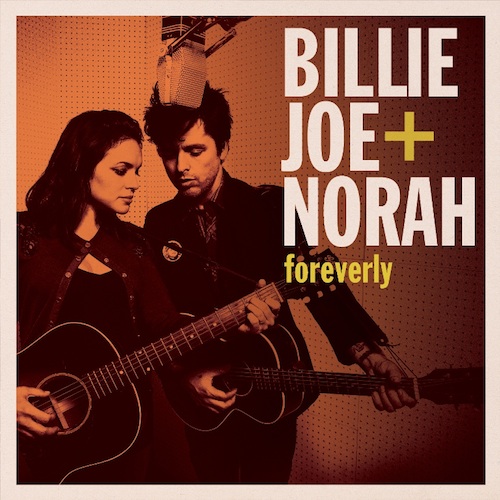
NekoCase6thJK13billiejoe&norahThe Worse Things Get, the Harder I Fight, the Harder I Fight, the More I Love You
-Neko Case (Anti-/Sony)
Foreverly
-Billie Joe + Norah (Reprise/Warner)
Though she has slowly moved away from the alt-country sound that first defined her as indie’s most distinctive vocalist, Neko Case still scans as Americana in the better sense of the term. She is steeped in a tradition she has outgrown, and while the melodies and arrangements on her latest, most confessional album defy categorization, they fit snugly into a continuum that leads back to her days with her country band the Boyfriends. She’s also lost her jokey feistiness, but her sense of humor is in tact, now tempered by bitter experience. “You never held me at the right angle,” she croons in “Wild Creatures,” an indirect way of saying something Dylan used to say quite often and with more bile. There’s a swooning quality to the music, as if the effort of trying to address her mortality and the way it impacts her romantic life keeps her constantly off-balance. The songs never rock the way her country songs did, but they do swing, and when the horns make their entrance on the closer “Ragtime” you swoon, too, because there’s something abrupt and final about them. Case understands that a guitar means parties and a horn section funerals, even when they’re blasting away. It’s a New Orleans thing, and New Orleans is the homeland of Americana, the place where music was born, and where it goes to die. Case is only 42, but she can see the horizon and means to sing as much as she can before it gets too close. That sort of fatalistic melancholy is all over the Everly Brothers tribute album, Foreverly, a one-off collaboration between Billie Joe Armstrong of Green Day and Norah Jones. The Everlys were the first pop vocal ensemble to suggest that teenagers had complicated inner lives. Their place in the Americana canon is as secure as Johnny Cash’s or Willie Nelson’s, and because of their innocence their songs are more emotionally affecting than either of those two men’s material, despite the demons they so famously battled. What’s interesting about Armstong and Jones’ tribute is that it focuses on one specific album, the Everlys’ Songs Our Daddy Taught Us, which was released less than a year after their debut. The Everlys didn’t write their own material, but this collection was even more removed since it consisted of traditional folk and country songs. It was, in effect, a roots album released at a time when the concept didn’t exist. Armstrong and Jones approach this material the same way the Everlys did, as formative texts, and though they are looser with the rhythms and less reverent of the classic arrangements, they faithfully recreate the supple harmonies, which is what the Everlys were all about in the first place. The revelation is Armstrong, who hasn’t been this emotionally invested in singing since his indie punk days. The album is slight overall, but as an introduction to the darker side of country music it will do fine. Continue reading

Posted in Music | Tagged , , , , , , , , , , , , , , | Leave a comment

January 2014 movies

Here are the movie reviews I wrote for the January issue of EL Magazine, which was distributed in Tokyo on Christmas Day.

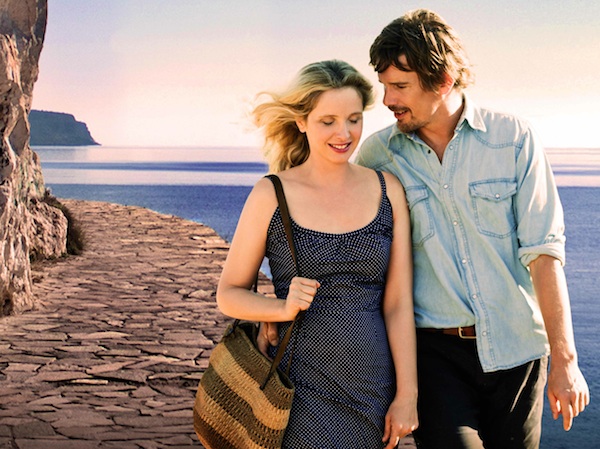
beforemidnightBefore Midnight
One of the great experiments in the history of film, Richard Linklater’s collaboration with Julie Delpy and Ethan Hawke derives its irresistible appeal from its unpredictable nature. In the first installment, Before Sunrise, twenty-somethings American Jesse and French Celine met cute on a train bound for Vienna and then spent the day and night in each other’s company, discussing all matters personal and political while falling in love in front of our eyes. Everything was a suprise, because that’s what falling in love is about. In Before Sunset, set in Paris, where Jesse has journeyed to promote a novel based on the Vienna adventure, he reunites with Celine, and though a lot of water has passed under the bridge in the intervening 9 years, the romantic tension is still taut and the surprises even more plentiful. The ending left their mutual fate in the air, though common sense told us where it was going, and that premonition is confirmed in Before Midnight, which takes place in Greece while Jesse and Celine, together now for eight years and the parents of twin girls, are on vacation. The 9-year lucanae is filled partly by the appearance of Jesse’s adolescent son with the wife he left for Celine. We see Jesse being the good dad as he sees his son off at the airport, giving him advice and attempting to draw a show of affection. The kid resists and tells the old man not to try so hard. This encounter casts a cloud over the rest of the film, which follows the structural precedent of its predecessors as a peripatetic two-way dialogue, but the stakes have changed. There is no longer the “will-they-or-won’t-they” uncertainty factor. Jesse remains a modestly successful writer (though he also teaches at the American school in Paris, where the pair make their home) and an American kid in temperament, while Celine frets about her own job prospects in the non-profit sustainable energy field and bears the usual burdens of encroaching middle age. So when Jesse indirectly suggests that he wants to be near his son back in the U.S. during these “very important years,” Celine feels both threatened and betrayed, but the force of her feelings don’t emerge until the couple is ensconced in a luxury hotel room for the night, a gift from one of their Greek hosts that was granted for the purpose of some much-needed solitary sexual comfort. But those feelings can’t be denied. As in the first two movies, the dialogue is delightfully circuitous, following the contours of real conversation without losing narrative cohesion. Jesse and Celine are, if anything, more compelling characters in their settled ripeness if for no other reason than that they have much more to lose now. (photo: Talagane LLC) Continue reading

Posted in Movies | Tagged , , , , , , , , | Leave a comment

Media Mix, Dec. 22, 2013

fd20131222pba-870x579Here’s this week’s Media Mix, which is about the media’s fascination with the burgeoning ranks of the senile. Aside from the obvious economic ramifications, which the column goes into, there is an underlying question of whether or not dementia is more prevalent from an organic standpoint. The basic assumption is that it will become a problem due to sheer numbers, that the very size of the boomer cohort is what it’s all about. But a sidelight of senility coverage over the years is what people can do to put off cognitive dysfunction. Usually, the answer is unoriginal: keep yourself healthy by eating right and exercising. Secondarily, one should remain mentally active and stimulated–take up a foreign language or keep a diary; make your hands busy by knitting or gardening. Japanese TV shows revel in the centenarian who is still cognitively sharp and gets around. In many cases these people are women who still work in the fields every day. It’s a convincing portrait of vitality and feels like common sense: If you have a reason to live, a reason to look forward to getting up every morning (as opposed to simply a reason to get up), then your body and mind will accommodate that desire by staying well longer.

These considerations have mostly been ignored in the recent coverage, and, of course, they are integral to the discussion. But there is another assumption at work that perhaps goes without saying. All the individual cases covered in these articles and broadcasts were of people living in urban environments. It’s another truism that feels tired, but as Johnny said so memorably in Mike Leigh’s Naked, after somebody says that a cliche always has some truth in it: “That’s a cliche, too.” As developed societies, and not just Japan’s, have moved from the country to the city, people become more isolated, which sounds counterintuitive but really isn’t. Rural life, with its closer proximity to the elements and uncertainty, requires greater community cohesion for people to survive, whereas in cities the infrastructure keeps uncertainty at bay. The circumstance that almost all of the senile people portrayed in the media have in common is isolation–even when they’re married and their partner is taking care of them. Without a community that nurtures real emotional responses–and that includes anger, fear, and any other negative feeling you can think of–the mind becomes less important and basically falls out of use. In the NHK Special I mention is a woman who gets righteously angry whenever social workers come by to get her to take her medicine or try and talk her into moving into a group home. She values her independence and rails against their meddling purposes, but it’s easy to conclude that these occasional interactions are the only stimulation she has, that her anger is a kind of compensating function for all the time she spends in her dark, cluttered room in the heart of Tokyo doing nothing except mooning nostalgically over a past that probably didn’t exist in the way she imagines it did. As one person in the program says offhandedly, by the time a person turns 95, chances are he or she will be senile. This is meant to sound shocking but when you think about it it isn’t. 95? Fifty years ago it would have been considered a miracle to reach that age. Now that it’s more easily achievable, the fact that people tend to lose part of their minds when they do achieve it shouldn’t be surprising. It’s like cancer. The older you are, the more likely it is that you’ll contract cancer. It has nothing to do with lifestyle and everything to do with normal biology, and if you had to think about it all the time as you grow old, you’ll lose your mind, too.

Posted in Media | Tagged , , | Leave a comment

December 2013 albums

Here are the album reviews I wrote for the December issue of EL Magazine, which was distributed in Tokyo yesterday.

ladygaga13avril13Artpop
-Lady Gaga (Interscope/Universal)
Avril Lavigne
(Epic/Sony)
The title implies that the biggest pop star on the planet wants her cake and eat it, too. It’s not enough that everything she’s ever done has an effect on the way popular music is produced and heard, Gaga wants to be acknowledged as an artist, an old argument that has never held much water. Art is where you find it and what you make of it, and there are people who always assumed her stuff is art. Gaga’s problem is that they may not be the “right” people, but if there’s any discernible difference between Artpop and her first two albums it’s mostly a matter of attitude. Artists, she seems to think, are people who are confident about the creative process, which sounds more like a description of a pop star; and while she’s been assertive in the past, it’s usually been in service to an inclusive philosophy, the cultivation of her “little monsters.” Here, she comments on the same themes but with an agency bordering on arrogance. Most of the songs are about sex, but there isn’t a lot of joy, especially when she tells R. Kelly, of all people, to “do what you want.” She plays the top in “G.U.Y.” as if it were payback. And while she’s always been good for a laugh when trolling fashionistas, here she’s just mean. I have no special affection of Donatella Versace, but could any target be easier? Throughout, Gaga’s sonic attack is brittle and bombastic, its pleasures visceral without being exhilirating, which is too bad because her singing remains her most underappreciated facet. Unlike all the other female pop stars her age she uses her lungs and understands that emotions get through when they’re projected with all the oxygen at your disposal. I just wish the emotions were worth it. Avril Lavigne may not seem like one of those pop stars, since her entrance into the pantheon was mainly through the back door (punk), but her new self-titled album definitely feels more zeitgeisty than her past work. The influence isn’t Gaga so much as Ke$ha, whose head tones are easier to pull off anyway, but it’s those exaggerated diphtongs that give the game away. Avril isn’t the only singer who’s appropriated Ke$ha’s style, so it’s no surprise in and of itself, but it is in light of the fact that her new husband, Chad Kroeger of Nickelback, is all over this album, and he’s the last person I would think might countenance the kind of party animal persona Ke$ha represents. Then again, Kroeger co-wrote the creepiest song on the album, “Bad Girl,” in which Avril gives birth to Marilyn Manson’s baby, so he’s obviously more magnanimous than his own power-play rock would indicate. If Avril herself sounds scrappier, more invested in the classic rock hooks than she has since her debut, credit it to the afterglow of the honeymoon. There are worse reasons for making a record. Continue reading

Posted in Music | Tagged , , , , , , , , , , , , , | Leave a comment