Review: Napoleon

People tend to complain when movies that endeavor to explain an important historical event fudge the facts, though anyone who has seriously studied history understands that there are always multiple versions of specific narratives, and the really important thing is to use discernment and native intelligence to reach conclusions that are at least plausible. Some historical movies, of course, don’t even bother and, in fact, make a point of not bothering. Ridley Scott’s big budget interpretation of the life of Napoleon Bonaparte fits easily into this category, since he’s said as much in all the blustery pre-release promotional materials and interviews. According to a number of recent articles, the French have already dismissed the movie as ahistorical nonsense, but that’s OK, too, as long as the movie holds together as a movie and renders what made Napoleon a vital figure understandable, but it doesn’t. Entertaining in spurts—mostly when it lingers on a battlefield—Napoleon shows potential as a sendup of the little corporal’s life but fails to hold together as a story, and history, in order to be at all true to itself, must have a coherent story.

The problems are mainly mechanical. Following a stirring guillotine sequence that conveys the spirit of the Revolution, the movie tries to explicate the Reign of Terror in such a way as to make it clear why a relatively insignificant personality like Napoleon’s could rise in the ranks to become a general so quickly, but the script relies so heavily on psychology that it fails to make sense of the political elements at play, and you’ll beg for a timeout to consult the relevant Wikipedia page on your phone. Consequently, Napoleon’s (Joaquin Phoenix) ascent to the throne comes across as inexplicably inevitable rather than cleverly calculated. By the same token, Napoleon’s relationship with his wife, Josephine (Vanessa Kirby), which competes with the battle scenes for the bulk of screen time, feels stuck from the beginning in a mucky chemistry that makes it difficult to understand what either thought they could get out of the arrangement except abject misery. I assume the passionless rutting and constant deriding of each other’s machinations is supposed to demonstrate the pointlessness of any connubial effort exerted for the sake of maintaining an imperial line, but besides generating a few good jokes at the emperor’s expense the marriage scenes’ only purchase on the story is the way they reinforce Napoleon’s reputation as the most royal of cuckolds. The rightly praised battle scenes may benefit mainly from being juxtaposed with the messiness of everything else in the film, since Scott is obviously fixated on getting them to not only make visual sense, but also logical integrity so as to play up the various vectors of force that led to either victory or defeat. If Scott had limited the whole movie to the Battle of Austerlitz, where the tactics are vividly delineated and the action directed for maximum visceral power, he might have had a masterpiece. 

Similarly, the exciting depiction of the Battle of Waterloo, which ended Napoleon’s career once and for all, might have provided a fitting climax to countervail any confused misgivings the viewer had formed up to that point, but Scott insists on sallying on to the emperor’s exile on St. Helena, where the movie just peters out, much like Napoleon’s sexual energy at any given moment. I will hand it to Phoenix, though. He manages to make his character a consistently petty, disagreeable man right up to the end, and while I believe that was Scott’s intention, I really don’t think it was a wise one. 

Now playing in Tokyo at Toho Cinemas Nihonbashi (050-6868-5060), Toho Cinemas Hibiya (050-6868-5068), 109 Cinemas Premium Shinjuku (0570-060-109), Toho Cinemas Shinjuku (050-6868-5063), Shibuya Cine Quinto (03-3477-5905), Toho Cinemas Roppongi Hills (050-6868-5024).

Napoleon home page in Japanese
Posted in Movies | Tagged , | Leave a comment

Review: This Is What I Remember

Kyrgyzstan director Aktan Arym Kubat says his latest film is a sequel to his debut fiction feature, The Adopted Son, which came out in 1998. Given that all his subsequent work has been autobiographical in nature, the “sequel” label may need further clarification. It seems to have less to do with an interrupted storyline than with the methods utilized to produce both films. For the most part, Kubat uses the same actors and locations in all his movies, but the actor who played the title character in The Adopted Son is the same actor who plays the son of the protagonist in his latest film, and since Kubat himself plays the father of these characters in both films, This Is What I Remember could be seen as a continuation of The Adopted Son. But that’s where the similarities end.

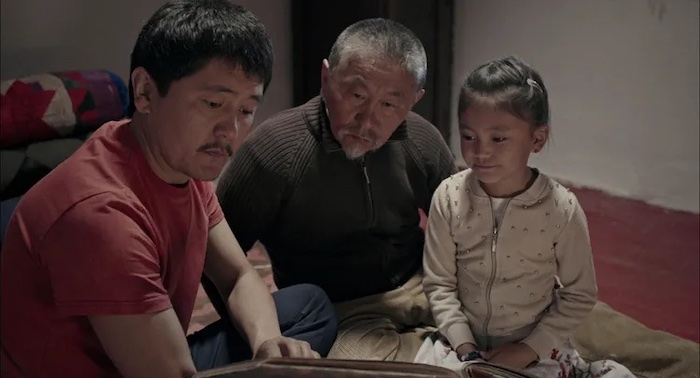
Kubat plays Zarlyk, who has been missing and presumed dead for 23 years after traveling to Russia for work. His son (Mirlan Abdykalykov), whose name happens to be Kubat, eventually finds a photo of Zarlyk on a website of “unknown persons” and goes to retrieve him, but Zarlyk has no memory of his family because he was injured in an accident shortly after arriving in Russia. Moreover, he was rendered mute. After returning to his home town, he spends his days obsessively collecting garbage in the town while his old friends and his son’s family fret about his mental state. Zarlyk’s return particularly upsets his former wife, Umsunai (Taalaikan Abazova), who, believing him dead, has remarried. Her new husband is the town’s much despised loan shark, Jaichy (Nazym Mendebairov), a man of means who drives a Lexus and lives in a compound. For most of the film, Zarlyk’s friends and relatives endeavor to make him remember his old life, often in comical ways that might feel cruel to the average viewer, but soon the normal rhythms of life take over and while Zarlyk’s responses to his environment don’t change significantly, the dynamic in his relationships does; that is, until Umsunai expresses interest in reconnecting with Zarlyk, a possibility that angers Jaichy’s mother, Kadicha (Anar Nazarkulova), who, in accordance with the tenets of Islam that hold forth in the compound (though not so much among the townspeople, who are comparatively carefree about religion), looks upon Umsunai as her personal servant. She tries to get the town elders to commit Zarlyk to a psychiatric institution, saying he is a danger to the community, citing as evidence a fire that was believed to have been started by Zarlyk. 

What’s intriguing about Kubat’s choices is the way he approaches Zarlyk’s condition, which doesn’t change appreciably over the course of the movie. Instead, it is others’ reactions to his condition that change, and within that contrast we realize Zarlyk does have something that can be called a memory. It’s just that it isn’t what people expect it to be. Zarlyk has basically embarked on a new life, one in which he accumulates new memories that may only have ambiguous connections to those he has lost but which are just as vital to his connection to the community, including his family. It is this connection that attracts Umsunai, who, since entering into Jaichy’s more orthodox household, has lost the freedoms she used to take for granted. Zarlyk may not remember her, but he is still the good man she once married. 

In Kyrgyz and Arabic. Opens Dec. 1 in Tokyo at Shinjuku Musashinokan (03-3354-5670).

This Is What I Remember home page in Japanese

photo (c) Kyrgyzfilm, Oy Art, Bitters End, Volya Films, Mandra Films

Posted in Movies | Tagged | Leave a comment

Review: The Exorcist: Believer

When The Exorcist was released in 1973, it was considered the scariest studio movie since Psycho, with audience members actually fainting during intense scenes. Nowadays, it’s more of a relic than an experience, which means its importance lies in what it lead to—a successful if sometimes derided franchise of its own, not to mention a slew of copycat films that spice up Catholic mumbo-jumbo with disgusting behavior and jump cuts. David Gordon Green’s reboot is obviously timed to take advantage of the 50th anniversary of the original, and it tries to make do by rehashing the famous set pieces that made people who are old enough to be your grandparents twitch in their seats, as well as by talking Ellen Burstyn and Linda Blair to return to the scene of the horror for gratuitous cameos. 

If two rotating heads are better than one, then it makes sense to have a pair of possessed little girls at the center of the mayhem. Before they are inhabited by the same demon that possessed Regan in the first Exorcist, we learn that one of them, Angela (Lidya Jewett), has lost her mother, who died on vacation in Haiti while giving birth to her. More to the point, her father (Leslie Odom Jr.) was given an impossible choice by the hospital: Your daughter can live, or your wife can live, but not both. Consequently, Angela grows up in an abject state of guilt, and upon hearing of a special seance ritual, she talks her best friend Katherine (Olivia Marcum) into joining her so that she can talk to her mother. This sojourn, which takes place in the woods, leaves them injured and acting strange. As they deteriorate mentally and physically in parallel, their loved ones go the usual medical route and, after things get progressively worse, turn to the spiritual. The only really compelling aspect of this part of the plot is that Katherine’s parents are serious Catholics who are convinced their daughter has been possessed, while Angela’s father is more empirical; though, in the end, he can’t help but give in to the argument that the problem can’t be scientifically addressed. What’s weird about this dynamic—which might have been interesting had it been allowed to develop to its natural end—is that the Catholic Church, so central to any movie about exorcism, doesn’t exert much of a presence here. Even Katherine’s family comes across as more like millennial evangelicals. Basically, Green’s approach is ecumenical, a collection of people from different faiths all seeing past their differences to help the two girls, including Aunt Lydia herself, Ann Dowd, as a nurse with some knowledge of possession who actually convinces Angela’s father to go with the exorcism plan. The whole purpose of this plot strategy seems to be to pull the rug out from under those whose faith is more or less self-serving.

As a result, the movie ends up being not only logically confounding, but unscary and, at times, inadvertently hilarious. In the last 50 years, advances in special effects and CG, not to mention more sophisticated approaches to supernatural phenomena, have made horror movies more distressing than The Exorcist, but this movie—pardon the expression—can’t hold a candle to the original in that regard. Even the demon is weak meat. 

Opens Dec. 1 in Tokyo at Toho Cinemas Nihonbashi (050-6868-5060), Toho Cinemas Hibiya (050-6868-5068), Shinjuku Wald 9 (03-5369-4955), Toho Cinemas Shinjuku (050-6868-5063), Toho Cinemas Shibuya (050-6868-5002), Toho Cinemas Roppongi Hills (050-6868-5024).

The Exorcist: Believer home page in Japanese

photo (c) Universal Studios

Posted in Movies | Tagged | Leave a comment

Media watch: If public misspeaking were an Olympic event, the LDP would get all the gold

Hiroshi Hase

In terms of entertainment value, the 2020 Tokyo Olympics, which is gone but far from forgotten, continues to pay dividends. The latest source of delight is Ishikawa Prefectural Governor Hiroshi Hase, a former Olympian wrestler who, during a lecture he gave in Tokyo on Nov. 17, recounted a conversation he had with the late Shinzo Abe in 2013 when Hase was a Diet lawmaker and head of the Tokyo Olympic bid committee and Abe was prime minister. Abe, who was desperate to win the 2020 Games hosting job for Tokyo, advised Hase that he didn’t have to worry about money because the cabinet’s secret emergency fund would be made available to him. Caught up in the excitement of boasting about his close encounter with a person who many now consider a saint, Hase then explained how he used these funds to produce a personal “photo album” for each member of the International Olympic Committee (IOC) who had once been an Olympic athlete. One album cost ¥200,000 to produce, Hase said, and they were subsequently presented to their respective subjects as “souvenirs.” As everyone knows, Tokyo won the hosting honors in September of 2013. 

Hase almost immediately realized the can of worms he had opened with his reminiscence and publicly disavowed it the same day, saying that he had somehow misconstrued the facts of the matter, but it was already too late. The press had picked it up. Asahi Shimbun, which did not attend the lecture, published several reports about Hase’s faux pas based on interviews with people who did. What exactly about the incident did Hase misconstrue? After all, it was he who carried out the photo album production for the assumed purpose of currying favor with the voting members of the IOC, which is a violation of IOC ethics rules. 

After Hase returned to Ichikawa he held a regular press conference to explain the upcoming prefectural budget, and the only questions asked by the attending press were about the Olympic bid. “I don’t get it,” said one reporter, obviously speaking for everyone. “Are you saying you didn’t understand what you were talking about?” Hase declined to answer and formally retracted all the comments he made at the lecture. Other reporters asked if he would admit “accountability” and “apologize to the LDP.” The press conference lasted a full hour, and Asahi estimates Hase refused to answer about 40 questions, all of them having to do with the bid. 

Asahi studied Hase’s personal blog and found a posting on April 1, 2013, in which he described a conversation with Yoshihide Suga, the future prime minister who, at the time, was the chief cabinet secretary, which means he was nominally in charge of the secret cabinet funds. During this conversation, Hase explained his plan for winning the bid. He would lobby foreign embassies in Tokyo and, prior to traveling abroad to carry out further promotional activities, meet with various photo agencies, presumably to secure materials for the albums. In another post for May 31, he wrote that the secret to guaranteeing the hosting gig for Tokyo would be to tap the voters’ honne (real desires), since it would be difficult to win just through a normal bid campaign. Asahi focused on this comment to imply that tapping honne essentially meant bribery.

Continue reading
Posted in Media | Tagged , | Leave a comment

Review: Hokage (Shadow of Fire)

The news that director Shinya Tsukamoto was concluding his “antiwar trilogy” with a film about the Tokyo firebombing was compelling. The March 1945 aerial attack killed more than 100,000 people in one night and yet receives much less attention than the Hiroshima and Nagasaki atomic bombings. Though such comparisons are inherently repulsive, the fact remains that most Japanese are not aware of the firebombing, which was carried out to kill as many civilians as possible. And, as pointed out in the recent documentary, Paper City, the government of Japan seems to prefer that people not remember the tragedy or even talk about it. As it turns out, Hokage isn’t really about the firebombing, but rather takes place shortly after the war has ended, centering on at least two characters who lost family in the March conflagration. Though the war and the awful destruction it visited on the Japanese populace is the backdrop, the action takes place in a contrived here-and-now that is all surfaces, and none of the main characters are given names. We see the aftermath without feeling the reality, and viewers who are not familiar with what Tokyo, or even the Japan home front, went through in 1945 may have questions. 

The setting for the first half is a pub whose widowed proprietor (Shuri) has turned to prostitution in order to survive, since the only vocations available are provided by a local black market. An orphaned boy (Tsukao Oga) who has become adept at stealing food is taken in by the woman, and soon a traumatized young soldier (Hiroki Kono) also enters her life, ostensibly as a patron, but he stays, and the three, for a brief time, form a family unit, albeit one whose entire purpose is to find provisions and keep one another from going mad, an endeavor that isn’t entirely successful. Tsukamoto intensifies the unstable mood by limiting almost all the scenes to the interior of the pub, with its damaged walls and air of death, rendering the war an abstraction. The only time the story gets beyond these walls is in the protagonists’ nightmares, especially those of the soldier, whose violent mood swings threaten to tear the household apart, a possibility the boy is prepared for, much to the shock of the widow, who demands the soldier leave and the boy find real work.

The second portion of the film concerns this work, as the boy accompanies a man (Mirai Moriyama) out of the city on a mission of revenge. It is during this passage, instead of in the story about the traumatized soldier, that Tsukamoto overtly condemns the militarism that caused and drove the war, but since the earlier passage only referred to the war obliquely, through dream sequences and careful production design, the climax has less of an impact than Tsukamoto probably intended. At a recent press conference for the film, the director addressed this matter by saying he hoped the audience would “internalize” the story and imagine the war that he doesn’t show or, for that matter, even talk about. In that sense, Hokage adheres to the aesthetic he devised for the previous two parts of the trilogy, Fires on the Plain (1959), a more graphic remake of Kon Ichikawa’s 1959 film adaptation of Shohei Ooka’s book about his experience as a starving infantryman in the Philippines; and Killing (2018), about a samurai who despairs that the world he lives in won’t let him quit violence. Both movies focus on persons rather than events, and while they make powerful statements about trauma, they say little about war except that it’s terrible.

In Japanese. Opens Oct. 25 in Tokyo at Eurospace Shibuya (03-3461-0211).

Hokage home page in Japanese

photo (c) 2023 Shinya Tsukamoto/Kaijyu Theater

Posted in Movies | Tagged | Leave a comment

Review: Plane

Some find the trend of ultra-simple titles for blood simple action movies—Cocaine Bear, Snakes on a Plane—refreshingly honest, if not appropriately dumb, but this Gerard Butler vehicle, which was produced by Butler himself, would seem to be the last word in the trend. In fact, the title is so amorphously generic that it could be about anything and everything. As might be expected, it’s mainly about a plane crash, with Butler playing the resourceful pilot who takes his responsibility as the captain of his ship very seriously, meaning he thinks of the welfare of his surviving crew and passengers first. For the most part, the action is as generic as the title, but up until the guns and violence kick in, the movie does a fair job of explaining the mechanics of a commercial flight and what a flight crew really does in an emergency. The director, Jean-François Richet, is meticulous in his setup, and so we understand the stakes from the get-go. The flight depicted is a less-than-half-full New Years Eve jump from Singapore to Tokyo. Capt. Brodie Torrance (Butler) sees a storm brewing over the Philippines and decides to fly around it, which would add an hour or two to the flight time. Since many of the passengers are going to Tokyo to connect to other flights, the flight manager says no way. 

Richet walks us through the flight prep, the takeoff, and the relatively uneventful first part of the journey, showing how Brodie and his co-pilot, Samuel (Yoson An), maneuver through the storm by attempting to fly above it. He also, in true disaster movie fashion, samples the passenger list, settling uncomfortably on a law enforcement type handcuffed to a fugitive, Gaspare (Mike Colter), who has been wanted for murder, though the fact that he committed this crime when he was a minor grants him a certain measure of sympathy that will come in handy later. And once lightning hits the plane and knocks out the electrical system, including all communications, the nuts-and-bolts exposition really comes into its own, as Torrance miraculously crash lands the aircraft in the middle of a Philippine jungle with only two casualties—one of whom is the law enforcement guy.

After that, the movie becomes real conventional real fast. Torrance goes into full survival mode while the folks back at the airline’s HQ in New York struggle to locate the downed plane and, understanding that this part of the Philippines is controlled by rebel forces who regularly hold foreigners for ransom, call in “private assets” for assistance. The rebels, of course, show up on schedule and immediately terrorize the passengers, doing nothing helpful for the image of Muslim separatists in the Philippines. It’s up to Torrance, who, it turns out, learned how to fly in the RAF (Butler for once is permitted to wield his natural Scots accent), and Gaspare, who spent his fugitive years as a foreign mercenary, to battle the rebels and save the passengers, and then get the plane airborne again. Given that the action pales in terms of excitement when compared to the flying sequences at the beginning and at the end, Plane does justify its title, since it’s really the star of the movie. 

Opens Nov. 23 in Tokyo at Toho Cinemas Nihonbashi (050-6868-5060), Toho Cinemas Hibiya (050-6868-5068), Toho Cinemas Shinjuku (050-6868-5063), Toho Cinemas Roppongi Hills (050-6868-5024). 

Plane home page in Japanese

photo (c) 2022 Plane Film Holdings, LLC (c) Kenneth Rexrach

Posted in Movies | Tagged | Leave a comment

Media watch: Diet members neglect to read the room and (inadvertently?) raise their own pay

Fumio Kishida

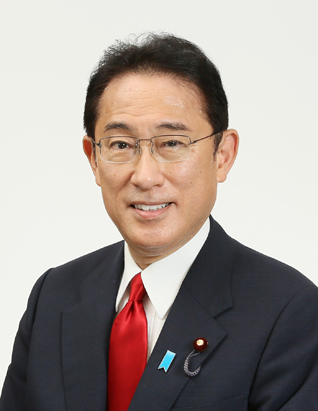
As Prime Minister Fumio Kishida’s support numbers continue to drop, the Diet on Nov. 17 approved an increase in pay for him and the rest of the cabinet, not to mention a select group of bureaucrats who perform “special work,” whatever that means. As one would expect, the increase was met with criticism, since the consumer price index continues to rise while the wages of mere mortals remain stagnant. The increase amounts to an extra ¥460,000 a year for Kishida and ¥320,000 for each member of the cabinet, and the prime minister obviously realizes the optics are not good here since he’s already announced he will return his increase to the treasury.

Nikkan Gendai Digital, in an article posted Nov. 15, before the Upper House passed the related bill, wants everyone to know that this won’t be the end of the matter. Gendai asserts that the mainstream media isn’t reporting the true significance of the increase: According to the law, when pay for cabinet members is raised, then bonuses for all members of the Diet must also be raised. The reason most media outlets didn’t mention this in their coverage is probably because the pay increase for MPs wasn’t included in the bill, and while the cabinet members can return their pay increases if they want to, MPs cannot return bonuses or any portion thereof. 

The main opposition camp, the Constitutional Democratic Party, submitted a bill to freeze the pay of cabinet ministers and other Diet members, but three parties, the ruling Liberal Democratic Party, their coalition partner Komeito, and the Democratic Party for the People, rejected it. The CDP’s Akira Nagatsuma pointed out that net wages in Japan have actually been declining for the last 18 months, so increasing politicians’ pay is just plain wrong. Kishida insists that the average worker’s pay will magically increase in April, so Nagatsuma thinks any pay increases for the government should be postponed until after that dream comes true. There’s absolutely no justification for raising pay at this particular point in time, and to add insult to injury the bill that was passed also includes a line that guarantees a pay increase for government officials working on the 2025 Osaka Expo, which is turning into a huge fiscal embarassment for everyone involved. As for what the CDP will do with the extra bonus pay they will receive against their will, Nagatsuma says they will collect the “difference” from all party members and donate it to charity. 

Continue reading
Posted in Media | Tagged , | Leave a comment

Review: Strays

As talking animal movies go, Strays isn’t very innovative visually, and its premise that the kind of typical dog behavior that humans find funny or gross is for dogs a point of pride is difficult to sustain for 90 minutes, but it does manage to entertain through its voice cast’s enthusiasm. Though not a big Will Ferrell fan, I think he’s perfect as the scruffy leading mutt, Reggie, who is too much of a callow canine to realize his layabout owner, Doug (Will Forte), hates him. As Doug continually tries to abandon Reggie, the dog just keeps coming back until Doug gets truly serious and dumps him in the city where his sense of direction is useless. Still convinced that Doug loves him, Reggie hooks up with the stray Boston Terrier Bug (Jamie Foxx), who quickly disabuses him about the reality of human warmth. Reggie is of the opinion that “a dog’s purpose is to make humans happy,” while Bug’s more cynical take is that Reggie is just a codependent sap and the life of a stray is where it’s at. 

Suffice to say that both dogs have their attitudes adjusted as they hook up with two other dogs disappointed with their own lots in life: Hunter (Randall Park), a former police dog turned therapy pet in a nursing home, and Maggie (Isla Fisher), a collie who’s been replaced in the affections of her owner by a Pomeranian. Parodying The Incredible Journey, the movie has this quartet finding their way to Doug’s house, where Reggie, his mind turned around by Bug’s profane life’s lessons, plans to “bite Doug’s penis off.” Along the way they filch food from a county fair, get high on mushrooms, dodge birds of prey, land in the pound where they and other strays make a jail break, and hump a lot of furniture and garden ornaments for recreation. It’s a dog’s life, director Josh Greenbaum wants to say, and while the jokes don’t always land the depiction of how dogs really view the world is consistent—and sometimes revealing in new and strange ways. Pissing, of course, comes with its own set of rules (doing it on another dog is a sign of affection) and philosophical tenets, while dog shit is obviously valued highly by humans—Why would they always pick it up and put it in a bag if it were otherwise? Also, postal workers are the Devil’s spawn. 

It’s the interplay between Ferrell’s clueless puppyism and Foxx’s street-wise bluster that keeps the movie going, as if the two actors had transplanted a seasoned comedy routine wholesale into the characters. And while the movie earns its R-rating, it’s hardly surprising that Reggie and Bug essentially change places at the end, with the former embracing his newfound independence and the latter finding his own human to love. Some things never change, though if this were a movie about cats, all bets would be off. 

Now playing in Tokyo in dubbed and subtitled versions at Toho Cinemas Nihonbashi (050-6868-5060), Toho Cinemas Hibiya (050-6868-5068), Toho Cinemas Shinjuku (050-6868-5063), Toho Cinemas Roppongi Hills (050-6868-5024).

Strays home page in Japanese

photo (c) Universal Studios

Posted in Movies | Tagged , | Leave a comment

Review: Mona Lisa and the Blood Moon

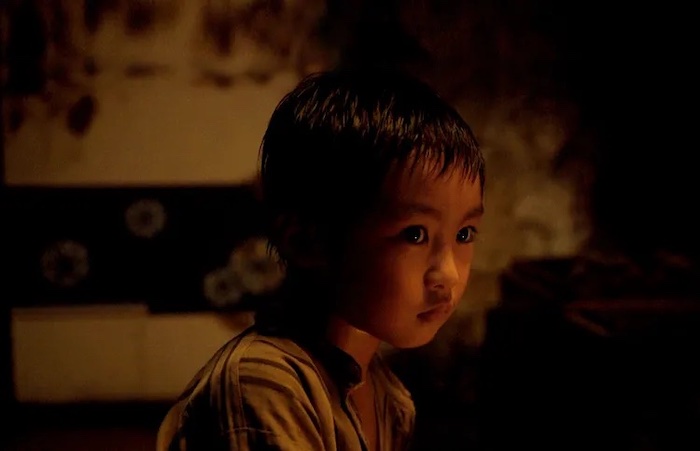
For her third feature, Ana Lily Amirpour returns to the methodology she adopted for her impressive 2015 debut, the Iranian vampire movie A Girl Walks Home Alone at Night, and though the dialogue was in Farsi (Amirpour grew up in the U.S. but is of Iranian heritage) and the setting was supposed to be Iran, it was filmed in California with Iranian expats. Mona Lisa and the Blood Moon evokes a similar feeling of dislocation. Though filmed on location in New Orleans, the disparate range of types suggest a hodgepodge of notions that must have coursed through Amirpour’s imagination while devising the story, which swerves wildly through and around several genres. 

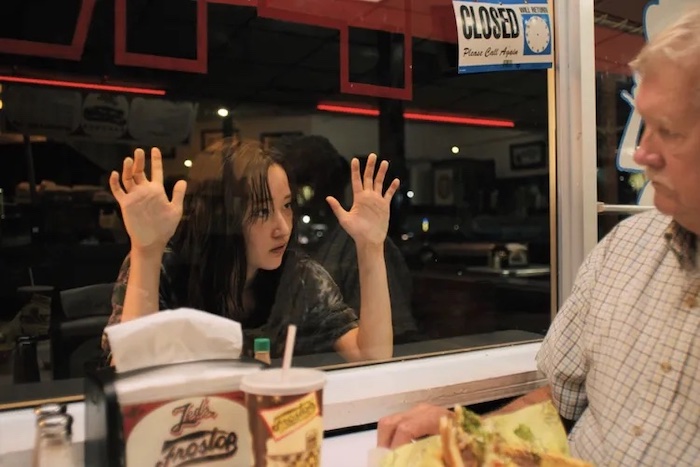
The titular protagonist (Jeon Jong-seo) is presented from the outset as suffering from some sort of neurological impairment that has confined her to a mental institution for what may have been her entire life. We take the orderlies’ less-than-reliable word that she is of Korean descent but that’s all the info we will ever get about her background. The staff subject this young, mute woman to offhanded cruelty, and one employee goes too far while cutting her nails. Mona Lisa Lee (Her real name or a nickname?) responds by locking eyes with her tormentor and taking control of her motor functions, making her stab herself repeatedly with the nail cutters. She then makes her escape onto the streets of the Big Easy, where, desperately searching for food, she encounters colorful characters galore, including a sympathetic but somewhat skeevy drug dealer (Ed Skrein) who buys her junk food (a running joke that runs out of gas pretty quickly) and a stripper named Bonnie (Kate Hudson), who, after witnessing Mona Lisa’s mind control shtick, recruits her to get people patronizing ATMs to surrender their cash. Eventually, the cop investigating the stabbing (Craig Robinson) tracks down the two and, after suffering himself under Mona Lisa’s gaze—she gets him to shoot himself in the foot—goes all out to capture them. Awkward chases and confrontations with underworld scum ensue. 

Though there’s a definite comic vibe to the whole enterprise, Amirpour can’t sustain any sort of tone. The viewer is meant to commisserate with Mona Lisa’s predicament, which amounts to that of an innocent just coming to terms with the wiles of the world, in particular, Americans who can be selfish but, deep down, still lean toward moral awareness. What they never are, however, is responsible. It’s hard to muster any kind of fellow feeling for Bonnie, who in addition to having a casual flair for larceny is a negligent single mother, even though I assume Amirpour wants us to identify with her. As for Mona Lisa, she remains an unmarked white board even as she slowly picks up some verbal capabilities and develops a sense of potential for her future. As a character she lacks qualities. She’s simply a vehicle for ideas that weren’t thought out very clearly.

Opens Nov. 17 in Tokyo at Shinjuku Cinema Qualite (03-3352-5645), Human Trust Cinema Shibuya (03-5468-5551).

Mona Lisa and the Blood Moon home page in Japanese

photo (c) Institution of Production LLC

Posted in Movies | Tagged , | Leave a comment

A conversation about Yasujiro Ozu with Kelly Reichardt

(c) TIFF 2023

The acclaimed American indie filmmaker Kelly Reichardt was invited by the Tokyo International Film Festival to come to Japan and join a symposium to talk about the work of the late Japanese director Yasujiro Ozu to celebrate the 120th anniversary of Ozu’s birth. Following a screening of Ozu’s 1959 comedy, Ohayo (Good Morning), on Oct. 27 at the Mitsukoshi Theater, Reichardt discussed the film and other Ozu works with fellow directors Kiyoshi Kurosawa and Jia Zhangke. Each was to choose a film to discuss in detail. Reichardt chose Ozu’s most famous film, Tokyo Story, which often shows up on lists of the greatest movies ever made. Kurosawa chose the lesser known The Munekata Sisters, and Jia talked about Late Spring. Several days later, I interviewed Reichardt in the offices of the festival for The Japan Times, and the conversation was so lively I have decided to post the whole transcript, digressions and all. Enjoy.

This is the first time you’ve been in Japan, right?

Yes.

You must be a big fan of Ozu if they expressly asked you to come for this symposium.

I was shocked. And then I came here and I literally only spoke for ten minutes.

How did it come about?

I’d been waiting to be invited to Japan for a long time, but my films haven’t really played here much. So this was my first chance, and it was great. But I only scratched the surface.

But why did they specifically ask you?

I don’t know. I think my films and Ozu films were mentioned together in some books. 

Well, you teach, right? Do you teach Ozu?

Well, next semester, just because I’ve been studying so much. I’ve just seen 16 films. I teach production. The students in one of my classes–I teach one semester a year–we do a feature film and each student does one scene and then we suture it together. I give them scenes where they sort of…I’ve shown Ozu and talked about Ozu before, but never made an Ozu film. It’s tricky, because you don’t want to see a bunch of Americans doing Japanese. There’s a lot of Chinese students in the class, so we could do a Chinese film. They do everything, but they’ll do a lot of scenes of Sirk and stuff in Mandarin. 

But if you use Ozu in class, do you use him to teach composition?

Yes. Composition. It’s all about trying to keep a formal language alive against the onslaught of YouTube. It’s a losing battle, but nevertheless. 

At the symposium you said that in the past you had always imagined Japan through Ozu’s lens. What have you discovered since being here?

I mean, also Mizoguchi and Kurosawa, but I suppose it’s the attention to detail for everything. I’ve seen some little scenes play out that seemed very Ozu to me, between parents and kids. It’s just that I’m suddenly very steeped in it right now. Also, this constant corridor effect of looking at things. I went to Kyoto for two days. It was nice to get that kind of change, even if it was only scratching the surface.

You also said that you had discovered Ozu backwards, meaning you saw the later films first. 

Those were the ones I knew.

Continue reading
Posted in Movies | 1 Comment