Review: Aalto

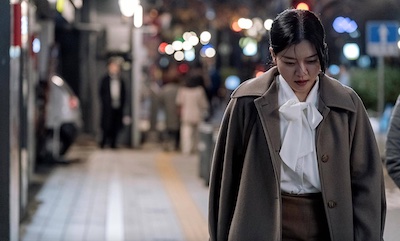
Though Alvar Aalto is considered not only one of the greatest architects of the 20th century but a central figure of the modernist movement, many people outside of Scandinavia are probably unfamiliar with his name. This probably has less to do with the fact that Aalto was Finnish than with the eventual impact of his work over the years. Though Aalto did see himself as an artist, with the stereotypical free-ranging behavior to prove it, he saw his mission as a designer in humanist terms, an attitude that’s most apparent in the furniture he made. In that regard, it’s important to mention his first wife, Aino, who was also a trained architect (and a trained carpenter to boot, which her husband wasn’t) with a more patient approach to commerce. One thing that this documentary by Virpi Suutari gets very right is the way it presents the title as a kind of brand made up of both Alvar and Aino. If Alvar still gets the lion’s share of the credit for the enduring utility and beauty of the things they created together, it’s mainly because he was good at promoting those things in the world, while Aino mostly stayed at home and ran the day-to-day business. He never denied her her rightful share of the glory.

As a movie, Aalto is endlessly involving but also frustrating in its inability to really convey the Aaltos’ mission of making things that were, first and foremost, human scale. Apparently, “aalto” in Finnish also means “wave,” and what most people notice first of all about the designs, whether applied to buildings or furniture, is their curvilinear aspect. The chairs that the couple made for their company Artek in the 1930s and 40s originated that now common look of one piece of wood steam-bent into a form that fits the body, but the curve is also what makes the famous Baker House at MIT so striking. And while Suutari does take us into the buildings, we rarely get a sense of how they are used since the people inhabiting them on screen seem more decorative than anything else. Still, the sheer volume of work that Alvar accomplished even after Aino died in 1949 and he took on a new wife/work partner, Elissa, several years later is astounding: 300 finished projects and 200 unrealized ones. And while Aalto did do the occasional design for private residences—the homes he made for himself and others in Finland achieve the near impossible feat of looking minimal on the outside while providing maximum space on the inside—his strong suit was public buildings that are marvels of light and form. His one seeming failure was also his most ambitious, the Helsinki City Center, which some felt was so grandiose as to be uninviting, though to me it looks fabulous.

As for Aalto’s personality, Suutari uses the architect’s own words, mainly in the many letters he wrote to Aino while travelling to America and Europe for commissions. Though I’m not sure if the infidelities he so boldly alluded to in these epistles (“you need to commit a whole lot of sin before we’re even”), or the drinking that Aino constantly chides him about best reveal his bohemian temperament, as Suutari seems to imply, they do reveal his own humanity. What interested me more was his approach to work, especially work with others. By all accounts he was a good boss, encouraging his employees to think for themselves even if, in the end, he had the last say. He even had great respect for the tradesmen who carried out his projects and worked closely with them, which was not something that most of his peers did. On the other hand, he was highly impressionable, and would easily lift ideas from others without acknowledgement. Upon meeting the dapper Frank Lloyd Wright, he even started dressing like him. Genius comes in many forms, but Aalto makes the case that ideally it has room for a democratic, inclusive spirit. 

In Finnish, English, German, Italian and French. Now playing in Tokyo at Human Trust Cinema Yurakucho (03-6259-8608), and from Oct. 28 at Tokyo Photographic Art Museum Ebisu (03-3280-0099).

Aalto home page in Japanese

photo (c) FI 2020 – Euphoria Film

Posted in Movies | Tagged , | Leave a comment

Review: R.M.N.

In his previous movies, Cristian Mungiu has interrogated Romanian society by focusing on specific aspects. In 4 Months, 3 Weeks and 2 Days it was the health care system via a woman seeking an abortion. In Graduation it was official corruption as seen through the education establishment. In his latest work, whose title essentially stands for the name of his country (as well as a medical procedure), he uses a wider lens to take in the meaning of Romania as a relatively new member of the EU and by extension its place in the larger world. He does it literally, by setting the movie in a rural village that itself is half populated by Hungarians who settled there years ago and which many residents have left in order to work abroad for better wages and benefits. We are introduced to our protagonist, Matthias (Marin Grigore), as he angrily quits his job at a slaughterhouse in Germany after being insulted and then hitchhiking his way back to the village. His wife, Ana (Macrina Barladeanu), is not happy to see him, even though their 8-year-old son, Rudi (Mark Edward Blenyesi), has been traumatized by something he saw in the woods on his way to school. Since then he has refused to talk, and Matthias takes it upon himself to try and invest some masculine qualities in the boy, since he thinks Rudi has become too feminized.

Though the mystery of what Rudi saw lingers in the background of this tense, moody drama, it is overshadowed by more immediate concerns. The local bread factory is desperately short of workers, and because they pay so poorly no locals answer their want ads, so they have engaged a broker to bring in labor from abroad (“Asians are better than Africans…”). Eventually, they hire two Sri Lankans, and the factory manager, Csilla (Judith State), finds them lodgings in a small apartment owned by the village’s self-proclaimed polymath. As the movie progresses, Mungiu slowly describes the interrelationships within the village, and the other shoe drops. The factory starts receiving threats against the foreign workers, who are accused of everything from stealing jobs to contaminating the bread they make with “pathogens.” When one of the Sri Lankans shows up at the village church—he is a Catholic, after all, though everybody assumes he’s Muslim—he is summarily walked out. Meanwhile, Matthias resumes his sex-only affair with Csilla (the main reason for Ana’s enmity toward him), who becomes the de facto defender of the foreigners, and not just because it’s her job. 

Throughout this thorny tale, Mungiu drop factoids about the Romanian situation vis-a-vis the EU, which has effectively closed the main employer in the village, an open strip mine, because of its environmental impact and hindered the lumber business by making large tracts of forest sanctuaries. (There is another foreign invader in town: a French biologist who is there to count the bears.) All these elements add to the villagers’ sense of aggrievement, and in a startlingly fluid, action-packed town hall meeting the parochial concerns of the various ethnic interests come to the surface, revealing not just the blatant xenophobia at large (it comes out that they’ve already, proudly, eliminated the “gypsy” population), but a shocking lack of understanding of how the world works. These are not uneducated people. They simply need someone to blame for things they don’t like and can’t do anything about. And while the movie’s ending takes a sudden dramatic turn, it’s not a development designed to provide closure. Though more than two hours long, R.M.N. feels as if it’s just getting around to addressing the problems it brings up when the end credits appear. 

In Romanian, Hungarian, German, English, French, Sinhala. Now playing in Tokyo at Euro Space Shibuya (03-3461-0211).

R.M.N. home page in Japanese

photo (c) Mobra Films-Why Not Productions-FilmGate Films-Film I Vest-France 3 Cinema 2022

Posted in Movies | Tagged | Leave a comment

Review: The Burden of the Past

Atsushi Funahashi describes his movie as a “docudrama,” which usually means a blend of documentary and staged scenes. In actuality, everything here is staged, with real actors. The subject is ex-convicts who find it very difficult to reintegrate into Japanese society after they’re released from prison. The recidivism rate in Japan is 50 percent, and the main problem is employment, since many businesses will not hire convicted felons. Moreover, people don’t even want them living in their neighborhoods, thinking that once a criminal always a criminal. Consequently, many ex-convicts’ lives enter into a kind of vicious cycle of offense-incarceration-release-unemployment-reoffense, almost by necessity. We’ve covered this issue in our media reports, and often these people see no alternative but prison, where they at least know they will have a roof over their heads and three meals a day. Outside, they just can’t make it work, and Funahashi’s movie shows us in brutal detail why that is.

The focus is on a publication by an NGO called Change that assists ex-cons in finding employment. The NGO has cultivated a network of businesses that agree to take on recently released felons as employees. The cases covered represent a cross-section. There’s an angry man who spent 10 years in prison for killing a teenage boy in a hit-and-run accident. There’s a young woman sent away for two years due to her addiction to crystal meth. Another woman spent ten years in prison for setting her boyfriend’s house on fire in what sounds like an act of lovelorn desperation. A former elementary school teacher received two years for molesting a student. All of these individuals are placed in jobs that are low-paying: food service, cleaning. At least two of the ex-cons work in a Chinese restaurant for a man who himself did time for extortion and attempted murder. In addition, the NGO conducts sessions with a professional therapist who uses role-playing games and “drama therapy” to help the ex-cons express their feelings about what they are going through now and how they got to this stage in their lives. 

It’s obvious that Funahashi would have had a very hard time making a straight documentary about this topic, because none of the subjects want to talk about their crimes or how their convictions basically destroyed whatever lives they have left. He needs proxies and has developed an acting style that is meant to allow the players to express their feelings honestly without having to resort to the usual dramatic devices. At first, the dour and bitter attitudes we see on screen are a turn-off, and then you realize that society really would prefer these people either stay in prison or just crawl into a hole so as to not burden so-called law-abiding citizens with their presence. We see the former inmates struggle with their attempts to resocialize. In one powerful scene, the ex-addict is hit on by a young guy while she’s cleaning ashtrays in the place she works. Without knowing her past, he tells her he used to smoke pot, as if it might impress her. She mistakes his lecherous candor for kindness and lets down her guard, telling him how she was sent to prison for meth. He laughs, calls her a “piece of trash,” and walks away. The hit-and-run perpetrator exists with a constant chip on his shoulder, believing he’s the victim of bad luck, though he understands deep down his responsibility. His quick temper only reinforces people’s opinion that those convicted of crimes have “criminal natures,” and the notion that people believe this makes him even angrier and more self-pitying. 

The movie culminates in a harrowing discussion following a theater presentation where the ex-cons play analogues of themselves in a fantasy story. The audience is filled with neighbors of the NGO who wish it would move away as well as some victims of the ex-cons. It doesn’t end well, and the various members of the NGO, who truly believe in their cause, are forced to address the fact that they can do nothing without convincing people that those who have “crossed a line” deserve another chance. “Why do you protect criminals?” is what the NGO faces on a daily basis. It doesn’t matter that many of these criminals grew up in broken, abusive homes. It doesn’t matter that Japan’s prison system is designed to punish, not rehabilitate. It doesn’t matter that there is no public system in place to help ex-cons reintegrate. Once you have crossed that line, they won’t let you cross back. 

In Japanese. Now playing in Tokyo at Polepole Higashi Nakano (03-3371-0088).

The Burden of the Past home page in Japanese

Posted in Uncategorized | Leave a comment

Busan International Film Festival 2023

Because I Hate Korea

Due to computer troubles I didn’t post my usual diary while I attended the Busan International Film Festival, which ends today. It was a fairly low-key year, and as usual there were a number of movies I wanted to see but couldn’t due to scheduling conflicts and ticket availability. But I did attend the Opening Ceremony. Usually I don’t because the flight I normally take arrives in the late afternoon, but Air Busan changed its schedule this year so I was in Haeundae by mid-afternoon. The ceremony was appropriately flashy but unstimulating, even with Song Kang-ho acting as the official “host” of the festival, a job that usually goes to the festival director. However, because of the scandal that resulted in the previous director resigning, there is only an interim festival director, Nam Dong-chul, also the head programmer, who implied to me when I interviewed him last week that he doesn’t want the job. Song covers up for the break in protocol with star power.

He did what he was supposed to do, but since he’s also the most famous Korean actor in the world, it was easy to believe that his enthusiasm was forced. Certainly when he greeted Asian Filmmaker of the Year Chow Yun Fat on the red carpet, acting as if they were old pals, it felt phony, but appearances are everything in such matters. I was mostly hanging around to see the Opening Film, Because I Hate Korea, and felt like the only person who cared, since about 3/4 of the audience left after the Opening Ceremony was over. Maybe they knew something I didn’t. The film was earnest and well-made, but rather unoriginal in its portrait of a young woman who, already disillusioned with her job and what it pointed to for her future, decamps to New Zealand, hoping the change of scene will give her some kind of reason to appreciate life. Of course, it doesn’t, but the humor was colorless and the story never seemed to go anywhere. It’s based on a novel and felt like it.

Next Thursday The Japan Times will publish my formal coverage of the festival, which will discuss the scandal, the financial crises that impacted the festival, the changes that have been implemented since the end of the pandemic, and whether the festival still best represents the hopes and dreams of Asian cinema.

In the meantime, here’s a rundown of all the movies I saw in the order I saw them.

Continue reading
Posted in Movies | Leave a comment

Review: Operation Fortune: Ruse de Guerre

Though I sort of consider the movies in the Mission: Impossible series comedies, this Guy Ritchie frivolity is more serious about taking the piss since it comes across as a straight sendup of the current species of international espionage blockbuster. First of all, you’ve got Jason Statham in what would normally be the Tom Cruise role acting all Stathamy; meaning, more concerned with his own well-being than that the mission at hand, whose main worth to him is the cash it will put in his pocket. Cruise’s Ethan Hunt is all about altruism and saving the world, while Statham’s Orson Fortune is strictly mercenary—until, of course, other dramatic options come into play. 

Like Hunt, Fortune has a team of wildly capable experts who help him accomplish his assignments with winking acknowledgements of how farfetched they are. In fact, the setup in this case is dodgy from the get-go. A briefcase is stolen from some kind of laboratory in Odessa by a group of violent, black-clothed soldiers, and British intelligence gets wind of it. Though they have no idea what’s in the briefcase or even what’s going on in the lab, they contact Fortune to retrieve it. As it happens, he’s on holiday and can only be persuaded to take the job when informed that a competing team of operatives headed by a former acolyte is after the briefcase as well. His professional pride provoked, Fortune assembles his team and heads for the French Riviera, where billionaire arms dealer George Simonds (Hugh Grant, having a grand old time impersonating Michael Caine in bad-guy mode), seems to be trying to sell the thing. Fortune’s plan is to bring along dim movie star Danny Francesco (Josh Hartnett), of whom Simonds is a fan—shades of The Unbearable Weight of Massive Talent! The only member of Fortune’s team worth the trouble of mentioning is Sara Fidel, the tech expert who wields a laptop as if it were an AK-47 and is played by Aubrey Plaza, who manages to bring the requisite lightness to dialogue that doesn’t always deliver the laughs the writers think it does. 

Most of the action is predicated on Statham’s patented battering-ram fisticuffs skills, which means, unlike in the M:I movies, there doesn’t seem to be a lot at stake, because once Statham starts delivering blows you know he’s won. The super-yacht milieu of most of these set pieces guarantees the kind of high-gloss visual extravagance that characterized British spy movies of the 60s, but without the wit. That said, Ritchie keeps his head down enough to allow the mechanics of the silly plot to work with the humor, and it’s an enjoyable ride as far as that goes. In short, I liked it better than the most recent M:I installment, but only because I’ve become bored with Tom Cruise’s show-offy movie star persona. 

Opens Oct. 13 in Tokyo at Toho Cinemas Nihonbashi (050-6868-5060), Toho Cinemas Hibiya (050-6868-5068), Toho Cinemas Shinjuku (050-6868-5063), Shibuya Humax Cinema (03-3462-2539), Toho Cinemas Roppongi Hills (050-6868-5024).

Operation Fortune home page in Japanese

photo (c) 2021 Eros STX Global Corporation

Posted in Movies | Tagged , , , | Leave a comment

Review: Revival69: The Concert That Rocked the World

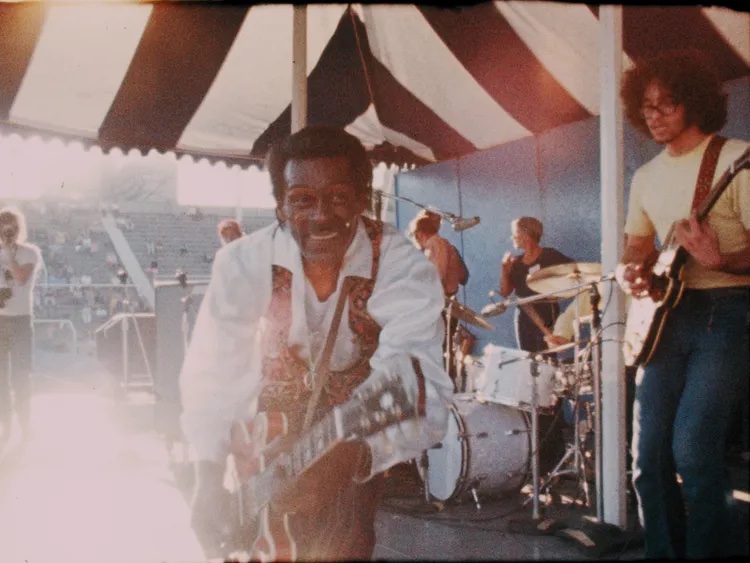
Whether because it took place in Canada or was overshadowed by the PR spectacle of Woodstock, which took place a little more than a month before, this ostensible rock and roll revival show has mostly been shunted aside in the annals of pop even if it marked the debut of John Lennon and Yoko Ono’s nascent Plastic Ono Band. In fact, Lennon’s participation, as this documentary so painstakingly points out, was mainly an afterthought instigated in order to sell tickets. The main idea of the concert, which took place at Varsity Stadium in Toronto, was to celebrate the work of the founders of rock—Chuck Berry, Little Richard, Jerry Lee Lewis, Bo Diddley, and Gene Vincent—but the success of a more contemporary pop-oriented festival at the same venue earlier that summer perhaps inflated the expectations of the two ambitious young promoters who put it on. Apparently, oldies show (and, mind you, this is only ten years out from these artists’ prime) just didn’t catch the youngsters’ attention as much. Before Lennon was tapped, they managed to snag The Doors, who were huge in 1969 but already bogged down in legal and image problems stemming from Jim Morrison’s notorious near-flashing episode in Miami earlier that year. The Toronto show was the only secure gig they could get.

What really makes the movie valuable as a document isn’t so much the concert footage, which, while intermittently exciting, rarely stays on any artist for an appreciable length of time, but the way it spotlights a particular instance in a very momentous year for pop. In September 1969, The Beatles were still together, though Lennon was seriously thinking of going solo, and the offer from the Revival69  promoters, originally asking him to emcee the event and maybe sit in with some of his heroes, hit him at the right time. Though he almost pulled out after he said “yes,” he quickly put together a group consisting of Eric Clapton, Alan White, and Klaus Voorman, and this truly motley crew didn’t rehearse anything until they were on the plane to Canada. Say what you will about the presumptuousness of rock stardom, but Lennon came up with two of his most indelible compositions for the gig: “Cold Turkey” and “Instant Karma.” A year late, of course, The Beatles would be no more and Lennon would have released his classic solo debut album, and it’s easy to hear the seeds of that work in what he was trying to accomplish in Toronto, even if he didn’t really know what he was doing.

The documentary has a lot of sideshow business that’s fascinating as well. Toronto, apparently, solidified Alice Cooper, who doubled as Gene Vincent’s backup band, as the force of avant garde rock vaudeville with their standalone performance, for what that’s worth. And Chuck Berry, as usual using a pickup band of teenagers who had to play everything by ear since Chuck never rehearsed, put on one of his greatest shows ever, according to no one less that the dean of rock critics Robert Christgau, who was there and provides one of the talking heads that gives the whole project credible context. For Christgau, a stone Berry freak, to say that actually means something, and made me wish Berry’s entire show was in the film, but you either get a thorough history lesson or you get kicks. You can’t expect both. 

Now playing in Tokyo at Human Trust Cinema Shibuya (03-5468-5551), Kadokawa Cinema Yurakucho (03-6268-0015).

Revival69 home page in Japanese

photo (c) Rock n’ Roll Documentary Productions Inc., Toronto RNR Revival Productions Inc., Capa Presse (Les Films a Cinque) 2022

Posted in Movies | Tagged , | Leave a comment

Review: Theater Camp

It was wise of directors Molly Gordon and Nick Lieberman to hire mostly unknown actors for their mockumentary about a summer camp for “theater brats” in the Adirondacks. Except for Amy Sedaris, who plays the founder of the camp but is only in the movie briefly, and Ayo Edebiri, who probably wasn’t famous yet for The Bear when she did this, the performers don’t carry with them any extraneous identifications for the audience, and thus their playacting of people who are smitten with the performance bug seems more natural than it would be otherwise, even if the broad comedy indicates that they are very much acting. Reportedly, much of the movie was improvised, and while the hit-and-miss nature of such a gambit results in a lot of uneven humor, it also keeps the viewer off balance. Maybe these people really are into Broadway that ridiculously.

The framing situation is that the camp, called AdirondACTS, is on the verge of bankruptcy, and when its CEO, Joan Rubinsky (Sedaris) suffers a seizure due to an errant strobe light, she is hospitalized and her business school-educated son, Troy (Jimmy Tatro), takes over, charged with learning the whole theater camp culture from scratch. Being a rational businessman, he lays off some of the instructors to balance the books and puts in their place one clearly unqualified instructor (Edebiri) who is quickly overwhelmed. This framework of desperation allows Gordon and Lieberman to study a rainbow of student types as they maneuver for choice parts in the big musical that the camp will present for their summer project. There are would-be divas and drama queens and macho pretenders and singers who can’t tell when they’re off-key, but for the most part the enthusiasm you would expect from theater brats—adolescents who already knew what Sondheim was about when they were in elementary school—is tempered with a sweetness that keeps any extreme snark at bay. On top of this cohort you have the camp’s staff—professionals who could not actually make it big in New York, and while the associated resentments linger just below the surface, they aren’t portrayed as being anything less than capable in their chosen field. 

There are so many examples of cliches that none of the characters except maybe Troy has a chance to develop into anything beyond their cliche. Tension is injected into the story when the owners of a neighboring camp for rich kids decides it wants to buy AdirondACTS for an expansion scheme, so the production—an original musical based on Joan’s life—has to be better than ever in order to fight off this threat from the evils of commerce, which Troy realizes he represents to many of his new employees. And if the ending is predictable, it makes up for the gentility of its early humor with a sufficiently squirm-inducing performance of the play-within-the-movie, which feels more realistic than most of what preceded it. You don’t need to be a theater brat to appreciate Theater Camp, but if you are one (or were one in the past) you’re likely to see yourself in someone up there on the stage. 

Opens Oct. 6 in Tokyo at Toho Cinemas Chanter Hibiya (050-6868-5001), Shinjuku Cinema Qualite (03-3352-5645), Shibuya Cine Quinto (03-3477-5905).

Theater Camp home page in Japanese

photo (c) 2023 20th Century Studios

Posted in Movies | Leave a comment

Review: The Equalizer 3

Though the latest John Wick installment included way too much plot for its own good, it still stuck to the tenet that has made it an enduring series: Everything serves the violent set pieces, which are long, abundant, and varied. The last movie in the Equalizer series suffers from the same problem and while the set pieces have the same nasty efficiency as those in the Wick flicks, the setups are convoluted and not entirely convincing. It would have been better, for example, to jettison the whole CIA subplot, which justifies much of the action but is poorly thought out.

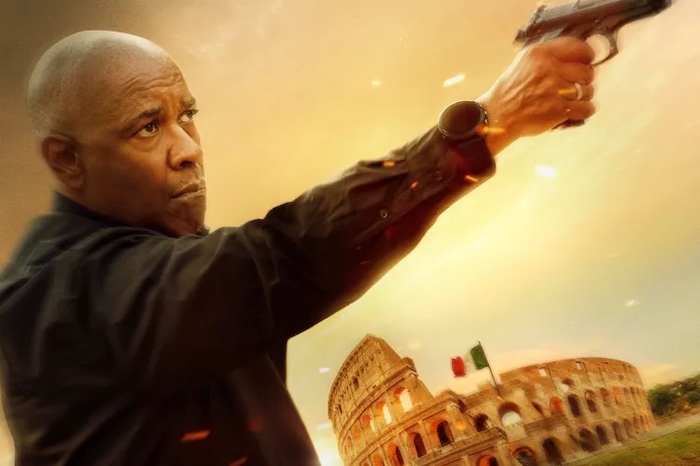
Our hero, Robert McCall (Denzel Washington), is out of Boston for once and in Italy for reasons that don’t become clear until well into the story (and even then I had big questions). He first appears at a Sicilian vineyard, surrounded by a dozen dead bodies when the proprietor shows up with a small boy. Apparently, the proprietor is the target, but since McCall’s brief as a former government operative turned vigilante requires he kills to even a score for a victimized innocent, we have to wonder what all this carnage is for, but in any case, after doing his job in the usual no-nonsense manner, McCall drops his guard and gets shot. Somehow, he makes it to the Amalfi coast where he’s rescued, unconscious, by a local policeman (Eugenio Mastrandrea), who has obviously encountered such matters before, and takes him to a local physician (Remo Girone), who patches him up without asking too many questions. The reason for this reticence becomes obvious once McCall undergoes his long rehabilitation in the scenic town of Altamonte, where the people are humble and kind and the Camorra lords it over them with a brutal protection racket that they plan to expand. Though not called upon to act, McCall takes it upon himself to become a one-man Seven Samurai and save the town from these devils, and he does it, per his titular moniker, with the same measure of brutality that the bad guys dish out to the people they exploit. Unlike in Wick, the killings have an emotional element owing to the fact that we get to know the assholes being dispatched and thus feel delight at their bloody demise. 

It’s worth mentioning Dakota Fanning as the local CIA agent who tracks down McCall after investigating the massacre at the vineyard, which turns out to be a front for terrorist financing, but for the most part she’s a distraction that doesn’t merit much attention, especially when the original reason for McCall’s “equalizing” is finally explained and feels like nothing more than an after-thought. Though director Antoine Fuqua has become adept at this kind of mayhem he can’t do much with a script so poorly structured that it renders the action set pieces as interchangeable, with no sense of buildup as the movie progresses. 

In English and Italian. Opens Oct. 6 in Tokyo at Toho Cinemas Nihonbashi (050-6868-5060), Toho Cinemas Hibiya (050-6868-5068), Marunouchi Piccadilly (050-6875-0075), Shinjuku Wald 9 (03-5369-4955), Toho Cinemas Shinjuku (050-6868-5063), Toho Cinemas Shibuya (050-6868-5002), Toho Cinemas Roppongi Hills (050-6868-5024). 

The Equalizer 3 home page in Japanese

Posted in Movies | Tagged , , | Leave a comment

Review: My Name Is Alfred Hitchcock

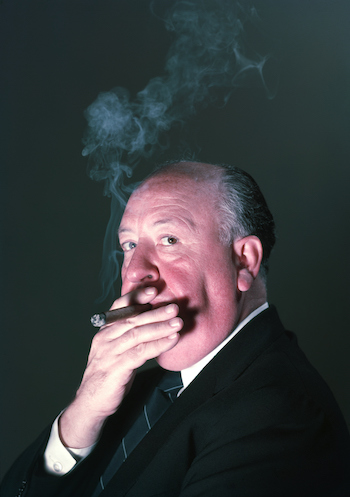
Fake spoiler alert: At the beginning of this documentary, a title card informs us that the narration is taken from actual recordings of Alfred Hitchcock, but at the end of the movie we learn it was a comedian (Alistair McGowan) impersonating the great director all along. Though other critics have said this imposture is director Mark Cousins’ best joke—it’s clear from the first lines that Hitchcock is supposed to be speaking from the afterlife, since he derides his viewers’ dependence on 5G technology—funnier is the way Cousins attributes to Hitchcock cinematic theories about his work that are obviously Cousins’ own, a conceit that may offend purists, but Cousins pulls it off through sheer arrogance, not to mention an intimate understanding of the master’s ouevre and a wicked wit. 

Divided into six sections based on themes that run through all of Hitchcock’s films, the movie has no chronological logic despite some early references to Hitchcock’s beginnings as a filmmaker, but the almost stream-of-consciousness way Cousins develops his thesis has a lulling, personal quality that conveys genuine character. Only someone who really knew him could tell whether the opinions presented are close to Hitchcock’s own thinking, but even if it’s a construct, it’s an extremely effective one for putting across Cousins’ ideas, which are so granular as to be borderline neurotic. He can get away with it because he knows the material so well. Each comment and hypothesis—presented as self-reflection by Hitchcock himself—is illustrated with a perfect scene from his films. More incisively, the comments play up the notion that Hitchcock was supremely self-aware, even if Cousins’ voice-from-the-grave device makes it all sound like hindsight. Hitchcock talks about his desire to “escape from tradition” and his strong aversion toward “photographing people talking,” thus naturally opening up a discussion about his technique, which he boastfully points out was “unconventional” for its time. He also addresses the accusation that he was too controlling as a director, but in a dismissive way, averring that such criticism is a “21st century projection.” Most essentially, he dives deep into those devices that he undeniably made his own, especially “time and fear,” which, of course, are the ingredients of suspense. 

The sheer volume of examples supplied by Cousins attests to Hitchcock’s dogged work ethic—9 movies made during World War II alone—and even stone fans will likely discover things they never thought or even knew about. Personally, I found the silent-era and early British films, few of which I’ve seen, more artfully conceived than his later, more famous work. At one point, Cousins/Hitchcock says that the purpose of film is “fulfillment”—for Hitchcock, fulfillment of his imagination; for the audience, fulfillment of their “desires.” Cousins’ movie takes this mission to heart, because, like a great Hitchcock movie, it’s not just enlightening. It’s fun to watch. 

Now playing in Tokyo at Kadokawa Cinema Yurakucho (03-6268-0015), Shinjuku Musashinokan (03-3354-5670), Yebisu Garden Cinema (0570-783-715).

My Name Is Alfred Hitchcock home page in Japanese

photo (c) Hitchcock Ltd. 2022

Posted in Movies | Leave a comment

Review: Hunt

Actor Lee Jung-jae exploits his rep as a second-wind Korean superstar as well as a bona fide global household name for Squid Game with a directoral debut that would be a challenge for even the most seasoned filmmaker. This espionage thriller, which takes place during one of the most politically fraught eras in postwar Korean history, is both narratively contorted and viscerally explosive, a combination that sometimes overshadows the subtler themes that would make it more interesting as a plot-driven puzzler. I emerged from it exhausted, though I’m not sure if it’s due to the excessively loud set pieces or the constant effort required to navigate the script’s twisty inertia. 

There are two protagonists, both of whom work for South Korean intelligence during its darkest days in 1983: Park Pyong-ho (Lee) who nominally handles domestic matters, and Kim Jung-do (Jung Woo-sung), whose brief is more international. During a visit to Washington, the South Korean president is targeted for assassination by a North Korean cell, and both Park and Kim get hell from their superiors for not being sufficiently prepared. During their dressing-down, we learn that the two have bad blood between them because Agent Park was suspected of being a party to the killing of President Park Chung-hee in 1979 and was subsequently tortured by Kim before being cleared. Water under the bridge in the always volatile world of Korean spycraft, but Park retains his resentment, which only intensifies, at least outwardly, when a North Korean would-be defector informs the South that the KCIA has a mole. The defector’s intelligence is confirmed when a covert operation goes sideways, since it’s obvious the North was tipped off. The viewer soon fixes on the idea that the mole is either Park or Kim, and as the movie moves fitfully from one shootout and/or knife fight to the next and bodies pile up the focus of suspicion shifts several times between the two men. What keeps the central story sharp is the notion that both men don’t really like what they’re doing, which is carry out the nefarious anti-democratic policies of the regime they serve, and after a while there’s a sense that there isn’t much difference between the North and the South in terms of maintaining ultimate power by using any means necessary. Though the “hunt” of the title refers to finding out who the mole is, it also pertains to the two men’s respective search for a way to make their actions morally and ethically right in their heads, a theme that becomes more compelling as the movie progresses but is nonetheless buried under the intensifying mayhem. 

Consequently, several interesting subplots—one about a shadowy manufacturer that deals in under-the-table weapons trades, another about a female student with anti-government leanings who seems to be Park’s ward—are rendered murky while the general image of the KCIA that develops is one of a self-important team of bullies who suck at their job. This latter aspect is best characterized by three-count-’em-three ultra-violent incidents that occur in foreign countries—the U.S., Japan, and Thailand—any one of which would have been as historically significant as 911 had they really happened. There is no title card saying that Hunt is based on a true story, but in any case even if you know how deadly and oppressive the South Korean dictatorship was in the 80s, it could never have been this bad.

In Korean, English, Japanese and Thai. Opens Sept. 29 in Tokyo at Shinjuku Wald 9 (03-5369-4955).

Hunt home page in Japanese

photo (c) 2022 Megabox Joongang Plus M, Artist Studio & Sanai Pictures

Posted in Movies | Tagged , | Leave a comment