For years, even decades, the big story surrounding Japan’s aging society is how to pay for people’s twilight years when so many grow old at exactly the same time. That time is upon us right now, and the story is changing. The dankai no sedai, or Japan’s version of the baby boom generation, is shorter in length than it is in other developed countries, technically comprising people born in the late 1940s, since the Japanese government successfully implemented a birth control system in the 1950s to address lingering postwar shortages. So while the bad news was that this huge cohort would all reach their dotage at the same time, once they started dying off, the fiscal challenges would subside.
But now we have another problem, which is that all these people are dying at the same time, and owing the the atomization of Japanese society a good portion of them have not made proper preparations because of poverty, lack of heirs, and no connections to their communities. An article in the March 29 Asahi Shimbun reported on a survey conducted by the interior ministry that found as of October 2021, local governments reported they were in possession of 60,000 sets of remains (i.e., ashes) of people who had died alone and without a will or any immediate contact information for heirs or relatives. Almost all of these remains were being stored in public facilities and had yet to be formally interred. Some were even being kept by private companies hired to clean up the living quarters of people who died alone. The survey report also points out that this number did not represent all the remains that were unclaimed, since ashes that had already been removed to temples or other religious facilities were not included.
Local governments are thus in a difficult position, and the ministry identifies the problem as being due to “no unified regulation to confirm the desire of relatives [of the deceased] to accept the remains,” and thus local governments don’t know what to do with them if they can’t locate any relatives. According to the law, “relatives” in this case legally extend to the “third degree,” and thus include uncles, aunts, and even great grandchildren. However, even if local governments do contact these relatives, if they don’t respond to the request to claim the remains, the local government can do nothing. And that seems to be happening in quite a few cases. Beyond the 60,000 sets of remains that were in storage, the number of dead individuals that were unclaimed between April 2018 and October 2021 nationwide amounted to 106,000. This translates as a huge burden on local governments, which have to spend money on cremation, storage, and sometimes even funerals. They can ask heirs to reimburse them when those heirs are found, but the heirs cannot be legally compelled to comply. Often, it also costs money just to locate these heirs.
What has always impressed me about the social-issue films of Belgian brothers Jean-Pierre and Luc Dardenne is the way they incorporate an empathetic take on the lives of people living on the margins into stories that are both credible and dramatically affecting. In some of their most recent films, however, this dynamic has slipped a bit, usually on the side of storytelling. Their latest, about a pair of African refugees struggling to settle into some kind of orderly life in urban Belgium, is their most scathing social indictment in years, which makes the small plot blunders all the more frustrating.
When we meet the titular characters, one an adolescent boy from Benin (Pablo Schils) who has been provisionally accepted because he is fleeing from terror, the other a young Cameroonian woman (Lokita) who slipped in via a trafficker to work and send money back to her family, they have both already finished what should have been the most arduous and dangerous part of their European journey, the trek from Africa by boat and truck. But danger is still at hand, especially for Lokita, who is trying to convince the authorities that Tori is her brother. For sure, their bond, obviously forged during the journey, is as tight as that of blood siblings, and when Lokita is away from Tori for any length of time she has panic attacks. Nevertheless, immigration doesn’t buy her story, and she more or less hangs in limbo, working as a drug courier for a restaurant chef. Meanwhile, the trafficker, a fellow African who helped her get to the EU, is demanding more money all the time and threatening her. Tori, as resourceful as they come, helps the best he can, and his efforts give Lokita courage under the most demeaning circumstances.
Eventually, Lokita has no choice but to obtain papers illegally, and the chef promises to help her get them if she works for his drug concern tending marijuana plants in an underground warehouse. She’s essentially a prisoner there, with no contact to the outside world, including Tori, who is trying to make a little more money on the side scamming the chef. Obviously, something’s got to give and when it does it hits hard. The bleakness of the turn of events is as believable as it is depressing, but the mechanics of how Tori and Lokita get to that juncture is painfully obvious and sometimes contrived. It’s a problem that’s evident in a lot of current cinema and TV—how exactly do criminal operations work in real life?—but if it’s in service to the thriller genre, then the viewer will cut the filmmakers some slack. The Dardennes are deadly serious about the situation they depict, and while the empathy is as strong as ever, the story is forced to travel a bumpy road. The brothers, it seems, are as liable to fall back on cliches as any action-movie hack might.
In French. Now playing in Tokyo at Human Trust Cinema Yurakucho (03-6259-8608), Shinjuku Musashinokan (03-3354-5670), Shibuya Cine Quinto (03-3477-5905).
Daniel Raim’s lo-fi documentary on the film version of the Broadway play Fiddler on the Roof is about exploring a world lost to time, but twice removed. On the one hand, the musical itself, based on stories by the Yiddish writer Sholem Aleichem, depicts a lifestyle—the Jewish shtetl of Imperial Russia—that had all but vanished by the eve of World War I. But the documentary itself depicts a world of popular culture that is also gone. The film version of Fiddler was made in 1971, when Broadway was still dominated by conventional narrative-arc musicals that were considered, as Pauline Kael so memorably put it, “square” to more progressive theatrical sensibilities of the day. In that regard, Fiddler not only represented the last gasp of classical postwar American musical theater, but, as a film version of an extremely popular work of imagination, a kind of unicorn in the entertainment realm. As narrator Jeff Goldblum explains in almost mystical awe, Fiddler shouldn’t have been a hit in the first place. Based on stories almost 70 years old about an Old World community that only very few were likely to identify with even indirectly, it nevertheless found a huge audience due to the universality of its theme–the fragility of family. Tevye, the poor dairyman, has to marry off three of his five daughters, and in the process comes face-to-face with a world whose changes he doesn’t understand but must abide by.
The central figure in the documentary is director Norman Jewison, whose credentials in musical film were impeccable, having worked in Canadian and American television on many music programs with people like Judy Garland and Harry Belafonte. However, as he explains so clearly (in footage that seems to range over several decades, thus indicating Raim’s doc is more or less an assemblage of stock interviews) he didn’t want to make a standard Hollywood musical, which in the 60s were mostly filmed on back lot sets. Though location musicals, like Paint Your Wagon, had been flops as movies, Jewison insisted on finding a place as close to the Ukrainian setting he could, and ended up in a village in Yugoslavia, which he points out is also gone. Much of the film is taken up with showing how this dedication to some kind of verisimilitude was both anathema to the concept of musical theater and challenging in its own right as a film production. But the real wonder of the doc is the way it approaches casting. Jewison (who also points out repeatedly that he is a “goy” nevertheless obsessed with Jewish culture growing up in Toronto due to his surname) was dead set against using Zero Mostel, who originated the part on Broadway, as Tevye because Mostel stole the show every night with his broad comic interpretation. Such a performance style was right for the theater but wrong for a movie, which was more intimate. Though many A-list actors, including the Italian Catholic Frank Sinatra, wanted the part, he chose the Israeli actor Topol, who played Tevye in the London stage production, and it made all the difference in the world. But even the other actors were virtual unknowns, and Raim spends a lot of time with the three women, now elderly, who played the three marriageable daughters. Though Fiddler made them famous for a short while, none really benefited from it in a big career way, because the parts were only iconic in the moment. The only possible exception in the cast was Paul Michael Glaser, who went on to stardom in Starsky and Hutch.
But there’s so much more of a techical nature that shows how, before CG and other filmic tricks, the making of a large-scale movie musical was a daunting task, and how resourceful the various staff were. John Williams, now the most successful composer in Hollywood, adapted the score for the movie, and his descriptions of syncing notes to visual cues is fasincating. Kael also said that the base appeal of Fiddler, especially for Americans, is the way it deals with the loss of home and community, but Raim’s documentary itself imparts a melancholy nostalgia that is difficult to shake, especially right now since the Japanese release takes place only a few weeks after the death of Topol.
Now playing in Tokyo at Human Trust Cinema Yurakucho (03-6259-8608).
Fiddler’s Journey to the Big Screen home page in Japanese
A book review that appeared in Harper’s about a year ago analyzed the movies of Nicolas Cage as a kind of literary exercise, and while the critic who tackled this assignment was careful to keep his tongue firmly in cheek he didn’t say anything about this particular movie, in which Cage plays himself as a figure of derision. The movie almost does a better job of placing Cage’s unusual career in context, but not quite. My understanding has always been that Cage does so many movies because he has so many debts, but according to The Unbearable Weight of Massive Talent, Cage can’t help but overextend himself because his ego won’t let him stop. In the opening scenes, “Nick” Cage is trying to secure the lead in a movie by the director David Gordon Green (playing himself, presumably) that he anticipates will be a comeback of sorts, though his therapist wonders what he’s coming back from, since he seems to be working all the time. Here, Cage and the film’s writer-director, Tom Gormican, are clearly sending up Cage’s career in schlock, since he’s hoping to regain the artistic cachet he enjoyed in the 1990s. In any case, Cage overplays his hand by pestering Green to no end, all the while talking to himself via split personality that reveals his total lack of confidence, an observation that’s reinforced by his agent Richard’s (Neil Patrick Harris) total indifference.
Upon losing out on the part, Cage vows to quit acting but takes one last desperate job for a million bucks to appear at a birthday party for a billionaire Spanish fan, Javi (Pedro Pascal), who, unbeknownst to Cage, is associated with a European drug cartel that may have kidnapped the daughter of a politician. When Cage shows up for the gig, the CIA, who is watching Javi, recruits Cage to be a mole. But as it turns out, Javi isn’t the evil drug baron most people might expect; he’s actually at the beck-and-call of his family, who are evil, and just wants to write a kick-ass action flick. That’s why he invited Cage, to see if he can sell his screenplay in Hollywood. The two get on like gangbusters.
So what promised to be a Hollywood satire poking fun at one of the most unusual careers a bona fide movie star has ever enjoyed essentially turns into the kind of low-rent, direct-to-video potboiler that Cage is often accused of stooping to star in. And while those who really like Cage for his characteristic OTT performances will appreciate the way “Nick” Cage does Liam Neeson better than Liam Neeson (there’s even a fictional wife and daughter who are placed in peril), the movie is short on laughs and suspense. The Harper’s article was way more exciting.
Now playing in Tokyo at Kadokawa Cinema Yurakucho (03-6258-0015), Shinjuku Piccadilly (050-6861-3011), Shibuya Cine Quinto (03-3477-5905).
The Unbearable Weight of Massive Talent home page in Japanese
On March 22, the Fukuoka District Court dismissed a lawsuit brought against the government by a regional electrical power company that claimed a surcharge added to all electricity bills nationwide to pay compensation to victims of the Fukushima Daiichi nuclear power plant meltdown in March 2011 is illegal. According to the Asahi Shimbun, the judge in the case ruled that compensation for the disaster should be “borne fairly by all electricity consumers.” The plaintiffs, Green Co-op Denki, a subsidiary of a Kyushu-based food cooperative that sells non-nuclear electrical power to co-op members in 16 prefectures, objected to the surcharge, which it is required to add to its electrical bills, by saying that it had been implemented via an order issued by the Ministry of Economy Trade and Industry (METI) without Diet deliberation. The judge said that the order was “based on the opinions of experts and discussions in the Diet.” The plaintiff’s attorney rejected this opinion, saying that the judge was merely parroting the government’s claims. “The fact that anything can be allowed through a ministerial order without revising the law” contradicts the principles of parliamentary democracy, the attorney said. “I can’t accept that.”
However, the issue goes deeper, as outlined in earlier Asahi articles, and addresses the way the government allows former regional power monopolies to do whatever they want in order to retain their exclusive grip on the grid.
Green Co-op launched its electricity business in 2016, 5 years after the Fukushima disaster, for the purpose of providing its 420,000 members with electricity that doesn’t use any nuclear power sources. Subscribers understand exactly where their electricity is coming from. However, Green Co-op has to use existing transmission lines to deliver their electricity, and those lines are owned and controlled by the former regional power monopolies, in their case, Kyushu Electric Power, which adds a fee to every electric bill, regardless of the service provider, called takusoryokin, or residential transmission fee. When Green Co-op examined this fee more closely they discovered that it incorporated a surcharge permitted by METI in 2017 and implemented in 2020 that is used to pay for compensating the victims of the Fukushima disaster.
Though I was the age that would have been the target at the time for the first of Bernard Waber’s series of children’s books about a singing crocodile that appeared in 1962, this live-action/CGI musical version is my first encounter with the story, which may account for my skeptical impression. Aside from Benj Pasek and Justin Paul’s original songs, which are mostly sung by pop idol Shawn Mendes, the concept comes across as too simplistic for a big-budget film. In fact, while Lyle the crocodile is the center of attention, the fact that he doesn’t express himself in speech, only song, limits him as a compelling personality. You really do imagine the other actors reacting to mute, green-clad body doubles as they perform.
The cast is certainly game. Javier Bardem is creepily chipper as the anachronistic stage performer and impresario, Hector Valenti, who, down on his luck after his sleight-of-hand shtick is rejected, happens upon Lyle warbling in the back of an exotic animals shop in Manhattan. He purchases the lizard and raises him to sing popular songs in the hopes that he can make a fortune, but when he gets his chance, Lyle chokes from stage fright and Hector is forced to go on the road to make money, leaving Lyle alone in his attic apartment. Though the idea of abandoning what is now a full-grown crocodile in a New York City apartment alone for months at a time challenges whatever capacity you have to suspend disbelief for the sake of entertainment, the bewilderment is compounded by any knowledge you may possess of just how high rents are on W. 88th Street these days, and, yes, the movie is clear in its assertion that it takes place in the late 2010s. Bewilderment then reaches meltdown proportions when a math teacher (Scott McNairy) moves into the same apartment building with his family. Fortunately, his wife (Constance Wu) writes cookbooks for a living that must make a ton of money, because there is no way a public school teacher can afford such beautiful digs on the upper west side. Nevertheless, the couple’s misfit son, Josh (Winslow Fegley), accidentally discovers Lyle upstairs and an inter-species, but mostly one-sided, friendship ensues.
Lyle, of course, despite his heft and length and sharp teeth, is not a danger to anyone, but much forced fun is had by all as Josh and then other members of his family endeavor to shield Lyle from the authorities and, more immediately, the grumpy middle aged NIMBY guy (Brett Gelman) renting the basement apartment; that is, until Hector returns and uses his magical powers of persuasion to set things right and put Lyle back on the road to show biz stardom. Though the script occasionally lightens up with a transgressive idea—Lyle sustains himself not by devouring the city’s storied vermin but by means of late-night dumpster-diving excursions—it’s fairly pedestrian in its aim to provide wholesome family entertainment, though I can’t imagine any kid, no matter what age, preferring this to Spider-Man.
In Japanese subtitled and dubbed versions. Opens March 24 in Tokyo at Toho Cinemas Nihonbashi (050-6868-50609, Toho Cinemas Hibiya (050-6868-5068), Shinjuku Wald 9 (03-5369-4955), Shinjuku Piccadilly (050-6861-3011), Toho Cinemas Shinjuku (050-6868-5063), Toho Cinemas Shibuya (050-6868-5002), Toho Cinemas Roppongi Hills (050-6868-5024).
The curious thing about Brett Morgen’s massive documentary about David Bowie is the way he juxtaposes the self-regarding artistic magnificence of the Bowie brand with the effect it had on his audience. By no means a biography of the definitive rock star, Moonage Daydream attempts a self-examination of Bowie’s purposes and results using his own statements and examples of his art, and not just in the musical sense. Opening with a quote by Nietzche about what the death of God means, the film proceeds through a somewhat chronological survey of Bowie’s attitudes as they changed over time, and the only thing that really remained unchanged was his fans’ adoration, which comes across as Beatlemania for the more discerning teenager. Morgen, who was given unlimited access to the artist’s own vaults by his estate, revels in scenes of pubescent girls weeping at Bowie’s concerts and tough boys in primary hues and glitter making the usual rough noises about rawk-and-roll. Take away the context and you might think you’re watching a movie about the Bay City Rollers—or AC/DC.
But Morgen isn’t interested in this contrast beyond its novelty. He wants to convey the greatness of the man using the largest canvas he can pay for, and the IMAX presentation is not just a commercial gambit. The format is required to deliver the desired enormity of Bowie’s visual ideas, as well as the fidelity of sound as it’s matched with larger-than-life concert performances—some never made available before—that are truly impressive. Morgen has allowed himself all the time in the world, and the presentation of full songs, like the title cut and a particularly mind-bending version of “Heroes,” anchor the movie in a milieu that makes his case for Bowie being the extraterrestrial he always claimed to be. If you want to know about Angie’s role in his initial success or the cocaine addiction that dominated his life after he moved to the U.S., you’ll be disappointed. Most of the biographical stuff is only included to explain one or another philosophical juncture in his artistic development, and while sometimes these explanations are thrilling, as they are with regard to his Berlin phase, other times they feel gratuitous, as if Morgen found a particularly fascinating quote but was unable to convey to the screen the immediate impact it made on him. If the movie drags at the end it’s only because by the new century Bowie had mostly exhausted himself musically and was trying to pass himself off more resolutely as the ultimate millennial renaissance man. I’m not saying he wasn’t, but only that Morgen seems to be fishing for a way to convince us that he was.
What Morgen mainly gets right is an overriding tone that captures Bowie’s talent for adapting to whatever trend he saw as being relevant to his purposes, using news clips, scenes from movies, original sci-fi animation, and a restless editing style that mimics Bowie’s thought processes. Obviously, prior knowledge of Bowie’s art will help the viewer better appreciate Morgen’s own achievement, but the movie’s psychedelic style has its own special universal appeal. Take drugs if you’ve got ’em.
Opens March 24 in Tokyo at Toho Cinemas Nihonbashi (050-6868-5060), Toho Cinemas Hibiya (050-6868-5068), Toho Cinemas Chanter Hibiya (050-6868-5001), Toho Cinemas Shinjuku (050-6868-5063), Shibuya Cine Quinto (03-3477-5905), Shibya Parco White Cine Quinto (03-6712-7225), Toho Cinemas Roppongi Hills (050-6868-5024).
Last week, South Korean President Yoon Suk-yeol met with his Japanese counterpart, Prime Minister Fumio Kishida, to settle a wartime labor compensation dispute between his country and its former colonizer brought about by Koreans who say they or their forebears were forced to work for Japanese companies before and during World War II for little or no pay. These people sued Nippon Steel Corporation and Mitsubishi Heavy Industries in 3 separate cases, and in 2018 South Korea’s Supreme Court ruled in their favor, but the Japanese government instructed the companies not to pay, saying that the agreement signed between the two countries in 1965 settled the compensation matter for all time. The plaintiffs and their supporters, which at one time included the previous South Korean president Moon Jae-in, claim that this is a private matter not covered by the 1965 agreement, which was between governments.
Yoon plans to set up a foundation that will compensate the plaintiffs. The Japanese government is very happy, since no Japanese entities are required to contribute to the fund, but the plaintiffs and their supporters are not, since the main reason for their suit was for the cited companies, and by extension Japan, to acknowledge their actions toward Korean workers under Japanese rule, since Korea was a Japanese colony at the time. General opinions in both countries differ accordingly. A recent survey found that 59 percent of Koreans do not approve of Yoon’s plan, while 57 percent of Japanese do.
Yoon’s purpose is to normalize diplomatic relations (and please the U.S. government, which approves of the plan) by removing at least one of the historical obstacles to such normalization. As a member of the right-leaning People Power Party, Yoon wants to move forward in Korea’s relations to Japan, mainly for the benefit of trade, but he is also following a policy that Korean nationalists have advocated since the 1965 agreement, which is that Korea needs Japan to ward off its communist neighbor to the north. Many in Korea have always maintained that Japan should more fully acknowledge the brutality of its colonial rule from 1910-45, especially with regard to the suffering of specific groups, such as forced laborers and women pressed into sexual service at front-line brothels. Right wing elements, some of whose fathers and grandfathers fought and worked for the Japanese during the war, tend to see left-wing elements as being easily manipulated by North Korea, and, in fact, one of the planks of the nominally liberal-leaning Democratic Party of Korea is to reunify the peninsula.
What commentators have noted about this contention is how it has not dissipated over the years, even though Korea achieved its independence in 1945 when Japan surrendered and since the late 80s has become an economic powerhouse in its own right. The position of Japan’s Liberal Democratic Party, which has pretty much governed the country since the mid-1950s, is that Japan did nothing wrong in Korea; it certainly did nothing illegal, since the annexation treaty of 1910 that brought Korea under its control was considered internationally valid at the time. How that treaty came about and how it was enforced afterwards is something they don’t talk about. But the Koreans do. In fact, they don’t just talk about it. They dramatize it all the time.
I write about this now because I just finished watching all 24 episodes of the 2017 Korean historical drama series Mr. Sunshine on Netflix. Mr. Sunshine can be further categorized as a romantic melodrama, and while the main characters are all fictional, the background is the pre-colonial struggle within the kingdom of Joseon (Korea) against various foreign elements that, for all intents and purposes, invaded the peninsula to gain influence. Of these elements, which include Russia and the U.S., Japan is the most aggressive, and the series depicts this aggression in the most dramatic ways. (China, which used to control Joseon as a tributary, doesn’t get mentioned much in the series except as a sanctuary for rebel movements.)
I’ve never been a fan of Asian historical dramas, be they Korean, Chinese, or Japanese, and while Mr. Sunshine contains all of the genre’s requisite attributes, I found its focus on how Joseon came under Japanese rule compelling. As it turns out, while the series was immensely popular when it was first aired on the Korean cable channel nTV, it was criticized for the way it presented its Japanese characters, which to some was too lenient and to others too harsh. I confess to bewilderment regarding the former charge, since almost all the Japanese characters are villainous in a cartoonish way, practically twirling their mustaches (they all have mustaches) in glee as they subjugate the natives while comparing them to the lowest forms of life. As someone who watches a lot of Korean cinema, I found this depiction both amusing and surprising. In most Korean films that take place during the colonial era, the Japanese overlords tend to come across as oppressive but also cold and distant. It is their Korean factotums who tend to be despicable, since they are betraying their birthright for the benefit of their conqueror. Mr. Sunshine does away with this nicety. The Japanese are evil and sadistic.
But while this depiction may seem unnecessarily harsh from a historical perspective, it conveys an inescapable truth. Almost all the major events in the story are based on acknowledged facts. It is the emotional component that’s exaggerated, because it has to align with the dramatic contingencies of the Korean romantic melodrama, which calls for epic suffering on the part of all the sympathetic characters, in particular the lovers at the center of the tale.
In this case they are two people whose love is doomed from the get-go. Choi Yu-jin (Lee Byung-hun) is the son of slaves whose parents are killed by their nobleman master after his mother resists being given to another nobleman for sexual recreation. Yu-jin, still a young child, escapes death himself and is taken in by an American missionary who brings him to New York and raises him as his own son, renaming him Eugene. The boy grows up and joins the marines, becoming a war hero during the Spanish-American War. He is promoted to captain and later assigned to the American legation in Hanseong (present-day Seoul), where he intends to exact revenge on the family who murdered his parents. In the meantime, he continually crosses paths with Lady Go Ae-shin (Kim Tae-ri), a member of another noble family whose own parents were killed by a treacherous compatriot in an underground patriotic movement to fight against foreign intruders. Ae-shin, with the quiet approval of her grandfather, a mentor to the Joseon king, has become an expert marksman and anti-foreigner sniper.
The dynamic of the love story is irresistible: the former slave vs. the woman of high birth; the repatriated citizen of an interloping foreign country vs. the single-minded protector of the homeland. Through love, the two eventually find a common ideological goal that seems inevitable in the final analysis, but it relies—again, dramatically—on there being a common enemy, and that’s Japan in this case.
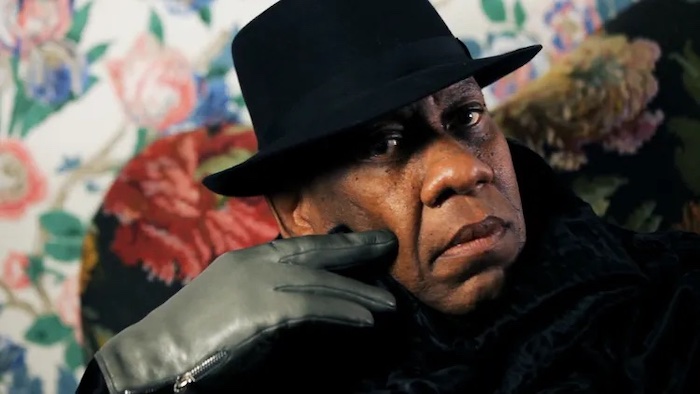
It would have been interesting to see what kind of documentary The Gospel According to Andre would have turned into had it been delayed several years until after the death in January 2022 of its subject, famed fashion journalist Andre Leon Talley. The movie was originally released in 2018, and principle filming seems to have been concluded early in 2017. Having Talley’s untimely death as a natural ending to the movie would have made it not only more biographically definitive, but might have prompted its director, Kate Novack, to question the original tack of the narrative, which hints at darker matters but mostly sticks to a conventionally hagiographic approach. For sure, within the rarefied world of high fashion, Talley was something of a revolutionary, but he was also a tragic figure, an aspect that Novack mentions without actually interrogating. Only a year before he died, Talley was also the subject of a long New York Times article about his failing finances in the context of the false facade of luxury that high fashion has to maintain in order to be taken seriously.
Talley’s newsworthiness is unimpeachable: He was a tall, imposing black man, son of a Southern sharecropper and raised by his grandmother in the church, who succeeded in New York’s fashion world on his own terms and, in doing so, changed the way glossy publications like Vogue, for which he was once the creative director, addressed racial and sexual minorities that had previously been overlooked, even if both had been direct influences on fashion for years. Certainly the best parts of the film are those in which Talley himself, dressed in one of his signature mantels or gowns, speaks of this world in terms and tones both sardonic and appreciative. But because he recognizes his stature in the industry and what it gained by “allowing him in,” he’s justifiably bitter at how things turned out. Due to artistic disagreements that he characterizes as being political within Vogue in the late 90s, he left the magazine under a cloud (though remained on the masthead as an editor at large) and subsequently struggled with a freelance career and chronic health problems (the Times article deals with these struggles much more clearly than the movie does). Countless celebrity talking heads appear during the course of the movie praising Talley’s influence, including Vogue chief editor Anna Wintour, who seems to have been central to his downfall. Consequently, there’s a marked disconnect between the exuberance of the tribute and the sad place where Talley ended up that is not explained.
I suppose if Novack had focused on Talley’s memories only and eschewed the solicited testimonies, the film would have been more satisfying, though probably no more complete. He himself probably wouldn’t have wanted much more exposure of his personal life, but Talley was too important a figure—and not just in the world of fashion—to fob off with an outline structure like this. I suppose we’ll have to wait for the big literary biography, which is a shame. As a personality alone, he was nothing if not made for the big screen.
Now playing in Tokyo at Bunkamura Le Cinema Shibuya (03-3477-9264).
The Gospel According to Andre home page in Japanese
Self-aware and fairly shameless as a performer, Antonio Banderas has become that rarest of movie stars, the guy who finds joy in every role he takes without necessarily finding artistic fulfillment. It’s not so much that he’s happy to get the work, but that work—any work—is what sustains him. Though it took him a while to make the leap from Almodovar’s resident hunk to Hollywood’s most reliable Spanish-speaking actor, he did it by making fun of his outsider status with the most ridiculous role of his career, the voice of Puss in Boots in the animated Shrek series, where his mellifluous Spanish accent perfectly conveyed the character’s absurd self-regard as an outlaw-cum-playboy-cum-superhero. This enthusiasm was rewarded with his own Puss franchise, of which The Last Wish is a sorely overdue sequel.
What made Puss superior to Shrek was its reliance on Banderas’s comic talents, which obviated the need for all those pop culture jokes that made Shrek so tiring. Once again, for Puss it’s all about Puss, and in the brilliant opening musical number, the wily feline is basically on tour selling his Robin Hood shtick. He even highjacks the mansion of the local governor for the “performance” before slaying a monster his shenanigans awakens, all the while singing a stupid song about how great he is. That is until he gets too cocky and is actually killed. No worry, he’s a cat, and cats have nine lives, but as the undertaker informs him, he’s already used up eight, so he’s on his last.
The realization that he’s mortal sobers Puss up, and in the movie’s funniest sequence he gives up the swashbuckling life to become a mere housecat in the home of a sterotypical cat lady, where he has to share the litter box with all the other former strays. He even grows an old man beard out of self-pitying neglect. He makes the acquaintance of an over-eager chihuahua posing as a cat, and when he hears of a magic Wishing Star that might grant him more lives, he and the dog light out to find it and along the way reacquaints with his old flame and rival, Kitty Softpaws (Salma Hayek Pinault).
As has become the norm for almost all CG animated films of the last two decades, the pace is brutally fast and the jokes nonstop, and while most of the latter hit their marks, what makes The Last Wish more enjoyable than most of its ilk is the quality of the action sequences, which are presented in a different visual tone, more like anime, in fact. And the action has consequences, as Puss has to compete with Goldilocks (Florence Pugh) and her family of three criminal-minded, British-accented bears (Olivia Colman, Ray Winstone, Samson Kayo), not to mention the patently evil “Big” Jack Horner (whose self-esteem issues stem from him being the spawn of a nursery rhyme rather than a fairy tale) and the figure of Death in the form of a Big Bad Wolf. And while the story falls victim to the same misguided urge to utilize the multiverse as every other superhero movie these days, it does so with a certain measure of comic aplomb. With Banderas as game as ever, it can’t help but be entertaining.
Banderas more directly derides his image in the Spanish film Official Competition, which isn’t as funny as Puss but given the aims of its directors, Mariano Cohn and Andres Duprat, that’s because the humor is built into the situation itself. An incredibly rich business mogul (Jose Luis Gomez), upon reaching his 80th birthday, decides he has to leave something meaningful to posterity (which, whatever his business entails, wouldn’t, apparently) and hits on making a “great movie” that will live forever. Knowing nothing about movies, however, he purchases the rights to a door-stopper by a Nobel-prize winner and hires the art house director Lola Cuevas (Penelope Cruz) to adapt it. The story is about a tragic rivalry between two brothers, and Lola decides to goose the subtext by hiring the stuck-up Hollywood star Felix Rivero (Banderas) and the consummate stage thespian Ivan Torres (Oscar Martinez) to play the two brothers in the hope that their natural competitiveness and mutual resentment toward each other’s professional approach will imbue the film with tension.
Though Banderas is perfect as an egomaniacal strutter, it’s Cruz who walks away with the movie. Lola is the kind of self-important auteur who really believes you have to suffer for art, just as long as it isn’t the auteur who suffers. She puts her two actors through some pretty humiliating exercises to get the reactions she wants, all the while flaunting her challenging intellect, which is hilariously telegraphed by her fashion sense: a huge, unruly hairstyle and a new designer ensemble every day that is sillier than the previous one. Eventually, however, her artificially rendered “competition” gets away from her and turns deadly, but by that point the viewer has adapted to the film’s black humor rhythms. Though it beats its one good idea to death, the movie says more interesting (i.e., funnier) things about the clash between art and commerce than you can shake Puss’s sword at.
Puss In Boots: The Last Wish, in Japanese subtitled and dubbed versions, now playing in Tokyo at Toho Cinemas Nihonbashi (050-6868-5060), Toho Cinemas Hibiya (050-6868-5068), Shinjuku Piccadilly (050-6861-3011), Toho Cinemas Shinjuku (050-6868-5063), Toho Cinemas Shibuya (050-6868-5002), Toho Cinemas Roppongi Hills (050-6868-5024).
Official Competition, in Spanish, now playing in Tokyo at Human Trust Cinema Yurakucho (03-6259-8608), Shinjuku Cinema Qualite (03-3352-5645), Yebisu Garden Cinema (0570-783-715).
Puss in Boots: The Last Wish home page in Japanese









 philipbrasor.com