Media watch: You can’t pay people to have kids

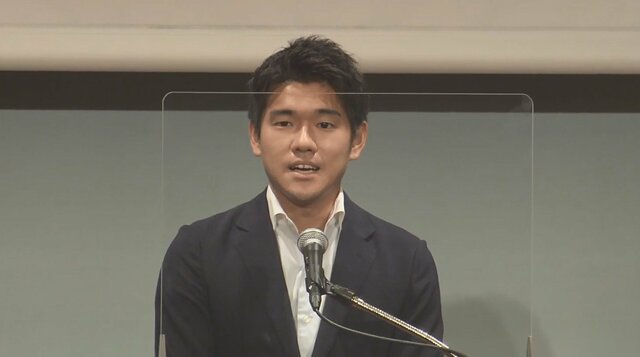
On Jan. 4 during his New Year’s press conference, Prime Minister Fumio Kishida vowed to implement measures to increase Japan’s low birth rate. In 2022, the number of babies born in Japan went below 800,000 for the first time, and Kishida said that the “problem” cannot be “neglected any longer.” Most of the countermeasures he mentioned are economical in nature: reinforce or increase the child allowance, provide after-school childcare services, give more government support for ailing children and post-natal care for mothers, and promote a more amenable work-life balance for working women who have children (no mention was made of doing the same for working men with children). 

Though Kishida tried to make it sound as if these steps were “bold” and “unprecedented” (“ijigen,” an odd word that literally means “of a different dimension”), they really aren’t. Tokyo Governor Yuriko Koike also recently announced she would approve an extra monthly allowance for children. When the government has tried to do something in the past to raise the birth rate, which has been low since the 1980s (though not as low as it presently is in other East Asian countries and Taiwan), they’ve thrown money at the problem, which sounds logical since many couples have said they can’t afford children or can’t afford more children. But so far nothing has made a difference, so throwing money more “boldly” at the problem probably won’t make a difference, either.

Continue reading
Posted in Media | Tagged | Leave a comment

Review: Kung Fu Stuntmen

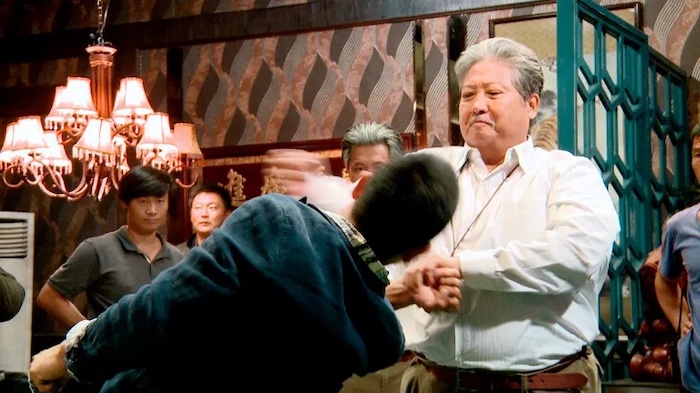
Perhaps because it was produced by a guild of Hong Kong-based stuntmen, this documentary about the evolution of their craft since the 1950s is both exhaustive (quite a feat at 92 minutes) and wonkish. Every legend you can think of and a few you probably haven’t heard of either comments on that history or is commented upon, and thanks to the relative looseness of the industry’s attitude toward copyrights, there is a wealth of valuable action footage on hand to illustrate each and every point fully. 

Starting out in the era of the Shaw Brothers, whose films dogmatically revolved around action scenes that lasted ten minutes, director Junzi Wei recounts how most of the men recruited to do stunt work were trained in Peking Opera, which helped define kung fu on the screen as being more balletic than violent, and therefore stylistic rather than realistic. The turning point was the development of the Drunken Monkey form of kung fu, which consisted of a standard set of movements that juxtaposed certain strikes to the opponent’s body with tumbling actions. And while the careers of stars like Bruce Lee and Jackie Chan (who essentially perfected the drunken monkey style with his Drunken Master series) receive attention because their distinctive screen personalities helped heighten the popularity of the genre, it was the stunt men who filled out their action scenes that get the lion’s share of attention in the doc, and they have a lot on their minds. In particular, they talk about health issues, the rise and fall of the apprentice system, and decades-long efforts to recognize their craft as one that the industry needed to address more responsibly in terms of payment. After Lee died, for instance, there was no big star to anchor movies for the main kung fu studio, Golden Harvest, until action choreographer Lam Ching Ying, formerly Lee’s assistant, revived and refined the art working with the great Sammo Hung, and often was featured onscreen since he was so good at what he did. His work helped transition kung fu into the more comic form championed by Chan in the late 80s, and which helped usher in the genre’s greatest era with stars like Donnie Yuen and Jet Li. 

The doc’s most interesting assertion is that, while the HK stuntman’s skills were proudly “low tech” and completely physical, the stuntmen themselves, understanding that advanced post-millennial film technology was putting them out of business, readily worked with this technology to sustain both their careers and the art itself. The important thing to them was not the technology itself, but rather the human element on screen, because that is what made the action so relatable to the audience. Miraculously, kung fu is even more vital than ever thanks to this progressive mindset, which now welcomes women and foreign actors/athletes into the guild’s ranks. Kung Fu Stuntmen is one of the most educational docs ever made about the movie industry since it obsessively focuses on an essential component of a particular style of filmmaking in order to explain how films in general have evolved over time. 

In Cantonese and Mandarin. Now playing in Tokyo at Shinjuku Musashinokan (03-3354-5670).

Kung Fu Stuntmen home page in Japanese

photo (c) ACME Image (Beijin) Film Cultural Co., Ltd.

Posted in Movies | Tagged , , | Leave a comment

Review: Emergency Declaration

Given its star power and large cinematic canvas, this disaster film would qualify as a blockbuster had it been made by Hollywood in the 70s or 80s. Nowadays it would just seem anachronistic, but since it was made in South Korea it could be considered yet another attempt by that country’s film industry to assert its primacy as the biggest challenge to Hollywood. Logistically, however, the movie ran up against the wall that was COVID, its original release date being pushed back until last year, though whether its postponement had to do with restrictions on movie theater attendance or the uncomfortable relevance of the plot particulars (probably both) isn’t readily known. The fact that it didn’t do as well box office-wise as expected was, I imagine, due to different aspects.

The star power is provided by two of Korea’s biggest male international draws at the moment, Song Kang-ho and Lee Byung-hun, as well as one of its biggest domestic female draws, Jeon Do-yeon. The disaster scenario is doubly fraught: a sociopath boards a flight from Incheon to Honolulu and spreads a lethal virus in the cabin. Song and Lee play the two heroes in the parallel plotlines, Song as a police detective on the ground who desperately tries to locate the origin of the virus in order to determine if there’s an anti-viral treatment, and Lee as a passenger and retired pilot who may have to fly the plane after the flight crew falls ill. The juxtaposition of these two thriller threads should be enough to maintain the requisite suspense throughout the movie’s overextended 140 minutes, but, as usual with Korean big tent entertainment, it isn’t enough, and so the detective’s determination is explained by the fact that his wife is on the plane, and the ex-pilot is revealed to be an alcoholic who quit flying because of an accident that, in reality, wasn’t his fault. There’s also an unnecessarily convoluted back story to the mass killer’s motive that extends to his former employer’s refusal to cooperate with the police, as well as lots of international diplomatic intrigue when the plane, running out of fuel, is refused permission to land in both Hawaii and Japan despite the pilot’s “emergency declaration,” which, according to international aviation law, should allow it to land anywhere it needs to. 

Which isn’t to say Emergency Declaration is a waste of time; only that its almost superhuman effort to stuff as much plot into a situation that already tests the viewers ability to suspend disbelief results in more nervous laughter than chilly shudders. Actually, given how outlandish it is I imagine no one is going to be negatively reminded of the COVID pandemic. Maybe a plane disaster movie about that virus would have been scarier. 

In Korean. Now playing in Tokyo at Marunouchi Piccadilly (050-6875-0075), Shinjuku Wald 9 (03-5369-4955).

Emergency Declaration home page in Japanese

photo (c) 2022 Showbox and Magnum9

Posted in Movies | Tagged , | Leave a comment

Review: Dream Horse

The British working class underdog movie is a proven box office winner, and much more convincing, if not more sentimental, than its American cognate, which is usually centered on sports. This almost apologetically formulaic fictionalization of a true story that was the subject of a 2015 documentary reveals its unadorned intentions in the title, but thanks to some subtly subversive performances and a script that sticks to the emotional contours of the story without swerving into easy bathos, Dream Horse effectively makes its socioeconomic points while still scoring in the tearjerking sweepstakes. 

The setting is a rural Welsh town where the middle aged protagonist, Jan Vokes (Toni Collette), holds down two boring jobs to support her and her husband, Brian (Owen Teale), whose unemployment seems to be chronic. Director Euros Lyn ably creates an atmosphere of small town conviviality that nevertheless conveys how most of the residents seem to have lost whatever mojo for life they once possessed before the local mine closed down. One evening, Jan overhears a local tax accountant, Howard Davies (Damian Lewis), in the social club where she tends bar in the evening talking to some acquaintances about his past success backing race horses. She can’t let go of the notion and eventually tries to get her neighbors interested in pooling their savings to back their own horse, which would mean actually buying one. Eventually, she convinces enough of them to participate out of a sense of “why not?” more than anything else. 

The mare they buy produces a pony they name Dream Alliance that shows immediate promise, and with Howard helping out as chief consultant and, later, full-fledged joint owner, they find a trainer (Nicholas Farrell) who can get the young horse into real steeplechase races, meaning real prize money is at stake. At this point, the movie enters into a predictable course of alternating triumphs and setbacks, much of which is predicated on the interminable Welsh-English resentment, which itself is a class conflict that the writer, Neil McKay, renders with a lightness of touch that doesn’t detract from its ability to enrage. What never changes in the story, however, is the horse’s seeming will to win, which inspires not only the Welsh folks who have invested their lives in him, but the audience as well. It’s great to have something to cheer for without feeling that you’re being cleverly manipulated to do so. 

Opens Jan. 6 in Tokyo at Shinjuku Piccadilly (050-6861-3011), Human Trust Cinema Yurakucho (03-6259-8608).

Dream Horse home page in Japanese

photo (c) 2020 Dream Horse Films Limited and Channel Four Television Corporation

Posted in Movies | Tagged , | Leave a comment

Number 1 Shimbun column January

Here is our January column for the Number 1 Shimbun, which is about the process of choosing the current name of the imperial reign and why the attendant calendar system is so inconvenient.

Posted in Uncategorized | Leave a comment

Best albums 2022

As so many music writers have already said, 2022 was a great year for pop, especially pop in album form. Though the theory is not publicly widespread, I would venture that the reason may have been a post-pandemic reaction on the parts of artists and listeners. I don’t mean to imply that the pandemic is over, but since the authorities worldwide have decided that they can’t allow safety measures to interfere with economic activity any more, the restrictions (either mandated or requested) that governed our lives for the previous two years would no longer apply, and so musicians were allowed to regain their livelihood, which means playing in front of paying audiences. This development coincided with new music that had been piling up on various artists’ hard drives and which came out in a flood this year. However, whether the high quality of these releases was a function of their quantity—there was just so much stuff that came out—or some other factor, is anybody’s call, and might provide some enterprising music scholar with an apt topic for one of those pop music conferences I’ve never attended. In any event, it took me longer than usual to winnow my shortlist down to a top ten, and while doing so I noticed something that always happens to me but which I never remarked upon before: My favorite albums either were released very early in the year or were albums I discovered in November or December, regardless of when they were released. This would seem to indicate that those records which continue to thrill me after so many months make the strongest impression when I compile this list, but so do those that are still freshest in my mind. So I have to ask myself: Am I overlooking anything in between?

Continue reading
Posted in Music | Leave a comment

Media watch: Even celebrities die alone

Yoko Shimada

On July 25, the Japanese actor Yoko Shimada died in a Tokyo hospital. She was 69 years old. Some older people may remember Shimada as the female lead in the 1980 American TV miniseries Shogun, which was based on James Clavell’s bestselling novel about Edo-era Japan and an Englishman, played in the series by Richard Chamberlain, who served the shogun. Shimada received a Golden Globe Award for her performance and became famous worldwide as a result. She was already a star in Japan and the acclaim made her even more of one. Afterwards, she was busy, and even did more work in Hollywood, but eventually she faded from the Japanese public’s consciousness, partly due to the usual indignities the industry imposes on female actors as they age, and partly due to Shimada’s pride. 

In 2018, Shimada was diagnosed with rectal cancer and refused to undergo chemotherapy. Realizing she might soon die, she initiated a final project, a movie called Ever Garden, in which she played a dying woman. It was filmed in Kagoshima Prefecture in the summer of 2021 on a shoestring budget, with Shimada providing her own wardrobe. She was on a lot of medication at the time and often had trouble breathing and even eating. According to an article in the Dec. 21 Asahi Shimbun, at one point, Shimada’s character was supposed to enter a lake, and the director, knowing how difficult that would be for her in her condition, suggested she just dip her feet in the cold water, but Shimada insisted on immersing herself fully. A co-star remarked that everyone on set was so impressed by how determined Shimada was to get the scene right. This incident is obviously included in the article to show what a consummate professional Shimada was, even if such an act was physically agonizing.

The movie opened in theaters at the end of 2021, but Shimada could not attend the premiere or any related events because she was in the hospital, where she did not receive any visitors and communicated to the outside world only through texts. When she died, she died alone. An anonymous acquaintance told Asahi that following her death, the Shibuya Ward office in Tokyo contacted the actor’s relatives listed in their records, but no one came to claim her body. The source elaborated by saying that before she died, Shimada had told others that she had no family to speak of after her own mother died. In addition, she had been going through financial difficulties for some years, so after Shibuya Ward kept her body for two weeks without any contact from kin, they cremated her at their own expense in accordance with the Welfare Law, which states that if the deceased has no family, or if they do and that family is insolvent, the local government will handle the postmortem processing. In most cases, this means a social worker or interested acquaintance can carry out a funeral and cremation ceremony that is paid for by the local government, even if the deceased was not approved for government assistance before their death. The local government will also take care of transporting and storing the body beforehand. When Asahi called Shibuya Ward to ask if this was the case with Shimada, the representative said they were not free to talk about it, but the previously mentioned source confirmed that everything related to Shimada’s postmortem process was paid for by the local government. 

Continue reading
Posted in Media | Tagged , | Leave a comment

Best movies 2022

Though the pandemic has in no way subsided in Japan—Christmas Eve marked a new one-day record for deaths from COVID—this year I managed to regain the movie-watching pace I enjoyed before 2019, and therefore am resuming the compilation of a yearly ten best. At the start of the pandemic I was dropped from a lot of distributors’ and publicists’ invitation lists, and while I haven’t gotten back on all of them I was able to see almost everything I wanted to see that was released in Japanese theaters this year, either at press screenings (wearing a mask), through online links provided by publicists or distributors, in theaters after the films opened, or on my computer after downloading them like a pirate. For that reason, I did not review some of the movies mentioned here, since I only post reviews as previews of films that are just opening. If they’ve already opened, I don’t bother writing a review. I also returned in person to the Busan International Film Festival for the first time since 2019 and saw even more movies than I normally would thanks to the festival’s continued policy of allowing press people to watch some selections online, but, in any case, I only saw one of the following movies originally at a festival. Also, the best movie I saw this year I saw at BIFF—Decision to Leave—but it doesn’t open in Japan until February, so it doesn’t qualify here. Also, none of these films were ones I saw on streaming services, but that’s only because I didn’t see any really good movies on streaming services this year. Upon reflection, I feel slightly mortified that there are only four Asian movies out of the 16 I write about, but that probably has more to do with Japanese distributors’ prerogatives than anything else. And I still have problems with new Japanese films, even though I saw more this year than I have in a long time.

Continue reading
Posted in Movies | Tagged , , , , , | Leave a comment

Media watch: Kishida’s kid not cut out for Nagatacho

Shotaro Kishida

If you have access to Japanese Twitter you may have noticed some Tweets about a certain female reporter who works for Fuji TV. The posts invariably link to tabloid news articles that describe the woman as being involved in some kind of “honey trap” scheme related to the Kishida administration, specifically Fumio Kishida’s eldest son, Shotaro, who also happens to be the prime minister’s executive secretary. The mainstream press has mostly avoided the scandal, so if you were at all interested you’d have to read the weeklies or tabloids to find out what’s going on. Since we’re presently working on a story about nepotism in politics, usually shorthanded as seshu, we are very much interested, and the scandal turns out to be quite illustrative of the current premier’s problems with both the press and his party.

Our own source is an article that appeared on Nikkan Gendai Digital Dec. 23, which itself was based on an article that appeared in the monthly magazine Facta that reported on a news item rumored to have been leaked by Shotaro back in October and which caused the Cabinet office some embarrassment. Facta claims that a certain “commercial TV station,” which other tabloid media have identified as Fuji TV, ran a “scoop” on Oct. 24 saying that then Economic Revitalization Minister Daishiro Yamagiwa was set to resign over his ties to the Unification Church, which had been dominating news cycles since July after the murder of former prime minister Shinzo Abe, whose alleged killer held a grudge against the religious organization. Yamagiwa’s resignation had not been announced yet on Oct. 24, and his plan to quit was supposedly only known by a handful of people in the Cabinet office. Obviously, this intelligence had been leaked to Fuji TV, and various other media tried to find the source of the leak. The most likely was then believed to be Shotaro, who had somehow revealed Yamagiwa’s pending resignation to a female reporter in her her 20s working for Fuji TV. Gendai followed up on Facta’s story by calling Fuji TV, which denied that such a thing happened. The Cabinet office said the same thing when Gendai called their press representative. In fact, the Cabinet office lodged a complaint with Facta, and politicians in the ruling Liberal Democratic Party got on board by saying that the media was being irresponsible for spreading rumors that were unfounded and that Shotaro himself didn’t know what they were talking about.

Continue reading
Posted in Media | Tagged , | Leave a comment

Media watch: Is Japan’s new defense posture vis-a-vis the U.S. a case of the tail wagging the dog?

Global Hawk

Though the Japanese government’s intentions to double the defense budget over the next five years has caused some controversy here, in the U.S. it has mostly met with unequivocal support. President Joe Biden, Secretary of State Antony Blinken, and other top officials have unanimously praised Japan’s “initiative,” saying that it proves that the country is taking a much needed leadership role in the protection of not only its own territory, but also democracy throughout eastern Asia. 

The huge budget increase will go towards hardware, most of which will be purchased from the U.S. Consequently, Japanese journalists who specialize in defense matters have been studying the proposals and several have wondered out loud if the U.S. isn’t taking advantage of Japan’s sudden willingness to buy lots of weapons. A Dec. 13 article on the website News Post 7 includes an interview with veteran reporter Shigeru Handa, who points out that a lot of the equipment Japan has pledged to buy from the U.S. is outdated and no longer that useful to the American military. It’s as if the U.S. saw Japan as the ideal place to dump its surplus and supperannuated stock of missiles and aircraft. 

Handa was especially curious about Japan’s possible purchase of 500 Tomahawk cruise missiles by 2027. Tomahawks can be used to attack enemy bases overseas and will be deployed mainly on ships. The technology was developed 40 years ago, and some experts in Japan have questioned their effectiveness in today’s battle scenarios. However, what concerns Handa is the method of purchase. Japan will buy the missiles using the American Foreign Military Sales (FMS) program, which, as Wikipedia puts it, “facilitates the sales of U.S. arms, defense equipment and services, and military training to foreign goverments.” In 2011, Japan spent about ¥60 billion through the program. In 2020, that spending had increased to ¥500 billion, meaning purchases of weapons and attendant services from the U.S. has increased almost tenfold in the last decade. As Handa points out, other world governments use FMS to buy weapons and equipment from the U.S. government, based on the U.S. Arms Export Act, but they tend to buy only the latest systems available. For the most part, Japan is buying older equipment. 

Moreover, FMS is structured in such a way that the price for the materials bought is whatever the U.S. wants to charge, and in many cases, due to shipping and other delays, the final price is much higher than the initial estimate when the purchase decision was made. So often Japan ends up paying much more than they originally budgeted for these weapons, a situation that Handa says causes problems all the time for Japanese auditors. 

Continue reading
Posted in Media | Tagged , | Leave a comment