Having not dived too deeply into recent B-movie extreme action cinema, I was not familiar with Ukrainian-American model-actor Oksana Orlan, but apparently she’s a formidable presence in that particular field. Here she fleshes out a role she originated in a 2015 action short by director Michael S. Ojeda about an assassin who survives an ambush that kills her boyfriend as they are trying to start a new life together. Ojeda continues the story with the woman, Dominique, flying a plane that is shot down over Colombia. She survives this ordeal, too (she’s already got a huge tattoo of a phoenix on her back), as well as being felt up by the nasty cartel factotums who did the shooting because they suspect—correctly—that the plane is transporting cash and weapons. Dominique makes short work of these goons, thus laying out for the audience her skills as a killing machine, not to mention a badass who doesn’t give a damn about anybody else.
Ojeda and Orlan pile on the devil-may-care attitude after Dominique finds a small town where she can lick her wounds. She drinks hard and beds a local police officer (Sebastian Carvajal) who seems to be the only public official around not beholden to the cartel, which is looking for her since, in addition to slaughtering their employees, she’s stashed the loot somewhere secret. She makes friends with the family of the officer, which include a father in a wheelchair and a pregnant sister and her two kids, and any astute action movie lover who’s seen this kind of setup before will know that these non-combatants are not safe any more, despite Dominique’s initial reluctance to get involved.
Fortunately, Orlan knows the assignment and maintains her character’s air of cool professional brutality until the end, even as the body count climbs into the stratosphere. What perhaps sets Dominique the movie apart from its ilk is its nihilism. Ojeda obviously feels his audience can take the kind of storytelling that leaves no one standing, regardless of their innocence in the scheme of things, except the person who is obviously slated to continue the story into a subsequent feature…and more, if the B-movie gods are willing. It’s probably an over-determined ambition on Ojeda’s part, but I can’t say I’m not curious to see how Dominique’s further adventures pan out.
In English and Spanish. Opens Nov. 21 in Tokyo at Toho Cinemas Hibiya (050-6868-5068).
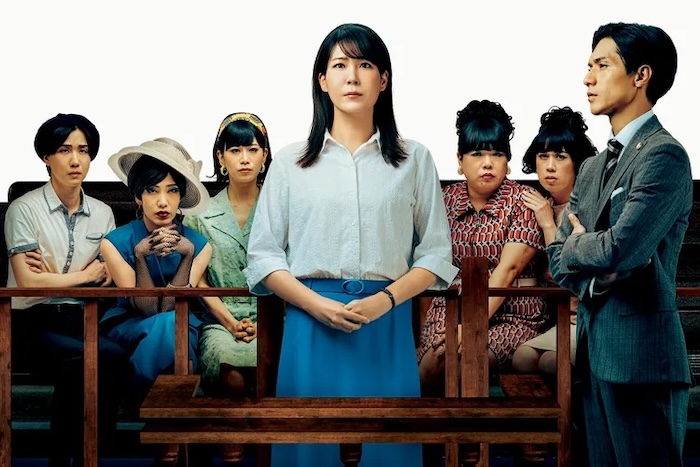
The Japanese constitution, like the American one on which it was modeled, guarantees the people the right to be happy, a rather amorphous concept that’s difficult to pin down legally, but usually it is interpreted to mean that everyone should be able to live their life the way they want to as long as it doesn’t violate another person’s right to live their life the way they want to. During the climactic courtroom scene in this feature film about the 1964 trial of a gynecologist for providing gender assignment surgery for trans women, the main witness, a trans woman who had been a patient of the defendant, was asked by the judge if she was “happy,” and she replies that she thinks she is, but that her idea of happiness may not be the same as another person’s.
Though the witness, whose name is Sachi and is played by the trans actor Miyu Nakagawa, isn’t saying anything particularly profound, in the context of the trial and, by extension, the movie itself, the remark’s ramifications are clear: Who exactly is Sachi hurting by wanting to live her life as a woman? And why should the doctor be punished by making her wish come true? That is, in fact, the kernel of the case, which takes place in 1964, since the police arrested Dr. Akagi (Takashi Yamanaka) not because he provided sex change operations, but because many of his patients were “blue boys,” the local slang for male prostitutes, some of whom were trans women. Prostitution was illegal, but since the law defined prostitution as a transaction between a man and a woman, male prostitutes who served men weren’t doing anything illegal. Even if the blue boys arrested had undergone gender assignment surgery, legally they were still considered men and couldn’t be prosecuted for prostitution, so the police targeted the doctor who made the changes possible, charging him with violating drug and eugenics laws. If that doesn’t make complete sense, it’s mainly because Japanese law is quite malleable in the hands of people who wield it, but that really isn’t the aim of the movie, which is to explore the lives of trans women at the time and how they coped with social oppression. In that regard, Sachi is a ringer, because she is not a prostitute, and though she works as a waitress, she is not in the “water trade,” meaning the night time entertainment business where most of the other trans women in the movie are employed. The infinitely patient and sympathetic defense lawyer, Inaya (Ryo Nishikido), badgers Sachi into testifying because she aspires to be a “normal woman” in that she favors most of the so-called feminine attributes that were considered wholesome during that time. And, in fact, she is living with a man, Iwamura (Ko Maehara), who knows she is trans but wants to settle down with her in a traditional marriage-like situation even if it is legally impossible.
Director Kasho Iizuka, who is a trans man, presents the case and the dramatic side stories in a straightforward way that highlights each character’s stake in the trial, which sometimes means the wider world gets shortchanged. We get a glance into Iwamura’s family life when his mother comes to visit and assumes Sachi is a woman, but the only real contrast to the demimonde depicted is Inaya’s home life, which is mainly provided to show how hard he’s working for his client. In fact, the hardest working people in the movie seem to be the tabloid reporters who sensationalize the trial in expected ways, drawing attention to the group of trans women (all of whom are played by trans actors) whose lives will be most affected by the outcome. That’s the focus of the drama, which entails tragedy and even some hilarity amid the persuasively staged sense of community.
In Japanese. Now playing in Tokyo at Toho Cinemas Nihonbashi (050-6868-5060), Toho Cinemas Hibiya (050-6868-5068), Toho Cinemas Chanter Hibiya (050-6868-5001), Toho Cinemas Shinjuku (050-6868-5063).
It’s interesting that 20th Century Fox has released two films within the last year each of which portrays one of Columbia/Sony Records’ biggest artists and only one of them has the artist’s name in the title. Is it because Bob Dylan is more historically iconic than Bruce Springsteen that there was no need to call the former’s movie Dylan: A Complete Unknown? It probably has more to do with each artist’s approach to his art and audience. Aficionados of both Dylan and Springsteen will certainly be aware of the films, but how about everyone else? In Dylan’s case, I would think it probably doesn’t matter, even to Dylan, who has always been confident enough in his notoriety to ignore such concerns, which is why the movie itself feels almost as if it could be about anybody. It comes across less as a document about Dylan the man and more as a witty and compelling story about a new kind of entertainer. Ostensibly, both films are about specific “stars” at important junctures in their careers, but only the Springsteen movie seems intent on that approach. As a public person, Springsteen has always been the more self-conscious performer, and a great one, which may be the point. He wants to show the world with this movie that he’s also a troubled creative type, something Dylan would never cop to, at least not publicly.
Like A Complete Unknown, Deliver Me from Nowhere covers a circumscribed period in its subject’s career, specifically the making of Springsteen’s sixth album, Nebraska, which was a complete departure from his previous work. Having finally established himself as someone who could not only sell out arenas but move substantial units after releasing his double-LP opus The River, Springsteeen (Jeremy Allen White) takes some well-deserved time off to reflect on his good fortune and think about the future, a prospect that doesn’t sit well with him due to certain inchoate feelings of inadequacy. He rents a house on a lake and spends much of his time alone with his acoustic guitar, venturing out once in a while to jam with a local band in a bar where, of course, everybody knows him. He starts a tentative romance with Faye (Odessa Young), a single mother and diner waitress who can only get so close owing to those inchoate feelings, which White telegraphs with all the distracted stares at his command. Meanwhile, he’s shielded from his record company’s ravenous demands for product “while the iron is hot” by his meticulously sympathetic manager (Jeremy Strong), who has his back, even when he decides to make that next album not the raver the company expects but a set of quiet demos he records in his bedroom about men living on the edge of their desperation.
Director Scott Cooper honors the hushed tone of the album by making the movie overcast and claustrophobic, inserting B&W episodes from Springsteen’s childhood in which he has to confront the troubled father (Stephen Graham) who was a distant but palpable presence in his life. Though some screen time is devoted to the actual making of Nebraska, the movie is essentially a mood piece about finally addressing the demons that drive a person to create in the first place, and as such it feels heavy-handed. You miss Springsteen’s down-to-earth humor, his mischievousness. The reason Dylan didn’t get a biopic like this is because he never seemed like the kind of artist who takes himself that seriously. He doesn’t demand you understand him. In Deliver Me from Nowhere, Springsteen practically begs for it.
Now playing in Tokyo at Toho Cinemas Nihonbashi (050-6868-5060), Toho Cinemas Hibiya (050-6868-5068), 109 Cinemas Premium Shinjuku (0570-060-109), Shinjuku Piccadilly (050-6861-3011), Toho Cinemas Shinjuku (050-6868-5063), Toho Cinemas Roppongi Hills (050-6868-5024).
Springsteen: Deliver Me from Nowhere home page in Japanese
The local distributor is promoting this Indian action film as Bollywood John Wick, which is comprehensible shorthand for what the target audience should expect: lots of balletic, well-executed carnage but in an Indian setting; and, for sure, it delivers that in spades, but the Bollywood factor, though somewhat misleading (nobody breaks into song and dance, though the soundtrack does contain some Hindi bangers), makes for a notable difference. In the John Wick films, not to mention most action movies where the body count is high, including Japanese chanbara and Hong Kong kung fu, the bulk of the casualties are treated as no more than bodies to be broken and dismembered. Here, the deaths mean something, and not just those of the nominal good guys. The film’s investment in the emotional outcome of the killings gives the action a frisson of titillation mixed with disgust.
Our hero is Amrit (Lakshya), an army commando with the requisite wicked skills as a fighter, though we’re introduced to him as the left-behind lover of Tulika (Tanya Manktala), the daughter of an IT oligarch who, frustrated by his daughter’s lack of suitable suitors, has arranged for her to marry another guy. Amrit clandestinely contacts Tulika and they arrange to elope once the engagement party reaches Delhi by overnight train, with Amrit tacitly tagging along in a different coach next to his best bro Viresh (Abhishek Cauhan). Unbenownst to any of them, a large crew of bandits has also booked passage and once the train leaves the station they start robbing the passengers of cash and loot after their psychopathic leader, Fani (Raghav Juyal), buries a machete in a conductor’s skull. Panic sets in and Amrit and Viresh spring into action, taking on the thieves with everything at their disposal within the narrow confines of the train cars. Inevitably, Fani discovers Tulika and her wealthy family and attempts to take them hostage. Amrit’s action brief thus becomes that much more complicated, but the writer-director, Nikhil Nagesh Bhat, doesn’t follow through on this premise in ways you might expect. He doubles down on the brutality by giving Amrit a reason to go at the bandits with a fully stimulated rage that gives no quarter. In return—and here’s where the violence is given meaning—the bandits, comprised of interrelated families, turn equally vicious because each person Amrit or Viresh kills is the father, brother, or uncle of somebody on the other side. The fighting increases in boodthirstiness accordingly.
Kill doesn’t rewrite the revenge action genre, but Bhat’s talents as a filmmaker who knows how to use space and time are considerable, and by ignoring much of the aesthetic flair that distinguished the Wick series he creates something new that is terrifyingly visceral in the way people kill and die, because now there is a reason, no matter how frivolous it may seem in terms of conventional cinematic storytelling. I admit to enjoying the relentlessness of the action while also being very unsettled by its emotional toll, exacted to a certain extent by the fact that the bandits, while initially preying on average folk, clearly represent the hungrier classes getting back at the 1-percenters as personified by Amrit’s hoped for in-laws. Sometimes even psychopaths hew closer to your sympathies than the good guys do.
In Hindi. Opens Nov. 14 in Tokyo at Human Trust Cinema Yurakucho (03-6259-8608), Shinjuku Piccadilly (050-6861-3011), Human Trust Cinema Shibuya (03-5468-5551).
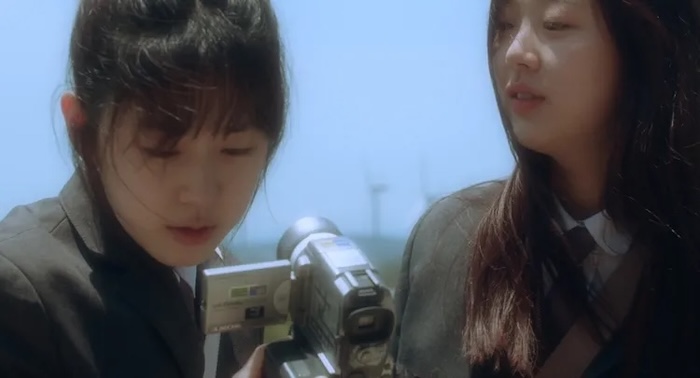
The edit of this 2022 Korean movie intended for release outside of Korea contains opening title cards in English that glancingly refer to the Sewon ferry accident of 2014, a disaster that claimed the lives of hundreds of children who were on a school excursion. Presumably, Korean viewers don’t need this information to appreciate the story they are about to watch, which focuses on two best friends who are somehow connected to the incident, though the first-time director, actor Cho Hyun-chul, keeps the viewer constantly off balance by circling around the matter. On the surface, The Dream Songs is a reverie on youthful ardor, the kind that best friends can feel to the point of infatuation, and is similar in tone and purpose to another recent Korean movie, So Long, See You Tomorrow, which also explores the fraught relationship between two adolescent best friends. The differences, however, are more striking. The pair in The Dream Songs are female, the one in So Long male. And while both movies trade in the kind of what-if fantasias that only cinema can deliver, The Dream Songs actually feels like a dream with its hazy, soft-filtered photography and narrative non sequiturs.
The movie starts with Se-mi (Park Hye-soo) at her school desk waking from a dream in which she imagines her BFF Ha-eun (Kim Si-eun) dead. Panicked, she begs the rest of the day off from her teacher to visit Ha-eun, who is in the hospital recovering from injuries sustained in a run-in with a bicycle. Relieved that her friend is not only alive but seemingly recovered enough to leave the hospital, Se-mi tries to convince Hae-un to join the rest of the class on the following day’s big school trip to Jeju Island. Hae-un is not going, and not just because of her injury. She doesn’t have the cash for it, so she and Se-mi concoct a plan to sell an old camcorder gathering dust in Hae-un’s father’s study. This plan leads to a series of misadventures that are sometimes confusing in their blend of intrigue and serendipity, but reveal Se-mi’s bond with her friend as something deeper than infatuation. At one point, she spies a note in Ha-eun’s diary about a mystery person whom she seems to have a crush on and commits herself to finding out who it is. This mission causes a rift between the two friends that results in Hae-un’s disappearance and Se-mi’s reckoning with her own immaturity, which peaks during a brilliantly staged scene in a karaoke box as Se-mi’s interpretation of an over-wrought love song turns into something hair-raising.
At some point, Cho, who also wrote the script, switches the nominal POV from Se-mi to Ha-eun and it takes the viewer a few minutes to adjust to the difference in sensibility. The movie becomes more melancholy, less impassioned in its emotional contours, and the viewer comes to an organic realization as to what the movie is trying to say—not tuned to plot machinations or sudden revelations but rather to a change in feeling that’s steeped in meaning. The digressions about lost pets and mistaken stalkers make sense not in a logical way, but in how they point to truths that should have been obvious all along. Part of the mystery has to do with teen attitudes. Cho lets his young actors live in their age-appropriate speech, which we in the audience can only partly penetrate; but not understanding what each remark is specifically supposed to convey doesn’t shut us out of their world because the movie’s meaning transcends language. It’s a dream that attempts to assuage the lingering pain of loss with memories of what love really felt like.
In Korean. Opens Nov. 14 in Tokyo at Shibuya White Cine Quinto (03-6712-7225).
Japanese distributors are releasing Alexis Bloom’s muckraking documentary about the House of Netanyahu a year after it was first shown elsewhere. Given the velocity of breaking news these days it would seem to follow that the movie is dated, but, in fact, it feels relevantly up-to-the-minute in the year of Trump 2.0, since the returned U.S. president’s imperious sensibility only highlights the eternal Israeli prime minister’s sense of entitlement, which Bloom shows has not only exacerbated the war in Gaza but extended its brutal outcomes indefinitely. Netanyahu, as the film stresses, is a much more media savvy public personality than Trump is, but given the testimony provided by other witnesses to his perfidy, many of whom are former confidantes and allies, including one who still claims to be Bibi’s “only friend,” the polished bluster and evasion come across as even more cynical than it does on TV. After all, Bloom’s movie is based mainly on leaked videos of police interrogations into the Netanyahu family’s corruption.
Initially, the charges and police action almost seem over-determined, since they mostly have to do with Netanyahu and his third wife, Sara, accepting and, in many cases, soliciting extravagant gifts like expensive cigars and crates of champagne. In his office, the sitting prime minister bats away investigators’ questions about these gifts by saying they’re trivial and that the police have better things to do. Sara is even harsher in her contempt for the investigation, insulting the officers and insinuating that they are unpatriotic. Reporters who have covered Netanyahu since he was a mere Knesset member and people who used to work with him or around him describe him and his wife as preternaturally haughty, in particular Sara, who is known to abuse servants and treat people who want favors from the family as conduits of luxury goods. “You can’t say no,” says one former assistant to Hollywood magnate and former arms dealer Arnon Milchan after relating how Sara would badger rich friends into feeding her liquor and jewelry addictions. So for a while, the doc feels more like an extended Page Six expose about elites exploiting their positions, but once it gets into Netanyahu’s paranoia about being tried and convicted of fraud, which is a real possibility considering that Israel may be second only to South Korea in terms of its history of prosecuting high-ranking officials, it shows convincingly how he manipulated the system, despite unified public opinion against him, in order to stay in power, first by changing the law regarding how the supreme court can judge and, ultimately, by taking advantage of the Oct. 7 massacre to justify a neverending war against the Palestinians so as to distract the nation in the most terrifying way possible.
Almost all of this information has been reported by the Israeli and international press, and any resourceful and curious viewer knows it already. What Bloom provides that the daily news doesn’t is the context of a man whose personal ambitions have driven him to hold his own government hostage, going so far as to channel funds clandestinely to Hamas in order to keep the Palestinian authorities internally embattled. He even moved further right to form a new political faction in order to dodge the condemnation of left-wingers and centrists. His son then got into the act by stage managing the press, using his father’s connections to billionaires who controlled the media companies. The excuse in this case is as banal as always, that the press is not balanced, but when you watch the interrogation tapes you see exactly the Trumpian playbook, which Netanyahu could have written: deny, lie, plead ignorance (usually by “forgetting”), and act aggrieved. One witness insists he is better than any movie actor you could possibly name, and he may be, but like most actors he leaves enough space on the edges for you to see the subterfuge behind the performance. He can’t help himself.
Subterfuge of a distinctly different type animates the drama of the German biopic Bonhoeffer, a real life subject who is as selfless as Bibi is self-serving. Dietrich Bonhoeffer (Jonas Dassler) was a Lutheran pastor whose well-publicized pacifist ideals clashed with the nihilist goals of the Third Reich and thus was executed mere weeks before Hitler’s suicide. The movie expands his brief by suggesting he was also directly involved in a plot to assassinate the chancellor, though some scholars have refuted this intelligence. The movie, a thoroughly German production with some very famous German actors in supporting roles, tips its hand toward commercial relevance by presenting all the dialogue in accented English (except, notably, the Gestapo, who speak in German, thus immediately equating the language with villainy), but the overall production is effective in showing how one’s faith can be the strongest bulwark against oppression.
The director, Todd Komarnicki, pushes this approach mainly by focusing a lot of screen time on Bonhoeffer’s time studying at New York’s Union Theological Seminary in the 30s, where he came in contact with Black church folk in Harlem. Though an impossibly quick read of Dixieland jazz at the piano in a nightclub displays his tolerance for New World innovation, it was Bonhoeffer’s personal confrontation with pure American racism that showed him how his religion could be used to fight the Nazis back home, and there are stirring scenes of the young pastor exhorting his flock from his Bavarian pulpit on the evils of totalitarian thought, which was being exercised by the Nazis through the commandeering of the German church for its own nefarious aims.
The movie’s hackneyed structure of having a framing storyline about Bonhoeffer’s last days in Nazi captivity as the war winds down doesn’t focus the dramatic thrust as much as Komarnicki thinks it does, but as a movie Bonhoeffer makes several good points about standing up to power without getting lost in glittering generalities. In fact, it might have been better if the movie were less cinematically ambitious. The protagonist is admirable without being anywhere near believable.
The Bibi Files, in English and Hebrew, now playing in Tokyo at Theater Image Forum Aoyama (03-5766-0114).
Bonhoeffer: Pastor. Spy. Assassin, in English and German, now playing in Tokyo at Human Trust Cinema Yurakucho (03-6259-8608), Human Trust Cinema Shibuya (03-5468-5551), Shinjuku Musashinokan (03-3354-5670).
The fact that Sho Miyake’s latest movie (Tabi to Hibi in Japanese) is based on two manga may cause some misunderstanding. The manga author is Yoshiharu Tsuge, whose work is subtle and idiosyncratic, meaning it doesn’t adhere to the kind of exaggerated theatrics that most manga deal in. Both stories take place in Tsuge’s native Hokkaido, but are quite different, not in tone so much as in narrative presentation. The first one is framed as a writing assignment by a screenwriter, Li (Shim Eun-Kyung), who has been hired to adapt one of Tsuge’s stories for the screen. We watch her struggle to make the proper changes and then see the end result, meaning the movie the script turns into, which is about two young people (Yumi Kawai, Mansaku Takada) getting to know each other on a secluded stretch of beach over the course of the summer. What happens in this film-within-a-film is less significant than what happens after the movie is screened at a university where Li is the guest who fails to answers the students’ questions about it. She was invited by a film studies professor (Shiro Sano) who later encourages her to visit Hokkaido to see the place that Tsuge was writing about, since she’s never been there.
The second half is prefaced by a tragedy that spurs Li to make that journey on her own, and it becomes clear as she disembarks from the train into the snow-bound resort town that she isn’t much of a traveler. Having not made any reservations she can’t find a place to stay and is forced to trudge halfway up a mountain to an inn that looks as if no one has stayed there in decades. There is only occupant, a reticent middle-aged man named Benzo (Shinichi Tsutsumi) who, at first, seems put out by Li’s entreaties to let her stay, but soon it becomes apparent that he just isn’t used to having people around, and as the host-guest relationship develops we learn a little about the way his mind works, and he seems willing to let Li write about him. In fact, it sounds just like something Tsuge would write, and I guess it is.
Miyake isn’t much for vivid expression, and the movie’s slow pace and undercurrents of melancholy can have a narcoleptic effect. Moreover, the dialogue, which often fades into philosophical musing, feels unnatural, especially for a film that is mostly about how we observe human interaction. In the end, when Benzo is questioned by the police about something he claims he didn’t do you feel as if the movie is about to say something, but it turns into a red herring. Life is like that, I suppose, but life isn’t always interesting.
In Japanese and Korean. Opens Nov. 7 in Tokyo at Toho Cinemas Chanter Hibiya (050-6868-5001), Theatre Shinjuku (03-3352-1846), Toho Cinemas Nihonbashi (050-6868-5060), Human Trust Cinema Shibuya (03-5468-5551).
There’s obviously something about Hong Sangsoo’s methodology that appeals to Isabelle Huppert, because this is the third movie of his that she’s starred in. It may be the free-form way Hong constructs his narrative. Like Mike Leigh, Hong doesn’t start with a finished script, but unlike Leigh he doesn’t involve his actors in the scriptwriting process. Instead he shows up to the set every day with notes that are then fleshed out by the actors. This method can sometimes backfire, with actors overcompensating for the lack of clear narrative intent with actorly flourishes that give the game away, so to speak. Huppert is too seasoned to give the game away, but in A Traveler’s Needs she seems more untethered than in the two previous films she did with Hong, In Another Country and Claire’s Camera. As a result, it’s the Korean actors who seem untethered.
Partly it has to do with language. Much of the dialogue is in English, and while Hong is self-assured enough to let his actors stumble around in the language in accordance with their skills levels—meaning they simply sound linguistically challenged rather than stilted—they still sound as if they’re not sure of what they’re supposed to be saying when they’re locked in conversation with the fluent Huppert. The French actress plays Ilise (or Iris, depending on how Anglophone you want to be), a preternaturally carefree Seoul tourist who is bold in striking up conversations with random natives. One encounter has led to an ad hoc French conversation teaching gig with a pianist, Isong (Kim Seung-yun), during which very little French coaching takes place. Mostly the two talk in English about Isong’s feelings, a method that at first smacks of laziness on the part of Ilise, who would rather drink (thus making her a perfect foil for Hong) than do anything else. But eventually you get the notion that Ilise’s insistence that her “students” open up to her is a kind of arrogance: She interprets the Korean reticence with foreigners as a hindrance to real communication, and, in a sense, her method works, though the reaction it sparks is not the one she expects. Eventually, the connection with Isong leads to connections with others who want to learn French, and in the patented Hong style these new encounters become variations on a theme rather than unique interactions in their own right.
Though all of Hong’s films are comedies, some are funnier than others, and A Traveler’s Needs‘ jokes have a biting insistence that sometimes feels forced, again, probably because of the language. When it’s revealed that Ilise is actually staying at the apartment of a younger man (Ha Seong-guk), the first impression is that she’s using her French feminine wiles to take advantage of his hospitality, since he doesn’t ask her for rent even though he himself seems underemployed. The man’s mother (Ha Jin-wha) confronts him about this unseemly arrangement (they don’t seem to be having sex, though you never know with Hong), but the incident isn’t really keyed into the overall flow of the story. It’s simply there to reinforce the theme of Ilise’s disregard for people’s concerns, despite her determination to understand their “feelings.” Maybe that’s a point that would become more pertinent on repeated viewings, but Hong makes so many films so quickly that it’s difficult to keep up with him.
In English, Korean and French. Now playing in Tokyo at Euro Space Shibuya (03-3461-0211).
Baek Seung-bin’s third feature’s literary pretensions go beyond his borrowing the title of William Maxwell’s classic 1979 novel. There’s a gay bar that figures centrally in the plot called Giovanni’s Room, the title of an early James Baldwin novel and one of the characters grows up to pen an award-winning work of fiction that takes place in parallel universes, a situation that mirrors the plot of Baek’s own movie, which reportedly is a response to an “existential crisis” the director experienced. The protagonist’s own existential crisis would seem to be a lifelong one, and starts with the departure of the high school classmate he loves after the suicide of the latter’s beloved mother, who happened to be a professional poet and English lit scholar. Baek doesn’t go much into detail regarding the relationship between the protagonist, Dong-jun (Sim Hee-seop), and the mournful friend, Kang-hyun (Shin Joo-hyup), but simply presents it as a given, with isolated scenes of the two trading philosophical bon mots and getting chastely physical. The difference is that Kang-hyun believes life isn’t worth living without risk-taking—his hero is the French tightrope walker Philippe Petit—while Dong-joon dreads the future, but doesn’t realize why until Kang-hyun goes away.
The bulk of the movie takes place in three what-if scenarios, as if Dong-joon, now 42 years old, were only a figment of Baek’s imagination as a writer. The conceit of having Dong-joon lead three separate lives depending on which life path he chooses at an early juncture would probably work better if Dong-joon were a more sympathetic character, but the one quality that all three of his “me’s” share is moroseness. In one life he’s an English lit professor who drinks too much and mopes around his office, trying to hide his homosexuality though everyone seems to know about it and doesn’t really give a shit, thus making his gloomy attitude not just pointless but annoying. In a second narrative, he’s a modest and hopeful cram school teacher with some literary pretensions of his own who is a good brother to a married sister undergoing a cancer scare, a good brother-in-law to the sister’s good-natured but ineffectual policeman husband, and a terrific uncle to the couple’s mildly rebellious teenage daughter; but still morose. In the third universe he’s again the heavy, though he seems to have mended whatever wayward tendencies ruined his marriage and turned his son into a convict. The proof of his redemption is the friendship of a construction worker widower-father who has his own literary pretensions that Dong-joon encourages is a selfless way—or is his interest more erotic in nature?
The other thing all three narratives have in common is that they all eventually lead back to Kang-hyun, an outcome that feels anticlimactic by definition, since it seems to happen three times. The trouble with movie scripts that want to be novels and movie directors who aspire to be Willam Maxwell is that both tend to create worlds that can only be effectively conveyed through unique literary stylings. Despite its formal ambitions, So Long, See You Tomorrow, the movie, is emotionally incoherent, which is especially disappointing. Right now, Korean cinema could really use a good, honest, straightforward fiction movie about queer longing.
The parallel universe depicted in Singapore director Eric Khoo’s Spirit World is a more conventional literary conceit: the afterlife, which here is inhabited by two recently deceased souls who are stuck watching a living person try to find meaning in a life that has become a chore. The fact that one of these two souls is a famous chanson singer named Claire played by Catherine Deneuve and the afterlife seems limited to Japan, specifically the Pacific coast of the lower Kanto region, says more about Khoo’s peculiar creative obsessions than it does about his beliefs.
The other departed-but-not-yet-enraptured soul is piano tuner Yuzo (Masaaki Sakai), one of Claire’s biggest fans who died only days before the singer was to make her long-awaited concert return to Japan, and thus his son, Hayato (Yutaka Takenouchi), a blocked film director, goes to the concert in his place as a kind of tribute to the old man. Claire dies while drinking a mess of nihonshu after the show and meets Yuzo on the other side. He tells her one of the rules of the afterlife is that newly embarked souls can’t cross over oceans (who makes these rules?), and so the pair spends the rest of the movie watching over Hayato as he slips into his own existential crisis, one that seems to have been triggered not so much by his father’s death or, for that matter, his reconnecting with his estranged mother (Jun Fubuki, behaving the total opposite of how you would expect a woman who abandoned her son as a young child would), but rather by his disappointment in how his career turned out. Based on what we’re shown it’s likely his cinematic vision tanked because he just drinks too much.
Khoo, along with his scriptwriter, Edward Khoo, has even less to say philosophically about the higher purpose of living one’s life gracefully than Baek does, and for the most part the viewer can do little more than tag along with Spirit World, whose internal logic, even as a fantasy, not only defies common narrative sense but lacks any recognizable emotional contours. The afterlife, it would seem, is pretty boring.
So Long, See You Tomorrow, in Korean, is now playing in Tokyo at Cine Libre Ikebukuro (03-3590-2126).
Spirit World, in French, Japanese, and English, is now playing in Tokyo at Toho Cinemas Chanter Hibiya (050-6868-5001), Kino Cinema Shinjuku (03-5315-0978), Yebisu Garden Cinema (0570-783-715).










 philipbrasor.com