There seems to be a certain type of indie film that only premieres at the Sundance Film Festival. Ostensibly black comedies with quirky, often disagreeable protagonists, they usually take place in the US heartland, but what makes these movies distinctive is that they vanish immediately afterwards. And one more thing: they always seem to find a Japanese distributor.
Adam Rehmeier’s Dinner in America is set in Lincoln, Nebraska, sometime in the 90s. It’s likely semi-autobiographical since the protagonist is the leader of a local punk rock band and Rehmeier had a hand in writing the songs performed. Simon (Kyle Gallner) isn’t just a punk rocker. He’s an anarcho-nihilist who is unabashed in his hatred for everything conventional, a sensibility that comes to a head during the titular family ritual, of which there are three extended examples in the film. Two of the three end up in very violent free-for-alls sparked by Simon’s provocative mouth. The third results in his receiving an invitation to stay the night. Unbeknownst to his hosts, he needs a place to hide from the police, who want him for arson and assault. While on the lam, he comes across Patty (Emily Skeggs), a college dropout and social misfit who has just been fired from her job in a pet store, and gets himself invited to dinner at her house with her clueless parents and hormonally confrontational teenage brother. Acting saintly, he fools the folks and then later, in Patty’s room, realizes she idolizes the masked punk singer John Q. Public, who happens to be Simon. He doesn’t reveal his identity, but is intrigued because Patty has been sending John Q. love letters with dirty pictures and song lyrics he finds compelling despite himself.
Whatever else Rehmeier intended his movie to be it’s basically a romantic comedy: two totally mismatched personalies meet cute and then find ways around their differences to fall in love. In that regard, Gallner and Skeggs make a nice couple but the humor relies too much on the viewer’s capacity to be shocked by Simon’s misanthropy and Patty’s gullibility. There’s also an unfortunate tendency to use the 90s setting as an excuse to forego any attempt at PC responsibility. Homosexuals and people with developmental disabilities get a lot of grief (Patty is repeatedly called the “r” word by her peers), and while the characters who wield these slurs are clearly assholes, after a while the device feels forced. More to the point, the requisite fulfillment of gross revenge fantasies provides no satisfaction. The difference between scrappy and crappy is only one letter.
Now playing in Tokyo at Human Trust Cinema Shibuya (03-5468-5551), Shinjuku Musashinokan (03-3354-5670).
Probably one of the most fraught American movie releases of recent years, Minamata opens in Japan with its own set of caveats for people interested in both the truths it attempts to address and those who just want to enjoy an engaging film for its own sake. It’s already had its requisite major festival premiere followed by a limited release schedule worldwide, but the U.S. remains closed to the film owing to North American distributor MGM’s squeamishness over star Johnny Depp’s recent notoriety as an alleged wife-beater. In Japan, the city for which the movie is named has effectively disowned it because, according to local media, its “content is unclear,” a rather roundabout way of saying that there are too many sensibilities at risk of being offended, though ostensibly it is the victims of Minamata disease the city is worried about, since they are still targets of discrimination. Nevertheless, anyone who sees the film will conclude that the victims are really victims of corporate greed and official negligence, since it deals forthrightly with the discrimination issue.
Director Andrew Levitas tries to make the film work on two levels. On the one hand, he wants to explain what has since become known as perhaps the seminal example of industrial pollution in the history of environmental degradation, and on the other he wants to explore the personality of the man, photographer W. Eugene Smith (Depp), who brought the disaster to the world’s attention. Minamata is a fishing town in Kumamoto Prefecture where the Chisso chemical company had a factory that spewed methylmercury into the sea, contaminating the fish that the local people ate. Starting in the 1950s, more and more cases of nerve-related illnesses appeared among residents, but for two decades the company denied that its operations had anything to do with it. The people affected could not find relief from either local or national officials who were in thrall to large companies like Chisso that were spurring Japan’s postwar economic miracle. Long story short, Aileen Mioko (Minami), a Japanese national living in New York, approaches Smith on behalf of the small group of Minamata activists fighting Chisso, because Smith had a reputation for socially relevant work and, more importantly, that work was published in Life magazine, which in 1971 was still an influential publication. (Another reason Aileen approached Smith was that he had some kind of promotional deal with Fujifilm, a factoid I wanted to know more about.) As the film portrays him, Smith by this point had become the stereotypical suffering artist who turned down guaranteed money-making offers in order to follow his whims, which weren’t very distinct, though his drinking problem was acute. In any case, Levitas tries to get too much thematic mileage out of Smith’s problematic relationship with Life editor Bob Hayes (Bill Nighy), who loves the guy’s work but hates the stubborn personality and has people to please who have no use for a dinky fishing village on the other side of the world.
The heart of the film, and what makes it work better than it should, is Smith’s eventual relationship with the people of Minamata. Understanding his mission they help him obtain cameras, film, and whiskey and set up a dark room for him without really trusting him. Because Smith is a fairly outsized character, Chisso knows he’s there and tries to stonewall him at every turn. Smith has to be snuck into the hospital by Kiyoshi (Ryo Kase), an activist of the victims’ group, in order to take photos of patients, but due to Smith’s exacting aesthetic standards, he isn’t satisfied, and, in any case, it’s unlikely that Life will buy photos of people lying in hospital beds, regardless of what put them there. Still, Chisso is spooked enough that the company’s president (Jun Kunimura) offers Smith bribes and, when that doesn’t work, sicks hired goons on the house he’s staying in to destroy the dark room.
But the movie really comes into its own with the scenes outlining the activities of the victims’ support group, whose leader (Hiroyuki Sanada) at one point gives a speech about how the tragedy needs to be acknowledged by the world because he’s sure that big companies take advantage of local communities everywhere. “It’s happened before,” he says, “and it will happen again.” Though it’s very likely that Levitas fictionalized this component of the film in order to, as they say, make it more dramatically potent, it takes the focus off of Smith long enough to drive home the real meaning of the movie. Quite possibly it is also this component that bothers the city of Minamata now, but from what I’ve read the people with any say in the matter haven’t even seen the film.
In any case, this grassroots movement to bring their case to the world and Smith’s dogged, somewhat selfish approach to photojournalism dovetail effectively into the movie’s centerpiece scene, in which Smith produces the photograph that made Minamata famous, the “pieta” shot with victim Tomoko Uemura and her mother in the bath. The movie is quite up front about how this shot was not only staged, but essentially planned out. The victims’ group knew that they needed something dramatic and simple to make their case, and after many months of pleading from Aileen, Tomoko’s mother agrees and Smith is ready (though Aileen seems to be the one who choreographs the image).
The rest, as they say, is history, though Levitas doesn’t send Smith off into the sunset a hero. He doesn’t really know what to do with him any more, which is a negative function of Depp’s star power. Depp has always relished playing iconoclasts, and when they’re odd enough to disappear into (Willy Wonka, Edward Scissorshands), he can be phenomenal, but Smith’s idiosyncrasies are mostly treated as cliches, and what we come away with is basically Johnny Depp on a bender. As with many A-lister turns in unconventional movies, he’s more distracting than enlightening. The real star of the film is the Japanese ensemble—including Tadanobu Asano and Akiko Iwase—which juxtaposes the fierceness of the victims’ anger and disappointment against the smallness of their community. Levitas can’t possibly bring forth the enormity of their struggle, which continues to this day and is more comprehensively covered by Kazuo Hara’s documentary Minamata Mandala, which comes out later this year and mostly addresses the issue of discrimination that Minamata city is so worried Levitas’s film will somehow aggravate. Personally, I think the two films complement each other well, but be warned: Hara’s film is more than six hours long.
In English and Japanese. Now playing in Tokyo at Toho Cinemas Nihonbashi (050-6868-5060), Toho Cinemas Hibiya (050-6868-5068), Shinjuku Wald 9 (03-5369-4955), Toho Cinemas Shinjuku (050-6868-5063), Shibuya Cine Quinto (03-3477-5905), Toho Cinemas Roppongi Hills (050-6868-5024).
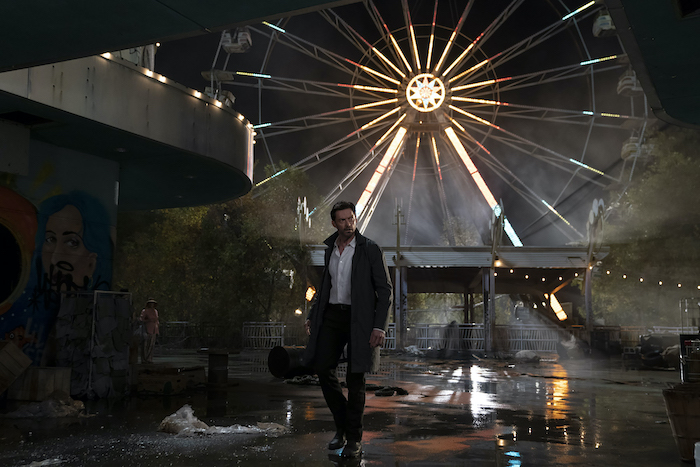
I slogged through the three seasons of Westworld on pure inertia. Though the basic premise of androids “evolving” self-consciousness and its attendant moral structures wasn’t particularly original, the extended series format gave creator Lisa Joy ample opportunity to explore all the possible ramifications, and within a fictional environment that was both hilariously uber-capitalist (a movie western theme park where the rich could indulge their worst impulses and appetites) and which encouraged creative narrative flights of fancy. The problem with the series was its attention to sci-fi and action movie formulas that eventually ground the characters down into dramatic stereotypes. Joy’s first film feature as director suffers from much the same lack of sustained rigor. The future of Reminiscence could be the same as that depicted in Westworld, only that we’re focused on a less affluent layer of society and a retail concept that’s cheaper and more malleable.
Miami is now a half-submerged city, like Venice but with skyscrapers. Nick Bannister (Hugh Jackman) and his partner Watts (Thandiwe Newton, the lone holdover from Westworld) run a service that allows clients to restore lost memories. Most want to relive pleasant experiences from their past, and there’s more than a hint that such indulgences have an addictive quality. One regular customer is behind on his payments but Nick lets it slide because, as a veteran of a terrible foreign war, he understands how important the salve of nostalgia can be for the PTSD-rattled mind. Conveniently, the memories can be stored on discs as reproducible holograms, an aspect that plays into the mystery that fuels the plot, which starts when the requisite mysterious femme fatale, here a nightclub singer named Mae (Rebecca Ferguson), comes in for a very prosaic purpose — she lost her keys and wants to remember where she left them. The fact that Nick’s eyes light up when she first walks in the door indicate beyond a doubt that Reminiscence is designed as an exercise in old-fashioned film noir, and, as she has shown in Westworld, Joy is nothing if not faithful to the cliches she follows.
Long story short, Nick and Mae end up in a passionate affair from which Nick cannot possibly exit in one piece, at least not psychologically, when Mae disappears without saying anything. Like any noir detective whose sexual ego has been bruised (what’s love got to do with it?), Nick’s attempts to track her down involve him in the doings of underworld criminals and powerful plutocrats, not to mention the corrupt cops who always figure into these stories. In the end, Joy tries to tie it altogether, as she did several times on Westworld, by plunging her main characters into a morass of self-doubt that demands they question the reality they think they’ve lived. In other words, Nick eventually gets wise, as the old noir saying goes, but the viewer, always wiser, may not care.
Now playing in Tokyo at Toho Cinemas Nihonbashi (050-6868-5060), Toho Cinemas Hibiya (050-6868-5068), Marunouchi Piccadilly (050-6875-0075), Shinjuku Wald 9 (03-5369-4955), Shinjuku Piccadilly (050-6861-3011), Toho Cinemas Shinjuku (050-6868-5063), Toho Cinemas Shibuya (050-6868-5002), Toho Cinemas Roppongi Hills (050-6868-5024).
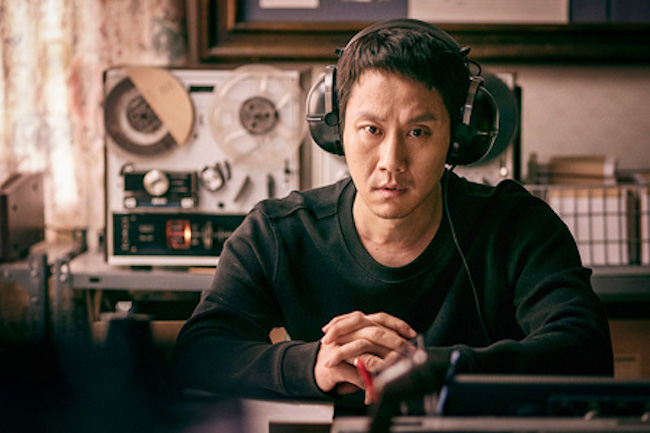
Living in Japan, where the treatment of politics and history by popular culture is a fraught undertaking, I find South Korean cinema’s willingness to confront the less edifying aspects of its recent past and current social mores almost astounding. Mainstream Korean filmmakers are so fearless in their desire to question authority that many times they go around the bend and make movies that almost seem to ridicule this tendency. Lee Hwan-kyung’s Best Friend (in some territories the English title is Next Door Neighbor) takes place in the mid-1980s when the government had declared martial law and regularly rounded up student demonstrators and political opposition leaders for torture and imprisonment. His dual protagonists occupy either side of this divide. Lee Eui-shik (Oh Dal-su) is the leader of a pro-democracy party who has spent the last several years in exile abroad. He returns home to South Korea to contemplate running in the upcoming presidential election, but is met at the airport by a group of thugs who cart him off to the headquarters of the intelligence services. Meanwhile, Yoo Dae-gwon (Jung Woo) is a fitfully employed ne’er-do-well who, while doing grunt work for the intelligence services, stumbles on a left-wing cell that gets him noticed by the slimy chief, who puts him in charge of eavesdropping on Lee while he’s under house arrest. Yoo moves into the house next door with two other spies to try to find evidence that ties Lee to North Korea so as to give them an excuse to put him in prison for life.
Despite the relatively serious purport of this plotline, the first half of Best Friend is a comedy, and a slapstick one at that. Yoo and his colleagues are supposed to lay low so as not to tip Lee and his family off that their house is bugged, and this dynamic leads to lots of awkward interactions that occasionally spill over into Three Stooges territory. The dramatic arc that is requisite for any mainstream Korean film follows Yoo’s changing sensibility, which goes from that of a simple man just trying to make enough money to feed his family to someone who grows as much of a conscience as necessary to understand that what he is doing is morally indefensible. Of course, this enlightenment is brought about by his inevitable relationship with Lee, whose own sensibility, based on fairness and trust in the human spirit, never changes at all.
Best Friend doesn’t break any new ground and its reliance on the kind of melodramatic devices that are almost mandatory in Korean cinema these days effectively dampens the political message. Korea is a Manichean society, according to the film, with the authorities as represented by the intelligence services incontrovertibly evil in their methods and intentions, while the liberal party that Lee heads, and in which most Koreans we’re led to believe have faith, is inherently virtuous. Nevertheless, the violence that pushes the plot to its inevitable conclusion in the second half is quite shocking. This 180-degree shift in tone is not surprising, but director Lee seems to be working under the assumption that he has to increase the volitility factor exponentially in order to distinguish his work from past anti-authoritarian dramas, so much so that the ending ends up being ahistorical, meaning it’s beyond revisionism. It’s pure fantasy.
In Korean. Now playing in Tokyo at Cinemart Shinjuku (03-5369-2831).
Scathingly literal in the way it depicts the organizational failure of well-intentioned multi-national peace efforts, Jasmila Zbanic’s slightly fictionalized take on the disastrous UN intervention in the mid-90s Bosnian conflict evinces that nauseous feeling of inevitable doom you get with certain horror movies, but without the attendant jolts and gross-outs. It’s a potboiler in that the heat is applied so gradually and steadily that by the time the pot is actually boiling you sit there in numb acceptance that this was going to happen all along. Zbanic’s means to this end is the title character played by Jasna Djuricic, an interpreter charged with being the linguistic medium between the Dutch UN forces trying to keep the fraught situation in Srbenica from turning deadly and the Serbian soldiers whose intentions they don’t dare second guess. At this point in 1995, Serbs had started murdering Bosnian civilians indiscriminately, acting out their age-old hatred of Muslims. The Bosnian residents of Srbenica, knowing the Serbs were on their way, flee to the safety of the makeshift UN base camp in the belief the international community will save them.
With no food or resources to take care of the townspeople who made it into the compound, and several hundred unable to gain entrance due to space limitations, the UN is forced to confront the arriving Serbian army, who insist they will not harm the Bosnians and that the UN should allow them to return to their homes. As the go-between in these negotiations, Aida understands where each side is coming from—the UN commander is restricted by his own agenda, which did not take into account all these refugees; while the Serbian leader is talking out of this side of his mouth—but as a professional can only translate what each one says, though she wants to tell the UN commander not to trust the Serbs.
Aida’s situation is complicated by the fact that her own family is on the other side of the fence, unable to get in, and when not helping with desperate conversations between the two sides that accomplish nothing, she is running around trying to gain favors from her UN supervisors to allow her husband and sons into the compound. The horror, as it stands, is purely bureaucratic in nature; which doesn’t make it any less horrifying. Aida’s mounting panic is checked by her understanding that only coolness appeals to officialdom when it is confronted by chaos. Meanwhile, Zbanic interrupts this frantic through-story with occasional snatches of stories from the crowd both within and without the compound, thus further intensifying the sense of hopelessness. Of course, anyone who knows the history of Srbenica will know what is going to take place, but even if you do, it doesn’t prepare you for it.
If anything, the almost dry storytelling tone sometimes defeats the dramatic effectiveness of the movie itself. The acting is uneven, and the script is laid out so matter-of-factly that certain plot points are glossed over. Though the UN is boxed in by its ineffective chain of command, which is unresponsive because top brass are on vacation that weekend (!), it’s not convincingly explained why they give up on the Bosnians so easily even though they must know what will happen to them when released into the Serbs’ care. But maybe it’s that point which is the most horrifying of all.
In Serbo-Croation, Bosnian, English, Dutch and Serbian. Opens Sept. 17 in Tokyo at Bunkamura Le Cinema Shibuya (03-3477-9264), Human Trust Cinema Yurakucho (03-6259-8608), Shinjuku Musashinokan (03-3354-5670).
As an American who was only physically present in the U.S. during the Trump administration for, at most, two weeks out of the year, I found former Daily Show host Jon Stewart’s comedy about the foibles of political gamesmanship both phony and too earnest. Essentially a Democrat’s owning up to the fact that he didn’t do enough to prevent Trump’s election, Stewart’s directorial debut plays both sides of the matter against the center, where he presumably exists, but in the end his even-handedness comes across as false, if not downright dishonest.
Steve Carrell is deep within his wheelhouse as Gary Zimmer, a successful Democratic consultant who was so blindsinded by the Trump victory that he thinks of packing it all in, but then he comes across a video of farmer and former marine Jack (Chris Cooper) giving a speech at a civic Q&A session in his small town of Deerlaken, Wisconsin, railing against the Republican mayor’s plan to force everyone to carry ID, presumably to check on illegal immigrants, saying that isn’t what he fought for, and Gary thinks he found his way back into the promised land. He immediately flies to Wisconsin and recruits Jack as a possible Democratic spoiler in the predominantly Republican town by stressing those values that Democrats usually have a lock on—or so Democrats think. Most of the comedy springs from Gary’s failure to navigate the cultural contours of Deerlaken while making Jack palatable to coastal elites. Of course, once Gary’s Republican counterparts, most prominently blonde GOP operative Faith Brewster (Rose Byrne), descend on the town as well and try to gum up Gary’s machine, problems accelerate. In fact, it’s the scenes between Faith and Gary, full of sexual tension and delivered with the kind of screwball accuracy that was once de rigeuer in Hollywood comedies, that prove Stewart’s bona fides as a promising filmmaker, but his real goal is trying to show how both parties miss what’s vital about real America.
If I don’t buy it, it’s because the kind of sentiments that Trump unleashed in the so-called heartland were genuinely scary, and Stewart does little more than make fun of them. The plan here seems to be to ridicule both-sidesism, but actually both sides are not equal, at least not in terms of how they will eventually affect the middle and lower classes, including many people who think they were better off with Trump. And by saving most of its ire for Stewart’s own industry, he basically falls into the trap that the extremes at both ends of the political spectrum have set for him and his liberal ilk, which is that it’s the media who are indeed the enemy of the people. The big joke that drops like a bomb at the end of Irresistible is also a big disappointment, since it succumbs to the age-old myth that plain folks are wise to the machinations of elites and thus know how to manipulate them to their advantage. That’s another Hollywood cliche, and one that takes on a particularly sinister cast in post-Trump America.
Now playing in Tokyo at Toho Cinemas Hibiya (050-6868-5068), Shibuya Cine Quinto (03-3477-5905), Toho Cinemas Roppongi Hills (050-6868-5024).
Here’s this week’s Media Mix, which is about the media narrative that young Japanese people are generally hesitant about being vaccinated for COVID-19. As part of the narrative-reinforcing process, the web magazine Litera went on about vaccine czar Taro Kono’s media campaign earlier this summer to change young people’s minds about the vaccine, when, in fact, they didn’t need changing. What needed to happen was making more vaccines available so that they could get vaccinated, but for a number of reasons, some of which I wrote about earlier this year, there weren’t enough doses. Litera, perhaps cynically, suggested that Kono’s media blitz was more about him promoting his new book than getting young people in line for a jab, and, in truth, I can see their point if only because Kono seems to be one of the rare public Japanese figures his age who not only understands the value of social media, but knows how to use it.
What seems to have set Litera off was not so much Kono’s perceived phoney appeal to young people but rather his avoiding some of the issues central to this role as vaccine minister. On Aug. 26, it was discovered that one batch of the Moderna vaccine amounting to 1.63 million doses was probably contaminated with foreign substances, which meant they would have to be thrown out. That’s a huge waste, especially cosidering the shortage that was already plaguing the government’s rollout program. But as Litera noted, Kono said nothing on Twitter that day about the Moderna problem, which isn’t to say he didn’t tweet anything. All he talked about was his new book (and, perhaps as a sop to responsibility, something about schools in Hiratsuka, his constituency, being closed until Sept. 3 owing to the pandemic). As a result, said Litera, Kono came off as “clueless,” though the implication is that he didn’t want to associate his position with the Moderna issue. In fact, it was the next day that the Shibuya pop-up vaccination venue opened, and the media clamor over the problems I described in the column both overshadowed the Moderna story and exacerbated the attendant outrage. Litera mentions a number of other embarrassing vaccine-related developments that Kono pointedly ignored on social media, including an instance where he seems to have manipulated data to make it seem as if Japan was in a “better position” than other developed countries with regard to immunization coverage. Actually, right now that may be true, but at the time Litera mentions, it wasn’t. Of course, Kono could be Japan’s next prime minister, and this tendency (or talent, depending on how you look at it) for dissembling on social media may come in handy. Neither Abe nor Suga seems to have been very good at it, but they had lots of flunkeys watching their backs.
Here’s this week’s Media Mix, which is about the death of Ratnayake Liyanage Wishma Sandamali last spring at an immigration detention center in Nagoya. As pointed out by Tokyo Shimbun reporter Isoko Mochizuki, Wishma originally went to the authorities because she was trying to escape a fellow Sri Lankan immigrant who she said was abusing her. The immigration officials who dealt with her case essentially ignored the domestic violence assertion and treated her as an overstayer, and Mochizuki’s reporting, not to mention lawyer Shoichi Ibusuki’s comments on the matter, suggest that detention center staff tend to be fixated on preventing detainees from being released at any cost, regardless of the reason for their detention or any attendant circumstances. Because that’s the overriding protocol, they didn’t even consider justice ministry guidelines regarding foreign nationals who claim to be the victims of domestic violence.
However, there is perhaps another, subtler reason for their neglect, which is that domestic violence itself is not treated very seriously. Wishma originally went to a local police box for help, telling them of the abuse she suffered, and their response was to hand her over to immigration services. There is no indication that they investigated her claim, even in Mochizuki’s rather detailed reports. In fact, one of the big mysteries in this case is what exactly happened to this Sri Lankan man. Supposedly, Wishma changed her mind about returning to Sri Lanka after she received threatening letters from him. As Mochizuki points out, all letters received by detainees are screened by staff, so if they read the letters themselves, they would have realized that Wishma’s claims deserved attention. But, again, how did the man know where to send the letters, and where did he send them from? There is another passage in Mochizuki’s report that said Wishma would often spend free time on the roof of the facility, but stopped going there at one point because she was afraid of running into the man, which implies she thought he was in the same building. Was he also being detained? Was Wishma delusional? In any case, Wishma’s supporters say that a central factor in the deterioration of her mental state was that the staff didn’t take her fears at face value. Domestic violence often leads to post-traumatic stress disorder, which is exacerbated if nobody believes you were a victim of abuse. The justice ministry seems to have formulated domestic violence guidelines in an environment where DV is not properly defined and its ramifications not fully understood.
Since scripting the thematically engaging but derivative drug thriller Sicario, Taylor Sheridan has gradually positioned himself as an action filmmaker with something interesting to say. Perhaps because the source material for Those Who Wish Me Dead is not his own, Sheridan seems unsure of how to approach the material and pretty much settles into full-bore action mode, allowing the story’s sentimental highlights to get away from him and inadvertently dominate the proceedings. With Angelina Jolie providing the requisite star power he probably felt he could let her handle whatever emotional subtexts the script offered, but Jolie appears content to cruise through the story with little real engagement.
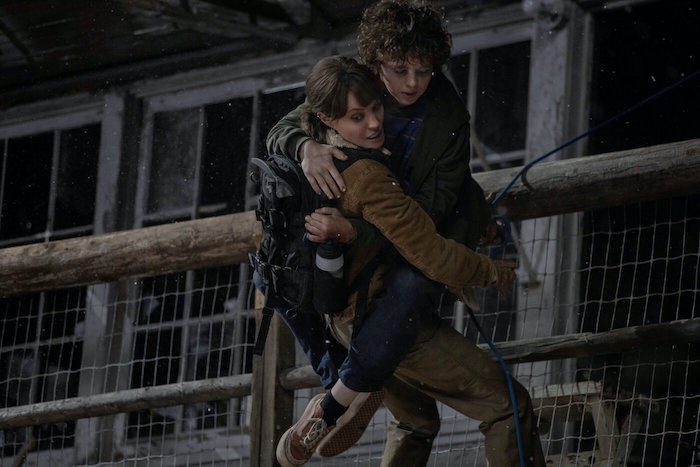
For what it’s worth, the setup seems way outside Sheridan’s wheelhouse. Before we even get an idea about Jolie’s main character, we have to sit through three action set pieces that require fairly detailed exposition for the rest of the movie to make any sense. Essentially, an accountant in Florida (Jake Weber) who uncovers the shady finances of a crooked politician is forced to flee his destroyed home with his young son (Finn Little) when the politician’s factotums’ sick a pair of hit men (Aidan Gillen, Nicholas Hoult) on him. They make it as far as Montana, where the accountant plans to hole up with his brother-in-law, Ethan (Jon Bernthal), a local police chief, but the bad guys get to him first. The kid escapes in the wilderness where he becomes the prey of the hit men. Ethan, expecting the boy to show up, recruits Hannah (Jolie), a “fire jumper” who has been demoted to lookout duty due to her alcoholism and failure to save two children during a recent blaze. Inevitably, the boy and Hannah cross paths just as the hit men are closing in, and by that point you may be itching for some real excitement if you aren’t already confused by all the characters and subplots the story has thrown at you.
Jolie has proved her mettle in action movies before, but Sheridan gives her almost no opportunity to make an impression, and once the bad guys start a fire to flush the boy out and distract the constabulary, Hannah has to pivot between hard-ass professionalism and the kind of empathetic maternalism that will redeem her as both a woman and a member of society. The action is exciting as far as those things go, but you can sense a certain impatience on Sheridan’s part with how busy the story is. In the end, it just doesn’t feels like the kind of action movie he’s good for.
Now playing in Tokyo at Toho Cinemas Nihonbashi (050-6868-5060), Toho Cinemas Hibiya (050-6868-5068), Shinjuku Piccadilly (050-6861-3011), Human Trust Cinema Shibuya (03-5468-5551).
Here’s this week’s Media Mix about Japan’s age of consent, which has been 13 for more than 110 years. A good portion of the column is taken up by the story of a girl who was allegedly molested by her biological father when she was 13, which means she was over the age of consent and would therefore have to prove in court that she resisted her father’s advances in order for him to be convicted of sexual assault. What makes the situation doubly perplexing is that the father could be prosecuted for having sexually assaulted his own daughter, but when the alleged assault happened he was divorced from her mother, who had sole custody of the daughter, so that particular statute didn’t apply. For sure, many people will find this legal point puzzling—how can fatherhood be revoked?—but it follows the peculiar logic of family law in Japan, which gravitates around the primacy of the family register (koseki).
Determining motherhood is easy, but fatherhood is essentially a matter of taking somebody’s word for it (minus a DNA check, that is). The family register system allows the state to be the sole arbiter for paternity. That’s why the state considers the father of a baby born to a woman within 300 days after her divorce to be her ex-husband, even if the biological father is really someone different. The reason for this law is because it is possible that the ex-husband could be the father if he had sex with the mother up until the eve of their divorce. In any case, it makes it easier for the bureaucrats. The state basically wants the final say on who the father of a child is, so when a couple get divorced and the mother gains sole custody of their children, the ex-husband is, technically at least, no longer the children’s father in the eyes of the state. Japan also doesn’t really recognize joint custody, and in most divorce cases it’s the mother who gets sole custody, a circumstance that has led to a great deal of misery on the part of fathers, both Japanese and non-Japanese, who end up being denied any contact with their children. However, sometimes it is the father who gets sole custody (usually because he or his parents are more invested in having an heir) and it is the mother who is cut off. The main controversy about this legal nicety is whether it is fair to the children, who, as the low age of consent shows, don’t merit much consideration in Japanese family law.





 philipbrasor.com