Review: Summer of Soul

Ahmir Questlove Thompson, the drummer of The Roots and the self-styled keeper of the flame of African-American music style and history, is ostensibly the director of this documentary about the Harlem Cultural Festival that took place over the course of six Sundays at Mount Morris Park in NYC in the summer of 1969. Except for those who actually attended the festival, most people didn’t know about it, despite the fact that it featured many of the most important soul, blues, and jazz acts of the day. One reason it has been neglected and/or forgotten is that Woodstock took place around the same time and the whole media fascination with hippie culture, not to mention the ad hoc immediacy of the festival itself, overshadowed any other music-oriented event that summer. In fact, one of the proposed titles for the documentary was “Black Woodstock,” and, in fact, a compelling part of the story of the film’s release is that the footage remained in the possession of the man who originally directed it in the belief that it would be made into a TV special. Hal Tulchin, who died in 2017, never got to see his dream come true, and to his credit Questlove pays fitting tribute to Tulchin’s legacy.

As such, the film is more than a series of lovingly shot, impeccably mixed musical performances. It is a chronicle of the state of Black consciousness at the time it was made. Questlove pays close attention, through interviews with people who were there and some who weren’t, to how the Civil Rights movement had evolved a year after the assassination of Martin Luther King, Jr. The Harlem Cultural Festival was not just a means of celebrating Black culture; as the Rev. Al Sharpton says, it was also a way to keep people occupied and amused who might otherwise want to burn the whole thing down out of righteous anger. The point was to couch the entertainment in a forthright appeal to Black pride. In that regard it was not only a success, but a milestone in raising the profile of Black culture among the people who needed it the most, meaning Black folks themselves. 

The artists not only knew this about the festival, they embraced the attendant themes wholeheartedly. Certainly the most surprising act was The 5th Dimension, an all-Black vocal group who many in the audience had assumed were white because of their string of hits, which didn’t sound much like soul music. Their performance is riveting, not because they try to “act Black,” but because they are Black and love what they do, and they make the audience love it, too. 

One Sunday was dedicated completely to gospel music and emceed by the Rev. Jesse Jackson, who describes in heart-wrenching detail how he witnessed firsthand the death of Dr. King. The older people in the audience know this music, but most of the young folk (it should be noted that the festival was free and promoted for the whole family) were not as interested in the church but fully appreciated the energy that exploded from the stage when the Edwin Hawkins Singers ripped through “Oh Happy Day,” or when Mahalia Jackson sings Dr. King’s favorite song, “Precious Lord,” and invites the young Mavis Staples, who was there singing gospel and R&B with her family, to duet with her. The expressions on the faces, young and old, captured by Tulchin’s crew are priceless and indescribable.

That said, Summer of Soul is not as affecting as another recently excavated Black music documentary. Amazing Grace, which recorded Aretha Franklin’s brief return to gospel music at the height of her pop fame in 1971, is more personal and thus more emotionally fraught, but Summer of Soul has a higher energy level that feeds off its righteousness, from the joyful crossover Motown pop of Stevie Wonder, David Ruffin, and Gladys Knight and the Pips (the Pips’ performance here may qualify them as the greatest backup singers in the history of the universe); to the rocking blues of B.B. King; to the Latin beat of Ray Barretto and Mongo Santamaria; to the grooving jazz of Abbey Lincoln, Herbie Mann, and Roy Ayers; to the pure African sounds of Hugh Masekala; and finally to the politically charged protest music of Nina Simone, who reads a poem in which she asks if it’s OK to kill white people. But it’s perhaps Sly and the Family Stone, a group that, after all, was also a huge hit at Woodstock, that Questlove positions most prominently because of their mixture of male and female, black and white players (a whole five minutes is given over to the amazement in the audience that this hardcore funk machine is bedrocked by a white boy drummer). They take the film out on a truly high note. 

Now playing in Tokyo at Toho Cinemas Hibiya (050-6868-5068), Toho Cinemas Shinjuku (050-6868-5063), Shibuya Cine Quinto (03-3477-5905).

Summer of Soul home page in Japanese

photo (c) 2021 20th Century Studios

Posted in Movies | Tagged | Leave a comment

Media Mix, Aug. 21, 2021

Chosen schoolroom

Here’s this week’s Media Mix, which is about a recent Supreme Court decision to deny Chosen high schools the right to receive central government tuition subsidies that all other non-public high schools in Japan receive. At one point in the column, there is a brief history of Chosen schools, which are associated with North Korea. As pointed out, there are also schools in Japan for ethnic Korean residents that are affiliated with South Korea, but they are fewer in number than Chosen schools. Of course, before the end of World War II, the Korean peninsula was a colony of Japan and thus Koreans were considered Japanese subjects. With the surrender of Japan in 1945, these individuals lost their Japanese nationality and, for the most part, Japan, not to mention the American occupying forces, expected them to return to their “home country.” Many Japan-resident Koreans had been brought over, some against their will, to work in Japan for the war effort, but there were also many who had been living in Japan for much longer. In any case, it wasn’t just a matter of suddenly packing up everything and moving back to Korea, which was in turmoil as the northern part of the peninsula fell under the sway of the communists in the chaos that resulted from Japan’s removal. For various reasons, the school system created by Japan-resident Koreans right after the war to teach the Korean language (banned under colonial rule) leaned toward the communist north, which is why the Americans eventually banned the schools at the urging of former Japanese imperialists who still had some influence.

Later, after the Korean War effectively divided the peninsula, resident Koreans also split between those who favored the south and those who favored the north, and some residents did “repatriate” to their respective “homelands.” Those who aligned with South Korea were able to gain South Korean nationality, even if they didn’t move to South Korea, but those who aligned with North Korea and who didn’t move to North Korea have become basically stateless, and for a time North Korea and its representative in Japan, Chongryon, financially supported Chosen schools. Presently, it isn’t clear how much support Chosen schools receive from Chongryon, but reliable reports indicate it isn’t much, if, in fact, they receive any at all. Over the years, an increasing number of resident Koreans have opted to become naturalized Japanese, but many do not in the belief they would lose their Korean essence if they did. Nevertheless, almost all have lived their entire lives in Japan and could not imagine living anywhere else, including South or North Korea. 

Here is a much more detailed explanation of the postwar situation of Japan-resident Koreans, as well as that of Okinawans.

Also, there is an earlier Media Mix column from 2013 that covers this same subject more contemporaneously.

Posted in Media | Tagged | Leave a comment

Review: IWeirDO

Taiwanese filmmaker Liao Ming-yi’s debut is said to be the first Asian movie shot on iPhones, a gimmick that no longer feels particularly fresh but one that is peculiarly suited to the themes he addresses. The portrait mode does a good job of conveying the discomfort of living with OCD, which our hero, Chen Po-ching (Austin Lin), suffers from. Po-ching, who sports an immaculate widow’s peak and a buff physique, manifests many of the stereotypical behavioral ticks associated with OCD: incessant cleaning, running errands at the exact same time every day while taking the same number of steps to the supermarket, and donning two layers of protective gear to ward off germs and other airborne contagions. As a freelance translator, he has no need for face-to-face contact with others and, on the surface at least, seems content with his lot, though as his therapist presciently points out, it’s all in his head, meaning he won’t die or otherwise fall victim to illness if he breaks out of his claustrophobic routine.

And then he meets Chen Ching (Nikki Hsieh), whom he spies at the supermarket similarly clad in PPE while shoplifting. Intrigued, he forces himself to strike up a conversation and finds that she, too, suffers from a condition that restricts her movement, except that in her case it really is mandatory. She can only leave her home for an hour or two at a time before breaking out in severe skin allergies. Moreover, while Po-ching’s odd outlook on life is determined by his psychological condition, Ching’s has been warped to a certain extent by the frustrations brought on by her illness, thus the shoplifting, which she doesn’t do for the sake of survival but as a means of coping with her demons.

Nonetheless, Liao’s film is a comedy, at least for the first half, and while the iPhone thing forces him to come up with unique, often funny exposition tricks, most of the requisite quirkiness is afforded by the bright, primary-color production design. Once it is established that Po-ching is a good translator but an atrocious typist and Ching won a typing award as an adolescent, there’s nothing to do but for her to move in with him and share their lives, which leads to various other cute moments that show how two oddballs, as Po-ching puts it, can not only get along but fall in love. 

And that’s where the movie loses its way. As soon as Liao changes the aspect ratio through what looks like magical realism and Po-ching decides that he has to make an effort to meet the world halfway, the meaning in the relationship falls to the side. Though this kind of melodramatic development is natural for a romantic comedy, in this particular case Liao can’t seem to figure out how it might manifest itself, and he resorts to the kinds of cinematic cliches that went out of fashion with Spellbound. Moreover, his decision to switch POVs only succeeds in needlessly confounding the audience and diluting his dramatic intentions. While I normally only have so much patience with the kind of cute romantic style that Liao brings to bear, I found it made total sense for the story he was telling. It’s too bad he didn’t see it through to the end.

In Mandarin. Opens Aug. 20 in Tokyo at Cinemart Shinjuku (03-5369-2831).

IWeirDO home page in Japanese

photo (c) 2020 Activator Marketing Company / MAN MAN ER CO., LTD / Taiwan Mobile Co., Ltd.

Posted in Movies | Leave a comment

Media Mix, Aug. 14, 2021

Image of Harumi Flag

Here’s this week’s Media Mix about some sustainability issues related to the so-called legacy of the recent Tokyo Olympics. As mentioned at the beginning of the column, after the Paralympics the Olympic Village will be thoroughly remodeled in order to create condominiums, which are currently on sale. More than a year ago there were already some problems with the plan owing to the postponement of the games, which meant people who were planning to move in would have to wait even longer. My partner and I wrote about these problems at the time and you can read the article here. Not sure exactly how the situation has changed since then, but if we’ll look and add anything we find.

Posted in Media | Tagged , | Leave a comment

Media Mix, Aug. 7, 2021

(c) 2021 Pankeki o Dokumi Suru Seisaku Iinkai

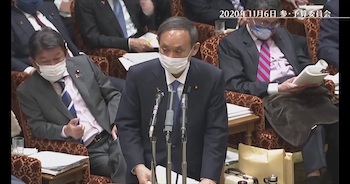
Here’s this week’s Media Mix, which is about the new documentary feature, Pankeki o Dokumi Suru, about Prime Minister Yoshihide Suga and his peculiar brand of survival politics. As pointed out in the column, one of the overriding themes of the movie is that Suga and his predecessor, Shinzo Abe, mostly work on feelings of resentment that guide their decisions and actions, and that includes Suga’s almost patented disregard for what others think. His hostility toward the media is unsubtle and entirely deliberate, but he also doesn’t have any use for fellow politicians who feel as if he owes them something since he happens to be the leader of the nation. During one long sequence in the movie, Hosei University Professor Mitsuko Uenishi analyzes Suga’s behavior and speaking style during Diet deliberations and has a grand old time pointing out how everything about him indicates his utter contempt for lawmakers who are simply trying to get a yes or no answer out of him. Given Uenishi’s reactions, you might get the feeling that Suga, in fact, enjoys baiting his interlocutors, but over the course of the movie the larger impression is that this attitude is bred in the bone. When his LDP colleagues are interviewed they betray a kind of admiration for Suga’s ability to push people away, which they think is a rare but necessary talent for a politician. Shigeru Ishiba says that Suga doesn’t kiss ass and that his “intuition” is sharper than most people’s. Others say that while most politicians lie as a matter of course, Suga doesn’t, and that if he says he’ll do something he will. These observations don’t necessarily contradict his reputation for stonewalling and obfuscation, which obviously can be considered beneficial skills if they are exercised for your sake. Last Friday, Suga was ridiculed in the press for skipping a whole page of his prepared boilerplate speech in Hiroshima for the anniversary of the atomic attack. Most media made it sound as if he was being lazy or inept, but more likely he just didn’t want to say the part about ridding the world of nuclear weapons, because he’s already said elsewhere that he has no intention of joining the worldwide campaign to denuclearize, despite Japan’s history with regard to nuclear weapons. It was somebody else who said that the papers of the speech had gotten stuck together, not him. So, yeah, he doesn’t lie, especially if he can get someone else to do it for him. What you see is exactly what you get. 

Posted in Media | Tagged | Leave a comment

Media Mix, July 31, 2021

Image of proposed IR in Yokohama

Here’s this week’s Media Mix, which is about the Yokohama mayoral election set for August 22. The main issue in the election, at least as far as the media is concerned, is Yokohama’s bid for an integrated resort-with-casino. The main issue for the residents of Yokohama, however, is the pandemic, which, of course, everyone wishes would end. It’s not clear if this contrast in perception will have any real effect on the outcome. As explained in the column, the media is fixated on the fact that most of the candidates are against the IR bid, meaning they are against having casino gambling in Yokohama, while the incumbent and one very minor candidate are in favor of the bid. The press thinks that the many anti-IR candidates will effectively dilute the vote, thus helping the incumbent, Fumiko Hayashi, win, even if she gets a relatively small percentage of the overall vote. But if the electorate doesn’t really care about IRs then they may base their decision on which candidate has the best plan to fight COVID, which, in truth, is really a national issue, since it depends on things like availability of vaccines and financial support for affected businesses. And, from what I’ve read, there doesn’t seem to be much difference from one candidate to another with regard to their ideas about addressing COVID. 

But what really makes the IR bid issue almost meaningless is that whatever ambitions Yokohama once had about building a casino are now seriously compromised. Until COVID is defeated, the city can’t hope to attract the large number of foreign tourists needed to justify an IR, and, in any case, they would need an operator to run the resort, and at the moment they don’t have any worthwhile candidates. Las Vegas Sands abandoned their bid to be the operator in May of last year; Wynn Resorts closed their Yokohama office last August and announced they were no longer interested in the Yokohama bid in January; and Hong Kong’s Galaxy Entertainment Group announced the same thing on June 17. Without a viable operator to construct and manage the IR, it’s difficult to see the central government choosing Yokohama as one of the first 3 locations for IRs; but, then again, the same thing seems to be happening with other candidates. Both Osaka City and Osaka Prefecture plan to apply for IR approval, but since the date for the approval keeps getting moved back, it seems unlikely they will be able to finish building an IR by 2025, when the Osaka Expo is supposed to take place, and that has always been the plan. The only really viable candidate right now is Wakayama, who had two operators competing for the bid until one dropped out on May 12, but the other, Clairvest Neem Ventures, has stayed in and has been confirmed as the partner in the proposed deal. The fact is, no one in Japan without a vested interest really cares about casino resorts right now, so if plans go ahead to build them it will likely just be through inertia, which is how a lot of public works projects in Japan proceed, come to think of it. 

*Addendum, Aug. 4, 2021: Yesterday, journalist Hajime Yokota, who was mentioned in the column, said on Democracy Times that Hachiro Okonogi would most likely win the mayoral election because he is a friend of Suga’s and, in fact, Suga doesn’t really care about casinos coming to Yokohama. The LDP wants Tokyo to get the IR nod, and while that doesn’t preclude Yokohama getting one also, it doesn’t make sense to have two IRs in such close proximity to each other. The thing is, Tokyo has yet to announce formally that it will apply for the bid, though everyone is expecting it to. That doesn’t mean casinos are going to be any more acceptable to the Japanese public, but it does make Suga’s job easier, since he doesn’t have to push an unpopular proposal onto his own constituency.

Posted in Media | Tagged | Leave a comment

Review: Song Without a Name

This Peruvian black-and-white film, directed by Melina Leon, who also wrote it with Michael J. White, feels schematically predictable on paper. It presents the all too common tragedy of an indigenous woman who is cheated by a nameless, criminal entity that represents contemporary capitalism — ruthless exploitation by any other name. And though the visual production is meant to evoke a feeling of timelessness, the plot exerts a strong sense of the year in which it is set, 1988. 

Georgina (Pamela Mendoza) sells potatoes on the streets of Lima, though she lives in a shack on the edge of town, thus compelling her and her husband to walk a long distance with their wares, even though she is visibly pregnant. One day she hears over a radio loudspeaker an offer for free prenatal care, and checks it out. A van takes her to a clinic in a different part of the city, where she is given a health check and told to come back when she thinks she is going into labor. She does, but after delivering her baby she is placed in another room and told that her child had some complications and was taken to a hospital. She objects and is turned away. When she returns later, the clinic has vanished, and the police say they know nothing about it.

At this point, which is early in the film, the viewer already sees the degradation that Georgina lives with, and while her despair is heart-rending, it also feels eerily familiar, which has something to do with the viewer’s expectation for such a movie, meaning the viewer’s expectations when thinking about a woman like Georgina. But then Leon throws in a ringer: Pedro (Tommy Parraga), a journalist who listens to Georgina’s tale when his colleagues won’t and sees not only a story that needs to be told, but a means of making his own life meaningful. Pedro is a closeted gay man who has recently, reluctantly embarked on a love affair with an artist. At first, however, he tries to convince a colleague to cover Georgina’s tale, since Pedro himself is in the middle of an investigative report about a paramilitary death squad. The viewer’s interest then goes beyond the usual lurid fixation with the lot of the poor. The possibility of a thriller pulls us in.

But that isn’t Leon’s game, though the investigation does proceed at a certain pace. Leon is too honest a storyteller to sensationalize the story beyond its power to make us angry and sad. Both Georgina and Pedro have lives to live, even as their minds are occupied with the investigation, and as Pedro’s romance stumbles along in an atmosphere of fear and self-doubt, Georgina still does whatever she needs just to survive. The effect is both disorienting and terribly depressing. Most of us can’t handle the genuine drama of quotidian life as an outsider. 

In Spanish and Quechua. Now playing in Tokyo at Euro Space Shibuya (03-3461-0211).

Song Without a Name home page in Japanese

photo (c) Luxbox-Cancion Sin Nombre

Posted in Movies | Leave a comment

Review: Inside (uncut)

Not particularly a fan of horror movies, I was nonetheless curious about this rerelease of an infamous 2007 slasher flick that has since become identified as a prime example of the so-called new wave of French horror, which tends to intensify the disgust factor by combining graphic bodily injury with extreme emotional distress, usually through the narrative use of torture. The local distributor has promoted this new release as the “uncut” complete version without really explaining what makes it different from the original one. The movie is about a pregnant woman being stalked by another woman who apparently wants the child for herself, and according to an internet search the original version had shots of the fetus inside its mother’s uterus reacting to the mayhem going on outside the mother’s body, and the directors, Julien Maury and Alexandre Bustillo, didn’t know about these inclusions until they saw the finished product at the premiere. Apparently, they were pissed off at the producers for interfering and demanded they be removed, so I am assuming this uncut version is actually that original version, since it does include shots of the fetus.

Obviously, placing a child—nay, an unborn child—in harm’s way will make the bloody action even more off-putting, but, for me, at least, there’s a tipping point to horror after which every bit of extreme carnage simply feels redundant. The thing about Inside is that it delays this point for a long time, so much of the first half of the film (a very efficient 83 minutes) is compelling dramatically; which isn’t to say it’s suspenseful. Maury and Bustillo dispense with the hackneyed jump scares and musical jolt cues and concentrate on an accretion of plot elements that explain the motive of the murderous, unnamed stalker (Beatrice Dalle) in a satisfying way, meaning it’s not much of mystery. Her victim, Sarah (Alysson Paradis), lost her husband several months earlier in a traffic accident in which she herself was injured, but both she and her baby survived. The action takes place on the night before she plans to have her delivery induced, and she is alone when the stalker invades her house armed with a pair of scissors. 

The simpler the horror premise, the more effective the movie, but you need more than just a woman with scissors chasing a pregnant woman around her Paris apartment to create ongoing excitement for a feature length film, so Maury and Bustillo inject a subplot about riots going on in the neighborhood which allow them to place a fair number of policemen in harm’s way, not to mention Sarah’s mother and employer, who drop by to check on her, understandably anxious that she is spending such a fraught night alone. (She has still not recovered from her husband’s death, another important facet to the story.) Suffice to say that once the blood-letting does start, it gets pretty gross, but at about the time when a prisoner of the police, begging for his life, gets the scissors-through-the-skull treatment I had reached my own tipping point. You can probably guess the ending. “Uncut” is definitely not the operative word here. 

In French. Opens today in Tokyo at Human Trust Cinema Shibuya (03-5468-5551).

Inside home page in Japanese

photo (c) 2007 La Fabrique de Films BR Films

Posted in Movies | Tagged | Leave a comment

Review: In the Heights

So much has happened in the world that could affect the basic premise of the musical In the Heights between its Broadway stage beginnings in 2008 and its cinematic manifestation last year that it’s impossible not to ponder them while watching the movie. The most direct influence was the extraordinary success of Hamilton, another Broadway musical by composer and original lead actor Lin-Manuel Miranda, who provides a clever cameo in the film. Miranda’s work explores how people of color with mixed backgrounds navigate the promises of America, and in that regard In the Heights is more approachable since it’s contemporary. In fact, the movie version seems to be taking place around now, though that other big change, Trumpism, is barely mentioned. Still, anyone who enters a movie theater right now to bask in the film’s infectious score and general atmosphere of cross-cultural solidarity can’t help but think of the actual world outside the theater and just how realistic the characters’ hopes and dreams are. 

The “heights” refers to Washington Heights, the uptown Manhattan neighborhood that has been home to a large Latin community — both immigrant and native born — for decades, and its theme is one that Jane Jacobs would approve of and could use as an illustration of her urban studies theories: neighborhoods are the bedrock of a city, not only in terms of cultural viability but economic resilience as well. As with the play, the movie charts half a dozen storylines that only occasionally cross, thus freeing Miranda and writer Quiara Alegria Hudes from the burden of trying to make some kind of grand statement. Each story has its own statement, and keeping them intimate and simple is the key to their power. The character who holds it all together is Usnavi (Anthony Ramos), the owner of a bodega that’s smack in the middle of the Heights, thus not only giving him a vantage point from which to observe the various plot vectors, but the film a central location from which to launch many of its big production numbers. The long opening song, which is meant to put across the notion that living in the Heights means living with music constantly, is first reflected in the window of Usnavi’s bodega, as the morning crowd spontaneously morphs into a dancing, singing community. Even the inanimate objects join in the symphony. 

If the stories themselves aren’t as striking as the songs that explicate them, it’s mainly because all are presented as familiar threads in the American fabric: the woman who quits Stanford because she feels out of place in a white person’s world; her father’s angry disappointment at her not fulfilling his dream of her making it in the white person’s world; the hair stylist who wants to move downtown and become a fashion designer; the undocumented immigrant who works to secure permanent residency; the elderly abuela who endured the abuse of white employers for decades and dreams of her native Cuba. Even Usnavi’s story, which involves his saving enough money to move back to Dominica to fix up a bar once owned by his parents, means looking beyond the Heights for something else when, in fact, everything they have that is worth having is right there. Though these themes seeemed corny to me when I saw the stage musical years ago, right now they make much more sense as diversity is being challenged as a cultural goal by the powers that be, and not only in the U.S. As for the controversy surrounding the film and which Miranda has addressed, as a white person I’m not sure how to talk about whether the actors chosen are themselves diverse enough to carry these themes accurately. But director Jon M. Chu knows how to balance the drama with the music and the comedy, which itself provides welcome diversity to the musical film genre: rock, hip-hop, salsa, and the usual American musical theater bombast. It works exceedingly well in that you leave the theater exhilirated and, I would like to think, enlightened. 

Opens July 30 in Tokyo at Toho Cinemas Nihonbashi (050-6868-5060), Toho Cinemas Hibiya (050-6868-5068), Marunouchi Piccadilly (050-6875-0075), Shinjuku Wald (03-5369-4955), Shinjuku Piccadilly (050-6861-3011), Toho Cinemas Shinjuku (050-6868-5063), Human Trust Cinema Shibuya (03-5468-5551), Toho Cinemas Roppongi Hills (050-6868-5024).

In the Heights home page in Japanese

photo (c) 2020 Warner Bros. Entertainment Inc.

Posted in Movies | Tagged | Leave a comment

Media Mix, July 24, 2021

Satoyama area

Here’s this week’s Media Mix, which is about some of the root causes of the killer mudslide that hit Atami on July 3. As Shukan Asahi pointed out, this sort of disaster is bound to happen again, and not just because climate change is intensifying rainfall. Japan doesn’t really have an effective forest management policy, and even if it did, there doesn’t seem to be enough trained people to carry it out. Traditionally, the concept known as “satoyama,” wherein rural areas, mainly surrounding farmland, were kept tidy by residents, helped forests thrive, but since World War II, during which so much of the archipelago’s trees were cut down for the war effort and then replanted with fast-growing cedar, the forests have mostly fallen into disrepair. Now that wood for construction is commanding a good price, lots of timber companies are cutting down trees, but many are doing it illegally, which isn’t difficult. Part of the forest management problem is that ownership of forested land isn’t clear. Property owners are supposed to maintain their forests by cleaning out undergrowth and removing dead trees, but, as with so much land in Japan, many have died over the years and their heirs have neglected the properties. Timber companies take advantage of this by going into a remote forests and clear cutting, often without anybody knowing about it, but they can only clear cut in areas that have some kind of road access, so sometimes they get found out by local residents. I remember once reading about loggers getting caught in the act and then pretending that they made a mistake, that they were on the wrong tract of land and then just disappeared. Since no one could find the owner of the land, nothing was done, and this seems to be a big part of the problem. Before the government can devise effective forest management regulations it has to be able to enforce them, and if it can’t find land owners then it can’t do anything, unless it wants to just take over the land. Given how hesitant Japan is when it comes to eminent domain, I doubt that will happen. Though rain is what causes mudslides, in a way it’s good that Japan is a wet country. Clear-cutting is bad for watersheds and leads to more landslides, but overgrown, unmaintained forests tend to catch fire more easily in dry weather. 

Posted in Media, Uncategorized | Leave a comment