

I was finally given the tools I needed to register for online press screenings for the Busan International Film Festival. Obviously, I’m not there in person, but the organizers were kind enough to invite me to “attend” remotely, the benefit of which is that I get to see this year’s selections at home without having to hustle to a ticket booth and wait in line for something that everyone else usually wants to see. The disadvantage, at least this year, is that the online selection is limited, as it usually is in the video room where you can call up those films that don’t fit into your schedule—but only if the distributors or producers deign to make them available. This year, only about half the 200+ films being screened are available online, and most of the major ones, including the this-year-only “Cannes” section, are not on the list. These are films that were supposed to premier at the cancelled 2020 Cannes International Film Festival. Also, many of the big Japanese films, like Kiyoshi Kurosawa’s Wife of a Spy, are not available, which is not as big a deal as it seems since many have already opened in Japan or will shortly, but it would have been nice to see them here since I missed the domestic press screenings due to pandemic protocols. I’ve been informed that there was not enough foreign press interest expressed for the Gala films, so we won’t have access to the films or the press conferences save one, the American film Minari. Also, no Hong Sang-soo online, which already feels like a big hole for me; but, then again, I’ve become spoiled watching Hong movies with Korean audiences, who tend to laugh their asses off, so I’m sure it wouldn’t be the same watching The Woman Who Ran on my iMac.
That still leaves a lot of movies that I can see, though. Choosing which ones might be a chore this time, since I don’t have ready, physical access to fellow press people who can recommend which ones are worth seeing and which ones to avoid.
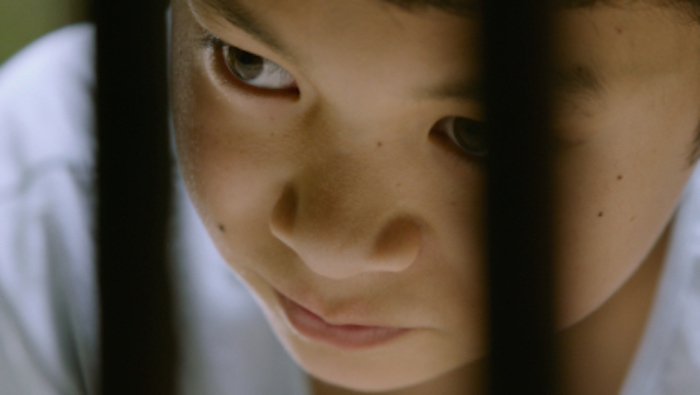
But there are a few no-brainers, one of which is Jia Zhangke’s Swimming Out Till the Sea Turns Blue, which I just finished watching. This is Jia’s third in a series of documentaries about the arts in China, and while I prefer Jia’s narrative films, the movie was engrossing in ways that the previous two installments weren’t, probably due to the subject matter. The first two films were about visual arts and fashion design, and mostly dealt with professionals who came of age during or after the 1990s. Swimming is about literature, and focuses on four writers who cover the entirety of the communist era. The impetus for the film was a literary festival that Jia attended in his home province of Shanxi. There he met three of China’s most celebrated poets/novelists, as well as the daughter of another, Ma Feng, a controversial figure who was central to the heroic style that the Party insisted on during its early years.
All these artists are from Shanxi or nearby, and the common theme that runs through their ruminations is that you are nothing without the place that produced you. Even Ma had to return to his roots in order to produce works that people wanted to read. Jia juxtaposes static interviews with illustrative everyday scenes from Shanxi comprising 18 “chapters” that are supposed to “play like a symphony,” a metaphor made somewhat trite by the liberal use of classical music on the soundtrack, especially Shostakovich. Still, the witnesses prove their literary worth with stories that are both entertaining and enlightening about their respective artistic developments. Jia Pingwa explains how his father was purged during the Cultural Revolution, which means he grew up on a reeducation farm. But because he grew up on a reeducation farm he was urged by the authorities to attend university since they wanted more peasants to earn a higher education. There he was exposed to Western art and literature, which helped him hone his craft, even though he had to publish work that was acceptable to the Party. It wasn’t until after he moved back to the countryside that he found his real voice.
The most colorful figure is Yu Hua, who came of age in the late 70s. Though obsessed with literature, he couldn’t pass the university exam and so went to vocational school to become a dentist. Assigned to a hospital in a big city he noticed that people who worked for the Cultural Bureau just walked around town all day. “That’s for me,” he said, and started writing fiction. After years of rejection letters a Beijing publisher finally took him on and he was able to secure a position in the Cultural Bureau, but by then he was a real writer, and, like Jia, moved back to the countryside, where he became a bestselling novelist. The third writer, Liang Hong, did attend university in Beijing, where she majored in literature, but it was her impoverished upbringing and the unusual circumstances of her family life that informed her work, which is personal and tragic (“my family was the village soap opera”). The interview with her 14-year-old son is priceless, as he represents the next generation, and Jia is canny enough to leave any speculation to himself. The son says he wants to be a physicist, but his sly way with words definitely pegs him as his mother’s son.

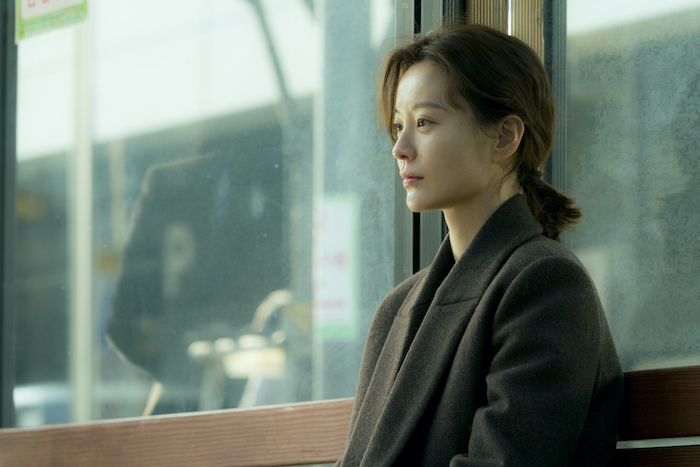
A very different mother-son combination is explored in Kim Ui-seok’s Empty Body, part of the Korean Cinema Today-Panorama section. The Korean selections are mostly grouped into two categories: Panorama, which are generally movies by established directors, and Vision, which showcases new Korean filmmakers. Empty Body doesn’t come across as either, really. It’s Kim’s second film, following his well-regarded debut, After My Death. Empty Body is obtuse speculative fiction. Moon So-ri plays a rich, seemingly single woman whose 23-year-old son dies in a car wreck and the police can’t determine if it was accidental or deliberate. The mother opts to transplant the son’s brain into a made-to-order android that eventually “deletes” the son’s consciousness. There’s a weird court trial to decide if the android effectively “murdered” its “owner,” and the android repeatedly assures the mother that her son wanted to die and resented that she forced him “back to life.” There’s a lot of existential heavy lifting going on, and the mood is depressingly, relentlessly bleak. Supposedly, the 90-minute film was expanded from a 50-minute TV broadcast, and the padding shows, mostly in the over-use of long takes filled with uncomfortable silences. It doesn’t have a lot going for it in terms of entertainment or thematic originality. It’s essentially high-concept art house cinema that runs off the rails.


 The true story of photographer Masashi Asada and his Mie Prefecture family, who were and presumably still are the main subject of his award-winning pictures, provides such a smooth dramatic arc for a movie that early on you begin to wonder how much was elided. As played by Kazunari Ninomiya, Asada is an amiable iconoclast, someone who is passionate about his art but not particularly intent on the work involved. His success is more or less accidental since he doesn’t actively apply himself to getting his photographs out there, and the viewer develops the feeling that he relies on his family for subject matter simply because it’s easier. Director Ryota Nakano depicts Masashi’s progress as a creative soul with the kind of comic aloofness you’d expect from someone like Robert Zemeckis, if we were to use a Hollywood cognate. If that seems like a cheap reductionist rhetorical gambit, it’s important to note that the aforementioned dramatic arc was something that Hollywood perfected in its heyday, if not outright invented.
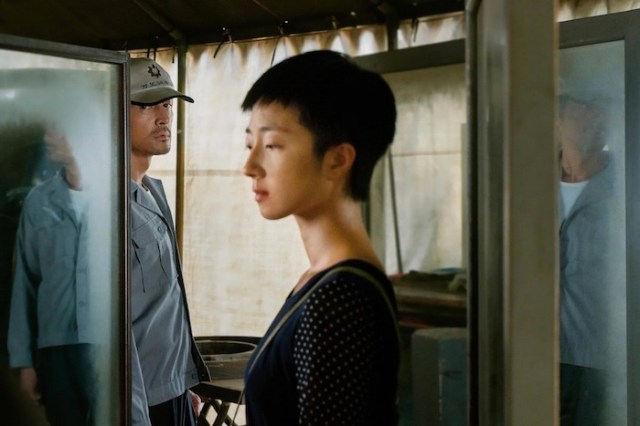 Mainland Chinese cinema was relatively late to film noir, especially in relation to Hong Kong and other Asian countries like South Korea, Japan, and the Philippines, all of which have reshaped the genre in distinctive ways. But once a younger set of directors applied film noir tropes to their local circumstances, it became almost a national obsession. Diao Yinan’s The Wild Goose Lake has pretty much become the standard to which all Chinese noir will be compared until something better or more original comes along, but that seems unlikely owing to how thoroughly Diao has applied these tropes. It’s a pretty stunning achievement, even if it can sometimes feel like a trial.
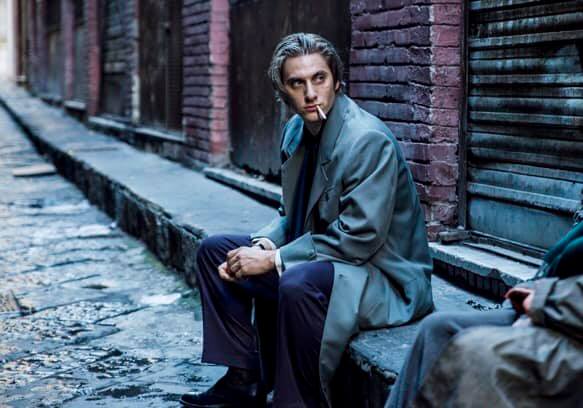 I haven’t read Jack London’s novel, which is supposedly an autobiographical affair outlining his genesis as a writer, but based on his other writings that I have read and the general tenor of autobiographical novels by writers, I can probably guess what the main theme is: the triumph of the individual sensibility over that of the crowd, and the suffering that comes with it. Pietro Marcello relocates the book’s setting from Oakland to Naples in a time that feels as if it’s early to mid-20th century (but since there are no references to any world wars, it may simply be a time out of mind). Martin (Luca Marinelli) is a sailor, a proletarian by birth who is uneducated but hungry for knowledge. He meets the socialite Elena (Jessica Cressy) after saving her brother from a beating, and develops a crush both on her and her bourgeois living situation. After a conversation with Elena about the poet Baudelaire, he decides to become a writer in a language, Italian, he’s not fluent in. Martin’s mission is simple and almost sad in its trite dramatic essence. He wants the respect of the better classes, initially so that he can marry Elena, since her parents can barely remain in the same room with him, but inevitably so he can get revenge on his own lowly past.
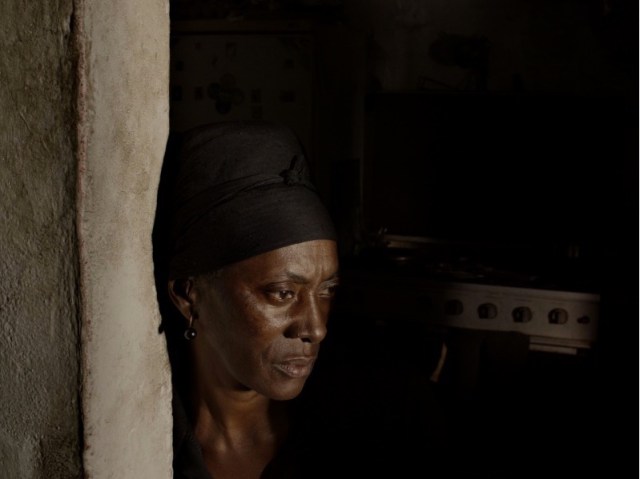 There’s a subset of narrative film directors who work almost exclusively with non-professional actors, which may sound like an oxymoron since these performers are in all likelihood paid for their efforts, but in most cases they only appear in one movie and otherwise live lives that have nothing more to do with film. The Portuguese filmmaker, Pedro Costa, belongs to this group, but his methodology is even more refined. For 20 years he has focused on immigrants to Lisbon from the former Portuguese colony of Cabo Verde, off the Atlantic coast of Africa. More to the point, he centers his stories in a small, warren-like Lisbon slum where these people live their lives of quiet desperation, and while that sounds like a cliche, Costa’s use of space and narrative is highly unusual, not so much because it follows documentary procedures, but rather because it plucks its protagonists’ stories out of a strip of their lives as a means of illuminating what it’s like to pass most of one’s existence in the shadow of an alien culture.
 philipbrasor.com