Media Mix, June 14, 2020

Public Prosecutors Office

Here’s this week’s Media Mix about the Kurokawa mahjong scandal and how the press gets information through access to government officials. Most of the column was about the reporter’s side of the transaction, but, of course, officials have their own reasons for leaking information. As I said, bureaucrats are not allowed to share information about their work with the press, so when they do share it’s usually for a specific self-serving reason. Tsunehiko Maeda, a former prosecutor who went to jail for fabricating evidence, wrote recently on his blog that the quid pro quo nature of these transactions can be quite sophisticated. For instance, sometimes reporters who are covering organized crime or the financial world bring stories to prosecutors who then use that information to build cases before an arrest or indictment. In return, the prosecutor may throw the reporter a bone or two in the form of a heads up when they plan to carry out a raid. That’s why there’s always a camera crew on hand when prosecutors show up and start carting out evidence in those brown boxes. Strictly speaking, no advance warning is supposed to be given when raids are executed. Another example of this is Carlos Ghosn’s arrest, which only a handful of media outlets reported at the time it happened. Some commentators suspect that prosecutors may have owed favors to these outlets, but in any case it was essential that the “theatrical” aspect of the arrest was carried in the media for publicity’s sake. Even after the arrest, many aspects of Ghosn’s interrogations were leaked when they are supposed to be totally confidential. It all depends on what’s convenient for the prosecutors. Some people believe that the current scandal in Hiroshima involving two Liberal Democratic Party lawmakers, husband and wife Katsuyuki and Anri Kawai, who may have bought votes in their constituency, was sparked by prosecutors who wanted to punish the LDP for some slight—likely the favoritism toward head Tokyo prosecutor Kurokawa, which the sitting prosecutor general found offensive. That isn’t to say the Kawais didn’t do anything wrong, but if every instance of improper campaign activities in Japan were prosecuted as diligently, almost all politicians in Japan would be in jail. Prosecutors pick their fights carefully, and always with their own interests in mind.

Posted in Media | Tagged | Leave a comment

Review: Young Ahmed

You have to hand it to Jean-Pierre and Luc Dardenne, the Belgian filmmaking brothers whose dramas make difficult socioeconomic issues relatable on a personal level. Despite the dozens of awards they’ve received and a reputation for unsentimentalized realism that even Ken Loach can’t approach, they forge ahead by trying to find ever more difficult subject mattter. Young Ahmed may be the most problematic theme they’ve ever tackled, which is probably why it’s also one of their most frustrating movies.

The title character (Idir Ben Addi) is an adolescent living in a small Belgian town who is receiving tutorials in Islamic thought from a radical imam (Othmane Mouman). The imam’s teachings are purposely divisive in that he thinks all humans, whether Muslims or not, do not live up to his high moral standards. The world, in other words, is a tower of apostasy that needs to be torn down, and jihad is the instrument of this destruction. Ahmed is seen as the perfect vessel for the imam’s discursions, young and impressive. He despairs of his single mother’s drinking, and even finds fault with his Arabic teacher, Ines (Myriem Akheddiuo), for trying to make the study of the language pleasurable through the use of blasphemous pop music in her classes. Ines sees the boy’s resentments and correctly interprets it as a combination of sexual frustration and lack of positive reinforcement. With a parent distracted by the difficulties of navigating a harsh economic reality while being a member of a minority, Ahmed has only the imam to look up to, and the imam counts on and manipulates such loyalty.

Eventually, Ahmed’s radicalization reaches a violent breaking point, and up to this juncture the Dardennes have exploited their patented tracking shots to full dramatic effect. The scene where Ahmed acts on his frustrations is one of the more shocking in the brothers’ body of work, but also points up how impossible it is to really convey what is going on in Ahmed’s mind. The Dardennes have often used troubled adolescents as protagonists, and the power of their storytelling was in their ability to build a unique personality through behaviors and dialogue that felt natural rather than contrived. But Ahmed is something of a cipher, a blank slate by design for whom the imam can write over. There is no development to Ahmed’s radicalization because we don’t really understand where he came from emotionally. It’s apparent the Dardennes are being cautious more than anything else. They naturally are wary of seeming to be anti-Islamists, even though the portrayal of the imam contains certain uncomfortable stereotypes. In many ways, the plotting of Young Ahmed is the most conventionally inventive in the Dardennes’ filmography, but the boy in the bubble doesn’t really invite much empathy, which is vital to a story like this. The powerful ending, which sees Ahmed, sent to a youth farm for his transgressions, sinking further into his religious self-absoption before coming out the other end changed, is too much too late, as if, perplexed by the enormity of the movie’s aims, the brothers succumbed to melodrama out of desperation.

In French and Arabic. Now playing in Tokyo at Human Trust Cinema Yurakucho (03-6259-8608), Shinjuku Musashinokan (03-3354-5670).

Young Ahmed home page in Japanese.

photo (c) Les Films Du Fleuve – Archipel 35 – France 2 Cinema – Proximus – RTBF

Posted in Movies | Tagged | Leave a comment

Review: Little Women

Greta Gerwig made a bold decision to tackle for her second directorial effort not only one of the most beloved classic novels of the 19th century, but one that has been adapted as a movie about a dozen times already. And it’s not as if these adaptations needed improving upon. The idea was that each generation of girls needed their own film version with contemporary actors for identification purposes, and in that regard Gerwig hits her marks admirably, but there’s something else happening in this version that never happened before, something that’s both bracingly fresh and slightly irreverent.


It’s not so much that Gerwig tells Louisa May Alcott’s story out of chronological order, a decision that immediately feels unsettling but in the end reveals more about our hero, Jo (Saoirse Ronan), and her ambition to be a writer. Jo, of course, is Alcott herself, and Gerwig seems to want to give the author more credit for her creation than she wanted to give herself. Right away, we get the measure of Jo’s rebellious nature when she rejects the criticism of a male editor who tells her that women’s stories have to be about a certain thing (love) and told a certain way (leading to a happy ending), and while this episode is from the book, by placing it near the beginning we understand what Jo will be striving for. It’s a little on the nose, but it prepares the audience for the drama to unfold. For the most part the plot is a series of anecdotes tied to Jo’s memories of how she became the woman she is, mainly through her relationship with her three sisters, her patient mother (Laura Dern), her patrician aunt (Meryl Streep), and the beloved father (Bob Odenkirk) who is mostly missing from the scene owing to the war.

And then there is, of course, Laurie (Timothee Chalamet), the childhood friend and confidante who has always nursed a deep crush for Jo, though ostensibly he is destined to marry younger sister Amy (Florence Pugh), who is more directly enamored of Laurie’s pedigree and future income. Laurie is the instrument with which Alcott tests Jo’s resolve to be an artist, and what gives Gerwig’s interpretation its bite is the way Jo wrestles with her feelings in such a violent way. Ronan is especially affecting in the way Jo occasionally abandons logic and practicality while understanding that it is those two values that will make her an artist rather than a woman pursuing a woman’s destiny (i.e., marriage and motherhood). In past versions, Jo was steadfast if slightly miserable. In Gerwig’s telling, Jo is a mess of contradictory impulses, and it becomes clear that it is this mixture that informs her artistic ideals.

Consequently, the episodes that make the story indelible — Beth’s (Eliza Scanlen) catastropic illness, the fraught engagement of eldest sister Meg (Emma Watson), the emotional return of the father at a most opportune moment — have a richness of purpose that in past versions seemed more like concessions to dramatic exigency. There is only one theme worth pondering in Little Women: Jo’s growth as an artist, and Gerwig, herself turning into a master filmmaker in front of our eyes, contrives every element of the movie toward the illumination of that theme. Alcott’s story has finally become both timeless and timely.

Now playing in Tokyo at Toho Cinemas Nihonbashi (050-6868-5060), Toho Cinemas Hibiya (050-6868-5068), Shinjuku Wald 9 (03-5369-4955), Shinjuku Piccadilly (050-6861-3011), Toho Cinemas Shinjuku (050-6868-5063), Toho Cinemas Shibuya (050-6868-5002), Toho Cinemas Roppongi Hills (050-6868-5024).

Little Women home page in Japanese.

photo (c) Sony Pictures Entertainment

Posted in Movies | Tagged , | Leave a comment

Media Mix, June 7, 2020

Yoshizumi Ishihara

Here’s this week’s Media Mix about Daigo Naito, the presumptive heir to the Takeshita political dynasty of Shimane Prefecture. As is apparent to anyone who follows Japanese politics even cursorily no one begrudges an aspiring office holder who is already famous for other reasons, including being a show business celebrity. Policies and ideological stances count for little even when it comes to election campaigns. Everything is built on name-recognition. Once you get elected you’re going to have to stick to the party line anyway, so why waste time and oxygen on building a platform?

But some names mean more than others. As mentioned in the column, Daigo appeared on a variety show last month with two other show biz scions, Yoshizumi Ishihara and Kazushige Nagashima. Ishihara is, of course the second son of Shintaro Ishihara, former governor of Tokyo and one of the loudest and most shameless representatives of the Japanese right wing. Yoshizumi has never expressed any interest in entering politics. He’s mainly known as a TV weatherman, though his name gives him plenty of opportunity to show his face on other TV shows. Shintaro, after all, was a golden boy himself as a young man, writing best-selling novels and helming projects for his brother, the movie star Yujiro Ishihara. They were from an already wealthy family that had little to do with politics directly. Shintaro became a politician because it was so easy for him to do so, but he eventually broke with the ruling Liberal Democratic Party when he ran as an independent for Tokyo governor. Presumably, the LDP wasn’t as far to the right as Ishihara would have liked. In terms of political dynasties, his eldest son, Nobuteru, and third son, Hirotaka, are national lawmakers with the LDP, and while Nobuteru has been a cabinet member for several administrations, his chances to gain the premiership seem shaky, which just goes to show pedigree is important but it has to be of a certain kind. Daigo may not be as ambitious politically, but the Takeshita political dynasty has roots that go deep, and the machine that runs it in Shimane is well-oiled. Shintaro Ishihara may have been one of the most famous politicians in Japan, but his loose cannon personality makes him something of a one-off. Nobuteru has already run for the presidency of the LDP once and did poorly. Even his candidacy for the Tokyo governorship, his dad’s old job, was an abject failure. Celebrityhood and family connections are extremely important for getting elected, but you need more to get to the top. Just ask Shinjiro Koizumi.

Posted in Media | Tagged | Leave a comment

Media Mix, May 31, 2020

Hiromu Kurokawa

Here’s this week’s Media Mix about the Abe administration’s failed attempt to install a favored bureaucrat in the prosecutor-general’s seat. The column touches on the irony that Hiromu Kurokawa was forced to resign after a weekly magazine caught him gambling with two Sankei Shimbun reporters and a former reporter for the Asahi Shimbun, but it doesn’t go into detail. In fact, I may write about this relationship between government organs and the media more thoroughly in future weeks since a number of freelance journalists have been talking about the problem lately. Our column has covered the topic numerous times in the past, but the sentiment this time among professionals is that they seem more determined to expose the corruption at the heart of the press club system, which is the main culprit. A sub-irony of the case is that, ostensibly, the Sankei and the Asahi are polar opposites ideologically. The Sankei is seen as a right-wing cheer squad and the Asahi as the bastion of Japanese liberalism, simplistic characterizations that obscure the fact that both are equally invested stalwarts of the “mass media” and thus uphold all the practices that make press clubs and access journalism profitable for them. One of the more interesting tidbits of outsider media reporting from the unusual string of news conferences that the prime minister held while addressing the coronavirus crisis was when Harbor Business mentioned that a freelance reporter asked Abe about the problems surrounding the press clubs. Because of the extraordinary circumstances, the special news conferences were open to all journalists, not just those assigned to the prime minister’s residence press club — meaning mass media outlets — and Abe was obviously not prepared for the reporter’s question, which is highly unusual, since press club reporters usually submit questions beforehand. Abe said, obviously off-the-cuff, that it was a matter the media outlets themselves would need to discuss.

Which is true, and a number of freelancers have been doing just that. Former Asahi reporter Hitomichi Ugaya, who is mentioned in this week’s column, said last week that press club members are basically employees of the ministries and agencies they cover and are often closer in terms of friendships to bureaucrats than they are to their own colleagues. In fact, they often graduate from the same universities. It is these reporters, in fact, who tend to get promoted. The most glaring example is Tsuneo Watanabe, the chairman of the board of Yomiuri Shimbun, Japan’s biggest newspaper in terms of circulation. He started out as a reporter and eventually became close pals with the late Yasuhiro Nakasone through his work and often had dinner and drinks with Nakasone even when he was prime minister. It’s no secret at all that Kurokawa was a gambling addict. According to Yukou Shimizu, also mentioned in the column, there are already books written by freelance journalists who have mentioned Kurokawa’s fondness for mahjong and his buddy-buddy relationship with reporters who themselves would never divulge that information while they are employed by a major media outlet. It’s not only widespread, it’s the way things are done. The reason Ugaya quit the Asahi is because he refused to play the access game (he says he was transferred many times from one post to another before he had enough and struck out on his own). TV talent Dave Spector, when talking about the Kurokawa scandal on a wide show two weeks ago, described the reporters as being “salarymen,” and I think it is this aspect of the job he was thinking about. Their loyalties are not invested in the truth or, even more unlikely, in the public’s right to know, but rather in their employers’ and their sources’ whims and demands.

Posted in Media | Leave a comment

Media Mix, May 24, 2020

Here’s this week’s Media Mix about stories in the press that focused on the spread of the coronavirus within households and how people coped with the danger. Much has been written about how Japan dodged a bullet with regard to COVID-19, and while we’re not out of the woods yet, it appears that most of the decisions made by the authorities were good ones. I have nothing profound to add to the argument, but based on what I’ve read and seen it doesn’t seem to be a big mystery. Essentially, the Japanese people did what they were supposed to do—they self-isolated to the best of their abilities until they were told it was safe to come out. Did the government act too late? I think so, but hindsight isn’t very helpful in this case, and comparing Japan’s actions and results to, say, South Korea, which acted sooner, has its problems. I believe that nervousness about the Olympics did affect the authorities’ decision-making. They didn’t really become serious about a possible state of emergency until some countries said they would not send athletes. But in the end they did take action, and the effectiveness of that action was reflected in where the virus was concentrating, i.e., in hospitals and among family members, the two places where it was very difficult to prevent contact between the infected and the non-infected. That tells me that people were doing as they were told, but whether this is due to some inherent virtue of the Japanese people I won’t say. Unlike in the U.S., those who feel unfairly put out by orders to shut down the economy didn’t raise their voices as much. The biggest problem in bringing the disease under control was systemic. As we pointed out in a previous column, Japan was perilously unprepared for the pandemic because of the government’s health service cost-cutting campaign, which has been going on for decades. Many hospitals teetered on the verge of operational collapse, and there were many stories in the media about people desperately trying to get medical attention and who were refused simply because they had to be almost on death’s door before a doctor would see them. Luckily, these cases were minimized thanks to the public’s efforts at social distancing and local public health centers’ individual efforts, which may or may not have had anything to do with central government directives. But the truth of the matter is obvious: Japan did as well as it did because it has universal health care and the government, once it made up its mind, acted in a concerted manner. In that regard, its response wasn’t really that much different than South Korea’s or Taiwan’s or other countries that didn’t see the kind of misery you see in the U.S., which does not have universal health care and where the response was woefully uncoordinated. Japan, of course, is going to suffer economically for quite a while, but a lot of people are alive who otherwise wouldn’t be if different decisions had been made. And obviously, Japan doesn’t need to change its constitution to effectively respond to the next pandemic.

Posted in Media | Tagged | 1 Comment

Media Mix, May 10, 2020

Here’s this week’s Media Mix, which is about the main reason behind the Japanese government’s improvisational response to the COVID-19 crisis. We’ve been covering this general topic for years now. The gist of our interest is that Japan has a national health insurance program that provides excellent, affordable care to every resident, but the government’s obsession with market dynamics combined with the medical industry’s profit-making impulses, can undermine the fundamental purpose of health care, which is to improve lives. In this column we explain how ongoing cost-cutting measures first implemented in the 1980s created a situation in which Japan was unprepared for the pandemic. For anyone who is interested, here are links to some other articles we have written on the same general theme.

The cost of reining in costs

Ballooning medical costs = higher premiums

Japan’s dialysis industry

Generic drugs

Private care insurance

Abortion as an economic issue

Who actually pays for care?

Psychiatric care as a growth business

Also, near the end of this week’s column we mention JCP lawmaker Tomoko Tamura, who we should point out has been prosecuting the government’s approach to medical care for some time. She may know more about Japan’s health care system than any current lawmaker, and the media should be paying closer attention to her work. Mostly they treat her as an opposition force who is effective at making the ruling party squirm, which is fine. We need more people who can do that. But what she’s really after, which is to improve the health care system rather than make it merely cost effective, is really what the press should be covering.

Posted in Media | Tagged , , | 2 Comments

Media Mix, May 3, 2020

Takashi Okamura

Here’s this week’s Media Mix, which is about emergency government payments to people in the so-called water trade for losing income due to the coronavirus pandemic. As mentioned in the column, sexual services are considered part of the water trade and comedians tend to use such services as fodder for jokes, thus indicating a certain familiarity, be it real or suggested. After we submitted the column Takashi Okamura of the manzai duo Ninety-nine made a remark about sex workers on his midnight radio show that got him into hot water. A listener had written in saying that the state of emergency had inconvenienced him a great deal because it had caused the shut-down of sex services he patronized. Okamura commented that the listener should just be patient because once things get back to normal there will be plenty of beautiful women in the sex trade because they’ll be desperate for employment.

The broadcaster, Nippon Broadcasting System, apologized for the remark first and then Okamura himself apologized. Of course, given the context of the remark—a midnight talk radio show hosted by a comedian who is already known for off-color humor—Okamura was just doing his job. Some producer obviously chose that listener’s message for Okamura to read on the air with the idea that he would say something humorously salacious. Over the years I’ve heard many comedians make similarly crass comments without getting criticized for it, so you could say that the backlash against Okamura, not to mention the pushback against Hitoshi Matsumoto, which we talked about in the column, are signs of progress, but the matter is very touchy for a number of reasons, not all of them having to do with sexism. Generally speaking, comedians in Japan play up their childishness, which means sexual issues are automatically addressed from an immature standpoint. Most of them can’t readily leave that mindset.

Posted in Media | Leave a comment

Media Mix, April 26, 2020

Here’s this week’s Media Mix about reviving the discussion of decentralizing government and financial functions in Tokyo as the COVID-19 crisis reveals how vulnerable Japan is when everything is concentrated in the same place. The argument for decentralization has two compelling points here. Concentration of these functions makes it more difficult to self-isolate and carry out physical distancing measures in a bid to alleviate the spread of the virus; and the attendant disruption of business-as-usual becomes more acute when everybody is in the same place, especially in the case of the public sector, which should be coordinating an effective response to the crisis.

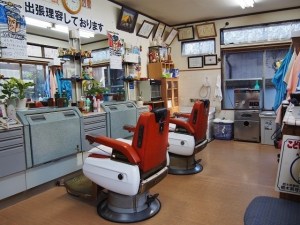
The point about hair grooming businesses at the end is offered with tongue in cheek. The Huffington Post article that brought up the matter was essentially looking at one industry whose very nature is directly affected by physical distancing, since cutting hair requires close contact between service provider and customer. Consequently, the barbers interviewed in the piece are of two minds—they have been trying to address the circumstances of their profession in order to minimize infection vectors, mainly by incorporating stringent disinfectant practices and scaling back on patrons. But they know that there is only so much they can do in their particular situation, and at least one of them believes barbershops should be closed and business owners compensated in some ways by the government. In a sense, she’s actually angry that the central government declared barbershops and hair salons in Tokyo “essential services” because that means if she closes her shop voluntarily for the good of her community, she has to take a loss in income. If the government ordered her to close, they would, logically, at least, be expected to provide subsidies.

The Huffington Post makes a comic jab at the LDP in its headline for the article, which says, in effect, “Politicians, are you really going to go to your barber now?” What this says to me is that Diet members are still in the public eye and therefore need to keep up appearances, so when they say that hair cutting services are essential, they mean for themselves. From what I understand, there are dedicated barber shops in Kasumigaseki and Nagatacho that cater only to government people, be they elected officials or bureaucrats. As I said in the column, the LDP has not insisted on keeping barber shops open in other cities, so the focus on Tokyo becomes a bit more suspicious. We wouldn’t want any cabinet members walking around with fly-away pompadours and unruly ear hair.

Posted in Media | Tagged | Leave a comment

Media Mix, April 19, 2020

Here’s this week’s Media Mix, which is about the state of employment during the current crisis and how some financial media outlets have addressed the matter. Though what drew us to this topic in the first place was the focus on suicides, which we only noticed in the financial press, we should stress that these media are in no way trying to make a case for “reopening” the economy prematurely. The news changes every day, perhaps more rapidly under such circumstances, and at the time we started researching this subject there was not the widespread contrarian opinion that we see today in the U.S. that lockdowns are authoritarian overreactions which impinge on individual liberties. This sentiment has not really taken hold in Japan, which is just now waking up to the realization that it did not act soon enough to prevent a worst-case scenario. But while the idea expressed by Tatsuo Yamakawa in Nikkei Business that the increase in suicides resulting from the coronavirus-caused recession could be just as bad as the number of deaths resulting from the disease itself sounds somewhat contrarian, he was expressing this idea as a means of advocating for greater government support for small businesses and workers in general. As pointed out by Tokyo Shimbun, major Japanese companies have plenty of cash in reserve to keep their employees safe either by having them work from home or not working at all—meaning not commuting to the office—but for the most part they haven’t cut back significantly on business activities, and the government, despite its calls for greater social distancing and the like, is loath to make any demands on the private sector, which is why infection rates are set to multiply drastically. On April 9, Asahi Shimbun ran a useful article about existing measures that the government and employers can use to keep workers both financially secure and physically safe, things like paid leave for childcare (a matter we plan to address in a future column), unemployment insurance, and even national health insurance. Unfortunately, many of these programs are not being taken advantage of fully, either because of red tape, dodgy qualification terms, or just plain ignorance. Instead, you have employers forcing workers to take paid holidays if they decide (or, for that matter, are asked) to not come to work. There are even programs that the self-employed can tap into in order to stay afloat, but employers and politicians don’t talk about it that much because of the settled notion that it isn’t cool to get paid for not working. It goes without saying that during extraordinary situations, settled notions don’t always count for much.

Posted in Media | Tagged , | Leave a comment