

Owing to Japanese distributors’ habit of taking their time to promote overseas releases, foreign films often don’t show up in theaters here until well after they’ve shown up elsewhere. This trend was exacerbated by COVID and thus I figure more than half the features on my best of 2023 list might seem like ancient history to moviegoers from outside Japan. Sometimes, as with Oppenheimer, the reason for the delay is different, but despite the local controversy I always knew Christopher Nolan’s blockbuster would eventually get a theatrical release here, and the tentative date is this spring, hopefully (for the distributor) before the Oscar show. Still, sometimes a filmmaker has a built-in audience in Japan that means the distributor can do away with extensive promotion, which is why the Aki Kaurismaki movie is on my list. In that regard, the biggest surprise is the Kelly Reichardt feature, which came out in the US this year. Reichardt has been making critically acclaimed movies since the early 90s and Showing Up is her first standard theatrical release in Japan—well, simultaneously with her 2019 movie, First Cow—which means somebody finally caught on (local streaming service U-Next, to be precise). Of course, I can’t use the promotional delay excuse to explain the absence of Japanese fiction features, something I’ve talked about in the past and which I won’t discuss here, but suffice to say that I saw the Hirokazu Kore-eda film and liked the story but not the characters; and didn’t go out of my way to see the Hayao Miyazaki movie because I’m not a big fan of anime. I did, however, see Ryusuke Hamaguchi’s latest, Evil Does Not Exist, and would have put it high on this list but it won’t come out in Japan until next year, so even Japanese films can be subject to the promotional delay. And if you’re wondering why Killers of the Flower Moon isn’t here even though it did receive a limited theatrical release in Japan, well, actually, I did see it, and, in fact, enjoyed it—or, at least, the parts I remember. There was something about the rambling quality of the nearly four hour film that left me afterwards with gaping holes in my recall of the story. I’d blame it on encroaching old age, but I remember almost every minute of Wang Bing’s documentary Youth (Spring), which I saw at Busan, and that was three-and-a-half hours. It just depends on what makes an impression in the moment, I guess.
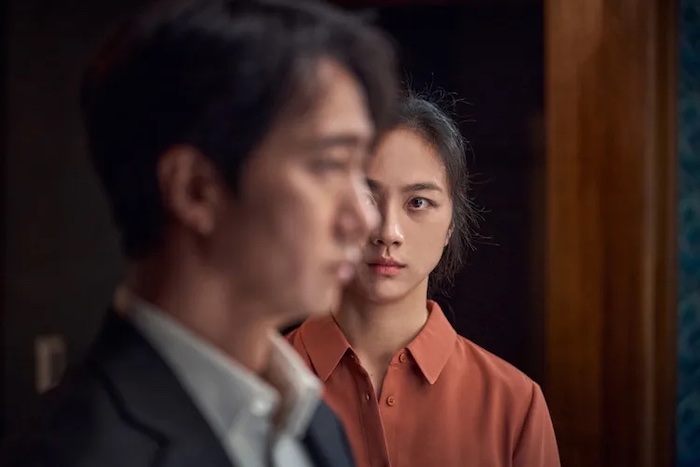
1. Decision to Leave (Korea): The best noirs are driven by character, and Park Chan-wook’s slippery mystery has two of the best ever: an obsessive police detective who suffers from insomnia, and a Chinese immigrant whose motivations for everything, including the possible murder of her older Korean husband, are obscured by language, whether purposefully or not. Park’s mastery of visual misdirection and comic sidelining makes it nearly impossible to guess where the story is going, but the two protagonists constantly draw you deeper into their world, where attraction is all the more irresistible in the shadow of suspicion and betrayal. [review]
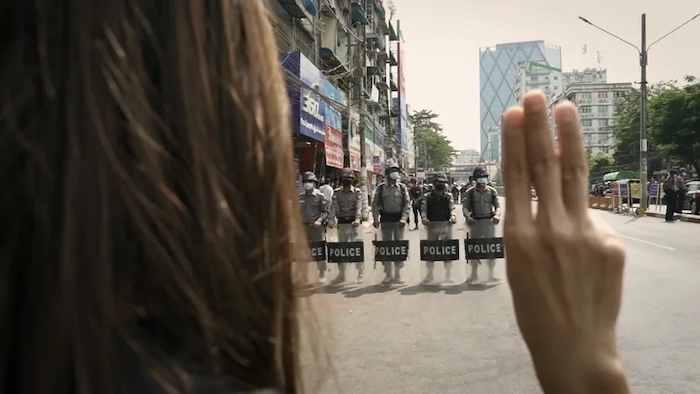
2. Myanmar Diaries (Myanmar/Netherlands): The individual makers of the short films included in this collection and created in the wake of the Feb. 2021 coup are necessarily anonymous, but so are the overseas editors, who deemed their names not important enough given the project’s purport. The selections comprise impressionistic staged dramas and actual visual documents of demonstrations, arrests, and general chaos. Juxtaposing the quotidian with the ominous and genuinely terrifying, the overall presentation conveys a powerful and intimate take on the mood of a country under the boot, but one whose spirit has not been stamped out. If it were, this movie would not exist. [review]

3. Great Freedom (Austria/Germany): Homosexuals were one of the minorities that didn’t benefit from the defeat of the Nazis. In 1945, Hans Hoffman, the protagonist of Sebastian Meise’s prison movie, goes almost directly from an Austrian concentration camp to an Allied detention center, and spends most of the next 25 years incarcerated. If Meise and his lead actor, the extraordinary Franz Rogowski, prove anything with this drama it’s that you can’t legislate desire. Since Hoffman sees himself as outside of society anyway, he almost takes pleasure in the state’s arbitrary cruelties, but he always connects with someone, because the authorities can never prevent you from loving. They can only make it more difficult. [review]

4. One Fine Morning (France): Lea Seydoux plays Sandra, a widowed single mother trying to find an assisted living facility in Paris for her ailing father, a retired academic, as she negotiates a love affair with a married man. The familiarity of the circumstances referenced in Mia Hansen-Løve’s contemplative script make it not only more relatable than similarly themed movies, but more dramatically compelling, even when the action is low-key. That’s because it focuses on the peculiar difficulties such circumstances impose on women, as Sandra receives assistance from her sister, mother, and even her father’s current female partner, all of whom can be counted on to do what’s right, unlike Sandra’s lover. [review]
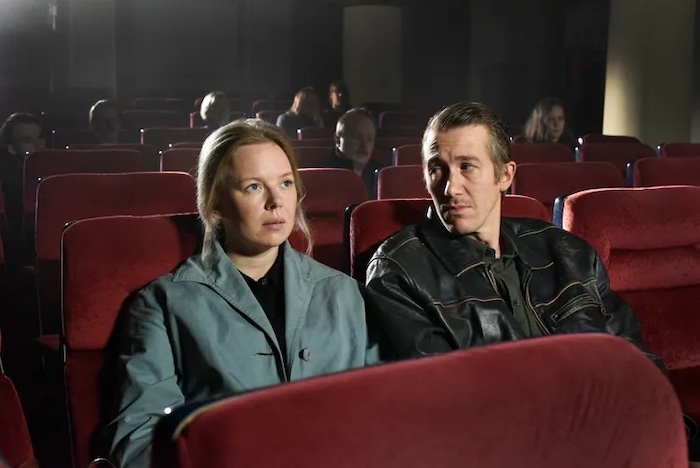
5. Fallen Leaves (Finland): Set within his typical immaculately drab set design, Aki Kaurismaki’s latest story about the blossoming love between a sullen alcoholic man and a lonely, occupationally challenged woman highlights familiar romantic movie cliches with an emotional richness that’s uniquely disarming. Here’s a couple who, despite the hand life has dealt them, still believes love can make the unfeeling world a tolerable place, but first they have to work out the business of getting to know each other, which is always a tough prospect when you also have to deal with everyday survival. Not nearly as wretched as it sounds, and funny enough to force a tear or two. [review]
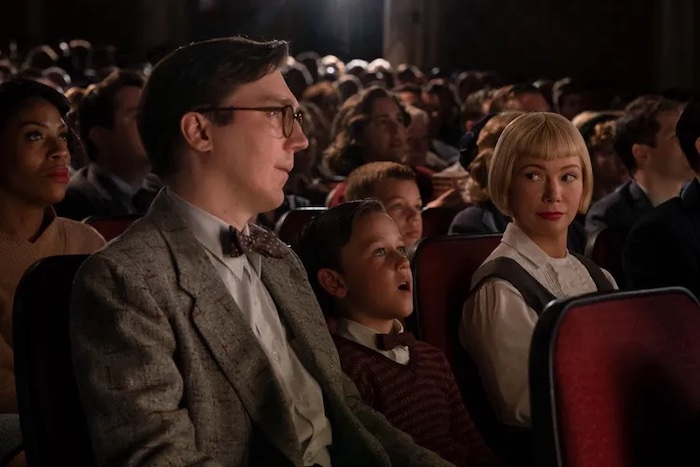
6. The Fabelmans (US): We’re fortunate Steven Spielberg didn’t turn to autofiction until he was in his 70s and thus less susceptible to the sentimentality that marked his early films. Spielberg’s avatar, Sam Fabelman, indirectly incorporates the angst generated by his brilliant parents’ troubled relationship into adolescent cinephilia as the family moves during mid-century from New Jersey to Arizona to California, where anti-semitism and the west coast sensibility, not to mention its weather, further solidify his aesthetic fundamentals. By the time he ends up in John Ford’s office solving riddles only Hollywood knows the answers to, he’s a fully formed mensch. [review]
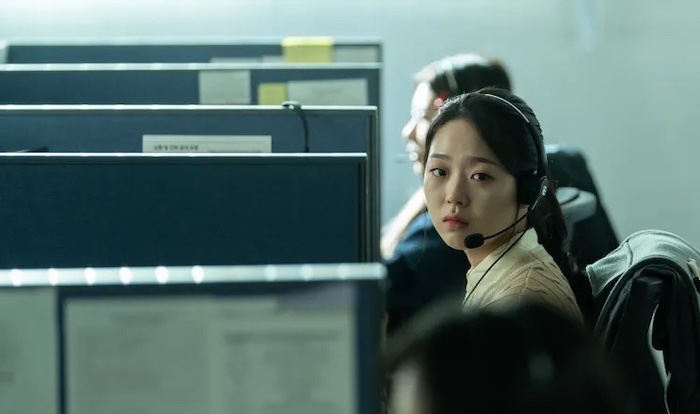
7. Next Sohee (Korea): Structure is the key to July Jung’s sophomore feature, based on a true story, about a high school girl who gets accepted into an “extern” program that gives her a head start in the working world as a customer service rep for a telecom company. Privy to Sohee’s background and temperament, we see how the demands of the job crush her native creativity and turn her into a depressed dogsbody. In the second half, a female police detective essentially reviews what happened in the first and the movie turns into a forensic investigation of post-millennial capitalism at its most criminally depraved. Young people, Jung suggests, don’t stand a chance. [review]

8. Showing Up (US): Kelly Reichardt’s gimlet-eyed study of art as both a vocation and a calling in a university milieu recalls Paul Mazursky at his most jaded. Michelle Williams’ sculptor prepares furiously for an upcoming exhibition as a series of individually minor indignities and distractions pile up at her feet, pushing her relationships with family and so-called friends beyond the breaking point. As her landlord, Hong Chau delivers one of the most delectably passive-aggressive performances of all time, and Judd Hirsch, playing the sculptor’s father (also a sculptor) as a Woody Allen character with zero self-awareness, exudes oodles of zest for the inconsequential twilight years that retirement has granted him. [review]

9. Aftersun (UK): Memory as anti-nostalgia. Edited as a highlight reel from a brief Turkish holiday that took place in the late 90s by an 11-year-old Scottish girl and her nominally estranged father, Charlotte Wells’ debut feature doesn’t so much interrogate this father-daughter relationship as subject it to a stress test. Years later, the girl, now the same age as her father was during the trip, tries to make sense of it for reasons that are not explained but suggested in odd and disturbing ways. As with all uncertain memories, those moments of real drama, whether scary or ecstatic, can feel more real than the provable living truth, which is how I would define the adjective “haunting.” [review]
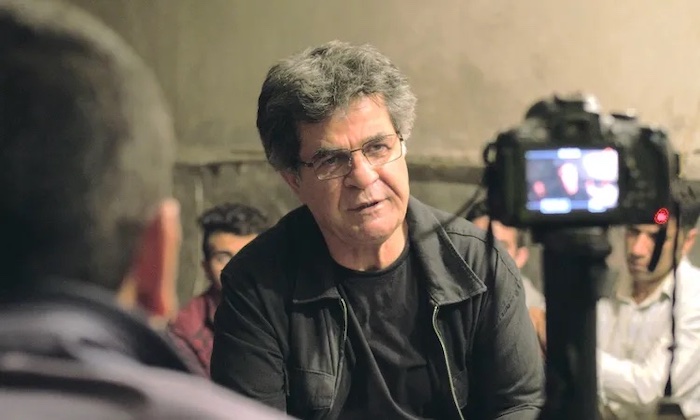
10. No Bears (Iran): Since this movie was made, its director, Jafar Panahi, has been released by the Iranian authorities after serving time for “propaganda against the establishment,” which shows how illogical the state’s own justifications are for its oppression. Restricted as to his movements and activities, Panahi once again plays himself, this time directing a movie in Turkey remotely from an Iranian border village where he is an infamous celebrity. The movie within the movie is about exiles, and the plot, not to mention the plight of the couple playing the leads, mirror situations happening in the village that Panahi himself may have set in motion. As usual, the director does not spare himself from the opprobrium of those who are the worst victims of cultural tyranny. [review]
Runners-up
The Wolf House (Chile/Germany): This claymation production pretends to be restored footage of a colony in Chile run by an ex-Nazi pederast. Grotesque and unsettling, it excavates proto-fascist tropes as surreal art. The purpose of the footage, and the fantasy story that spins off from it, is to sell the colony as an oasis of civilization, and, of course, the effect is totally the opposite. [review]
Return to Seoul (Korea/France/Cambodia): Encompassing ten years in the life of a French woman and her relationship to the capital of South Korea, where she was born and given up for adoption, Davy Chou’s enigmatic feature chronicles the woman’s emotional development as she uncovers her provenance and reluctantly learns to accept its paradoxes and ambiguities. [review]
The Card Counter (US): Oscar Isaac’s ex-con professional gambler in Paul Schrader’s movie is the epitome of opaque self-possession, a loner who doesn’t know the world as well as he thinks he does. He’s better at reading an opponent’s poker face than choosing his moral battles. [review]
Paper City (Japan/Australia): Less an explanation of the March 1945 firebombing of Tokyo, which killed more than 100,000 people in a single night, than how it has been (not) memorialized, Adrian Francis’s documentary conflates the responsibility of the unrepentant Americans with that of the current Japanese ruling party, an ideological extension of the prewar military government. [review]
Hommage (Korea): Art and commerce again. A struggling indie filmmaker takes a job restoring one of the first Korean movies directed by a woman and finds her own view of creative agency itself restored. [interview]
Moonage Daydream (US): David Bowie depicted in perhaps the way he really wanted to be remembered: Not as a man with a life, but as a vivid artistic outlook. Even if you’d rather know more about drugs and behavior, see it for the music, which is magnificently presented. [review]
The Apartment With Two Women (Korea): The permanent feud between a middle aged single mother who has always done what she wants to do and the directionless 20-something daughter who wishes she wouldn’t makes for typical film student fare—overlong, shaggy, filled with stereotypes. It’s also, thanks mainly to the acting, hilarious and shocking. The fights are WWE-worthy. [review]
 philipbrasor.com