
Here are the movie reviews I wrote for the May issue of EL Magazine, which was distributed in Tokyo on April 25.
 Captain America: Civil War
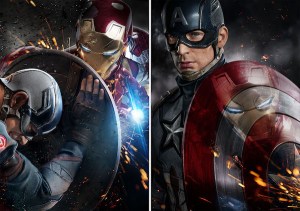
No, Cap hasn’t been transported back in time to fight the Rebs. The internecine struggle indicated by the title is between Captain America/Steve Rogers (Chris Evans) and Iron Man/Tony Stark (Robert Downey Jr.), thus making this latest Marvel blockbuster not only another chapter in the Avengers series, but also an inadvertent (?) Marvel response to the recent Batman versus Superman fiasco. That it isn’t a fiasco itself says more about Marvel Studios’ knowhow as purveyors of cinematic bombast than any distinctions you might want to draw between the two superhero institutions as institutions. Marvel has had more practice and are better at spending money than the DC people, even if the DC people have been in the comics game much longer. In a more essential way, Marvel, while always a bit too casual with the cynicism, bothers to consider the superhero genre as something that actually has an influence on society. The problem with the Superman and Batman movies is that they’re so generic. The civil war in this instance is sparked by something us skeptics have always huffed about in these movies: the incredible collateral damage that comes with saving the world. In the opening recap, we get the greatest hits of the Avengers’ carnage in various world cities, which has brought the wrath of these countries down on their heads and with it an intermediary (William Hurt) to run roughshod on their activities. Rogers, who suspects they’re being set up by one of those evil forces they were formed to fight, doesn’t go for the leash, while Stark, at one time the loose cannon destructo king, takes the bit. They clash, and the other Avengers line up behind one or the other, depending on their political stance. In the meantime, some stray members of the Marvel universe are finally recruited, with Ant Man (Paul Rudd) hanging with Cap and the preternaturally millennial Spider-Man (Tom Holland, in his debut as the character) taking Stark’s stand. Though it’s more coherent and intellectually stimulating than Winter Soldier, there’s still a lot of flab in terms of set pieces whose only purpose seems to be to spread the action amongst as many superheroes as possible, and since there are so many (Jeremy Renner as Hawkeye, Scarlett Johansson as Black Widow, Anthony Mackie as Falcon, Chadwick Boseman as Black Panther, etc., etc.) it’s a lot of fighting to sit through. Daniel Bruhl plays the heavy, an outlier whose own score to settle with the Avengers actually has some merit, and makes you wonder how much better the movie might have been if his story had been given more attention. Since everybody assumes the Avengers stand for America, it’s nice to see them get their comeuppance for once, but apparently there’s always a limit to such things. (photo: Marvel) Continue reading
 Here’s
  Here’s
  Here’s
  Here’s
 The Catastrophist
 The Big Short
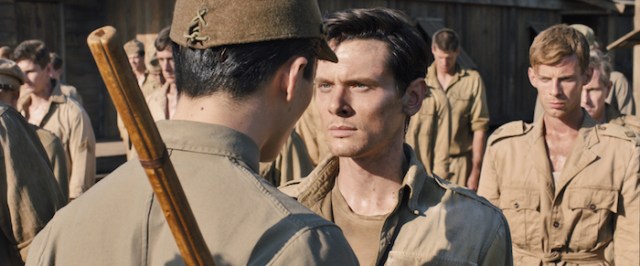 As has been well documented, at least by the non-Japanese press, Angelina Jolie’s epic Hollywood retelling of the life of Olympic runner Louie Zamperini was not picked up by the usual Japanese distributor for Universal Studios product due to fears that right wing elements would make a stink about the film’s purported “anti-Japanese” slant. If the negative light this story shed on the Japanese movie industry was dimmed somewhat, it probably had more to do with the fact that foreign critics, not to mention American audiences, were cool about the movie. To a certain extent, the publicity stems from Jolie’s celebrity status and its somewhat paradoxical relationship with her intentions as a director. Her first film, after all, was set during the Bosnian conflict and featured unknown actors speaking in languages other than English. Unbroken isn’t quite as pure-of-purpose. It’s very much a big budget production, and while there are no famous faces on the screen, it has the melodramatic heft of a Tinseltown biopic. In that regard, and given Jolie’s popularity in Japan, it could have been a moderate money maker here, though I’m not sure if that explains why a distributor normally associated with European and Japanese art films took the risk of releasing it.
  Ben Cotner and Ryan White’s documentary, produced for HBO, immediately sets its priorities and its outlook. As the title forcefully suggests, the movie is a polemic against Proposition 8, the California state initiative to repeal legal same sex marriages, and which won in a 2008 referendum. That was the same election, the film notes, that brought Barack Obama to the highest office in the land. As journalism, the movie’s steadfast position in opposition to the particulars of the proposition would seem to make it less than objective, but Cotner and White gave themselves the luxury of covering the lawsuit that eventually annulled the election results, and which took five years. In that regard, the film is an invaluable investigation into how the American consensus on same sex marriages changed over time.
 philipbrasor.com