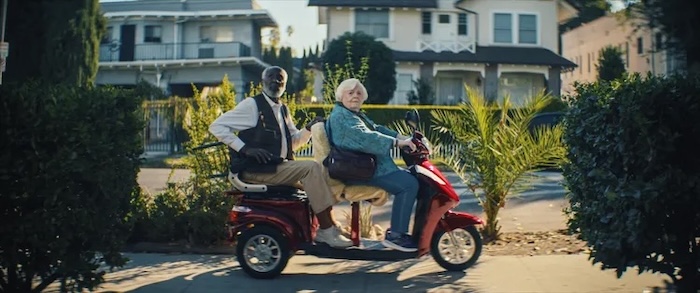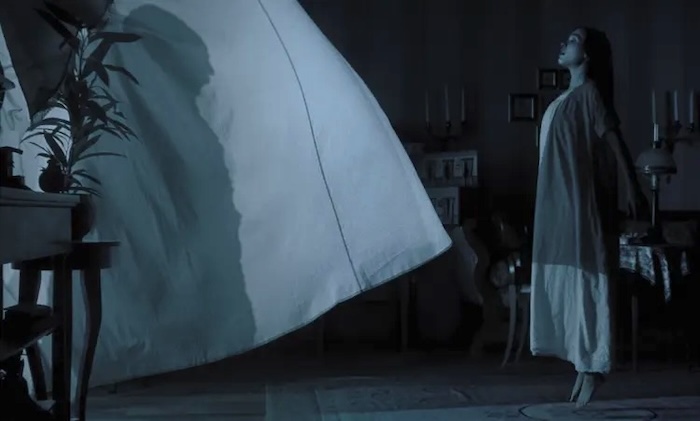
Media watch: Nobody takes the evacuation plans for Sakishima seriously

Last week, the government released a plan to evacuate the residents of the Sakishima archipelago, which comprises the outlying islands of Okinawa Prefecture, in the event of a Chinese invasion of Taiwan. Since the U.S. has pledged to defend Taiwan against any such attack, Japan would be drawn into the conflict in accordance with the U.S.-Japan security agreement. Those Japanese islands geographically closest to Taiwan would likely be affected, so the government came up with a plan to move civilians from the region to mainland Japan.

Japanese media have reported these plans with an air of skepticism. Tokyo Shimbun‘s explanation, which appeared in its March 29 edition, included a comment that the scheme does not take into consideration the real situation surrounding the islands targeted for evacuation. 

The entire operation would endeavor to move about 120,000 people from the islands, including any tourists who happened to be present at the time, to 32 municipalities in 8 prefectures, 7 of which are on the island of Kyushu. The 55,000 residents of Miyako Island would be moved to 4 prefectures. Ishigaki’s 49,000 residents would go to 3 prefectures, including Yamaguchi on Honshu. The 4,000 people of Taketomi would be taken to Nakasaki; Yonaguni’s 1,600 people to Saga; and so on. All the evacuees would be flown to two airports, Kagoshima and Fukuoka, and from there bussed to the various municipalities that have been assigned to accept them. Some, such as those going to Yamaguchi, would use the Shinkansen part of the way. 

Continue reading
Posted in Media | Tagged , , | Leave a comment

Review: Tuesday

The debut feature by Croatian director Daina O. Pusić seems purposely designed to throw the viewer off-guard. A ratty CG parrot with wolf-like attributes encounters humans in various states of distress, after which the action cuts to an American woman named Zora (Julia Louis-Dreyfus) sitting impatiently in her nice London home waiting for someone—a young nurse (Leah Harvey), as it turns out. There’s another quick cut to a taxidermist’s shop where Zora tries to sell the proprietor a set of stuffed rats done up as Catholic bishops. What is going on here? Eventually, the action returns to the house and Zora’s bedridden teenage daughter Tuesday (Lola Petticrew), who we quickly learn is dying from some wasting disease after the parrot shows up and she realizes his purpose. “Please don’t kill me,” she pleads. “I must,” he replies in a guttural voice. 

Cinematic fantasies about confronting death are not uncommon, but Pusić’s approach feels almost improvisational. Louis-Dreyfus’s characteristically anxious comic effect masks Zora’s underlying despair, and Tuesday’s negotiations with Death the bird (voiced by Arinzé Kene) involve the cleaning of centuries of soot and grime from his feathers, the playing of Ice Cube’s “It Was a Good Day” (a song Death admits he has always liked), and the sharing of medical THC via vape cartridge. “I love sarcasm,” the bird says at one point after Tuesday makes a joke, and he grants her a brief delay from her descent into eternal nothingness, but only so that she can prepare her mother for it. By this point, the viewer has realized that Zora’s actions are all in the service of her full-on denial of Tuesday’s fate, and the movie becomes a kind of battle of wills regarding what it means to “let go.” Pusić maintains the surreal tone with magical bits showing an apocalypse taking place out in the real world, characters changing size for no discernible reason, and Zora herself becoming an angel of death upon acquiring the bird’s powers through literal ingestion. The random quality of these story details turns them into non sequiturs, making it difficult to grasp the director’s intentions, even when, in the end, Zora comes to terms with her own fears after Death tells her that the only afterlife for Tuesday is “in your memory.”

As someone who doesn’t believe in the afterlife, I found this pronouncement to be weak tea, especially after sitting through such fantastical audio-visual exertions. Perhaps the movie requires more than a single viewing to appreciate the odd allegorical richness of Pusić’s ideas, but they felt undercooked to me; which isn’t to say Tuesday isn’t moving. Louis-Dreyfus ably embodies the heartbreaking reality of Zora’s refusal to accept that her daughter is going to die very soon. “What am I without you?” she asks, and all the otherworldly stylistic inventions constructed by Pusić fall to the wayside in the light of Zora’s incomprehension. Louis-Dreyfus alone carries the terror and conviction that the movie struggles so hard to convey. 

Opens April 4 in Tokyo at Toho Cinemas Nihonbashi (050-6868-5060), Human Trust Cinema Yurakucho (03-6259-8608), Human Trust Cinema Shibuya (03-5468-5551).

Tuesday home page in Japanese

photo (c) Death on a Tuesday LLC/The British Film Institute/British Broadcasting Corporation 2024

Posted in Movies | Tagged , | Leave a comment

Review: Here

Robert Zemeckis’s career has been built on gimmicks, usually of the technical kind but also conceptual ones. Though most of the attention focused on his latest has to do with the extensive use of de-ageing/ageing AI software and the curious deployment of picture-within-picture devices for the purpose of scene changes, the main gimmick is promotional: Reassembling the cast and crew responsible for Zemeckis’s most famous project, Forrest Gump, on the occasion of its 30th anniversary, to once again celebrate American boomer exceptionalism as a historical given. The entire movie is set up to depict a certain space in the universe over the course of millennia, though the vast bulk of the film’s running time covers mid-20th century Pennsylvania, specifically the living room of a suburban house built in 1900 that is across the street from the original home of Benjamin Franklin’s illegitimate son, which has become a memorial. From this vantage point we sample the lives of the various families who occupied the living room over the course of a hundred years, including a budding aviator and his nervous wife, the randy couple who invented the La-Z-Boy recliner, a post-millennial Black couple and their son, and, most extensively, three generations of the Youngs: a WWII veteran, his frustrated artist son and put-upon wife, and the son’s own children, all living in the same house.

This last subplot stars Tom Hanks and Robin Wright as the second generation scions, Richard and Margaret, who are stuck in the house their entire married life with Richard’s parents, the alcoholic Al (Paul Bettany) and passive Rose (Kelly Reilly), due to post-60s economic stagnation. Though I haven’t read the graphic novel upon which Here was based, I would say Zemeckis missed a major opportunity to say something interestng and pointed about how Boomers were given all the resources and advantages to outperform the Greatest Generation and blew it by embracing capitalist consumerism in a death grip. Mostly what’s offered up are cliches—Richard abandons his draftsmanship talents for a career in insurance, Margaret crawls toward spiritual despair on having missed out on life (exemplified by “never seeing Paris”) because of her obligations as wife and mother—presented in a garishly theatrical way, complete with over-extended declamatory dialogue that is meant to carry all the way to the audience sitting up there in the top balcony. And because this main plot is punctuated with time-slipping asides to the other family stories over the century there’s no dramatic buildup. The hackneyed humdrum nature of the storytelling exacerbates the lack of flow, leaving only the technical flash to engage interest.

How much more engaging the movie might have been if the details, like the aviator wife’s involvement in the nascent sufragette movement, or the Black couple’s concern for their son’s welfare in a decidedly white environment, were elaborated upon, thus giving us more to chew on than the usual parade of pop music nostalgia and stumblings toward sexual awakening. I’m not necessarily one of those moviegoers whose memory of Forrest Gump is overwhelmed by revulsion, but Here makes the same miscalculations for the same tired reasons, and I wonder who still cares for this kind of showy but empty demonstration of cinematic wherewithal.

Opens April 4 in Tokyo at Toho Cinemas Nihonbashi (050-6868-5060), Toho Cinemas Hibiya (050-6868-5068), Toho Cinemas Shinjuku (050-6868-5063), Kino Cinema Shinjuku (03-5315-0978), Toho Cinemas Roppongi Hills (050-6868-5024).

Here home page in Japanese

photo (c) 2024 Miramax Distribution Services, LLC

Posted in Movies | Tagged , , , | Leave a comment

Media watch: Tokyo ward reminds citizens that they aren’t members of the royal family

We’re number one!

One of the peculiarites of Japan’s family registration (koseki) system is that a citizen can designate any address in the country as their main domicile, or honseki, regardless of where they actually live. A person’s residential address must be registered as such with the proper local government and indicated on the residence certificate, or juminhyo, but the koseki, which delineates one’s family relationships, isn’t so strict. Consequently, a significant number of Japanese people have designated Tokyo, Chiyoda Ward, Ichi-ban (number 1) as their honseki, because that is the address of the imperial palace. Of course, registering as such does not make one a member of the royal family, but, apparently, a lot of people like to dream, as it were.

According to Asahi Shimbun, this trend is becoming a problem for the bureaucrats of Chiyoda Ward. The number of people who live in the ward is about 68,000, but the number of Japanese people who have registered their honseki there is presently 210,000 and rising. Only about 3,000 people have registered the palace as their honseki, but for some reason Chiyoda Ward is the single most common jurisdiction in terms of honsekis nationwide. A lot of people also register Tokyo Station as their honseki, which is in Chiyoda Ward. 

The reason it’s a problem is that the koseki is needed for many procedures and transactions, which means the local government designated as the honseki of an individual must assist in these procedures and transactions—taking out insurance policies, applying for loans, registering at schools—by providing copies of the koseki and amending its attachment, the fuhyo. One of the basic functions of the koseki is registering one’s marriage, since those who enter into a marriage are, by definition, “leaving” their parents’ koseki and creating a new one with their partners, and that means choosing a honseki. Though most newlyweds use either their current address or their home town, others prefer something more exotic or romantic, and choose a famous place, like the palace or Tokyo Station. Though registrants are not required to give a reason for using a particular address as their honseki, Chiyoda Ward staff told Asahi that a lot of people who call to inquire about registering their honseki in Chiyoda Ward say that “it’s easier to remember.” 

The result has been a huge burden for Chiyoda Ward workers, who now handle on average about 30,000 koseki-related actions a year. These services cost money, which means that actual residents of Chiyoda Ward are paying, through their taxes, for procedures that benefit non-residents. The problem became so severe that last August the ward placed a notice prominently on its home page asking people not to use Chiyoda Ward as their honseki unless they actually lived there. The notice has no legal force. It is merely a desperate plea.

Someone who is new to the discussion will rightly ask: What is the purpose of the honseki if it doesn’t actually indicate the address of the registrant? The Asahi could not come up with a definitive answer. The honseki seems to confirm some sort of attachment to a place, which was more important in the past than it is now. After the juminhyo system was implemented in 1967 to administer public services through one’s local government, the honseki became merely symbolic, since most people only used it as a link to their past or heritage. That’s why Japan’s so-called untouchable class, the burakumin, are difficult to identify today, because the only indication of belonging to the class was one’s address—burakumin tended to be restricted to certain neighborhoods. It was the only aspect of their identity that made them burakumin other than their occupations. Nowadays, it’s almost impossible for someone without specific arcane knowledge to tell who supposedly or historically belongs to the burakumin class.

So why retain the honseki? Asahi doesn’t go that far, but likely the reason is force of habit; or, more precisely, the notion that dismantling any single component of the koseki undermines the rationale for the whole system. Proponents of the koseki see it as the perfect administrative embodiment of what makes Japan unique, and those elements which no longer have any meaning in the current social and cultural environment should nevertheless be kept so as to maintain that uniqueness. It’s why many people can’t countenance separate names for married couples. That would contradict the whole logic of a “family register.” 

We’ve even heard that some older people still list “Manchukuo” (the part of northeastern China that’s commonly referred to as Manchuria) as their honseki, since their families emigrated there before World War II, when it was briefly a colony of Japan, but it may be an urban legend. What we’re sure isn’t an urban legend is the intelligence there are still Japanese people who list the Russian-held “northern islands” off Hokkaido as their honseki, something we assume the government encourages since it keeps the dream that those islands still belong to Japan alive, albeit only in some people’s imaginations.

Posted in Media | Tagged , , | Leave a comment

Review: Better Man and Piece by Piece

The biopic, especially those about musicians, was rendered a cliche when John C. Reilly cosplayed as a Johnny Cash-like character in Walk Hard, but that movie did nothing to slow the continuing onslaught of “based on true” recreations of the lives of pop stars, a parade of mostly mediocre films that all follow the same story arcs. Michael Gracey’s Better Man is, in theory, another attempt to poke fun at the formula, but not with overt humor. Gracey’s subject is the English singer Robbie Williams, who became a superstar as a member of the boy band Take That and was indirectly forced to go out on his own because of his offstage bad behavior. Gracey actually tells Williams’ story in the typical biopic fashion: kid from problem-addled background grows up rough but follows his dream of being an artist to the top before descending into drugs and poor decisions and then rising like a phoenix to even greater adulation and success. Gracey’s peculiar slant on this kind of story is to make Williams into an ape, in accordance with a conversation he once had with the singer who characterized his career as being that of a “dancing monkey.”

The best part of this conceit is that it’s played absolutely straight. Through excellently wrought CG, Williams (“acted” by Jonno Davies) looks like a real primate and even moves on occasion like one but never alludes to the fact that he’s different, physiologically or any other way, from all the humans around him. Consequently, the viewer is constantly under the impression that what’s happening on screen is not so much the objective truth as much as it is how the Williams “character,” who narrates the story, sees himself. Thus, during Williams’s childhood in a middle class family in Central England, his difficulties with school bullies and a father who eventually abandons his family to pursue his own dreams of show biz glory take on a special, almost bizarre poignance. Likewise, his own rise as a member of Take That and the cheeky way he asserts his unique talents in a group that is supposed to present a unified front has more power. At the same time, the appeal of the music and the group’s image is never taken for granted, and Gracey, who’s already proven his mettle in musical presentation with The Greatest Showman, knows how to stage a production number for maximum excitement, contrasting them with suitable drama after Williams launches a solo career whose highs are both sartorial and chemical, thus providing the story with ample justification for the requisite precipitous drop into notoriety and dashed romantic possibilities afforded by Williams’ relationship with Nicole Appleton of the girl group All Saints.  

If the movie eventually runs out of steam it’s mainly because the ape gimmick can’t keep the biopic formula freshly engaging for more than two hours. Halfway through I completely forgot I was watching a simian. The ending, where Williams seems to slay all his inner demons and find something approaching genuine satisfaction with life, felt merely cynical. Of course, that very well may have been intended, but for such an outcome to be effective at all it would have required a completely different approach to what I would describe as movie entertainment. 

Another musical superstar named Williams, Pharrell to be exact, wanted to do something similarly different with his biopic and, in a sense, his take is even more radical than Robbie’s. At the very beginning of Piece by Piece, Pharrell is seen chatting with the movie’s director, Morgan Neville, about his ideas for the project and Pharrell says he wants to do it as a Lego movie because his story is about “borrowing from what’s already there,” though the real reason seems to be that Pharrell is just a big Lego fan. The kicker is that he has already been introduced as a Lego figure by the time his idea is proposed.

As with Better Man, nothing changes once the gimmick has been put into action. The difference is that Robbie Williams as a monkey is something the audience has to get used to, but the Lego movie style is already very familiar. Previous Lego movies, which were mostly action-comedy fantasies that made fun of established franchises, have conditioned us to expect outrageous visual jokes about cultural touchstones, like the Batman movies. Pharrell tells his story as it happened and early on it becomes obvious that he isn’t using the Lego style to sharpen the irony or heighten any comic possibilities. As he said in the beginning, he just likes it. 

So the ups-and-downs typical of the musical biopic are played straight with the main difference being that Pharrell himself has always been pretty conventional as both a person and a professional. He indulged his childhood love of music without any adverse complications, having grown up in a loving, supportive family. He didn’t get into trouble or challenge authority. Along with his Neptunes producing partner, Chad Hugo, he realized his ambitions through hard work and talent, did not indulge in drugs or unwholesome behavior, and always treated mentors and collaborators with respect. This isn’t to say that Pharrell’s career is boring, but rather that the Lego style doesn’t really do much to render it in a more interesting way, except maybe to make Pharrell’s occasional spiritual pronouncements visually trippy. To me, the most enlightening element of the story is that Pharrell cemented his reputation by producing beats for the biggest names in hip-hop, including nominal gangstas, all of whom testify (in their own voices) that, as Jay-Z puts it, Pharrell “has absolutely no street” in his persona, even though he grew up in an African-American housing project. True to the name of the pop act he created with Hugo, N.E.R.D., he’s an otaku before he’s anything else. He just happens to be the richest one in the world. In that regard, making a biopic as a Lego movie is the ultimate vanity project.

Better Man now playing in Tokyo at Toho Cinemas Nihonbashi (050-6868-5060), Toho Cinemas Hibiya (050-6868-5068), 109 Cinemas Premium Shinjuku (0570-060-109), Shinjuku Wald 9 (03-5369-4955), Shinjuku Piccadilly (050-6861-3011), Toho Cinemas Shinjuku (050-6868-5063), Toho Cinemas Roppongi Hills (050-6868-5024).

Piece by Piece opens April 4 in Tokyo at Toho Cinemas Nihonbashi (050-6868-5060), Toho Cinemas Hibiya (050-6868-5068), Toho Cinemas Shinjuku (050-6868-5063), Shibuya Parco White Cine Quinto (03-6712-7225). 

Better Man home page in Japanese

Piece by Piece home page in Japanese

Better Man photo (c) 2024 Better Man AU Pty Ltd.

Piece by Piece photo (c) 2024 Focus Features LLC/The LEGO Group

Posted in Uncategorized | Leave a comment

Review: Mickey 17

Slapstick wasn’t always a feature of Bong Joon-ho’s cinematic style. It was first noticeable in a minor way in his sci-fi thriller, The Host (2006), and then central to his two English language fantasies, Snowpiercer and Okja. However, his comic sensibility was put to its most potent use in the Oscar-winning Parasite (those pizza boxes!), which is probably why Western viewers who weren’t familiar with his work before then now think of him as a satirist. His newest movie willl certainly reinforce this view, as its entertainment value is highly reliant on cruel humor to put across Bong’s acid opinion of where capitalism is taking us. Set in the near future on a private colonization expedition to a distant planet, Mickey 17 presents Chaplin’s hapless tramp in the form of failed franchise owner Mickey Barnes (Robert Pattinson), who is reduced to selling his body and soul for a chance to escape his creditors and achieve redemption—over and over again. Mickey has signed on to a rich religious cult leader’s space adventure as an “expendable,” a crew member offered up for sacrifice whenever there is a need for a disposable human body, and is then “reprinted” afterwards to do the thing all over again with the same memories and personality. He is literally and repeatedly worked to death, and, understandably, he’s sick of it.

As with Parasite, the offensive classisms are in the details. The cult leader, an unsuccessful Trumpian politician named Kenneth Marshall (Mark Ruffalo), is not only a blatant eugenicist but parades his childish arrogance like a peacock by serving his crew and followers the grossest food, treating everyone except his patrician wife, Ylfa (Toni Collette), with devastating condescension, and throwing deadly tantrums when his hare-brained schemes don’t go his way. After his 17th incarnation, Mickey is left for dead by his former business partner and straight man, Timo (Steven Yeun), on the surface of the cult’s new home planet after falling into an icy cavern, but Mickey manages to survive only to discover that in his impatience to get on with the project, Marshall has reprinted him again: Mickey 17 meet Mickey 18, who, for reasons that are not satisfactorily explained, is a psychopath to his predecessors’ meek punching bags. The fact that “multiples” are deemed an “abomination” by Marshall’s dogma means elimination of both Mickeys without the possibility of return, but 18 has already gotten it into his head that he was reincarnated for only one purpose: Payback for all the times he’d died. 

It’s a brilliant premise for which Bong can’t take full credit since the script is adapted from a book, but the director rigorously exercises his funny bone with numerous absurdist subplots involving Mickey’s on-board girlfriend, engineer Nasha (Naomi Ackie), whose libido is doubly stimulated by having access to two Mickeys; Ylfa’s plan to exploit the planet’s native marumushi fauna for her “sauce” fetish; a stowaway agent of Mickey’s and Timo’s loan shark who is on the hunt for the two scofflaws; and countless speculations on the uses of science and technology to profit materially at the gratuitous expense of those at the bottom. A little of this goes a long way and if it weren’t for Pattinson’s inventive and sympathetic portrayal of both Mickeys the breathless intrigues that Bong contrives might have outpaced me, but I was able to maintain my stamina until the end. For what it’s worth, Parasite did much better with basically the same themes and tools, but real imagination backed up by real ambition is never a waste of anybody’s time.

Now playing in Tokyo at Toho Cinemas Nihonbashi (050-6868-5060), Toho Cinemas Hibiya (050-6868-5068), Marunouchi Piccadilly (050-6875-0075), 109 Cinemas Premium Shinjuku (0570-060-109), Shinjuku Wald 9 (03-5369-4955), Shinjuku Piccadilly (050-6861-3011), Toho Cinemas Shinjuku (050-6868-5063), Human Trust Cinema Shibuya (03-5468-5551), Toho Cinemas Roppongi Hills (050-6868-5024). 

Mickey 17 home page in Japanese

photo (c) 2025 Warner Bros. Ent.

Posted in Movies | Tagged , , , , | Leave a comment

Review: Emilia Pérez and Femme

At this late date, whatever interesting things Jacques Audiard’s unusual musical has to offer as entertainment have been subsumed by its attendant controversies. But even those interesting things are open to debate, mainly because they rely so heavily on idiosyncrasy for making an impression. The most obvious idiosyncrasy is the almost total lack of sympathetic characters, which shouldn’t necessarily be a handicap, but Emilia Pérez began as an opera, which means it relies on melodramatic devices for its emotional power, and without a countervailing indication of virtuous intentions the dramatic elements feel lopsided. One could argue that Rita (Zoe Saldaña), the lawyer who takes on the task of ushering the titular Mexican drug cartel boss through her sex change and then protecting her new identity as a woman, is the most relatable character in terms of basic human decency, but it requires a leap of faith that Audiard doesn’t justify.

Another idiosyncrasy is that many plot points are patently ridiculous, but only one is treated as such by the musical format, and that’s when Rita goes to Thailand to research sex change surgery options and is met with an elaborate production number featuring wheelchairs and humorous references to genital transformation. Most of the other musical interludes come across as almost serious, though it’s difficult to tell because they offer no memorable melodies or choreography that move the story along. Most are what you would call inner monologues cosplaying as songs. Saldaña is a fine dancer and Selena Gomez, who plays the cartel boss Manitas Del Monte’s Mexican-American wife Jessi, is a bona fide 21st century idol-pop star, so there’s no shortage of talent on display. Karla Sofía Gascón, who plays both Manitas and Emilia, has a roughness of presentation that enlivens both her acting and her singing, but the songs she’s been given don’t add anything to Emilia’s story as a journey of self-discovery. After all, the main purpose of her transition is not so much that she has always wanted to be a woman (though she says so many times) but rather that she wants to put the death and destruction that comes with her vocation behind her. After reemerging as Manitas’s previously unknown cousin, Emilia tries to make up for the misery caused by her former self by establishing a foundation to help the families of her victims reclaim their loved ones’ remains and find closure. But even Rita, who sold her soul to this devil in the first act, has to scoff at the perfidy of such an attempt at redemption, and Audiard engineers a punishment for Manitas/Emilia’s presumptions that is suitably operatic but no less ludicrous. 

In the end, the idiosyncrasy that neutralizes whatever inherent entertainment charms the material offers is the length. Operas and musicals are long because their production numbers require elliptical pauses in the action, but even the plot here feels as if it’s marching at a slower pace than necessary, which means it should have either been a straightforward telenovela without songs, or a ribald musical farce. At first, I concluded that Audiard brought too much to the table, but it’s probably the opposite: He didn’t think it through thoroughly enough. 

The protagonist of the British thriller Femme is not a transsexual, like Emilia Pérez, but rather a part-time transvestite. Jules (Nathan Stewart-Jarrett) turns into the glamorous lip-syncing queen Aphrodite on Saturday night, dolled up to the nines and strutting like a monument to outlandishness; and in private with his roommates admits that it’s difficult to tell which persona is the real him and which is an act. This fatal dichotomy becomes word when, still dressed in his stage gear, Jules goes out to buy some cigarettes and is accosted by a bunch of homophobic goons who beat the shit out of him. One of them he recognizes as a guy who’s been hanging outside the club giving him the eye, and following a period of traumatized healing when Jules retreats into himself, he hesitantly ventures out to a sauna where gay cruising takes place and stumbles upon his attacker, who doesn’t recognize him in mufti. Jules comes on to the guy, a drug dealing ex-con named Preston (George McKay), as a means of exacting revenge, though he doesn’t really know what form that revenge will take as he plays the subsequent affair by ear.

The directors, Sam H. Freeman and Ng Choon Ping, take this premise to its limit, both emotionally and dramatically. Preston’s greatest fear is that his mates will find out about his proclivity for homoerotic sex (Cultivated while in prison? That seems to be the implication), and his attitude toward Jules shifts constantly and often suddenly between violent paranoia and full-on obsession, while Jules, all the while plotting his reprisal, stews in his own fear and, against his better judgment, develops feelings for Preston that are only partly an expression of sympathy for his spiritual dilemma. When Preston takes Jules out on a date he brings him to an expensive restaurant where he tries to show off his epicurean side, which does nothing to counter his boorish self-image as a true lad but rather intensifies, in Jules’ mind, how completely at a loss he is in terms of self-esteem: All that showy macho bluster can’t hide the hatred he feels for himself. 

The story only magnifies the two characters’ slippery purchase on their respective identities even as it charges headlong into conventional thriller territory. If I found the denouement a bit too ambiguous, that’s probably because I, like too many habitual moviegoers, expect something more definite when confronted with certain genre elements, but you couldn’t accuse the filmmakers of being dishonest. 

Emilia Pérez, in Spanish and English, opens March 28 in Tokyo at Shinjuku Piccadilly (050-6861-3011), Marunouchi Piccadilly (050-6875-0075), Bunkamura Le Cinema Shibuya Miyashita (050-6875-5280), 109 Cinemas Premium Shinjuku (03-6709-6410), Toho Cinemas Roppongi Hills (050-6868-5024).

Femme opens March 28 in Tokyo at Shinjuku Cinema Qualite (03-3352-5645), Human Trust Cinema Yurakucho (03-6259-8608), Human Trust Cinema Shibuya (03-5468-5551).

Emilia Pérez home page in Japanese

Femme home page in Japanese

Emilia Pérez photo (c) 2024 Page 114-Why Not Productions-Pathe Films-France 2 Cinema

Femme photo (c) British Broadcasting Corporation and Agile Femme Limited 2022

Posted in Movies | Tagged , , | Leave a comment

Review: Babygirl

It occurred to me while watching Halina Reijn’s extramarital transgression melodrama that it might not have worked as effectively as it does if an actor other than Nicole Kidman weren’t playing the main transgressor. With her reputation as a Hollywood superstar she injects a subtext of power into her character, a successful CEO who within the context of the story is considered a role model for female entrepreneurs. In the opening scene, she gets it on with her handsome, loving husband (played by Antonio Banderas, who was obviously chosen for his own extra-curricular baggage) in order to show that she doesn’t necessarily “have it all,” to use the cliche normally attached to women who enjoy both lucrative careers and solid marriages/families. Without Kidman to anchor this idea (Was it Steve Martin who made that joke about how Kidman is in every movie and TV show right now?) the film itself might have been received as little more than a kinky soap opera.

Kidman’s Romy is the founder of a robotics company who embarks on an affair with a young intern, Samuel (Harris Dickinson), who seems to have her number from the get go. Since we already understand that she fakes orgasms with her husband, we’re set up to intuit how Romy will respond to Samuel’s flirtations masked as genuflections to the differences in class and age that separate them. It’s these differences that Reijn wants to highlight, but the need to spice things up by making Samuel into an opportunistic predator often gets in the way of the social implications. If D.J. Lawrence did it more convincingly, it’s because the class distinctions between Lady Chatterley and Mellors were definitive. Reijn has to contend with the audience’s automatic repugnance of de facto class delineation. Like Mellors, Samuel asserts control through his use of the kind of sexual experience that Romy either doesn’t possess or has forgotten in her rush to the top of industry. Samuel is dominant, it’s implied, because Romy just can’t help herself once she’s gotten a taste. In that sense, the sex on screen is both liberating and highly stimulating, since Reijn and the actors serve it up straight. But in the end, the affair, and Romy’s desperate attempts to keep it under wraps, overwhelms everything else she does: It’s when the sex gets in the way of her work and leaves her exposed to blackmail, rather than interferes with her family life, that things start to fall apart.

Which is to say that social transgressions are more self-destructive than connubial ones. With or without Kidman, I could appreciate Reijn’s insistence that the kind of unfettered sex that Romy and Samuel partake of has no real bearing on the other aspects of their lives if left to their own devices, but that only means sex cannot be separated from one’s life in any way. Romy’s debasement in front of her so-called inferior, as exemplified by the title, is less of a thing than the notion that she is ruining all she’s worked for just to have a bit of nooky, which is not a particularly original idea, but one that Reijn puts across with a provocative freshness. 

Opens March 28 in Tokyo at Toho Cinemas Nihonbashi (050-6868-5060) Toho Cinemas Hibiya (050-6868-5068), Toho Cinemas Shinjuku (050-6868-5063), Shibuya Cine Quinto (03-3477-5905), Toho Cinemas Roppongi Hills (050-6868-5024).

Babygirl home page in Japanese

photo (c) 2024 Miss Gabler Rights LLC

Posted in Movies | Tagged , , | Leave a comment

Review: Three films by Alain Guiraudie

French novelist and filmmaker Alain Guiraudie has been active since the early 90s but didn’t really make an impression on the wider world until after the turn of the century, and even then his films were mainly categorized as Queer Cinema, a label that certainly applied but didn’t prevent his work from finding a bigger audience and winning Cesars and festival prizes. The fact that it has taken this long for any of his movies to earn theatrical releases in Japan is not necessarily surprising, but if this were the late 90s-early 00s, I’m sure he would have already become an item on the Japanese mini-theater circuit. Distribution of world-class art cinema isn’t as thorough as it used to be here. 

The oldest of the 3 features being released in Japan simultaneously this weekend, Stranger by the Lake, came out originally in 2013 and was the film that made Guiraudie famous internationally after it won the Queer Palm at Cannes and was chosen as the best film of 2013 by Cahiers du Cinema. Though I haven’t seen his previous work, which number a dozen shorts and features, from what I understand Stranger marked a shift in tone away from an aggressive form of confrontational cinema to something more conventional in presentation. Nevertheless, Stranger can still be startling in the way it tries to normalize behavior that many will find gratuitously unwholesome, and it’s not just because it’s set in an exclusively gay milieu, a remote lakeside cruising spot where anonymous, spontaneous sex is the only recreation on offer other than skinny dipping. Guiraudie delineates this aspect by dropping a straight character into the mix, a tubby, middle-aged guy named Henri (Patrick D’Assumçao) who shows up regularly at the beach just to watch what goes on. Our protagonist, a young buck named Franck (Pierre Deladonchamps), makes his acquaintance and the two often talk about life in general until Franck spies someone he likes and pursues him into the bushes. Guiraudie stages these trysts in such a way as to heighten their comical quality, but at one point Franck spies on a mustachioed hunk he’d like to shag who swims out to the middle of the lake with a companion and proceeds to drown the guy. Though he’s shocked, Franck’s ardor isn’t cooled a bit, and eventually he and the hunk, Michel (Christophe Paou), hook up as we in the audience wait for the other shoe to drop. The fact that the police finally show up and can’t penetrate the veil of homosexual solidarity—Franck’s too taken with Michel to rat him out, and thus his life seems even more at risk—heightens the suspense to almost unbearable levels. 

There are gay themes in Nobody’s Hero, released in 2021, but the main love story is hetero, even if it’s no less transgressive than the one in Stranger and a lot funnier. A freelance computer programmer of indeterminate age and no discernible charm named Médéric (Jean-Charles Clichet) approaches Isadora (Noémie Lvovsky), a middle-aged prostitute he’s been eyeing for a while, and propositions her for free sex, saying that he is “anti-prostitution.” Isadora initially blows him off but calls back later, intrigued by his gall, and they start to get it on in grand style in a rented hotel room when the TV reports a terrorist bombing in their city and Isadora’s burly, blunt husband barges in and drags his wife away. Guiraudie’s busy script lurches back-and-forth between this awkward and somewhat unappealing affair and Médéric’s parallel relationship with a homeless Arab teen, Selim (Ilies Kadri), who may have been involved in the bombing and is camping out in the hallways of Médéric’s apartment building. The two storylines eventually come together in classical farce style, sending up French attitudes toward minorities and the transience of sexual attraction. Not nearly as provocative as Stranger, Nobody’s Hero is nevertheless weirdly irresistible in its ability to take subjects that most people would consider controversial and treat them with a wry frivolousness.

Guiraudie’s most recent movie, Misericordia, isn’t as funny but still manages to keep you off balance with a story that never takes itself as seriously as it probably should. Jérémie (Felix Kysyl) drives to the rural village he grew up in to attend the funeral of his mentor, the village baker who schooled him in the art of pastries and baguettes. He boards with his mentor’s widow, Martine (Catherine Frot), who seems to be attracted to him, though it soon becomes clear that Jérémie always had a thing for her husband. Her son, the volatile Vincent (Jean-Baptiste Durand), is convinced that Jérémie has designs on his mother and pressures him to leave, thus making Jérémie even more determined to stay and manifest his real attraction toward a doughy old friend, the retired farmer Walter (David Ayala—one thing about Guiraudie’s objects of desire, they aren’t conventionally attractive), who quickly disabuses him of his availability. The real monkey wrench, however, is the elderly local priest (Jacques Develay), whose intentions toward Jérémie are anything but hidden, and when Jérémie becomes the prime suspect in a villager’s disappearance, it is the priest who comes to his rescue, so to speak, with an offer Jérémie can’t likely refuse. 

Some critics have called Giraudie’s films “Hitchcockian” in the way they toy with a viewer’s presumptions and primal feelings, but the most affecting aspect of his work isn’t the subversive humor or the weird way he ramps up tension. It’s how he confounds expectations about where his stories are going. His plots bob and weave tantalizingly, and often end up somewhere you would never predict after they make their own intentions clear. You may not appreciate them as much once you get to where they’re going, but you’ll have to admit they’ve taken you on quite a ride. 

All three movies, in French, now playing in Tokyo at Theater Image Forum Aoyama (03-5766-0114).

Home page in Japanese

Stranger by the Lake photo (c) 2013 Les Film du WorsoArte/France Cinema/M141 Productions/Films de Force Majeure

Nobody’s Hero photo (c) 2021 CG Cinema/Arte France Cinema/Auvergne-Rhone-Alpes Cinema/Umedia

Misericordia photo (c) 2024 CG Cinema/Scala Films/Arte France Cinema/Andergraun Films/Rosa Filmes

Posted in Movies | Leave a comment

Review: Starring Jerry as Himself

While watching this self-styled docudrama, one has to take into consideration that it is being directed by a professional filmmaker even if the protagonist-narrator, Jerry Hsu—playing himself, as the title so usefully points out—seems to be making all the decisions. So the home video quality of the production, which is a big part of its appeal, is something of a dodge, even as it sets the scene with a melancholy but believable premise. Jerry, who emigrated from Taiwan to the U.S. as a young man and now resides in a typical exurban town as a retired engineer, lives fairly comfortably on the money he saved. He is divorced from his wife, Kathy, who seems to enjoy a second life taking classes and hanging out with friends, and while in touch with his three grown sons doesn’t appear to be that close to them, even as the youngest is badgering him to loan him money for a down payment on a home. In other words, Jerry, the self-made immigrant, is pretty much an average American septuagenarian, healthy but lonely.

The drama starts when Jerry receives a call from two policemen in Shanghai who tell him that the Chinese authorities have determined criminals are using his bank account in the U.S. to launder money. The director, Law Chen, switches up the framing and the production values to show us the two policemen, played obviously by actors, talking to Jerry in Mandarin and explaining the situation to him, and thus the home movie takes on the cinematic trappings of a crime thriller. As Jerry, who is easily intrigued by the adventure potential of the police request, starts cooperating via cell phone with the officers to trap the criminals by staking out his own bank, which he is told is in on the scam, his sudden change in behavior piques the curiosity of his family, whose members have so far shown little interest in his activities or even well-being. But since Jerry has to keep a low profile, thinking the criminals may be somehow watching him, he can’t tell his sons what he’s doing. At one point, they conclude that maybe he has cancer and is dying, a plot development that gooses the story’s comic possibilities, though not as much as Jerry’s initial suspicion that Kathy might be working with the money launderers. 

Eventually, something’s gotta give, and when it does the movie loses its creakily charming mojo and turns into something more like an elaborate public service announcement. Admittedly, the entire family comes out of the ordeal closer and with a better appreciation of Jerry as a paternal figure, but it’s also obvious that Jerry the producer has contrived matters in such a way so as to convince the audience of all that. It would have been impossible for him to make a straight documentary about what happened to him in hindsight, but the methodology he ended up choosing feels deceptive. Only Jerry’s own natural likability saves the movie from being a total come-on. 

In Mandarin and English. Now playing in Tokyo at Toho Cinemas Hibiya (050-6868-5068), Toho Cinemas Shinjuku (050-6868-5063).

Starring Jerry as Himself home page in Japanese

photo (c) 2023 Forces Unseen, LLC

Posted in Movies | Leave a comment