Review: Kinds of Kindness

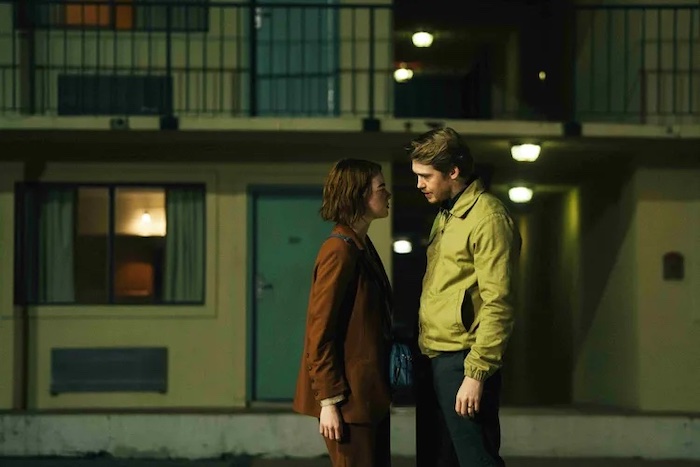
Kinds of Cruelty would be a more accurate title for Yorgos Lanthimos’s latest movie, but in line with the director’s often skewed view of human foibles and how those foibles can be dramatized, he frames his uniformly unpleasant characters in ways that accentuate their well-meaningness while at the same time exposing their basest impulses. In that context it’s worth repeating what a number of other critics have pointed out about Lanthimos’s approach. Here, working with Efthimis Filippou, the screenwriter who did his earlier Greek-language work as well as his more outré English-language movies, Lanthimos misses the common narrative appeal of his two best movies, the Oscar winners The Favourite and Poor Things, which were written by someone else. Like Dogtooth and The Lobster, Kinds of Kindness relies on twisted personalities doing weird things that Lanthimos obviously believes will be intriguing to his audience but which are just baffling because they are set in a very familiar, almost banal world (in this case urban and suburban America). Lanthimos is the master of the startling non sequitur, and Kinds of Kindness, at almost three hours, is just one long series of non sequiturs in service to clearly delineated plots that could have just as easily been conceived in a more naturalistic way without losing any of their thematic relevance, for what that’s worth.

There are three distinct stories using the same group of actors playing different characters, the only through-line being an amorphous, mute participant who goes by the initials R.M.F. This character figures into the titles of all three stories, though only in the first does his presence have any meaning. In that story, “The Death of R.M.F.,” he seems to be hired by a powerful CEO named Raymond (Willem Dafoe) to act as the “victim” of an employee, Robert (Jesse Plemons), whom Raymond has cultivated at every step of his adult development. Raymond has bought Robert the nice house he lives in, chosen his wife, Sarah (Hong Chau), tells him when to have sex and what to eat, and generally dictates every detail of his life. When he asks him to purposely get into an car crash with R.M.F. and the result is a fender bender with no serious casualties, Raymond is disappointed and demands Robert do it again with more seriousness and Robert refuses, occasioning a rift between mentor and mentee that leads to terrible, albeit ridiculous outcomes. There are lots of ways to interpret this tale, though none of them have anything to do with how we live our lives realistically. It’s all designed to shock and dismay. In the second story, “R.M.F. is Flying,” Plemons plays Daniel, a police officer whose oceanographer wife, Liz (Emma Stone), has gone missing during a field survey at sea. After she is finally found alive, Daniel’s anxiety does not turn to joy but rather paranoia, as he is convinced Liz is not the woman he married but some kind of imposter. As in the first story, matters become increasingly ludicrous as they also turn violent and distressing. The last, and probably best story, “R.M.F. Eats a Sandwich,” has Plemons and Stone playing acolytes of a new age guru (Dafoe) and his partner (Chau) looking for a chosen individual who has the ability to raise the dead. Stone’s character is a woman who has abandoned her husband and daughter for the guru and is eventually compromised in the guru’s estimation with regard to her faith, and then summarily banished; at which point she endeavors to return to the fold by any means necessary. More pointless violence ensues.

As already suggested, much of this violence, which includes vehicular mayhem, shootings, self-mutilation, and a particularly disturbing rape, is played at least partially for laughs, and while Lanthimos has a certain talent for the transgressive effect, it’s so schematically presented that you feel he’s following some kind of manual. Almost all the decor is sterile and tasteful, the dialogue invariably high-mindedly polite except when it isn’t (thus provoking a predictable reaction), and the story details single-mindedly counter-intuitive. For instance, I couldn’t figure out why Lanthimos and Filippou had Stone’s character in the last story drive a vintage Dodge Charger at exceedingly high speeds, since it didn’t seem to match the character’s sensibility, and the reason only became clear in the last scene, when her reckless driving caps the action in the most blatantly obvious way. It felt like cheating, and then I realized that the whole movie was kind of a scam. 

Opens Sept. 27 in Tokyo at Toho Cinemas Nihonbashi (050-6868-5060), Toho Cinemas Hibiya (050-6868-5068), 109 Cinemas Premium Shinjuku (0570-060-109), Shinjuku Piccadilly (050-6861-3011), Toho Cinemas Shinjuku (050-6868-5063), Shibuya Parco White Cine Quinto (03-6712-7225), Toho Cinemas Roppongi Hills (050-6868-5024).

Kinds of Kindness home page in Japanese

photo (c) 2024 20th Century Studios

Posted in Movies | Tagged , , , , , | Leave a comment

Review: The Roundup: Punishment

The fourth go-round for this ultra-formulaic police thriller series starring Ma Dong-seok is as predictable as the last two sequels, an m.o. justified by its massive box office returns in South Korea. Once again, burly battering ram police detective Ma Dong-seok (Ma) is drawn into the murder of a Korean national overseas, thus securing tourist industry participation in the production. We’ve so far had the opportunity to visit Singapore and Vietnam, so it’s only a hop, skip, and a jump to another popular Korean destination, the Philippines, where a rich tech bro (Lee Dong-hwi) has set up an online casino operation that’s managed by a bloodthirsty, ambitious ex-mercenary, Baek Chang-mi (Kim Mu-yeol), who lures programmers from Korea to the Philippines with lucrative job offers and then imprisons them in front of screens to create software that hooks offshore rubes. When one of these programmers tries to escape, Baek brutally kills him and the body, which has been reported missing back in Seoul, comes to the attention of Ma, who promises the victim’s mother—before she commits suicide from grief—that he will “punish” the person responsible, thus setting up the premise of all the Roundup films: Ma stretching the already flaccid limits of the law to bring a sadistic criminal to justice.

The only alteration to this formula is that Baek isn’t sadistic. He simply kills anyone who is inconvenient or standing in the way of his own material betterment, though in a manner that would be considered extreme by any normal sensibility. The more consistent series trait is the humor, which in this film is mainly a function of Ma’s ignorance of the IT that is central to the criminal enterprise. He can’t quite get his head around the idea of virtual anything and though he tries to cover up his lack of tech savvy with the usual bluster (“Is this a digital fist?”), it doesn’t matter in the end, because he wins all the fights, which, just like sex scenes in the proverbial porno, take place every five minutes or so in order to fulfill the film’s contract with the series’ fans. The other through-theme is how cavalierly Ma and his fellow cops intimidate witnesses and suspects with the threat of beat-downs and even death in order to get the information they need. Does South Korean law enforcement really appreciate their being portrayed in this way, even when it’s a joke? 

Given the money that Ma and his producers have made off the series, I doubt if they’re going to stop, though I have yet to read about a fifth installment. If they do decide to continue they should take a bit of time off first and try to freshen the formula, though the thinking is probably why fix something that isn’t broken, at least in terms of ticket sales? Ma the star is still a great comic actor and while there are about five fights too many in Punishment, the choreography can’t be beat, which is why I hear Ma makes a tidy side business in the U.S. training other action stars on how to use their fists. Nice work if you can get it.

In Korean. Opens Sept. 27 in Tokyo at Marunouchi Toei (03-3535-4741), Shinjuku Piccadilly (050-6861-3011).

The Roundup: Punishment home page in Japanese

photo (c) 2024 ABO Entertainment Co. Ltd. & Bigpunch Pictures & Hong Film & B.A. Entertainment Corporation

Posted in Movies | Tagged , | Leave a comment

Media watch: Social services continue to miss the real reasons behind child abandonment

Various Parent-Child Handbooks (Asahi)

Earlier this month, the Children and Family Agency released statistics about child abuse in Japan. In 2022, 72 children died as the result of “abuse,” two fewer than in 2021. However, in recent years this statistic has remained pretty much the same with only slight fluctuations, and according to an agency official quoted in an Asahi Shimbun report on the statistic, the number 72 “is still a big problem.”

The term “abuse” in this case should be qualified. Of the 72 deaths of persons under the age of 16, 56 perished of “abuse that did not involve group suicide,” meaning 16 children died at the hands of a parent or parents who committed suicide along with their children, and since minors are not considered to have agency under such circumstances, they were effectively murdered. Breaking the number down further, 25 of the children were less than 1 year old when they died of abuse, and 9 “were killed” on the day they were born. All of these nine babies were “abandoned,” though it isn’t clear from the Asahi report if the children died of actual violence or neglect. Five of the babies were “abandoned by the mother,” one by “both parents,” and the circumstances of the remaining three are unknown. As far as the agency can tell, six of the mothers of these abandoned children had never been examined by a physician while they were pregnant, and 7 were not in possession of the Mother and Child Handbooks that are routinely given to expectant mothers by medical institutions. In only one case did the agency determine that the mother consulted some form of authority about her pregnancy. 

The agency’s comment on these statistics acknowledges that some pregnant women and girls need “support” due to poverty or the fact that the pregnancy was unplanned, but doesn’t really offer any solutions. Asahi talked to the head of a psychiatric hospital in Kumamoto Prefecture that works with women who have been convicted of killing and/or abandoning their babies after giving birth alone. The doctor said that such women have a “lower ability to adjust to normal social situations,” a condition known as borderline personality disorder, and tend to have weak or no connections with family and no interaction with authorities, which they don’t tend to trust anyway. A few have been prostitutes, but in any case the “struggles” of these women need to be better understood.

Continue reading
Posted in Media | Tagged , | Leave a comment

Review: High & Low – John Galliano

Several years ago, I read an article in the New York Times that explicated the financial circumstances surrounding the fashion industry. Most designer fashion houses, including quite a few high-end ones, constantly operate in the red, since their product is so expensive to produce and promote and, due to its scarcity nature, doesn’t sell in volumes that can support those expenses. Consequently, the designers rely mainly on sponsors to prop up their lavish lifestyles, because without the image such a lifestyle conveys, the public won’t believe they are high fashion designers. This concept remained forefront in my mind as I watched Kevin Macdonald’s highly accomplished but pointlessly exhausting documentary about the British designer John Galliano, who destroyed his career in 2011 when he drunkenly spewed virulent antisemitic comments in a Paris cafe that were recorded by bystanders. Macdonald, in fact, opens the film with one of the recordings and then proceeds to show how Galliano reached this low point in his career. It’s a standard means of explaining the man and the artist, even if it runs on wicked tabloid energy. 

The rise before the fall is Horatio-Alger-on-meth boilerplate. Born into a working class Catholic family with an abusive father and a Spanish-born mother, Galliano “knew he was very gay” by the time he finished grammar school in London. Cultivating a posh accent while studying art and fashion on his own terms as a teenager, he eventually floored every teacher at the art college he attended and graduated with a fashion show that drew the attention of the relevant press and big houses in the 80s during the so-called new romantic period. Highly influenced by Abel Gance’s silent biopic of Napoleon, he made clothing that channeled the foppery of the 18th century into ambisexual provocations that delighted the cognoscenti. He was suddenly the hottest, youngest designer to ever commandeer a catwalk, but he was also broke because no one would buy his “art,” which is how it was characterized. When he moved to Paris to try to capitalize on his reputation he had to sleep on people’s couches. Meanwhile, he had already cultivated addictions to alcohol and certain drugs that only added to his outré appeal. Eventually, star makers like Anna Wintour and Andre Leon Talley took up his cause, determined to get him a gig that paid, thus bringing him to the attention of billionaire Bernard Arnault, who became his de facto patron and master manipulator. By 1996, he was working for Givenchy, a position that catapulted him to the head designer chair at Dior, at which point his workload was so heavy he couldn’t support it without the chemicals and the punk attitude, which everybody seemed to love. With Alexander McQueen replacing him at Givenchy, it was the age of the “rock and roll designer.” Macdonald carefully shows how Galliano’s self-destructive attitude infected those close to him, including his loyal assistant, who eventually died due to the unending strain.

Macdonald doesn’t skimp on the celebrity talking heads, most of whom sing Galliano’s praises as an artist while acknowledging he was a royal fuckup. On a number of occasions he talked to the man himself, who is now sober but hardly whole and still struggling to work himself back into the good graces of the layer of the industry that makes a difference in these matters as the artistic director of Maison Margiela. From all appearances, he is humbled by his fall but, still convinced that the punk-pirate image that got him to the top will get him there again, seems oblivious to how little stock the public and the press have put into his acts and statements of contrition. To Macdonald’s credit, he doesn’t really buy Galliano’s self-styled resurrection, but that doesn’t mean he isn’t getting off on his mortification. 

In English and French. Now playing in Tokyo at Human Trust Cinema Yurakucho (03-6259-8608), Shinjuku Piccadilly (050-6861-3011).

High & Low – John Galliano home page in Japanese

photo (c) 2023 KGB Films JG Ltd.

Posted in Movies | Tagged , , , | Leave a comment

Review: Songs of Earth

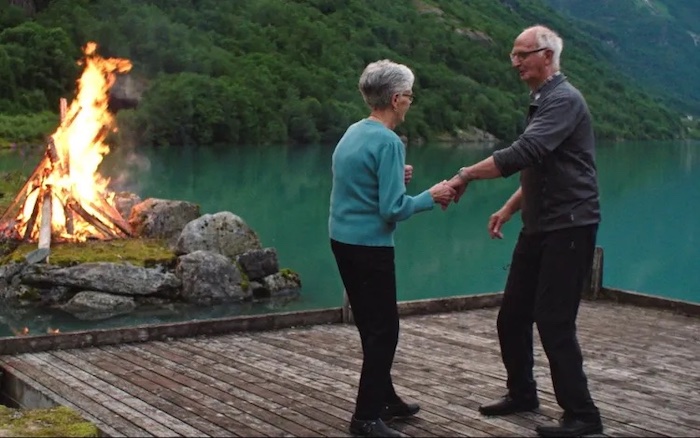
The scenery captured by four expert camera operators—one using a drone—in Margreth Olin’s documentary is undeniably other-wordly, even if the images are meant to convey the magnificence of nature in the raw. The reason has to do with the perceptions of the world that the majority of us live with, perceptions that often diminish nature. Though the film, as Olin plainly puts it, is “an ode to my parents,” it takes place in a remote corner of Norway called Oldedalen that seems to have totally escaped the encroachment of technology that has been visited on the rest of the world. In a sense, Olin sets up a paradox by using supremely high-tech cameras and sound recording to preserve audio-visual renderings of natural beauty that may be more viscerally expressive than the experienced thing itself.

This impression has to do with scale. Olin follows her 82-year-old father as he hikes this formidable land, with its towering mountains, mirrored-surface frozen lakes, serpentine fjords, and astounding diversity of flora and fauna, for the umpteenth time, telling stories about what has happened here and how nature shaped the lives he’s known, including his own. There’s an old tree where he proposed to Olin’s mother (still alive and healthy and fretting that she will die first), a sunken village where 40 people were killed by a landslide that caused a fresh-water tsunami, a vanishing glacier that shows how the distant thunder of civilization has made its impact even here. Intercut with the panoramic photography are old family snapshots from generations ago, impressionistic recreations of local anecdotes, and brief interludes indicating the passing of seasons and well as the hours of the day. A lot of this kind of thing goes a long way, and sometimes the narrative simplicity is overwhelmed by the visual sumptuousness. You tend to forget to listen to what’s being said.

Though only 90 minutes long, the leisurely pace has a numbing effect that feels more like therapy than elucidation, and when it’s finished you look for the complementary photo book that will sit on your coffee table; which isn’t to deride the polished look of the film or its moving tribute to the power of familial love. Olin delivers something we can only receive with awe because we can’t imagine ourselves being surrounded through an entire life with such beauty and circumstance—both happy and tragic—and in the end you could be forgiven for thinking that none of it is as real as it obviously is. 

In Norwegian. Opens Sept. 20 in Tokyo at Toho Cinemas Chanter Hibiya (050-6868-5001), Cinemart Shinjuku (03-5369-2831).

Songs of Earth home page in Japanese

photo (c) 2023 Speranza Film AS

Posted in Movies | Leave a comment

Review: Bonnard, Pierre and Marthe

Director Martin Provost is known for his biopics of French women, both real and (semi-)fictional, and his latest extends the idea by studying the artistic evolution of Marthe de Meligny (Cécile de France), a factory worker who, by chance, meets the budding impressionist painter, Pierre Bonnard, on a Paris street in 1893 and quickly becomes his model, despite having no overt inclination for art or posing. The nudity he insists on, in fact, bothers her at first, but since the couple is having sex before the day is through, you assume she’s not as prudish as she claims. Either that, or Provost is simply exercising his prerogative as a French director to make everything about sex. The ensuing story takes the couple through the rest of their lives, and, despite Pierre’s self-justifying tendency to stray, Provost and his two actors are convincing with regard to the Bonnards’ enduring love, though the director endeavors to cast this love as a function of the pair’s artistic ambitions. Eventually, Marthe, too, becomes a painter, and rather than react with competitive resentment, Pierre encourages her to the extent that he takes on the household chores around their sloppy but large, airy, rural house so that she can concentrate on her art more diligently. Though refreshing in what it says about their relationship, for Pierre, assuming domestic responsibilities has more to do with throwing off bourgeois trappings—at first, he forbids Marthe from getting pregnant—and embracing the modernism he so slavishly admires around him. 

Though there’s not much of a plot on which to hang the movie, Provost contrasts the pleasures of the epicurean oasis Pierre has created with the hypocrisies of male-oriented bohemianism in such a way that you can follow the road that modernism followed in the first half of the 20th century. There’s a lot of naked frolicking and weighty discussions about art and social constructs that imply you had to be there to fully appreciate the epistemological significance. And while Marthe’s chronic infirmities are used to add drama to sequences where there otherwise wouldn’t be any, she remains the strongest character in a film that includes such contemporary luminaries as Claude Monet (Andre Marcon) and Édouard Vuilliard (Grégoire Leprince-Ringuet), thus suggesting that without participants grounded in the reality of day-to-day life, modernism would have died of starvation early on. 

Consequently, it takes a crisis of love to really push Marthe toward her full potential as an artist, and Provost makes a good case that she was the superior painter because of it. I’ll take his word for it because I knew nothing about the Bonnards before I saw his movie, and while your enjoyment of it will greatly depend on your capacity for melodramatic overkill in the service of sex and art, I will admit the movie has historical value. That assumes, however, Provost is being honest and not just exploitative.

In French. Opens Sept. 20 in Tokyo at Cine Switch Ginza (03-3561-0707).

Bonnard, Pierre and Marthe home page in Japanese

photo (c) 2023 Les Films du Kiosque-France 3 Cinema-Umedia-Volapuk

Posted in Movies | Tagged , , | Leave a comment

Review: A Human Position

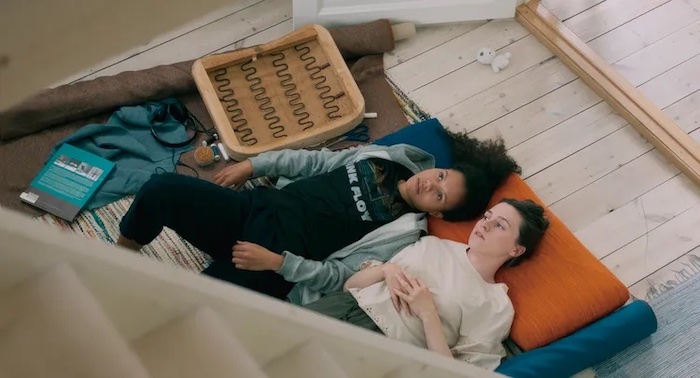
It says a lot about this quiet, enigmatic Norwegian film that the main character, Asta (Amalie Ibsen Jensen), almost casually secures a job as a reporter at her small coastal town’s newspaper without the viewer registering much in the way of congratulatory feeling. The job, in fact, seems trivial, like something you’d take on for the summer just to make extra money. Much of the reason for this lack of excitement is the fact that nothing of any consequence really happens in Ålesund’s news cycle except sports and PR gambits, and so when Asta starts pursuing a story about an asylum seeker who was working in a local food processing factory before being forcibly deported you many miss the significance until the story has meaning for her. Asta, who seems to be recovering from some kind of trauma, has moments of acute depression that her lover-roommate, Live (Maria Agwumaro), a furniture repairer/upholsterer, tries to sidestep until she can’t. Of course, there’s a cat, too.

If A Human Position sounds like slow going, it is, though there’s a poignancy to the static shots of the beautiful landscape of the town and Asta/Live’s bare, airy, well-lit apartment. The conversations are often blank and go nowhere meaningful but help signify the relationships on view in ways that more meaningful dialogue wouldn’t (though the comments about Norway’s welfare state are interesting), because these are the kinds of things people talk about to create spaces in which they can survive from day to day. So when the asylum-seeker story presents itself to Asta it gives her own existence meaning, even if nobody else seems to care about it. She needs more than a distraction. She needs to believe in her ability to make a difference, something the trauma suggested she couldn’t do, and which obviously preoccupies her. 

Which isn’t to day A Human Position is a downer. There are moments of subtle humor, as when Live discovers an old electric organ left in the attic and attempts to play a popular tune, that illustrate the title more clearly. As is often said, most of life is spent sitting around and waiting for something to happen, and the director, Anders Emblem, seems uniquely tuned into this credo in showing how Asta not only copes with disappointment, but remains open to the possibility of renewal and even reawakening. The fact that we don’t witness these changes because the movie ends before they happen doesn’t take anything away from Emblem’s purpose. If anything, it makes hope more believable. 

In Norwegian and English. Now playing in Tokyo at Theater Image Forum Aoyama (03-5766-0114).

A Human Position home page in Japanese

photo (c) Vesterhavet 2022

Posted in Movies | Leave a comment

Review: Hit Man

Richard Linklater could be cited as one of those world-class directors who alternates idiosyncratic, arty films with mass-marketable, crowd-pleasing entertainments, and most people will probably slot Hit Man in the latter category, but it’s deeper than the description would let on. Titles cards at the beginning and end claim it is based on a true story or, at least, the protagonist is a real person, but the contours of the plot adhere so resolutely to those of a criminal thriller that you know Linklater and his co-scenarist, leading man Glen Powell, have taken the story into fabulist territory. And while the basic premise is by no means meta in execution, the script and direction constantly comment, even directly, on the whole sub-genre of paid assassin movies. After all, the titular character, Gary Johnson (Powell), a philosophy professor at the Univ. of New Orleans who moonlights for the police as a faux assassin to entrap people who solicit hit men, says more than once that “hit men don’t exist,” that the “occupation” was essentially made up by popular culture. It’s a theory I myself have often pondered while watching movies like David Fincher’s The Killer.

Linklater fortifies this idea by showing how Gary’s professional study of human behavior (“The self is a construction,” he tells his students) informs his various impersonations of paid assassins. Powell gets limitless comic mileage with these impersonations, each of which is tailored to the particular person who is endeavoring to hire him. Consequently, when he shows up as “Ron” to a meeting with a woman named Madison (Adria Arjona) who wants him to off her abusive husband, he adjusts his character’s cool, macho manner in such a way as to convince her to leave the guy instead, thus enraging the cops he works with by letting her get away. Later, he embarks on a hot affair with Madison as Ron, who is much more of a stud than Gary is. However, this ongoing impersonation becomes more than a liability, and the way Linklater resolves the various ensuing complications makes for plot development of rare ingenuity. If, like me, you find paid assassin movies redundant and predictable, the unexpected twists and turns that Hit Man follows will have you laughing and shaking your head all the way into next week.

Some viewers will balk at the story’s moral ambivalence, but, again, Hit Man is essentially a comment on popular entertainment while itself being popular entertainment of the most bracing and imaginative kind. And Powell earns his current reputation as the most interesting leading man in Hollywood. We often talk about movies within movies. Powell’s acting here comprises performances within performances, and all are not only convincing, but refreshingly articulate and coherent. It will likely be streaming pretty soon in Japan (it already is overseas), but I urge you to see it in a theater just to bathe in its intelligence. 

Now playing in Tokyo at Kadokawa Cinema Yurakucho (03-6268-0015), Shinjuku Piccadilly (050-6861-3011), Human Trust Cinema Shibuya (03-5468-5551).

Hit Man home page in Japanese

photo (c) 2023 All the Hits LLC

Posted in Movies | Tagged , | Leave a comment

Review: Breaking Point

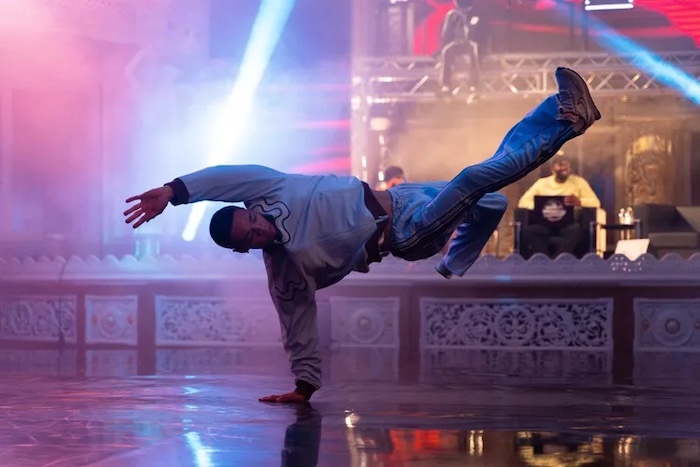
It’s difficult to say if this 2023 British film’s release in Japan was meant to coincide with the 2024 Paris Olympics, which featured breaking (break dancing for you old-timers) as an official event for the first time. Likely not, but the timing provides a certain ironic context given that the most prevalent topic surrounding the breaking competition at the Games was its air of cultural appropriation—which may explain, at least partly, why it isn’t scheduled to be reprised at the next Olympics. For sure, Americans, specifically African-Americans, who invented breaking were under-represented at the Games, and probably for understandable reasons. Serious breakers in the U.S. probably don’t have much use for this kind of organized presentation, with judges and scores and such, so that leaves it to the Europeans and the Japanese, who take such competitions seriously. Breaking Point is conceived as a classic sports movie, wherein the main characters work toward a big tournament, in this case a world team championship. The fact that the final match (spoiler!) comes down to Britain-versus-France shows where the film’s priorities lie.

The drama is provided by brothers Benji (Karam Singh) and Trey (Kelvin Clark), whose relationship has been icy ever since their mother died in a car accident that they survived. Both were gifted street dancers in their youth, but after the accident went separate ways, goal-wise, with Trey abandoning breaking and working toward admission to a good university and Benji sticking with breaking, which he practices usually under less-than-legal circumstances. There are, of course, love interests and family conflicts, and eventually the two brothers bury the hatchet and work toward forming an all-UK team that can go to the world championships. Since the two leads were chosen for their footwork, the acting is, at best, serviceable, but the script is better than the above description might indicate if only because the family dynamics at play are just complicated enough to draw you into the story. 

The hook is and should be the breaking, which is difficult to judge for someone like me, not so much because of the moves themselves but rather the music, which is more hip-hop-adjacent than hip-hop. Consequently, the routines feel over-choreographed, lacking the kind of spontaneity that made old school breaking so exciting when paired with genuine raps. But then the victor of the tournament, per the implications of the filmmakers, is determined mainly by the quality of the coaching. You can’t get more Olympics-oriented than that.

Opens Sept. 13 in Tokyo at Marunouchi Piccadilly (050-6875-0075), Shinjuku Piccadilly (050-6861-3011).

Breaking Point home page in Japanese

photo (c) FAE Films BP Ltd. 2023

Posted in Movies | Tagged , | Leave a comment

Media watch: How sustainable is Japan’s health insurance system?

There are reasons why I, an American, have decided to live the rest of my life in Japan, and though one of them is the current state of political discourse in my native country, that factor entered into the decision late in the game. Certainly, the most pertinent economic advantage of living in Japan as opposed to living in the U.S. is health insurance. I really don’t see the point of the private insurance system in the States, which, besides being expensive, is arbitrary with regard to the kind of treatment that’s available depending on your plan. Japan’s isn’t necessarily cheap, but it is pegged to income, which makes it fair, and everything, including dental care and all major surgery, is covered. There’s just no comparison.

For some years now, Japan’s national health insurance system has become a serious burden on the government, the main reason being the rapidly aging population that demands more care. But another reason is the basic cost of care, which is increasing almost exponentially as new treatments are developed. The reason these increased costs are such a concern was covered in a September 7 Asahi Shimbun article, which considered whether Japan’s medical care system can be maintained at such a high standard into the future. Part of the reason, according to the journalist who wrote the piece, Makoto Hara, has to do with Japanese attitudes, which hold that every single life is precious and thus the best medical care must be available to everyone regardless of social station and income. Hara thinks this attitude is the reason why Japanese lifespans are the highest in the world. Some people may disagree with this assessment, but in practice it seems to be the fundamental philosophy behind the health care system. At the same time that Japanese people live longer than others, Japan’s national debt is also higher than other countries’, owing mainly to its medical insurance system. But there are other countries in the world with universal health care and they don’t have the same level of debt. What’s the difference?

Hara says that it’s the way Japanese doctors are encouraged to utilize the most cutting edge treatments as soon as they are available. At first glance, that statement seems self-justifying. After all, one of the sticking points of America’s health insurance situation is that, depending on your plan, many treatments, especially new ones, may not be available to you, and such limitations could have a serious effect on your level of care. In Japan, there are no such limitations as long as the treatment—be it a drug or a procedure—has been approved by the health ministry. And as Hara reports, there’s a kind of taboo against criticizing the use of such treatments, since anyone should be able to access them. But an increasing number of doctors, especially those who treat cancer, are wondering if the pressure to use state-of-the-art treatments isn’t bankrupting the system at this pace. Many of these doctors believe that not enough research has gone into determining how effective these new treatments are compared to older treatments, which often cost a fraction of what new treatments cost. 

Continue reading
Posted in Media | Tagged , | Leave a comment