Review: Fanatic and All the Beauty and the Bloodshed

Fanatic

Oh Seyeon’s Fanatic is definitely a student project, since she was still studying film at university when it was first shown at Korean film festivals in 2021. As such it’s also a deeply personal film. Oh explores the mystery of fandom, especially the downside, and takes off from her own adolescent crush on a K-pop singer who was eventually arrested and tried for gang rape and distributing videos of his victims. An air of embarrassed amateurness pervades the documentary, even if Oh, having already tasted the limelight as a fan, seems confident in her ability to hold your attention. 

That literal 15 minutes of fame when she met her idol, Jung Joon-young, in person at a fan event broadcast on TV, is the centerpiece of the film since it not only describes the depth of her devotion, but made it possible for her later to reach out to other fans who came to know her by reputation. She interviews a dozen young women, both Jung fans and some who had crushes on other stars. What they all have in common is that their idols eventually disappointed them, either through criminal activity or scandal. Predictably, their enmity became as fierce as their adoration had been. “I want him to die in jail,” one woman, hiding beneath a hoodie, says of Jung after he was convicted and sentenced to five years in prison. Despite the fact that Oh herself professes to only being able to talk frankly about it while drunk, she’s philosophical about her feelings, as are almost all her interlocutors, who are self-aware enough to probe their own fanaticism. The defensiveness of hardcore K-pop fans is well-known, but for some reason Oh doesn’t go into that aspect of the matter, maybe because from her perspective defensiveness is more or less natural, but as a reformed seongdeok (fanatic) she certainly knows how it feels, and at one point makes the connection between rabid K-pop fandom and right wing politics by visiting a rally for the release of imprisoned former president Park Geun-hye, where one of the activities was writing fan letters to Park that the organizers would deliver to her. As someone who has had a lot of experience penning sweet meaningless love notes to someone she doesn’t know personally, Oh felt as if she were among comrades, despite the fact that most were old enough to be her grandparents and she didn’t have any particular feelings about Park.

She also avoids the elephant in the room, especially with regard to K-pop, which is that most stars are manufactured, their whole public existence built on cultivating devotees like Oh. One of the women Oh interviews had a crush not on a K-pop star but on an indie rock artist, which would seem to contradict Oh’s thesis, since indie artists are, by definition, self-made. But the woman didn’t sound any less disciplined in her devotion than the K-pop fans did, and was similarly destroyed when the artist she followed was brought down by scandal. It also would have been interesting had Oh interviewed some men, but maybe their own brand of fandom scans differently than women’s.

Thankfully, Oh doesn’t take herself seriously, even if her movie is formally meticulous. At least half her production budget was apparently spent on taking the train from Busan, where she’s from, to Seoul in order to attend Jung’s trial, which like any function related to K-pop “sold out” in 5 minutes. (It’s implied that she got into the courtroom by paying a scalper.) She also interviews her mother about her own feelings regarding an actor she idolized who similarly ended his career in disgrace. The parallels with her daughter’s situation are both sobering and hilarious, and when Oh asks her if she was worried about her daughter’s obsession with Jung, the mother says, “No. I thought it was good that you stuck to one thing for so long.” Let’s hope she sticks to filmmaking with the same dedication.

All the Beauty and the Bloodshed

Veteran documentarian Laura Poitras has years of experience on Oh, not to mention an Oscar, and her award-winning All the Beauty and Bloodshed traces a more nuanced look at obsession, specifically through the experiences of famed photographer Nan Goldin. Poitras’s film is more overtly political than Oh’s, but there’s a similar determination at play to get at the heart of the mystery of obsession, even if it leaves out the fanaticism part. The target of Goldin’s attention is the Sackler family, which owned Purdue Pharma, the company that made billions on the prescription opioid OxyContin and thus was eventually found responsible for the deaths of millions of Americans through addiction to the drug, which the company not only knew about but encouraged. Goldin was one of those addicts, though she survived her own overdose and afterwards made Sackler a project that required even more of her typically fierce concentration than her art did.

Since Poitras is an observer, she presents Goldin’s crusade as part of a feature-length biography that goes deep into the artist’s battles with mental illness, the history of her nominally transgressive art, and the carefully curated, years-long legal case she brought against the Sacklers. The early biographical material charts Goldin’s rise as a photographer on the east coast—chiefly the queer mecca, Provincetown—where she was a fixture of the demimonde who went from shoplifting and living in relative squalor to producing what is generally considered the most revolutionary photography exhibition of the 1980s, The Ballad of Sexual Dependency. In the end, she incorporates this theme of conquering the art world into her mission of taking down the Sacklers by destroying them as patrons of art. Over the years, the family has funded many museums, and Goldin is a powerful enough artist in her own right to influence these museums’ self-regard by refusing them to show her work as long as they take her nemeses’ money. It’s perhaps the most elemental depiction of the conflict between art and commerce I’ve ever seen on film, and the drama this conflict evokes is powerful. There’s even palpable intrigue when Goldin discovers she’s being stalked by agents of the Sacklers’ legal team.

It helps that Goldin is articulate about her anger, a quality that’s developed through countless encounters with lawyers and the public as she has beat the drum for greater accountability on the Sacklers’ part. Poitras gives her free rein, and while purists may question the film’s lack of objectivity, All the Beauty and the Bloodshed (the title comes from a medical report about the suicide of Goldin’s beloved sister at the age of 18) is meant to be an emotional journey. It is not journalism in the strict sense. It is a chronicle of rage that ends up being a work of art in its own right.

Fanatic, in Korean, is now playing in Tokyo at Theater Image Forum Aoyama (03-5766-0114).

Fanatic home page in Japanese

All the Beauty and the Bloodshed is now playing in Tokyo at Human Trust Cinema Yurakucho (03-6259-8608), Shinjuku Piccadilly (050-6861-3011).

All the Beauty and the Bloodshed home page in Japanese

All the Beautry and the Bloodshed photo (c) 2022 Participant Film, LLC

Posted in Movies | Tagged , | Leave a comment

Review: Ghostbusters: Frozen Empire

Having passed through the original Ghostbusters craze phase unscathed and unenlightened, I came to the fractured franchise late and never quite got its blend of winking gross-out humor and imaginative but tame scares. There was always something under-cooked about its premise of a professional squad of ectoplasm exterminators, as if all the ideas had been worked out in the kitchen. That’s why the characters themselves are so important to the series, and why the original crew still needs to show up, however peripherally, in the new incarnation—or, at least, until the characters in the new incarnation make as much of an impression. Paul Rudd, who plays Gary, the nominally male head of this new enterprise, which has moved from the Midwest to the old fire station in New York that housed the original Ghostbusters, has imprinted his patented awkward nice guy on too many decent comedies to make the proper impression here (most people who are into this kind of movie will likely look at him and think of Ant-man first), and the three actual blood family members of the crew, mom Callie (Carrie Coon), daughter Phoebe (McKenna Grace), and son Trevor (Finn Wolfhard), weren’t given enough distinctive dimensionality in Ghostbusters: Afterlife to carry over to the new movie. I feel I have to get to know them all over again.

The silver lining is that Phoebe gets to reboot her emotional affiliation with the audience by shouldering the one dramatic subplot of the movie. After a job in a sewer goes wrong, she strikes up a friendship with a ghost named Melody (Emily Alyn Lind), whose provenance is never completely clear, but the two bond over conversations about death and family that are surprisingly affecting. Whatever the purpose of this diversion, director Gil Kenan has other entertainment obligations to carry out, and the volume of plot elements he has to juggle overwhelms him in the end. The real “story,” as it were, starts when a slick scam artist (Kumail Nanjiani) tries to sell a family heirloom to original GBer Ray (Dan Aykroyd). It happens to contain an imprisoned ghost that is out for big time revenge in the form of icing over New York City (which, typically, takes the wintery attack in stride). The related action is sufficiently potent but keeps getting interrupted by business that stalls whatever momentum Kenan can muster. Major chunks of expostion are given over to another original GBer, Winston (Ernie Hudson), and the paranormal research center he has built in an abandoned aquarium; as well as Gary’s fanboy obsession with the original Ghostbustermobile, which is presented as a series of flat running jokes. Phoebe’s story doesn’t stand a chance.

So when Bill Murray shows up for his requisite nostalgia appearance in the loud climax, you can practically smell the calculation. Murray has always been good at counteracting his don’t-give-a-shit attitude with crack comic timing that saves even the lamest jokes from themselves, but here he just feels obligatory, especially when he gets frozen in place with nothing much to do. Now how much did he get paid for that?

Now playing in Tokyo at Toho Cinemas Nihonbashi (050-6868-5060), Toho Cinemas Hibiya (050-6868-5068), 109 Cinemas Premium Shinjuku (0570-060-109), Shinjuku Wald 9 (03-5369-4955), Shinjuku Piccadilly (050-6861-3011), Toho Cinemas Shinjuku (050-6868-5063), Toho Cinemas Shibuya (050-6868-5002), Toho Cinemas Roppongi Hills (050-6868-5024).

Ghostbusters: Frozen Empire home page in Japanese

Posted in Movies | Tagged , , , | Leave a comment

Review: Oppenheimer

It was inevitable that Christopher Nolan’s multiple Oscar-winning biopic of J. Robert Oppenheimer, the father of the atomic bomb, would play in Japan despite some earlier reports that no local distributor would touch it because of Hiroshima/Nagasaki; though it remains to be seen if it’s as much of a box office draw as it’s been in other markets. And, in fact, it does address the utter devastation the bomb inflicted on a human population, albeit in a scene where the titular scientist (Cillian Murphy) imagines that devastation as it affects people who don’t look particularly Asian. Nolan’s reason for not including what actually took place in Japan on August 6 and 9, 1945, is that he has made a movie about a man who was not there on those dates, and, in fact, there are very few sequences in the film that do not center directly on Oppenheimer the man. Moreover, half the script is about what happens to him when he publicly renounces his creation for the terrifyingly destructive thing it is and the uses to which it is being put, so it is hardly a celebration of that creation. Nevertheless, the scene where the news of the dropping of the bomb on Hiroshima is met by Americans with cheers and celebration will undoubtedly make many Japanese people uncomfortable. It made me, an American, very uncomfortable, and I assume that was Nolan’s aim.

Because if the movie is about any one thing it’s hubris—Oppenheimer’s, mainly, but also that of the American intellectual left, the U.S. military, and males in general (the women are treated as cavalierly by the movie as they were in real life). Nolan’s purpose is to get into Oppenheimer’s mind in such a way as to show how those who needed him to produce the bomb could manipulate it to their ends. Normally, such an approach is done with more intimate tools, but Nolan, being Nolan, can’t work intimately, and so he trains his IMAX cameras on easy metaphors—from raindrops in water puddles to explosions on the sun—that are meant to be visually overwhelming. Likewise, Oppenheimer’s ambitions, which take him to Europe to hobnob with intellects and egos as big as his (He learns Dutch in six weeks just to present a lecture!), to the greatest universities in the U.S., where he’s a despised superstar, and finally to the attention of the authorities who exploit that ego—and his Jewish identity—for the war effort, are treated with maximalist detail by populating the cast that revolves around the protagonist with Oscar-winners and other A-listers. At first, I thought this parade of well-known faces would be a distraction (Matt Damon! Emily Blunt!Josh Hartnett! Kenneth Branagh! Robert Downey Jr.! Florence Pugh! Casey Affleck! Rami Malek for two minutes only!) but in Murphy he has an actor who does more with his face than with his voice or his body, and when you see it perform on the huge screen there’s little else to think about. This prioritizing of images at the expense of everything else comes into its own in the middle portion at Los Alamos, where the terrible deed is prepared and demonstrated, and the force that Nolan subsequently unleashes reverberates for the rest of the movie, which deals granularly with Oppenheimer’s political persecution in the 1950s and 60s.

Which isn’t to say Oppenheimer is the usual linear historical epic. Nolan liberally switches time periods and color palette to get what he wants, and if the story’s development seems to defy logic—much in the same way that the theories of the universe Oppenheimer ascribes to do, at least at first—it arrives at its destination with a proper sense of who the man always was and how it destroyed him in the end. What’s revolutionary about Nolan’s movie is how it interrogates the inner life with cinematic devices normally reserved for recreating bombast. Nolan has already proven he can do both, but he’s never juxtaposed the elemental with the gargantuan in such an assured way. It does what blockbusters have always endeavored to do: Hold the audience spellbound for three hours with the biggest gestures money can buy. But rather than assault the senses, Oppenheimer wields these devices in order to force us to ponder the arrogance of human enterprise, which may be the most terrifying thing of all. 

Opens March 29 in Tokyo at Toho Cinemas Hibiya (IMAX 050-6868-5068), Marunouchi Piccadilly (050-6875-0075), Toho Cinemas Shinjuku (IMAX 050-6868-5063), Shinjuku Wald 9 (03-5369-4955), Shinjuku Piccadilly (050-6861-3011), 109 Cinemas Premium Shinjuku (03-6709-6410), Toho Cinemas Nihonbashi (050-6868-5060), Toho Cinemas Roppongi Hills (050-6868-5024), Toho Cinemas Shibuya (050-6868-5002).

Oppenheimer home page in Japanese

photo (c) Universal Pictures

Posted in Movies | Tagged , | Leave a comment

Review: Love Reset

It’s been said by wiser cinema-heads than I that the romcom is dead, killed off by a post-modern critical attitude that doesn’t appreciate the irony that once made the genre appealing. My own take is that the classic trappings of romantic comedies—middle class, middle-brow aesthetics tied to a belief in the transcendant values of monogamous heterosexual love—no longer apply in a world where constant connectivity breeds cynicism toward human relationships. And I’d say that was a shame if I believed in middle class, middle-brow aesthetics in the first place, but the romcoms I’ve always liked—Preston Sturges’ work, Shampoo come to mind—are already cynical, so maybe I was never the target. At the moment, Korean cinema and TV series are thriving on romcom stories, and for the most part they blend the kind of snark I appreciate with the wettest sentimentality you could possibly stand, an often toxic combination that nevertheless keeps you awake to the possibilities of a particular story.

Love Reset is what used to be called high concept, meaning it was pitched for its gimmick—married couple about to get divorced are in an accident that leaves them with amnesia and thus open to the possibility of falling in love all over again—and, as is often the case with any Korean romcom, the story is so unwieldy and imprecise that there’s bound to be something there you like, if only for a minute or two. The introduction is promising: Perpetual law student Jeong-yeol (Kan Ha-neul) is drinking himself into a stupor because the love of his life, Na-ra (Jung So-min), is getting married to somebody else. Though the two have dated for some time, Na-ra, from a well-to-do family, doesn’t think Jeong-yeol, who is going for his fourth or fifth run at the bar exam, is ever going to amount to much, but at the altar she has a Graduate moment and bolts the ceremony, arriving at the bar where Jeong-yeol is blotto to declare her intentions. From here, the movie veers widely away from the path a Western romcom would take, with Na-ra’s family, understanding there’s no point in fighting it, offers to support Jeong-yeol while he studies again for the test, a development that makes Na-ra question her own future with him, and after they marry she finds she can’t stand his spendthrift ways (he’s determined to pay back his in-laws) and purity of purpose. She goes the opposite way by drinking constantly and leaving a mess wherever she goes, and her freelance movie production work suffers for it.

What’s promising about the setup is that after the two lose their memories their families and friends reverse course and endeavor to make sure they don’t get back together again, thus creating a tension between the different intentions at play. A lot of the comedy is self-referential (“this is like something out of a movie”) and the scatological humor might be a bit too ripe for some tastes, but as a sour look at the state of matrimony in Korea and the class pressures that work to its disadvantage it’s often amusing in a broad, slapstick way. In any case, I can’t see how anyone would want to marry either of these clowns.

In Korean. Opens March 29 in Tokyo at Marunouchi Piccadilly (050-675-0075), Shinjuku Piccadilly (050-6861-3011).

Love Reset home page in Japanese

photo (c) Cinema Woollim, TH Story and Mindmark

Posted in Movies | Leave a comment

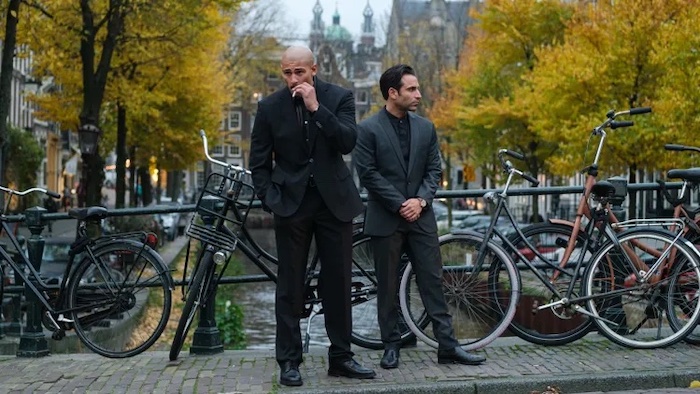
Review: Rheingold

One of the few intriguing elements of Fatih Akin’s biopic of the Kurdish-German rapper and media star Giwar Hajabi (professional moniker Xatar) is the title. The composite word comes up when Hajabi, as a child, accompanies his composer-conductor father to a performance of the similarly named opera in Bonn, shortly after his refugee family has arrived from Iran via Iraq and Paris. Das Rheingold is the first of Wagner’s four works addressing German culture’s mythological origin story, and the scene sets the stage for Hajabi’s own self-mythologizing impulses (the Rheingold, after all, makes you immortal) as a foreigner gangster who survives by his wits and outsized personality. It also gives Hajabi a credible grounding in both music and outlaw attitude, the former of which is only latently realized.

Moving back-and-forth through Hajabi’s life, the storyline focuses on hard responses to hardship, with the family suffering mightily in exile following the Iranian Revolution before the elder Hajabi secures work in Germany as a musician—and then promptly abandons his wife and children when he meets another woman. Bullied and vilified by other immigrants and ignored by the natives, Giwar (Emilio Sakraya as an adult, Ilyes Moutaoukkil as a teen) sells porn videos in school to augment household finances and becomes a street fighter who can give as good as he gets when he turns to dealing drugs. Akin doesn’t do much to distinguish the various facets of young Hajabi’s life as he falls headlong into a life of crime that leads him to an expat mob headquartered in Amsterdam who sees his potential and puts him to work. One botched job leads to another and Giwar goes on the lam for stealing a shipment of gold (Aha!), forcing him to hide out in Syria where he’s picked up by local military who torture him to find out where the precious metal is stashed. Because Akin doesn’t follow this portion of Hajabi’s life in a linear fashion it lacks the urgency you expect from stories about criminals caught up in their own miscalculations, and it’s difficult to understand exactly how Hajabi ends up back in Germany in prison. But that’s where he takes up hip-hop as a vocation after having only dabbled in it previously.

Akin borrows what he needs from the canon—a bit of Scarface here, some Tupac music video style there; a lot of Scorsese—but the total package never finds a purchase on the imagination and feels generic as a tale of personal triumph. It doesn’t even register as being particularly dangerous, which is odd since Xatar is a very controversial artist in Germany. In the movie, he’s just another flattened-out example immigrant success. 

In German, Kurdish, English, Dutch, Turkish and Arabic. Opens March 29 in Tokyo at Human Trust Cinema Yurakucho (03-6259-8608), Cinemart Shinjuku (03-5369-2831), Bunkamura Le Cinema Shibuya Miyashita (0570-6875-5280).

Rheingold home page in Japanese

photo (c) 2022 bombero International GmbH & Co. KG/Palosanto Films Srl/Rai Cinema S.p.A./Lemming Film/corazon international GmbH & Co. KG/Warner Bros. Entertainment GmbH

Posted in Movies | Tagged | Leave a comment

Media watch: Local governments finance potential future mothers as marriages decline

Nippon TV report on freezing eggs

Though the dwindling birth rate continues to be an important media topic, two recent news items, taken together, highlight one of the less remarked upon reasons for the lack of babies in Japan. At the end of February, the welfare ministry revealed not only the number of births in 2023, but also the number of marriages, which fell below the 500,000 line for the first time in 90 years. In the last few years there have been many news reports about how young Japanese people have shown little if no interest in getting married, mainly for financial reasons, meaning that they tend to think of matrimony as an economic undertaking. Consequently, the government tends to throw money at the issue of shoshika (declining birth rate), thinking that’s the only thing they can do. Another news item, which has been less prominent, may, in fact, prove that the government is right, though it also suggests that, in the end, there’s nothing anyone can do.

A Jan. 18 report on NHK’s morning variety show, Ohayo Nippon, covered the topic of women freezing their eggs, a procedure that the Tokyo Metropolitan Government will subsidize as a countermeasure to the falling birth rate. The idea is that young women who have embarked on careers but haven’t gotten married or even found a suitable partner yet still plan to have children sometime in the future, so while they are young and relatively fertile, they harvest their eggs and store them for later in vitro fertilization (IVF), presumably after they get married. 

Depending on the medical institution, harvesting eggs costs between ¥300,000 and ¥600,000, and that doesn’t count storage fees. As with prenatal care, childbirth, abortion, and fertility treatments, harvesting eggs is not covered by national insurance, so Tokyo is offering to pay up to ¥300,000 for the procedure and for storage fees up to 5 years to women who want to undergo the process. Last September, Tokyo started offering explanation sessions for the program, and the number of women who applied was much larger than they expected. In the last three months of 2023, 7,000 women applied for the sessions. A Nihon Keizai Shimbun article published Feb. 16 says that Tokyo will increase the number of women who can receive the subsidy since so many seem to be interested. In 2023, there was only enough money prepared for 200 women, but in 2024 that number will be increased to 2,000. The main conditions for elegibility are age—between 18 and 39—and the applicants must be residents of Tokyo. In addition, they have to attend an explanation session and agree to take part in a survey. 

One 31-year-old woman interviewed by NHK who attended a session and has decided to freeze her eggs said that she recently changed jobs and enjoys her work. She doesn’t want to take two or three years off in order to have a child right now, though she does want to be a mother someday. Her main hurdle about freezing eggs so far was worry about “safety and effectiveness,” and apparently one of the aspects of the Tokyo program that spurred her decision was that a local government body is subsidizing the procedure, so it must be reliable. The woman makes no mention of whether she is married now, but the fact that she says she doesn’t want to have a baby right now would seem to suggest she is. 

Another woman who has already made the plunge and who works for a “major company” told NHK that in the past she didn’t think seriously about getting married and having children, but as she approached her present age of 39 she felt more desperate about her future, and so decided to freeze her eggs just in case. The woman understood beforehand how difficult it could be, considering her age. A female human being is born with all the eggs she will ever produce in her life, and that number steadily decreases as she gets older, so by the time a woman is 39, it becomes more difficult to harvest a sufficient number of viable eggs for IVF. Two weeks prior to harvesting, the woman had to receive hormone injections to promote ovulation and it caused depression and sluggishness. She told NHK that she did not tell her superiors or colleagues at work because she is afraid of “how they would look at me.” After the procedure, her gynecologist told her that the number of eggs they harvested was lower than the ideal, which would make it more difficult to achieve conception, so she underwent a second round of harvesting. Tokyo gave her a subsidy for the first harvest, but she had to pay herself for the second round. She is understandably anxious, because the subsidy will be revoked if the eggs don’t undergo IVF by the time she turns 43. 

Continue reading
Posted in Media | Tagged , | Leave a comment

Review: Penalty Loop

As long as everyone is talking about Christopher Nolan, let’s look back at Memento, still my favorite movie by him because it’s such pure cinema, and not just in terms of what you see on the screen. The story is utterly cinematic as it deals with linearity in a way that wouldn’t make sense in any other medium, including the written word. After all, it’s about a guy who can’t remember more than a few minutes into the past and thus has to record and edit experience and save it for later reference. What makes Memento unique is that this looping of time moves backward. Shinji Araki’s similarly schematic Penalty Loop is more conventional, in that the repetitive time loops have a forward momentum, as they do in Groundhog Day. Araki’s protagonist, Jun (Ryuya Wakaba), keeps reliving the same day but changes up the key experience of that day with each successive repeat. If it’s closer in feeling to Nolan’s movie that’s because it’s about revenge, though with Penalty Loop the viewer has to decide in the end if the event that prompted the retribution actually happened.

Also like Groundhog the tone is essentially irreverent. Jun wakes up one day and goes to work where he kills a colleague named Mizoguchi (Yusuke Iseya), who he believes drowned his girlfriend. After disposing of the body and thinking he’s gotten away with the crime he returns home, only to wake up and discover it’s the same day and Mizoguchi is still alive—so he does it again. This scenario replays every time he wakes up, with Jun changing the m.o. in order to achieve closure, but the same day dawns and he has to take an entirely new tack. Eventually, like Bill Murray in Groundhog, he gets to the point where he realizes nothing he does will change matters and becomes almost casual in his approach to homicide. Moreover, his victim comes to expect the violence and even encourages it, adding a layer of comic absurdity that Araki doesn’t always know how to handle. 

Loop movies have a built-in hazard, which is that repetition can quickly become…well, repetitious. Araki keeps the action fresh, but the other shoe has to drop at some point, and while the rationale behind Jun’s seeming predicament is clever, Araki seems reluctant to spell it out in terms that would trace a clear through-line from Jun’s girlfriend’s death to Jun’s murderous intent, a process that, along the way, has been affected by technology and commercial protocols. Though not particularly deep, Penalty Loop is one of those movies that encourages post-viewing discussions to help the viewer reach some understanding of what it’s supposed to mean (spoiler: the flyer provides a strong clue), so I would suggest that you see it with someone who likes to talk about movies.

In Japanese. Now playing in Tokyo at Shinjuku Musashinokan (03-3354-5670), Ikebukuro Cinema Rosa (03-3986-3713).

Penalty Loop home page in Japanese

photo (c) 2023 Penalty Loop Film Partners

Posted in Movies | Leave a comment

Review: Paragraph 175

Originally released in 1999, Rob Epstein’s and Jeffrey Friedman’s documentary was another in the directors’ explorations of gay history and themes, with The Times of Harvey Milk (1984), The Celluloid Closet (1995), and the Oscar-winning Common Threads (1989) being their best known works. The title, Paragraph 175, refers to the German penal code that forbade homosexuality, though as the script, soberly narrated by Rupert Everett, points out, the law almost exclusively targeted gay men, as they tended to represent everything the Nazi sensibility seemed to abhor by “depriving Germany of the children they need.” (Lesbians were considered “curable” in that they were capable of giving birth.) 

As someone whose adolescent eyes were opened to the wider possibilities of sexual freedom by Cabaret, I found it fascinating to learn how vibrant the gay community was in Berlin between the wars. “So much joy!” as one witness remembers it. For the most part, the gay denizens of Berlin waved off anti-sodomy laws and the authorities tolerated their free spirits. There was a campaign to abolish paragraph 175 that seemed destined to succeed until the 30s rolled around and Hitler took over. Aryan purity became the thing. Abstinence was a virtue, and the new order looked askance at trendy youth movements that advocated for nudism (“nature and friendship”) and Zionism. Ironically, one of Hitler’s right-hand men was a well-known homosexual who actually organized the Storm Troopers. Hitler ignored his sexual predilection while he was useful and then arrested him when that usefulness ended, and he was put to death. The regime destroyed one of the most advanced research centers for sexual studies after the Reichstag fire and then the SS targeted every gay meeting place in the country, rounding up all the men they found and sending them off to the newly established archipelago of concentration camps. Because homosexuals weren’t always labeled as such, statistics were difficult to nail down, but it’s estimated that 100,000 were arrested and up to 15,000 were locked up in camps, where many perished. 

The story is mostly explicated by the dozen survivors that the directors located. Almost all are men who don’t necessarily trust their interlocutors. “You have to see this romantically,” one insists, and goes on to describe how the terrors of Nazism and the war in general brought these men (and boys—the movie isn’t squeamish about the love between minors and adult men) together. “We had sex on the train,” another says forcefully when the interviewer fails to get his drift. A French nonagenarian reveals he still can’t talk to anyone with a German background. The archival footage is extensive and remarkably evocative, but it’s the descriptions that carry the film. One man recalls the “singing forest” where Nazis captured gay men and tied them to trees, torturing them to death. Another admits to enlisting in the German Army because that’s where all the men were. Many survived the war only to end up in prison for violating paragraph 175, which wasn’t rescinded until 1969. (For a more dramatic recreation of that postwar milieu, see the Austrian film, Great Freedom.) There is even one woman who tells the heartbreaking story of receiving a precious travel permit to England from her lover, a woman who “looked like Marlene Dietrich.” Though the witnesses are probably dead by now, this topic can never be exhausted. 

In English, German and French. Now playing in Tokyo until March 29 at Shinjuku K’s Cinema.

Paragraph 175 home page in Japanese

Posted in Movies | Leave a comment

Review: Call Jane

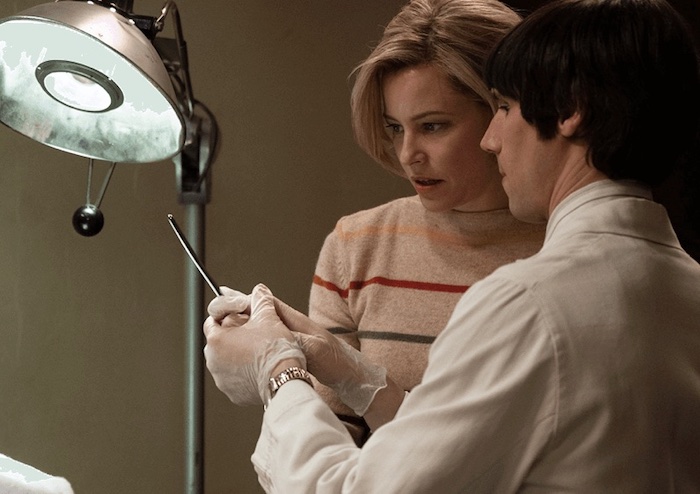
In 2024, almost two years after the U.S. Supreme Court overturned Roe v. Wade and sent the question of abortion back to the states, a movie about how women accessed the procedure before it became constitutionally protected in 1973 will have to tread lightly, but this peculiarly conventional indie feature was made before that momentous decision while seeming to presage it. The oddness of tone, however, has less to do with political realities now than with how the filmmakers (mostly women) use watered-down emotional cues and even comedy to score political points. Hindsight has much to do with it, but so does a cinema culture that tries to be even-handed at all costs, even when the material begs for something more contentious. 

Joy (Elizabeth Banks) is a homemaker living in the suburbs of Chicago in the late 60s. Though she studied to be a lawyer, she has settled into domesticity with her fair-minded but patriarchy-enjoying husband Will (Chris Messina), who is a full-time lawyer. The subtle assault to Joy’s status is that she works pro bono for Will by writing his briefs. She’s introduced to the counter-culture by way of Yippies being beaten up by cops outside the Democratic Convention, but the real challenge to her privilege, not to mention her gender, is more personal. After discovering she is pregnant, a development that is unplanned, she also learns that the pregnancy is possibly life-threatening, but her hospital, or, more precisely, the male physicians who run it, decide they can’t approve a therapeutic abortion, which was the only legal kind there was at the time. After a bit of drama that involves Joy going to the seedy side of town to obtain a back alley abortion and chickening out, she calls a number she finds on a phone booth window for “Jane” and becomes acquainted with an underground operation run by a woman, Virginia (Sigourney Weaver), who understands the environment and guarantees safety, if not necessarily affordability. Joy undergoes the “service” blindfolded, though she doesn’t have to see the young white doctor (Cory Michael Smith) to understand he’s in it more for the money than for the principle. Eventually, Joy becomes a factotum for Jane (who is not a person but rather a collective of card-carrying and nascent feminists), first as a driver and eventually as an abortionist herself, thus sending her into streams of illegality that become more perilous to navigate. The subterfuge of attending art classes when husband and adolescent daughter (Grace Edwards) ask why she spends so much time out of the house seems mainly incorporated to emphasize how much society expects her to adhere to middle class roles, but in the end it is just a lazy plot device that can easily be tooled for laughs. 

Given all the wrong things that can happen under these circumstances—which include payoffs to the mob and the service’s ambitions toward actual expansion—the movie should evince a palpable sense of anxiety, but for the most part the movie putters along with only the slightest bumps of unease due to the producers’ insistence that the abortion movement embodied by Jane is just one element of the revolutionary spirit of the time. Undergoing a prohibited procedure outside of a medical facility is certainly more fraught than smoking pot and digging the Velvet Underground, but the movie places all these activities along a continuum of implied righteous transgression. If the movie gets anything very right, it’s the way it portrays how women, whatever their background or economic wherewithal, could only count on one another for help with matters that the aforementioned patriarchy would prefer to not even think about. In that regard, Call Jane definitely still has something to say about our current situation. 

Now playing in Tokyo at Toho Cinemas Chanter Hibiya (050-6868-5001), Shinjuku Piccadilly (050-6861-3011).

Call Jane home page in Japanese

photo (c) 2022 Vintage Park, Inc. 

Posted in Movies | Tagged , | Leave a comment

Review: Count Me In

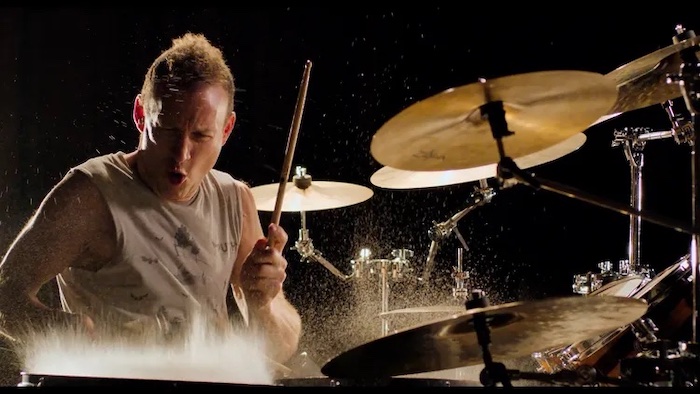
As James Brown would always say to his audience at a show, “Give the drummer some,” and this documentary attempts to do just that, though its range of appreciation is fairly narrow. For one thing, none of JB’s drummers, who practically invented modern funk, are even mentioned in the film. In fact, the only Black drummers cited are jazz innovators like Art Blakey and Max Roach, which means no Clyde Stubblefield, no Benny Benjamin, no Bernard Purdie (and his seminal “Purdie shuffle”), no Questlove. Props to the producers for highlighting currently active female drummers like Jess Bowen and Cindy Blackman, but even in those cases the focus is on rock, and rock of a certain type. This focus makes sense when you check out the provenance of the film, which is the UK. Though lots of famous drummers are interviewed and each offers insight into the profession and musical interpretation in general, the core through-line is the history of rock drumming from Ringo to Watts to Baker to Moon to Bonham. Except for a few detours by way of people like the Clash’s Topper Headon, who ably describes punk’s reduction of everything to rhythm, it’s mostly the 1960s British male rock drummer who is considered the template for an entire industry.

A lot of lip service is given to gear, which isn’t to imply that the producers have something to sell, but rather that in the movie’s chosen context drummers are more associated with their instruments and their technical skills than with their inventiveness and, dare I say, soul. Even more lip service is lent to concepts like groove and swing, but it’s Bonham who epitomizes the film’s purview since, as more than one drum-head here comments, he was the master of “power and speed.” At one point, when the history lesson veers into new wave and post-punk, Stewart Copeland, probably the most articulate practitioner on display, avers that pop and rock drumming “became more African,” though the movie doesn’t really take that cue to the next logical level (or, for that matter, the previous logical level). Instead, it goes into the realm of drum machines, a technology that the film suggests set drumming as a vocation back ten years; that is, until Dave Grohl recaptured the mojo with his monk-like mindset about always being in the hard rock zone with Nirvana, which looked particularly dynamic on MTV. 

The most derided cliche in classic rock is the 10-minute drum solo, which the people who put together Count Me In probably think of as the ultimate test of skill and showmanship. To those of us who dig songs over everything else, long rock drum solos are a distraction that only make sense when you’re in a large venue and high on drugs, an insight the movie overlooks in favor of other cliches, like driving your parents and neighbors crazy after you get your first kit for Christmas and later achieving success through “conviction and hard work,” which in the end make it a typically didactic American documentary.

Now playing in Tokyo at Human Trust Cinema Shibuya (03-5468-5551), Shinjuku Cinema Qualite (03-3352-5645), Human Trust Cinema Yurakucho (03-6259-8608).

Count Me In home page in Japanese

photo (c) 2020 Split Prism Media Ltd. 

Posted in Movies | Leave a comment