Review: No Bears

Between the time this movie was shot and its release date in Japan, its director, Jafar Panahi, was jailed and then released by the Iranian government for engendering “propaganda against the establishment”; and this on top of the 20-year ban on filmmaking imposed on him a decade ago for the same charge. During the ban, Panahi has continued to make movies in semi-secrecy, and they have been as formally rigorous and thematically thought-provoking as any movies made in Iran—or the world, for that matter. No Bears, at the very least, is his boldest comment on the role of art under a repressive regime, though it’s also his most plot-dependent story in years, which is a function of the situation he created in making it.

Panahi plays himself making a movie remotely from an Iranian village on the Turkish border. Unable to travel abroad legally, he sends his crew to a town on the other side and, through his MacBook, directs his actors and sets up shots as long as the cell coverage cooperates. The movie he is making is about a dissident couple, Zara (Mina Kavani) and Bakhtiar (Bakhtiar Penjei), who are trying to secure fake passports in order to emigrate to the West. As we eventually find out, the actors are themselves trying to do the same thing, and Panahi is basically fictionalizing their situation to make a dramatic film, a strategy that backfires with unfortunate consequences. Meanwhile, in the village where Panahi is temporarily resident, the locals look at him with a mixture of awe (his reputation as a director proceeded him, but mainly because his mother is from this area) and suspicion that grows to a certain level of contempt when rumors spread that he has accidentally taken a photo during his stay of a couple who are forbidden from seeing each other because the female half has been betrothed to another man ever since she was born. Panahi dismisses this claim by saying he did not take any such photo and gives the village elders his data card to prove it, but the tensions within the community are so strained that he must go the extra mile to convince them that he is telling the truth, and, as with the movie he’s trying so desperately to complete, his sense of righteousness gets the best of him and ends up making the matter much worse.

The central plot thread is Panahi’s cordial but nonetheless defiant approach to local customs that he doesn’t believe in (“I don’t get the rationale”), an attitude that mirrors his defiance of the Iranian government. But the director doesn’t let himself off the hook. His status as an artist who looks at things from a position of objective intelligence has made him arrogant, and just as the poetic license he possesses prompts him to miscalculate what his machinations are actually doing to the couple who portray his principals in the Turkish movie-within-a-movie, his sense of aggrievement at his own circumstances leads to a second tragedy in the village that affects innocent people who have no involvement in his affairs, be they political or professional. Though No Bears has a rambling structure that’s often frustrating to follow—probably owing to the fraught circumstances of its production—it’s one of the most emotionally affecting works in Panahi’s filmography, and that’s saying something. 

In Persian. Now playing in Tokyo at Shinjuku Musashinokan (03-3354-5670), Human Trust Cinema Shibuya (03-5468-5551).

No Bears home page in Japanese

photo (c) 2022_JP Production

Posted in Movies | Tagged | Leave a comment

Review: Gran Turismo

As a studio, Sony Pictures is relatively light on IP product, though the one they do have, Spider-Man, is a heavyweight. I’m not sure if the race driver simulation game Gran Turismo is franchise-worthy, but the whole presentation here is geared toward endurance. In one significant way, however, it’s a one-off: The movie is based on the true story of Jann Mardenborough (Archie Madekwe), a British kid who went from a stone talent for the GT game to an actual career as a racer. And while I’m not sufficiently attuned to gaming lore to understand how close the connection is between GT and Sony’s Play Station, the company that gets the most attention and product placement here is Nissan, one of whose Japanese racers came up with GT as a simulator for drivers and which eventually sponsors an academy that invites the best sim drivers in the world to compete for a chance to drive the real thing. Apparently, Mardenborough’s story has been liberally altered in order to sharpen the movie’s dramatic arc, which is only to be expected, and there’s a rote quality to the storytelling that leaches whatever tension the movie might offer outside of the actual racing scenes, which are the best that money can buy.

Much is made of the disconnect in actual experience between racing sim cars and racing real cars. Jann’s father (Djimon Hounsou), a retired footballer, doesn’t see his son’s pastime as a “real sport,” but even the salty Jack Salter (David Harbour), the old school racing coach who is talked into working with the half dozen sim hopefuls who want to join the Nissan race team, never quite buys the idea that skills on the console can translate to skills behind an actual engine. Jann and the other students in the academy are constantly being told “you’re only gamers” and then, of course, they prove everybody wrong, but director Neill Blomkamp has to show this with a lot of CGI that itself looks like it was designed for video games, like when Jann imagines the real race car around him as a set of separate interlocked parts (one of the features of GT is that racers can design their own cars), though exactly how that translates into victory is not clear. Jann’s obstacles are multivalent. Orlando Bloom’s Nissan factotum, the man who came up with the academy idea, isn’t keen on Jann as the best representative of the brand until, of course, he is; and Jann’s competition, especially a smug McLaren racer (Thomas Kretschmann), refuse to take him seriously. As a result, Jann’s string of victories feels vindicating in a pleasant way, but the sailing, to use a completely different sports metaphor, is way too smooth, despite the fact that Jann at one point is involved in a horrific crash that almost kills him.

If I said the racing scenes make Gran Turismo worth seeing, it’s not going to convince people who are already averse to such sports films to buy a ticket, but Blomkamp, who made his name with the sci-fi curiosity District 9, is a very visceral director, and it’s when Jann and the other characters are in actual race cars on a track that the movie comes into its own. Obviously, the makers of the game Gran Turismo are hoping more people will be turned on by this aspect to join in the fun, but I imagine anyone who has ever had the potential of being a sim gamer is already one. And as for Nissan, no one is going to buy a Skyliner after seeing this movie. Sony Pictures should just be happy they got one decent film from this particular IP.

Opens Sept. 15 in Tokyo at Toho Cinemas Nihonbashi (050-6868-5060), Toho Cinemas Hibiya (050-6868-5068), Marunouchi Piccadilly (050-6875-0075), 109 Cinemas Premium Shinjuku (0570-060-109), Shinjuku Wald 9 (03-5369-4955), Shinjuku Piccadilly (050-6861-3011), Toho Cinemas Shinjuku (050-6868-5063), Toho Cinemas Shibuya (050-6868-5002), Toho Cinemas Roppongi Hills (050-6868-5024).

Gran Turismo home page in Japanese

Posted in Movies | Leave a comment

Review: Brother and Sister

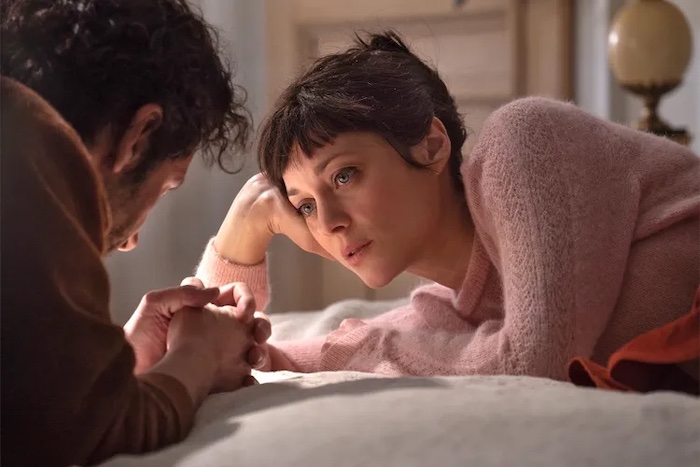
This is at least the third new film by a major French director released in Japan this year that focuses on adults addressing their elderly parents’ pending deaths. Being that the director is Arnaud Desplechin, whose metier is family-centered black comedies of manners, it should be the best of the three, but ever since his heyday in the 00s, Desplechin has wandered thematically outside his comfort zone and he seems to be having difficulties getting back into it. There’s a feeling of desperation to this tale of siblings who hate each other with a passion, as if Desplechin believed he had to follow the more hackneyed guidelines established for melodramas premised on parental mortality. The opening two scenes are over-wrought for purposes that seem unnecessary and the movie never really gains its narrative bearings despite the script’s attempts to explain the feud’s background through flashbacks that pop up in a random fashion.

The reasons for the principals’ mutual enmity is never explicitly clarified. Alice (Marion Cotillard) is a successful stage actress with mental health issues that may have been the result of an abusive childhood, though her resentment of her younger brother, Louis (Melvil Poupaud), springs from envy of his own early success as a writer that she believes came at the expense of the family’s dignity—there’s much talk of a defamation suit that Alice brought against Louis back in the day. The particulars emerge piecemeal over the course of the movie, which opens with Alice trying to attend the wake for Louis’ young son and being told to leave in the most unpleasant way possible. This scene is followed by one that takes place five years later on a country road where Alice’s and Louis’ parents (Joel Cudennec, Nicolette Picheral), stopping to help a young woman who has had an accident, are themselves hit by a truck, thus leaving them with life-threatening injuries that compel the two warring siblings, along with their ineffectually neutral younger brother, Fidele (Benjamin Siksou), to converge at a Paris hospital and wait for the worst. Much of the movie’s action has to do with Alice and Louis pointedly avoiding each other, thus necessitating multiple episodes from their separate lives and how they cope with their anxieties and rages. Alice, who is in the middle of a production of Joyce’s The Dead, drinks and downs anti-depressants she obtained through tactics that can only be described as bullying (and from Louis’ psychiatrist, no less); while Louis also drinks but prefers the more organic salve of opium. Marginal characters, like Louis’ inexplicably tolerant wife, Faunia (Golshifteh Farahani), and a Romanian immigrant fan of Alice’s, Lucia (Cosmina Stratan), are obviously on hand as sympathetic sounding boards for the siblings’ respective bitter ramblings, but it’s hard to get worked up over their feelings of persecution when they’ve lead such charmed lives. Desplechin’s decision to make his two main characters people who have made decent livings from their creativity (though Louis, apparently, hasn’t published anything of note in recent years) effectively undermines his dramatic goals, especially when he constantly trades in cliches about writers and actors. 

The viewer waits, of course, for the truce, which comes in spurts, and while such a reckoning seems more like real life the overall film never coalesces into a credible story. Alice and Louis remain such dislikable, unsympathetic characters throughout that any reconciliation is going to be difficult to pull off, and I didn’t buy it for a second. What’s even more frustrating is that I’m not sure I was meant to. 

In French. Opens Sept. 15 in Tokyo at Bunkamura Le Cinema Shibuya Miyashita (03-3477-9264).

Brother and Sister home page in Japanese

photo (c) 2022 Why Not Productions – Arte France Cinema

Posted in Movies | Tagged , , | Leave a comment

Media watch: To survive, ex-cons have nowhere to go but back to jail

In an essay posted Aug. 23 on Magazine9, activist Karin Amamiya wrote about “someone the same age as me” (48) named Hiroshi Yamada who is currently on death row for the murder of an elderly couple in Nagoya in 2017. Prior to his sentencing in March, Yamada had already received a death sentence last year when he was diagnosed with terminal cancer. Consequently, the court-ordered death sentence had little meaning for him because he already knew he would die in prison. “So what?” he thought when the judge sentenced him to hang, according to an article Amamiya read in the magazine So written by Yamada. The article was in the form of a memoir, and Amamiya, whose life work is helping people who live at the margins of Japanese society due to economic hardship, found his story to be not only affecting, but representative of a situation that is all too common in Japan: the ex-con who is prevented from reentering society due to systemic and cultural barriers. 

Yamada, it turns out, is not his birth name, which was Matsui. After he was sentenced to death, Matsui was adopted by another man on death row named Koji Yamada, for reasons that Amamiya does not explain. Amamiya admits that she was unaware of Yamada’s case, even though he has already posted various essays about his life and situation on the blogsite Note through various people on the outside. Amamiya went back and read these essays and was struck by the chain of events that led to the murder for which Yamada received the death penalty. He attributes the killing to a sudden burst of resentment when the male half of the couple he killed, who lived near him and knew he was collecting government assistance, said something to the effect of “It must be nice living so well when you don’t have to work.” 

Yamada has been in and out of prison most of his adult life. He was born in 1974 to a single mother who worked in bars and was always dating married men. Yamada started working right after junior high school, and was kicked out of the house he shared with his mother and sister after he stole some of her then-boyfriend’s alcohol. He lived on his own and worked a string of jobs in the electrical trade, often clashing with superiors and having to change employers. Then, when he was 24, he was hit by a truck, causing permanent damage to one of his legs. After his release from the hospital, he tried to move back in with his mother but she refused, so he slept under the overpass of a train line. There, he attempted suicide once and, desperate for cash, stole a wallet. He was caught and spent time in jail awaiting trial. It was the first time in his life that he had a secure roof over his head and guaranteed three meals a day. He was released when he was given a suspended sentence, but soon, at the age of 30, he was arrested again, convicted, and sent to prison. After 3 months he was paroled, and the only work he could get, given his criminal record and his bad leg, was in the sex trade working mainly for underworld types. Carrying out his job often entailed illegal actions, and he was arrested again for theft and given a 5-year sentence. After completing his debt to society, he was released and tried to become a taxi driver in Tokyo. He even managed to pass the test the first time, but his leg made it difficult for him to work long hours and he had to quit. 

He turned to his underworld acquaintances but even they couldn’t provide him with enough work to get by, so he applied for welfare, and the official who handled his case at the local government told him he first had to have an address and steered him to so-called hinkon bijinesu (poverty business)—shady companies that find lodgings for people on government assistance as long as they sign over most of their payments to the company. Obviously, the local governments and these companies are in cahoots, because hinkon bijinesu is an already well-documented racket that preys on desperate people. Through the company he contracted with, Yamada was given personal space in a room with others in exchange for most of his welfare payment. In the end, he had only ¥20,000 left over per month. He eventually got sick of it and left the lodging, thus effectively forfeiting his welfare payments. It occurred to him that the only place left for him was prison, so he shoplifted some confections from a supermarket and reported himself to the nearest police box. They told him to go away, and so he went to a bar and stole a handbag, and then reported himself to another police box, but the woman who owned the handbag didn’t want to press charges. He ended up spending only 10 days in jail.

His mother then allowed him to move in with her and the man she shared it with. Yamada applied for welfare again, and, as with the first time, was steered to a hinkon bijinesu. He stole ¥4,000 worth of pachinko balls and was arrested “on site,” and finally got what he wanted, another stint in prison, where he attempted suicide twice. Upon release he went right back on welfare, but this time he lived in a shelter, which had lots of rules. Even hinkon bijinesu was better, so he signed over his welfare payments to another company. 

Continue reading
Posted in Media | Leave a comment

Busan International Film Festival 2023 press conference

It seemed somewhat telling that the first question from reporters attending the online-only press conference for the 2023 Busan International Film Festival was about the Zoom format itself. Prior to COVID, the press conference, traditionally held the first week of September to announce the main features and participants, was held in person in two locations, Seoul and Busan. The pandemic forced it to go online from one venue, but now that the pandemic is officially over, why still do it that way? asked one journalist. The interim festival director, Nam Dong-chul, answered that the Zoom format was “more reasonable” logistically, since more press people could attend, especially those, like myself, who lived outside of Korea. 

I think it’s not unfair, therefore, to approach the press conference from an aesthetic standpoint. Unlike the past two PCs, this one was framed as a middle distance shot, with the two presenters, Nam and the interim managing director, Kang Seung-ah, sitting at the dais some distance apart within the frame. Usually, the presenters are shot as tightly as possible, so the framing here had the effect of making the observer feel as if they were in the actual room where the PC was taking place and sitting some ways away. There was a sense of spatial separation, and it was difficult to gauge the expressions on the two officials’ faces. Since what they were doing was essentially reading the press kit out loud, the event itself seemed to have little meaning. However, there were opening remarks and the Q&A, which ended up revealing perhaps more than what the official pronouncements have done.

For one thing, Nam did not avoid the elephant in the room, which is the scandal that precipitated his and Kang’s elevation to “interim” leadership status. As everyone knows, former executive director, Huh Moon-young, resigned in May after he was accused of sexual harassment, and the festival itself then apologized over “mishandling” the scandal, since it didn’t initially reveal the allegation when it announced that Huh was leaving, thus implying that it wanted to cover up the reason. Sexual harassment in the Korean film industry is an open secret, so the festival said it would investigate the allegations (which Huh denies), but since then the whole administration has been in chaos because co-founder and chairman, Lee Yong-kwan, also quit to take responsibility. With this year’s edition of the festival at risk, the administration named Nam, the lead film programmer, to the director’s post, and Kang to the newly minted managing director job, which is mainly in charge of budgeting and administration. That Kang is a woman is significant since insiders have told the trades that what they are basically raging against is the culture of male cronyism that pervades the Korean film industry, as well as BIFF.

After a brief video rundown of the film highlights of the festival, Nam admitted that the festival was going through a “difficult time,” but that only meant he and his colleagues would have to “work harder than ever” to make the festival a success, “though we shouldn’t get our hopes up.” This unnecessary feint to fatalism may have been a hedge against any future problems that crop up, but he was sure to thank the sponsors and the mayor of Busan for their support. Later, during the Q&A, Kang talked about the budget and how it had been difficult to attract sponsors due to the scandal, so some cuts had to be made. The most obvious result is the lineup, which is much smaller than it was in 2019, before the pandemic: 209 films from 69 countries, though it should be noted that there are 87 World and International Premieres. Another casualty of the budget issue is there will be no BIFF Forum this year, where noted filmmakers hold forth on their work in lecture or interview-style settings. 

Continue reading
Posted in Media, Movies | Leave a comment

Review: Tell It Like a Woman

This omnibus of shorts, all written and directed by women of different nationalities and centered on the unique problems that women face in the world, is predictably earnest in a kind of European way (the production is mostly Italian), but one stands out for its almost banal simplicity of purpose. Mipo O’s “A Week in My Life” focuses on a Tokyo apartment headed by a single mother (Anne Watanabe) raising two very young children. It shows her routine—getting up at the crack of dawn, fixing breakfast and bentos, getting her older kid off to kindergarten and then biking her younger one to daycare so she can put in an almost full day of work at a prepared food establishment; then returning to pick up her kids, fix them dinner, help them with their homework, and, if she’s lucky (the 15-minute film does, miraculously, encompass a whole week), taking care of her own needs after putting her kids to bed. There’s no mention of a man or extended family; no complaining about her lot in life; not even anything really approaching “drama,” except maybe suspense over whether she’ll get out the door in time.

O’s concise profile tells me more about a woman’s lot in life than the other, more pointed tales. The movie opens boldly with Taraji P Henson’s depiction of a true story about a female inmate (Jennifer Hudson) whose multiple personality disorder makes it difficult for her to secure release. Though the film makes a good case for providing proper mental health care to people in distress—in this case a woman raised in an abusive environment—the presentation is so broad and loud that you can’t see the forest for all the trees erected by Hudson’s hyperbolic performance. Similarly, Catherine Hardwicke’s “Elbows,” in which a physician’s (Marcia Gay Harden) rounds checking in on unhoused people during the COVID pandemic is highjacked by Cara Delevingne as a young woman with severe OCD refusing to remove her many layers of clothes so that the doctor and her assistant can clean her, is intriguing, but the film seems to be more about Delevingne’s acting than anything else. 

Three other works are more conventional—a famous architect (Eva Longoria) inconvenienced when her late sister’s will names her as her niece’s guardian; a veterinarian (Margherita Buy) discerning from a woman’s signals that she is being abused by her husband; a transgender Indian woman going on a highly anticipated date—while the final animated entry is an anodyne, Pixar-inflected, head-scratching allegory. If this were a competition, O’s film would win hands down because it says so much with so little. 

In English, Italian, Japanese. Now playing in Tokyo at Shinjuku Piccadilly (050-6861-3011), Yebisu Garden Cinema (0570-783-715).

Tell It Like a Woman home page in Japanese

Posted in Movies | Tagged , , , | Leave a comment

Media watch: Struggling to keep the memory of the 1923 Korean killings alive

Still from September 1923

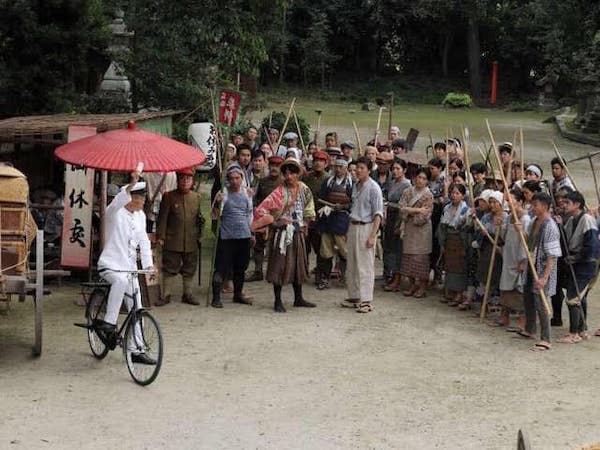
Today marks the 100th anniversary of the Great Kanto Earthquake, one of the worst disasters to ever strike Japan, a country that’s had more than its share both natural and man-made. In the days following the quake, which was centered in Sagami Bay, false rumors would radiate out from Tokyo to surrounding prefectures about how ethnic Koreans were setting fires and poisoning wells. In 1923, the Korean peninsula, then known as Joseon, was under Japanese imperial rule and many Koreans resisted their colonial overlords, a situation that caused anxiety in Japan, where Koreans had moved or were forced to move for various reasons. This anxiety came to a head following the quake, and scholars estimate that more than 6,000 Koreans were lynched by police, soldiers, and vigilante groups. 

Though there is no doubt that the massacre happened, there is debate over the number killed. Numbers cited by Korean groups and Japanese scholars are much higher than the official number, 230, determined by the Japanese government. What’s become a more serious problem is that the very fact that a massacre happened is slowly fading from Japan’s collective consciousness, if, in fact, the general population was aware of it at all. The most apparent evidence of this was explained in a recent Asahi Shimbun editorial regarding Tokyo Governor Yuriko Koike’s refusal to send a eulogy for the Korean victims to an annual memorial held in Sumida Ward to mourn those victims. The memorial has been held every year since 1974, at least partly as a means to keep the memory of those killed alive for future generations, and every governor since then has sent a message of support and sympathy, including Koike in 2016, the year she assumed office. But starting the next year she stopped, and when asked why she replied that she preferred mourning all the victims of the 1923 earthquake and resulting fires and mudslides. She didn’t see the point in singling out one group for special mention.

Koike, it should be noted, does not deny that a massacre happened. Last February she told the Tokyo assembly, in regards to the matter, that “It is up to historians to delve into what is an obvious fact.” However, by refusing to distinguish people who were murdered in cold blood from those who were killed by the forces of nature Koike trivializes the massacre, abandoning it to the past where it is in danger of disappearing. The sad fact is that hate for Koreans is still at large in Japan, and while the authorities would surely protect Korean residents in the event of another disaster, the Asahi article believes that Koike’s and others’ neglect of the 1923 massacre “increased the risk of a similar mistake recurring.” At the very least, Koike should reiterate that nothing of the sort should ever occur again whenever the anniversary rolls around, but she has decided, for reasons unknown but which could be inferred given her ideological bent, that she can’t be bothered. Indeed, the kind of false rumors that led to the killings in 1923 could easily be spread by social media today following a disaster. 

As with most historical matters that shed an unfavorable light on Japan, the massacre is also mostly ignored by the ruling Liberal Democratic Party, whose official position on the massacre is that there are “no related records” confirming numbers and what really happened. This position denies the related scholarship that exists in abundance and which credibly documents what did happen based on records of local governments and written accounts of eyewitnesses. 

Continue reading
Posted in Media, Movies | Tagged , | Leave a comment

Review: Asteroid City

At this point, what’s most impressive about Wes Anderson’s movies is how quickly he makes them. Woody Allen used to be the fastest auteur in the world not named Hong Sangsoo, but Allen’s films were simple in the first place, and over the years he had streamlined his production methods. Anderson’s movie-a-year schedule seems more daunting, not only because of his painstakingly elaborate production design, but also due to the complications inherent in his scripts. His latest involves two storylines, one dependent on the other, but even within those two storylines there are subplots that overlap and intersect without derailing the audience’s train of thought. It’s a skill that Anderson has always had, as if he were already a seasoned filmmaker when he made Rushmore.

The framing story of Asteroid City is a black-and-white documentary explanation of a TV play produced in 1955 in which we meet the author (Ed Norton), the director (Adrien Brody), and several of the actors (Scarlett Johansson, Jason Schwartzman). In typical Anderson fashion, these characters explain the trials and tribulations of their craft in stylistic ways, but the play itself is presented as a full-color movie. The titular burg is not a city in the strictest sense; more like a crossroads in the Southwest American desert where a few small businessmen have set up shop. During the course of the play, various people come to the town to celebrate Asteroid Day, which commemorates a prehistoric event in which a large piece of extraterrestrial debris crashed to earth in the vicinity. This celebration allows Anderson to introduce an array of characters who are there for different but perfectly plausible reasons, such as an army general (Jeffrey Wright) who is using the celebration to run PR for the military (atomic bomb tests are visible in the distance), a scientist (Tilda Swinton) who is there to explain the significance of the asteroid, and a late middle-aged father (Tom Hanks) who has come to mourn his daughter. This father’s son-in-law (Schwartzman), a war photographer, still hasn’t told his four children that their mother is dead, even as he transports her ashes in a Tupperware container to the desert. Ostensibly, the family is in Asteroid City so that the eldest son (Jake Ryan) can compete for a science scholarship, and in the process he falls into a budding romance with another teen “brainiac,” (Grace Edwards), who is there with her mother (Johansson), a Hollywood star taking a break from the spotlight and, especially, the flashbulbs. 

The core story is the melancholy friendship that blossoms between the movie star and the war photographer, and while one could easily imagine how the finely tuned dialogue, filled with longing and sadness, could make for a fine stage play, in the end these scenes are almost overwhelmed by the sheer volume of action, which is both central and tangential to the core story, carried out by Anderson’s huge cast of big names; but due to Anderson’s inventiveness as a storyteller, they all remain distinct and stimulating, so that even the framing story of the TV play’s production, where the actors playing the photographer and movie star also have a kind of extra-curricular relationship, is vivid and affecting. I still prefer Anderson in a more focused mode of creation (Moonrise Kingdom, Fantastic Mr. Fox), but his instincts never fail him, even when he takes on too much. 

Opens Sept. 1 in Tokyo at Toho Cinemas Nihonbashi (050-6868-5060), Toho Cinemas Chanter Hibiya (050-6868-5001), Toho Cinemas Shinjuku (050-6868-5063), Shibuya Parco White Cine Quinto (03-6712-7225), Toho Cinemas Roppongi Hills (050-6868-5024).

Asteroid City home page in Japanese

photo (c) Focus Features LLC (c) 2022 Pop. 87 Productions LLC

Posted in Movies | Tagged , , , | Leave a comment

Review: Daliland

Though I had misgivings about I Shot Andy Warhol and American Psycho, I think director Mary Harron did as good a job as anyone could have with the source material—the former, a retelling of the attempted murder of the original Pop Artist, the latter, an adaptation of Bret Easton Ellis’s snarky, grisly bestseller—and I looked forward to this investigation into the late period of another modern superstar painter, Salvador Dali, thinking it was right up Harron’s alley. I have no idea how straight it is with the facts, but the whole manufactured mood of mid-70s/early 80s decadence-for-the-sake-of-decadence is so flat and ordinary that I wonder what she actually put into it. For sure, Dali, as played by Ben Kingsley (and by Ezra Miller as a youth in flashback), is a believably odd bird, obsessed with his status as the most famous painter in the world but still possessing a distinctive artistic sensibility, not to mention genuine talent. But the movie is premised on Dali’s and his wife Gala’s abnormal fixation on money and libidinal fulfillment that never feels honest, and while I would assume this is a comment on the couple’s self-delusion as self-made celebrities, the movie fails to engage on even a salacious level. These people could not possibly be as pitiable as the movie makes them out to be.

The story is mostly told through the agency of a young man named James Linton (Christopher Briney), who, in 1974 when the first part of the movie takes place, has recently been hired by the New York gallery that handles the Spanish painter’s work. The couple is soon to arrive for their annual residency at one of the most expensive hotels in the city, and it is Linton’s job to make sure Dali produces something for sale, because he and Gala (Barbara Sukowa) spend tons of cash on parties and orgies (which they don’t physically participate in) and taking care of younger would-be lovers—in Dali’s case a woman who is rumored to be transsexual, in Gala’s case the fatuous young man currently playing the lead in the Broadway production of Jesus Christ Superstar. Linton has his hands full trying to persuade the temperamental artist to put brush to canvas and making sure Gala doesn’t drive her nonetheless devoted husband to suicide while bankrupting the gallery. If Dali has mastered the art of surrealism, Russia-born Gala has done the same with the science of intimidation, and at least Sukowa’s scenes have a whirlwind quality that keeps the story stumbling forward. Otherwise, it would be nothing but a series of enervated, hackneyed anecdotes. Meanwhile, Linton, an innocent from Idaho who came to New York to be an artist himself and lost his nerve, is initiated into the New York demimonde (though one that is represented by Alice Cooper, always Bud in hand, rather than Lou Reed). You’ve seen this kind of coming-of-sexual-age thing a million times before.

The latter part of the film takes place in the mid-80s after Gala has died and Dali is in a state of catatonic dotage. Linton shows up to help out in ways that are never properly explained, but it allows the scriptwriter, John C. Walsh, to address Dali’s place in cultural history as either a visionary or a charlatan. That he leaves it up to the viewer to decide is the film’s ultimate cop-out. Daliland is the kind of movie that makes you run to Wikipedia only because it left you feeling so unsatisfied. 

Opens Sept. 1 in Tokyo at Human Trust Cinema Yurakucho (03-6259-8608), Shinjuku Musahinokan (03-3354-5670), Yebisu Garden Cinema (0570-783-715).

Daliland home page in Japanese

photo (c) 2022 Sir Reel Limited

Posted in Movies | Tagged , , , | Leave a comment

Media watch: U.S. draws Japan further into its militarist mindset, this time through history

USS Missouri

In a recent interview with Asahi Shimbun, Prof. Ritsu Yonekura, who teaches media history at Nihon University, talked about “August journalism,” a topic we’ve covered extensively since we first started writing about Japanese media in the mid-90s. August journalism refers to the preponderance of stories about World War II by Japanese publications and broadcasters that appear in August to commemorate the atomic bombings and the Emperor’s announcement to quit the war in 1945. Yonekura, who was once a director at NHK, has seen a marked change in this coverage over the years in terms of both quantity and quality. He claims that August journalism peaked in 1995, when, by his count, 294 articles and TV programs about the war appeared in major media in August. Since then the number has been steadily dropping, but, more significantly, the tone of the coverage has changed, too. After Shinzo Abe started his second stint as prime minister, the nature of the coverage has been uniform. In 2015, to mark the 70th anniversary of the end of the war, there were 45 TV programs, and none mentioned anything about Japan as an aggressor; nor did any express any sense of remorse over Japan’s role in carrying out the war. He pinpoints the beginning of this change in 2001, when NHK ran a special program about sexual violence during World War II on its educational channel that upset many people in the government. After that, NHK made a point of avoiding the so-called comfort women issue. 

In the interview, Yonekura says he first became interested in the subject of August journalism when he was working for NHK in Hiroshima during the 50th anniversary of the atomic bombing in 1995. He remembers the mayor at the time, a former journalist named Takashi Hiraoka, whose memorial speech that year mentioned Japanese aggression and how what Yonekura calls the “Hiroshima ideology”—the idea that such an act should never be repeated ever again—had never really spread outside of Japan. That’s because whenever people talked about the bombing in Japan, it was always from the position of “weakness,” meaning those who died and suffered were victims of war without actually explaining what had brought about this particular war. No one connected the bombing to Japan’s status as an aggressor. Hiraoka blamed poor journalism for this dereliction, which placed the bombing in the context of “hibaku [atomic bomb casualty] nationalism,” based on the idea that only Japan has been attacked with nuclear weapons and was therefore special. 

It was after the speech that Yonekura began studying in earnest how journalism explained the war in Japan, and he came to believe that future generations of Japanese will not fully appreciate the scope of the war, and thus their understanding of it will differ greatly from people in the rest of the world. Eighty-five percent of the current population was born after the war, and the cohort that remembers it firsthand has almost died out. It is the mission of journalists to preserve as much of the war’s history as possible, and the media is failing in that regard. What’s necessary is an “outsider’s viewpoint,” meaning Japanese journalists and opinion makers who have lived overseas and can see the larger picture, because the story of the war as it’s told in Japan is only how it affected Japanese people.

In particular, he sees a wide gap between U.S. and Japanese perspectives regarding the atomic bombings. Though the U.S. and Japan are now allies and have been working toward a more assertive, locked-in military relationship, there is no shared consensus about the atomic bombing, which in the U.S. is widely considered the act that ended the war (though that is debatable). In Japan, as already noted, it is more amorphously thought of as a horrible tragedy visited on the Japanese people, but the authorities are loath to blame the U.S. for using the bomb and, therefore, do not promote the abolition of nuclear weapons because of the U.S. policy of deterrence. 

Continue reading
Posted in Media | Tagged , | Leave a comment