Review: Rudeboy, the Story of Trojan Records

As fascinating as this docudrama about the legendary London-based indie label is, it necessarily leaves a whole lot out of the history of Jamaican music, which was the specialty of Trojan Records. Director Nicolas Jack Davies, a music video producer, presents a chronologically fastidious but skeletal explanation of the influx of Carribean immigrants to the UK in the late 50s and early 60s and how the music and culture they brought with them affected the massive pop contours of the 60s and early 70s. For sure, this story hasn’t been told with any kind of formality on film before, and Trojan was seminal in molding a youth environment that came to accept Black music for what it was. (Though Trojan was not, as one commenter put it, “the Motown” of British pop. Motown was the Motown of British pop.) But a whole movie about reggae that doesn’t touch upon Bob Marley and the roots/Rastafarian movement, or the eventual dominance of dub and dancehall, isn’t going to tell anywhere near the whole story.

That’s because Davies wants to focus on the UK, where Jamaicans were “encouraged” to immigrate but weren’t really welcome. He delves momentarily into the NCP problem (“no colored people”) and interviews several old-timers who admit to not wanting to leave Jamaica in the first place but had to for economic reasons. Consequently, they longed for a connection to home, and that was mostly music. Davies does a good job of explaining the sound system concept, wherein DJs built formidable audio setups and hired themselves out for dance parties, where they played records. In the beginning, the music was standard R&B from the U.S. south, which Jamaicans could pick up on their radios, but these heavily bass and beat-driven singles (Louis Jordan’s “Caldonia” is cited as a representative favorite) eventually were translated by local artists into ska, with that insistent off-beat syncopation driven by the rhythm guitar. It’s what gave ska and rocksteady its distinctive bounce, which had its first big hit with Millie Small’s “My Boy Lollipop” in 1964.

Trojan was started by an Indian immigrant from Jamaica, Lee Gopthal, who parlayed a side job as an agent for Jamaican producers into a distribution gig. One of the labels he represented was Island, whose founder Chris Blackwell partnered with Gopthal on a retail shop specializing in Jamaican records. In 1967, the two men started Trojan (as in the horse), which not only licensed Jamaican musicians but eventually started producing their own records made by reggae and ska artists resident in the UK. What Davies gets right and what makes the documentary more than just a history lesson is the way he dovetails the fortunes of Trojan with the emerging English youth culture of the late 60s. Trojan’s brief was dance music with attitude (rude boys were essentially well-dressed gangster types), and besides serving the urban Black community of immigrants and their children, it also attracted the attention of “skinheads”—white kids who weren’t into the standard pop and hippie-identified rock music that dominated radio and media, and therefore should be distinguished from late-70s skinheads who tended to lean white supremacist. This was, for all intents and purposes, the start of the two-tone movement that would coalesce in the late 70s as the ska revival, which piggy-backed on punk with bands containing Black and white members in equal portions.

Davies gets some fine talking head remarks from Derrick Morgan, Lee “Scratch” Perry, Bunny Lee, Marcia Griffiths, Don Letts and a dozen more originals from the scene, but has to rely on dramatizations for most of the illustrative footage, since he doesn’t seem to have access to much archival material. And since this is about Trojan rather than music in general, it ends in 1975 when, tragically, the label was put out of business by partners who believed the reggae/ska movement had passed, and didn’t really trust Gopthal in the first place. (One told him, with perfect racist glibness, that if he wanted to own a business he should have become a “greengrocer.”) Of course they were wrong, as evidenced by the rise of Bob Marley around the same time, but Trojan did delineate a distinctive era, and the music here alone is worth the price of admission. 

Now playing in Tokyo at Theater Image Forum Aoyama (03-5766-0114).

Rudeboy home page in Japanese
Posted in Movies | Leave a comment

Review: The Kingdom Exodus

The story goes that Lars von Trier came up with the idea for his bizarre Danish TV show, The Kingdom, which ran for two 4-episode seasons in 1994 and 1997, after watching Twin Peaks, which makes perfect sense. Just as David Lynch was, in the 80s and early 90s, the most dauntingly original filmmaker in the U.S., whether you’re talking indie or Hollywood, von Trier was becoming his cognate in Europe. But while Lynch’s iconoclastic approach was almost purely a matter of artistic expression, von Trier’s included an element of willful provocation. This difference was especially evident in the two TV shows, both of which took certain serial formulas—for Lynch, the police procedural, for Von Trier, the hospital-set soap opera—and added subtexts in the occult and alternative cosmologies. Both also used humor to disarming effect, but Lynch’s jokes were gentler, more idiosyncratic, while von Triers’s were cruel and absurd—in other words, willfully provocative. 

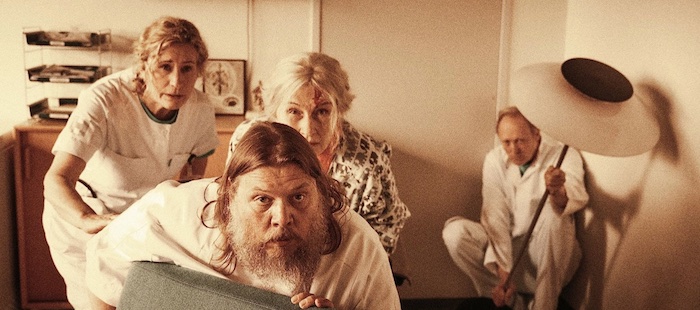
It’s thus natural to assume that Lynch’s 2017 revival, Twin Peaks: The Return, was the impetus for von Trier to make The Kingdom Exodus, which was initially broadcast on Danish TV last year, but it should be noted that the second season of The Kingdom did not end with a satisfactory resolution almost 25 years ago. In fact, part of the underlying motivation for the plot in Exodus is that the main character, Karen Svensson (Bodil Jørgensen), an elderly woman living alone, has just finished watching Season 2 on DVD and, perplexed by the lack of closure, leaves her house by taxi and goes to the titular hospital to find out what happened to Sigrid Drusse (Kirsten Rolffes), who, like Karen, was a sleepwalker whose condition made it easier for her to commune with the spirits that haunted the place. The origin story, recounted at the beginning of every episode, is that the hospital was built on the site of an ancient bleaching pond that also contained unsettled souls of the dead, and the theme of the series is how the technocrats who built and now run the institution deny the existence of a spiritual realm at their own peril. That explanation is deceptively high-minded, because The Kingdom is a singularly ridiculous series whose use of doctor and horror cliches is tangential to its mission to deride both the medical profession and creepy TV shows. 

As far as the former mission goes, von Trier doesn’t hold back at all. The physicians who work at Copenhagen’s Kingdom Hospital (a nickname, not its real name) range from the dangerously paranoid to the even more dangerously self-important and arrogant. The subtheme of bitter antagonisms between Danes and Swedes is continued in Season 3 with the arrival of Dr. Helmer (Mikael Persbrandt), the son of Stig Helmer in the original series, a Swede who hated Danes with a spitting passion. Junior has not only inherited that enmity, but taken a job at the Kingdom for the express purpose of finding out how his late father was driven insane—and to find out where he is buried. Von Trier ups the ante on this cross-Scandinavian hate campaign by making fun of Volvos and IKEA, and then creating a secret society of Swedish expat workers called Swedes Anonymous, which includes program details of AA, thus suggesting that being Swedish is a kind of sickness. Certainly the cleverest offshoot of this idea is having Alexander Skarsgård play an on-site Swedish lawyer (his office is in a stall in the ladies room) who represents both sides in a sexual assault case between two Swedish parties. Nevertheless, the Danes match them idiocy for idiocy. Head of surgery, Dr. Pontopidan (Lars Mikkelsen), avoids contact with his colleagues at all costs and runs meetings, conferences, and even ORs as if he were trying desperately to make them fail so as not to require his services ever again. Helmer’s Danish counterpart, Dr. Naver (Nikolaj Lie Kaas), spends his working days in a constant state of rage, telling jokes in atrociously bad taste and occasionally making good on his threat to scoop out his eyeball with a teaspoon. 

In terms of horror, Exodus is slighter than the two previous seasons, as if von Trier couldn’t really be bothered. Udo Kier returns as Little Brother, the abominable man-child born of a neurosurgeon (Birgitte Raaberg, one of the few actors reprised from the original two seasons) and which has grown into a giant whose vital organs now intertwine with the infrastructure of the Kingdom. There’s also a puckish Willem Dafoe as an agent of Satan who runs around the hospital causing all sorts of mischief, and various lesser ghouls who pop in-and-out of the story for no discernible reason. Suffice to say that while there is more of a resolution here than there was at the end of Season 2, it’s so laughably meta that Karen would likely find it even more of an insult, but most viewers who will want to see The Kingdom Exodus will probably be watching because all three seasons show off von Trier’s uniquely acerbic humor much more successfully than his feature films do, and the guy is nothing if not relentless in his lampooning of finer sensibilities. (Note: the theatrical version opening in Tokyo is five hours long.) If you want prestige TV, look elsewhere. Von Trier has no patience for the structural mandates of conventional serial storytelling, but Exodus is, in many ways, more purely entertaining than The Return was. In order to enjoy it, however, you’ll require a strong stomach for emotionally stunted human beings with horrible grooming habits. 

In Danish and Swedish. Now playing in Tokyo once a day (special admission price) at Cinemart Shinjuku (03-5369-2831), Human Trust Cinema Shibuya (03-5468-5551).

The Kingdom Exodus home page in Japanese

photo (c) 2022 Viaplay Group, Dr & Zentropa Entertainments2 APS

Posted in Movies | Tagged | Leave a comment

Media watch: Prosecutor implies false accusation is just part of the job

 Masaaki Okawara at a recent news conference (Kyodo)

The long legal saga of the government’s case against equipment manufacturer Okawara Kakoki Co., Ltd. has turned into a stark illustration of how Japan’s law enforcement agents work within a bubble of self-justification. At present, two of the company’s executives, President Masaaki Okawara and former director Junji Shimada, are suing the government to the tune of ¥565 million because police and prosecutors pursued a case against them that was a “fabrication,” according to various media. 

A report posted on Daily Shincho July 12 detailed a July 5 session in Tokyo District Court where two prosecutors were cross-examined by the plaintiffs’ lawyers about their handling of the case. The head prosecutor, Takako Tsukabe, testified that she indicted the two men, along with a company advisor who is now dead, “based on the evidence we heard and saw,” and which she believed was proper. However, after the men were indicted and had spent almost a year in detention the prosecutors dropped the case when they realized that their evidence would not hold up in court. When the the lawyer asked if she thought the prosecution should have “confirmed this negative evidence” before bringing an indictment, Tsukabe said, “There was no feeling that there was any negative evidence,” and that even if she had known about the negative evidence she would have proceeded with the indictment because of other evidence. When prompted to offer an apology for improperly “building a case” against the plaintiffs, Tsukabe replied that the prosecution did nothing wrong and therefore there was nothing to apologize for. After the session, the attorney told the Shincho reporter that, based on how she reacted during cross examination, he thought that there was a good possibility Tsukabe would again fabricate cases in the future, because she obviously thought of it as being part of her job.

The entire case warrants close scrutiny because of how cavalierly the police and prosecutors approach laws they don’t really understand. In this case, it was the foreign exchange and foreign trade law. Okawara Kakoki, which is headquartered in Yokohama, makes various devices used in the manufacture of substances and materials. In question was a spray-dryer that was mainly used by food companies to turn liquids into powder, such as instant coffee and instant ramen, though it can also be used to make pharmaceuticals. In October 2018, Okawara was stopped by members of the public security police while he was leaving his house for work. They presented him with a warrant, though they didn’t reveal what it was for. They proceeded to search his home and, later, 50 officers went to his company and searched the premises, hauling away loads of documents, storage devices, and computers. They also searched three other business locations and the homes of seven employees. According to a long report in the Asahi Shimbun, the company’s lawyer, Tsuyoshi Takada, showed up but could not get any information about the purpose of the raid from either Okawara’s employees or the police. In any case, he advised the company’s executives and employees to cooperate and answer all questions sincerely.

Continue reading
Posted in Media | 3 Comments

Review: Mission:Impossible-Dead Reckoning Part One

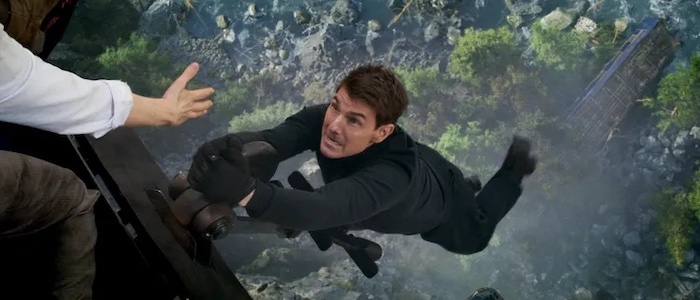
I certainly can’t be the first film writer to notice a connection between the meta subtext of the new M:I installment and the dual labor strikes currently blocking Hollywood productions, and it has nothing to do with Tom Cruise’s semi-scab entreaties to allow him to shill for his most beloved project. As most everyone probably knows by now, the “heavy” of the new film is an A.I. program called the Entity that various players, including Ethan Hunt’s (Cruise) Impossiblle Missions Force, are trying to gain control of by obtaining a “key” that unlocks its powers. Aside from copying the basic plot points of the latest Transformers epic, the whole premise feels like a comment on how blockbusters are made these days, since the Entity is characterized as having no “designs” on anything. Whether it serves the forces of good or evil, it simply follows its algorithmic programming, and it’s difficult to come away from Dead Reckoning Part One without wondering how much of the script was written by A.I. Of course, none of it probably was, but it could have been, given how meticulously it adheres to the established M:I formula—or, at least, the formula since Cruise turned it into the most successful action movie franchise of all time. Compared to the original TV series, which was always about difficult assignments that tended to only affect intra-national politics or economies (for the benefit of the U.S., of course), M:I the movie series is always about nothing less than saving the world.

Consequently, the plot, as it were, is totally beside the point; especially in this case, which, as the title helpfully informs us, marks the first of a two-part finale, and as I’ve learned from having seen almost all of the previous installments, I’m probably not going to remember much about this one besides the big set pieces when Part Two opens next spring (WGA and SAG-AFTRA willing). Fortunately, the generic nature of A.I.-driven stories is such that I probably don’t have to, because no one in Part One seems to really understand the ramifications of the Entity, all of which, we assume, will be explained in Part Two. So I felt comfortable, if not within my rights, ignoring what would normally be characterized as “development” here: the meetings between Hunt and his supposed betters in the U.S. intelligence community, who never trust him to do as they say; not to mention a convergence in Venice of almost all the people with a stake in the Entity, including the main human villain, Gabriel (Esai Morales), and the freelance thief/romantic interest, Grace (Hayley Atwell), none of whom miss the opportunity to inform Hunt that he’s in over his head—classic last words that nevertheless mean nothing because Hunt likes nothing better than to be in over his head. He proves this truism with a daredevil car chase through the streets of Rome that impresses, though not as much as comparable car chases in any number of current Korean action films, which, to me, have cornered the market on vehicular mayhem, 2 Fast 2 Furious notwithstanding. Suffice to say that the action in M:I is limited to incidents wherein Hunt and his team have to get out of scrapes rather than achieve whatever mission they’ve been charged with, an idea that allows the story to be stretched out over five hours or so (Part One is almost three). 

I’m tempted to say all these digressions and narrative dead spots become moot in the shadow of the final set piece, which is set on a runaway train and directed within an inch of the lives of everyone involved. This is where, as they say, you get your money’s worth, but given Cruise’s irrepressible urge to share his enthusiasm with the world, we’ve already seen on YouTube and E! how this amazing sequence was created. Such PR gambits no longer count as spoilers, but obviously I’m overthinking the matter. Since there’s no compelling story to pay attention to, there’s nothing to spoil. Part Two can’t come soon enough, because my memory isn’t what it used to be.

Now playing in Tokyo at Toho Cinemas Nihonbashi (050-6868-5060), Toho Cinemas Hibiya (050-6868-5068), 109 Cinemas Premium Shinjuku (0570-060-109), Shinjuku Wald 9 (03-5369-4955), Shinjuku Piccadilly (050-6861-3011), Toho Cinemas Shinjuku (050-6868-5063), Toho Cinemas Shibuya (050-6868-5002), Toho Cinemas Roppongi Hills (050-6868-5024).

Mission:Impossible-Dead Reckoning Part One home page in Japanese

photo (c) 2023 Paramount Pictures Corporation

Posted in Movies | Tagged | Leave a comment

Review: Chess Story (The Royal Game)

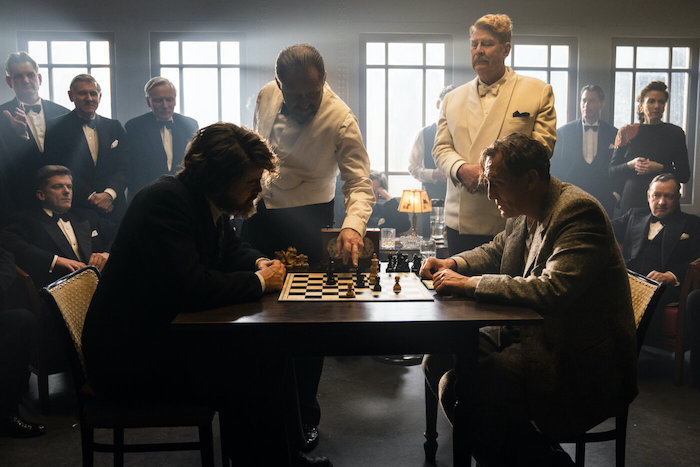
Film adaptations of fiction that plays with form and structure offer unique challenges, and while I haven’t read the Stefan Zweig bestseller on which Chess Story is based, there are enough odd, disconcerting turns to the development to make me assume that director Philipp Stölzl is trying to mimic some sort of stylistic gambit offered by the novelist. The story moves back-and-forth between two settings and times: A Vienna hotel following the Anschluss, and a passenger ship making its way from Rotterdam to New York right after the end of the war. The protagonist, Josef Bartok (Oliver Masucci), exudes opposing states of mind in the twin storylines. In the former, he’s headstrong and arrogant, a rich hedonist who, at least in the beginning, doesn’t take the approaching Nazi takeover seriously enough, even as mobs of sympathizers attack his chauffeur-driven car on the way to a ritzy soiree. In the latter, he’s an utterly broken man who appears to have lost everything, including his mind.

We watch in anticipation of finding out how the first man turned into the second one, and for the first half the revelations feel conventionally reliable. The Gestapo quickly descends on Bartok’s notary office to confiscate his records of bank accounts he set up in other countries for his aristocratic clients. Bartok has anticipated the raid and burned these records, but not before memorizing the access codes. Caught trying to escape, he is brought to a hotel where the Gestapo has set up operations and interrogated by a steely officer, Böhm (Albrecht Schuch), who suspects he has the codes in his head. When Bartok says he doesn’t, Böhm locks him up in a room and keeps him there for an indefinite amount of time, removing him every so often to repeat the demand. He puts off physical torture, however, confident that depriving Bartok of any sort of intellectual stimulus in the form of reading material will eventually break him down, and he’s right, but the viewer is also forced to live within Bartok’s loss of temporal and spatial indicators. We have no idea how long Bartok has been captive, or even whether the information the Gestapo demands is available any more. Halfway through, during one of Böhm’s interrogations, Bartok secretly steals a book and when he returns to his cell-room discovers it is a volume of famous chess games. Desperate for mental stimulation, he memorizes the book, even though previously he derided chess as a “game for Prussian generals.” Meanwhile, in the parallel story on the ship, he has revealed that he is something of a chess wiz and is pressured by the ship’s owner to play a famous Hungarian master who is also on board and looks suspiciously like Böhm (he is played by the same actor), at which point the viewer starts to doubt everything being presented.

Stölzl occasionally retreats into filmic cliches to convey Bartok’s confusion—there are at least two madness montages, and the recurring image of Bartok’s wife becomes trite very quickly. Nevertheless, Chess Story‘s rendering of psychological trauma is compelling enough that, were I still into fiction, I would probably seek out the original novella if only to find out why the Germans insist that Bartok still remembers the codes even after he’s turned catatonic and delusional. Skilled fiction writers can make you believe in a story that only exists in someone’s head. Filmmakers have a much harder time of it.

In German. Opens July 21 in Tokyo at Cinemart Shinjuku (03-5369-2831).

Chess Story home page in Japanese

photo (c) 2021 Walker+Worm Film, Dor Film, Studicanal Film, Ard Degeto, Bayerisher Rundfunk

Posted in Movies | Tagged | Leave a comment

Review: Saint Omer

There is a scene near the beginning of Saint Omer that suggests why director Alice Diop chose to render this tale, based on a real incident and a real trial, as a fiction film rather than as a documentary, which is what she’s known for. After the spectators are seated and photographers have taken pictures of the courtroom, the head judge asks all journalists to leave. If Diop were to make a documentary about the story, she would not have any footage related to the trial, and it’s the trial that interests her. Diop’s stand-in is Rama (Kayije Kagame), a novelist and university lecturer who, in the opening scene, discusses in class Marguerite Duras in reference to a film of French women having their heads shaved after the war for “collaborating” (read: sleeping) with occupying German soldiers. This specific act “humiliates women” by “sublimating violence” toward them. The scene resonates throughout the movie, which focuses on a young Senegalese woman who killed her 18-month old baby. Rama is also of Senegalese background, and while she grew up in France and the defendant, Laurence Coly (Guslagie Malanda), came to France as a student, they both have troubled relationships with their respective mothers that Diop believes warrants scrutiny. Ostensibly, Rama is attending the trial to write a book comparing Coly’s story to the Greek myth of Medea, but in a phone conversation with her publisher late in the film, she implies, at least to the viewer, that she’s not sure if that’s the best thing to do. Now that she’s there watching the trial, Coly’s story means something else to her.

And that something else remains hidden for the length of the movie, which rarely steps out of the Saint Omer courtroom. The trial is presented in as dry a manner as possible and appears to be an open-and-shut case, since Coly admits to the murder. The only question left to answer is: Why? She professes to have loved the child and believes that she succumbed to “sorcery,” though, as she points out early in the proceedings, “I’m here to find out if that’s true.” The middle aged female judge seems sympathetic to Coly’s situation, and her questions are designed to allow the young woman plenty of latitude to explain how her mindset may have been affected by the stress of her studies, the trauma of growing up in a broken home, and the economic straits she found herself in after moving to Paris. For the most part, Coly dismisses these extenuating circumstances by downplaying them, allowing the male prosecutor to wedge in his claim that she killed her child out of pure selfishness, while her own attorney plays up a defense based on “madness.” Meanwhile, Rama sits in the gallery with a pained expression on her face. At one point she manages to have lunch with Coly’s mother, who shares her daughter’s belief that she has been cursed, but in any case thinks she should be punished for what she did.

As fascinating as the trial is, it doesn’t go anywhere, and Diop’s use of Rama as a kind of reflecting board muddies the movie’s intentions even more. Rama is pregnant and, as with Coly, the father of her child is white, though he is much younger than the man (Xavier Maly) Coly lived with for financial reasons, as she admits. Perhaps the most trenchant point of identification is that Coly came to France to be an academic and study philosophy, an element to her story that brings out the only expression of overt racism in the film, when her former professor testifies that, as an African, Coly could never possibly comprehend her choice of a thesis topic: Wittgenstein. Here, Coly’s humiliation for being a bad mother is compounded by her being a pretender to bourgeois intellectualism, and Diop makes sure we see Rama’s withering reaction. Though there’s little action in Saint Omer, there’s a lot going on, which makes it both riveting and frustrating. 

In French and Wolof. Now playing in Tokyo at Bunkamura Le Cinema Shibuya Miyashita (050-6875-5280).

Saint Omer home page in Japanese

photo (c) Srab Films-Arte France Cinema-2022

Posted in Movies | Tagged | Leave a comment

Review: Close

I can’t remember where, but I once read an article that said our first realization of our place in the world comes when we experience loss. The two protagonists of Belgian director Lukas Dhont’s Oscar-nominated feature are old enough that they have surely already lost something important to them, and yet loss comes in many shapes and sizes. Thirteen-year-olds Leo (Eden Dambrine) and Remi (Gustav De Waele) look as if they’ve been best friends since they were born. The opening scenes form a montage of all the different varieties of closeness this pair manifest, from sharing an imaginary world of martial derring-do to napping together in the same bed while holding on to each other. Even Remi’s mother (Emilie Dequenne) comments lovingly how she feels so lucky to have “two sons” when Leo is around, which seems like all the time. When Remi, clearly the more sensitive of the two, performs an oboe concerto, Leo looks on with pride and awe, and schemes with his friend about their future: I will be your manager, he says, and we’ll be rich and travel the world together.

Their friendship is a utopia, and as literature has always taught us, all utopias are doomed. Though the ostensible cause of Leo and Remi’s breech is the pressure of social engagement, Dhont makes it clear as the story progresses that it was going to happen anyway due to the nature of love. After the new school year starts, the boys are teased by classmates who ask if they’re “a couple,” and a few male bullies toss homophobic slurs their way. The chiding gets to Leo more than Remi—at least on the surface—and Leo feels compelled to put a certain measure of space between himself and Remi by joining the ice hockey team and avoiding touching Remi in public. Remi resents these acts of betrayal and becomes sullen and, eventually, antagonistic. The two end up in a schoolyard fight that has to be broken up by teachers, one of whom tells a struggling Remi, “It’s over!” She’s talking about the fight, but to Remi it means something more.

Loss pervades the second half of the movie, but Dhont tries to avoid the inevitable as long as possible by focusing on everyday details, like Leo working hard on the family flower farm, or his sudden passion for hockey, an aggressive form of activity that is obviously a substitute for something else. Separation, Dhont seems to say, is felt physically as much as it is emotionally for children and adolescents, maybe even more so, manifesting as loss of appetite and bed-wetting. This description sounds clinical, but the viewer absorbs the movie’s sense of loss in a visceral way, mainly through Dhont’s insistent use of tight closeups, which give much of the story a melodramatic cast. I could have used a bit more distance myself. It’s unbearably painful to watch children go through such misery while standing so damn close. 

In French and Dutch. Opens July 14 at Human Trust Cinema Yurakucho (03-6259-8608), Shinjuku Musashinokan (03-3354-5670), Shibuya Parco White Cine Quinto (03-6712-7225).

Close home page in Japanese

photo (c) Menuet/Diaphana Films/Topkapi Films/Versus Production 2022

Posted in Movies | Tagged | Leave a comment

Review: The Pope’s Exorcist

Though The Pope’s Exorcist is not a particularly good movie, it’s a fitting vehicle for Russell Crowe’s return to top billing, albeit one in which he appears grey-bearded and paunchy. As the titular priest, Crowe brings a welcome measure of cynicism to the movie’s jaundiced take on post-millennial Catholicism, and while it might have been even more fitting had the movie done more than mention the most pressing scandal to confront the Church in the last 50 years only in passing, the filmmakers were obviously not going to push their luck by trying to be topical. The main scandal they dig up is the Spanish Inquisition, which was handled more effectively many years ago by Monty Python. 

Still, there are comic elements on display that distinguish The Pope’s Exorcist from the usual head-spinning, pea soup-vomiting extravaganzas, and most are delivered by Crowe, whether purposely or not. His Father Gabriele Amorth is a polymath and something of a black sheep in the Vatican (his Vespa-riding skills are portrayed as that of an iconoclast), who obviously has the ear of a pontiff (Franco Nero) who keeps his own counsel to the best of his meager ability. Amorth’s main heresy, as far as his colleagues are concerned, is approaching his specialty without the necessary gravity. In an opening scene, Amorth is called upon to exorcise a young Italian man who can suddenly spout English profanity as fluently as Ozzie Osbourne, and while Amorth fulfills his task in a novel way, he also reveals that he thinks most possessions are either faked or the result of deep psychological trauma. But that somewhat compelling insight, like the nod to pedophilia, is pushed aside for the main story, which takes place at a castle in Spain that has been inherited by a widowed American woman (Alex Essoe) and her two children, the younger of whom, Henry (Peter DeSouza-Feighoney), becomes possessed. Amorth, accompanied by a younger local priest, Father Esquibel (Daniel Zovatto), quickly realizes that the possession has something to do with the castle’s use as a site for torture during the Inquisition centuries before, an explanation that basically relieves the Vatican of any responsibility for the terror it inflicted since it was apparently the work of a servant of Satan. But, in any case, Amorth and Esquibel are put through their conventionally hellish paces, complete with finding the name of the demon and undergoing quasi-possession themselves.

It may not be saying much that Crowe makes the whole mess entertaining. His dodgy Italian accent and jaunty fashion sense congeal for an image of a “have holy water will travel” kind of free agent whose attachment to his higher calling seems nominal at best, and he pulls it off with more than a wink and a nod. He clearly seems to be enjoying himself. In fact, the ending is primed to make it seem as if Father Amorth might be worthy of a franchise (the character is based on a real person). If Crowe has decided, like Liam Neeson, that his serious acting days are behind him, playing the pope’s exorcist isn’t a bad gig to see out his twilight years. 

Opens July 14 in Tokyo at Toho Cinemas Nihonbashi (050-6868-5060), Toho Cinemas Hibiya (050-6868-5068), Toho Cinemas Shinjuku (050-6868-5063), Toho Cinemas Roppongi Hills (050-6868-5024).

The Pope’s Exorcist home page in Japanese

Posted in Movies | Tagged | Leave a comment

Media watch: Hiroshima sister park agreement angers atomic bomb survivors

Pearl Harbor memorial

Sister city relations between municipalities of different countries are familiar to most people, though sometimes these arrangements have a specific purpose. Apparently, in 2016 there was a sister-type relationship forged between the Sekigahara battlefield in Gifu Prefecture, where General Toyotomi Hidetoshi, fighting for the Oda Nobunaga clan, lost to the forces of the Tokugawa Shogunate in October 1600, thus ushering in three hundred years of Tokugawa rule; and the Gettysburg battlefield in the U.S. state of Pennsylvania, the site of the bloodiest and perhaps most consequential battle of the American Civil War. There are enough thematic similarities between the two battles to make the sister relationship apparent, but, obviously, the deal was made mainly for tourism purposes.

A more recent sister partnership is less easy to explain. On June 29, the city of Hiroshima announced it had concluded a “sister park” agreement between the Hiroshima Peace Memorial Park and the Pearl Harbor National Memorial in Hawaii. The agreement was signed by U.S. Ambassador to Japan Rahm Emmanuel and Hiroshima Mayor Kazumi Matsui. According to a report in Tokyo Shimbun, the sister park agreement was proposed by the U.S. State Department last April as a gesture before this year’s G7 Summit, which took place in Hiroshima in May. Ostensibly, the state department said the purpose is to promote peace education and help set up an exchange program to share experiences and resources that would help foster historical facilities and, yes, tourism. As to the thematic relationship between the two memorial parks, the state department said that they represent the two temporal poles of the Pacific War, meaning Pearl Harbor was where the war started and Hiroshima was where it ended. Given that Hiroshima was attacked with an atomic weapon on June 6, 1945, and another atomic bomb was dropped on Nagasaki three days later, and the emperor of Japan did not announce Japan’s capitulation until August 15, by which date many other cities in Japan had be “conventionally” bombed by U.S. forces since Hiroshima (including some that were bombed even after the emperor’s broadcast), it would seem that the historians at the state department should reread their John Dower. 

Continue reading
Posted in Media | Tagged , | Leave a comment

Review: Great Freedom

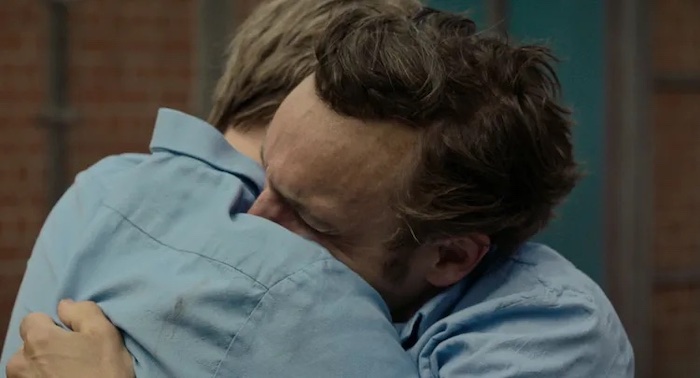
Sebastian Meise’s prison movie jumps around between 1945, 1958, and 1968, but starts near the end with a trial in which prosecutors use clandestinely shot film of male-on-male couplings in a public toilet to convict Hans Hoffman (Franz Rogowski) of violating Germany’s Criminal Code Paragraph 175, which prohibits “homosexual acts,” and sentences him to 24 months in prison. Hans’s unperturbed reaction to the court’s decision indicates he’s been through this before, and when Meise subsequently flashes back to 1945, we learn that Hans was a concentration camp inmate, and went directly from Nazi hell to an Allied detention center, solely due to his sexual orientation. Meise provides very little background for Hans—no job history, no family—focusing completely on Hans’s life as a recidivist sodomite, a description that would seem to reduce him to someone whose entire existence is dictated by appetites, but in fact the movie makes a broader, much more moving case for Hans’s character.

During his first prison stint, his cellmate is Viktor (Georg Friedrich), a junkie initially disgusted by Hans when he hears of his crime, but once he discovers Hans was in a camp, Viktor’s attitude changes and he offers to cover up Hans’s number tattoo with a larger design. Inking is forbidden in the prison, and so the work is done secretly at night, but eventually it is found out and both are punished with beatings and solitary confinement. Nevertheless, a bond has been formed. Hans encounters Viktor again during his subsequent stints, and while both are depicted as “addicts,” Meise is insistent that there is a big difference between Viktor’s chemical cravings and Hans’s need for love, because that’s how it’s portrayed. During his imprisonment, Hans has relationships with two other prisoners, one a young school teacher named Leo (Anton von Lucke) who was caught with Hans in the aforementioned toilet. Through carefully coded messages that Viktor helps deliver, the two actually carry on a physical affair and in the end Hans deepens his own criminal record to help win Leo a pardon. But Hans’s motives aren’t always easy to understand. He almost seems to take pleasure in the cruelty of the state, since it reinforces his self-image as a man outside of society who can only deal with other human beings in a direct, honest way; otherwise they are simply unknowable. His relationship to Viktor is practical, until it isn’t. When Viktor demands a blowjob in return for passing Hans’s message to Leo, Hans at first refuses, saying, “I don’t do it for just anybody.” He has to feel something.

Throughout Great Freedom the state hovers above like a dark, permanent cloud, depriving Hans—and Viktor, too—of hope for any kind of life free from its disapproving shadow, and in the end, when Paragraph 175 is suddenly rescinded and Hans visits a gay bar (also called Great Freedom), he seems not so much liberated as confused by the irony of it all. “Can they just abolish a law?” says Viktor, utterly at a loss to comprehend such an act, even though it doesn’t affect him. Given Hans’s measured reaction, maybe he believes it doesn’t affect him either. After all, the law never prevented him from loving whom he wanted to love before, it just made it more difficult. 

In German. Now playing in Tokyo at Bunkamura Le Cinema Shibuya (050-6875-5280).

Great Freedom home page in Japanese

photo (c) 2021 FreibeuterFilm-Rohfilm Productions

Posted in Movies | Tagged | Leave a comment