Review: Yokai no Mago

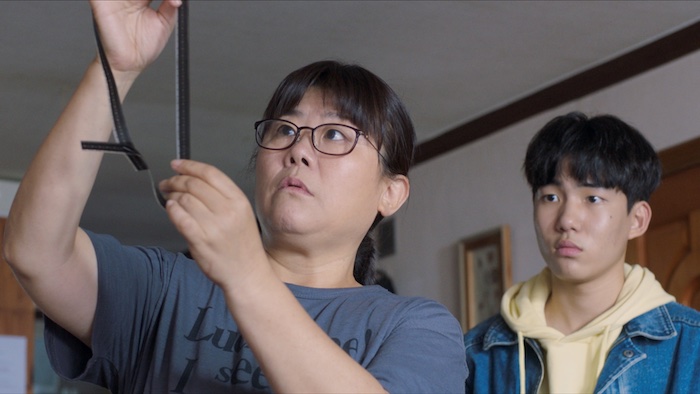
The title of this new Japanese documentary translates as “Grandchild of the Monster,” with “monster” referring to the late Nobusuke Kishi, who was prime minister from 1957 to 1960 and often called the “monster of the Showa Era.” The term does not necessarily connote a malevolent being (though many do consider him such) but rather someone whose influence was so prevalent as to be overpowering. After all, he masterminded the industrial development of the puppet state of Manchuria and was imprisoned by the American occupation forces as a war criminal, only to be released because of his value to U.S. Cold War aims in Japan. The subject of the documentary, the late Shinzo Abe, was Kishi’s grandson on Abe’s mother’s side. 

At first the purposes of director Taketo Uchiyama, whose previous doc was about former prime minister Yoshihide Suga, seem to be to analogize Abe’s rise to Kishi’s, but he theorizes that Abe, who became the longest-serving prime minister in Japanese history, saw his grandfather as more of a rival than a hero to be emulated. Abe’s father, Shintaro, was a powerful politician himself who had no time to attend to his son, and, for that matter, neither did his mother, whose job was to support her husband in his political endeavors. Shinzo was basically raised in Tokyo by a nanny, far from his father’s constituency in Yamaguchi Prefecture. Abe was a poor student and self-centered, so when he did have contact with his mother, she was invariably critical of his attitude, especially toward school. One biographer thinks Shinzo’s hurt feelings metastasized into a determination to outdo his mother’s father in the political realm by accomplishing those things that Kishi couldn’t, in particular revising the postwar Constitution. 

Consequently, Abe’s political career was fueled by personal resentment, and while he is identified with certain policies, his whole public outlook was geared toward electability and little else. More than one interviewee comments that Abe was not a deep thinker and likely didn’t even understand his policies, but that was OK. Topics were chosen for how easily they could be understood by the public, and if the public found them boring, all the better since low voter turnout was one of the Liberal Democratic Party’s most effective schemes. Much is made of Abe’s hatred of the media and his campaign of initimidation, a charge he laughed off. But the proof is in the pudding: Abe never really had very much public support, so his staying power was simply a matter of keeping the opposition off-balance and not confusing those who did vote. When he finally did leave the PM’s office, the people were sufficiently sick of him, notwithstanding all the subsequent fuss kicked up by his state funeral. 

In that regard, the movie doesn’t have anything new to add, though it does spend an inordinate amount of time on an alleged deal that Abe made with underworld types in his Yamaguchi constituency to intimidate the rival of a local politician he supported back in 2000. The fact that the matter got out of hand and ended up in court proved two things: Abe is clumsier than he seems (the Moritomo and sakura party affairs reveal the same thing), and that he has an uncanny ability to shrug off scandal and get other people to take the fall for him. That ability in and of itself has a monstrous quality to it.

In Japanese. Opens March 17 in Tokyo at Shinjuku Piccadilly (050-6861-3011).

Yokai no Mago home page in Japanese

photo (c) 2023 Yokai no Mago Seisaku Iinkai

Posted in Movies | Tagged | Leave a comment

Review: The Son

Though I thought the movie was better than others did, I agree that Anthony Hopkins’ Oscar-winning performance as the titular character in Florian Zeller’s The Father lifted it higher than it probably deserved. Hopkins also appears briefly in Zeller’s new movie, The Son, as the grandfather, a domineering monster who is the farthest thing from the sensitive, dementia-addled protagonist of Zeller’s debut feature. In a sense, Hopkins’ participation reminds us that the French playwright is generally held in high esteem for interrogating the foibles of the upper middle class nuclear family, and like The Father his new movie transplants his original play from a French milieu to an Anglophone one (with the help of Christopher Hampton). The Son, however, takes place in New York and centers not on Nicholas (Zen McGrath), the son in question, but rather on his father, Peter (Hugh Jackman), a successful corporate lawyer who is about to enter Washington politics big time.

Peter is the kind of hotshot whom people often describe as having too much on their plate, and it’s implied this self-imposed busyness has damaged Nicholas without Peter really knowing it, because he hasn’t been around the teenager that much since he divorced his mother, Kate (Laura Dern). Peter now has a much younger wife, Beth (Vanessa Kirby), and a new baby, so when Kate calls him up saying that Nicholas has been a chronic truant, he reacts more put-out than concerned. Still, he knows what’s expected of him and expresses a gratuitous sense of guilt-cum-responsibility by promising to talk to the boy and straighten everything out. Nicholas, who the audience has already been primed to understand suffers from clinical depression, demands that Peter and Beth take him in, not so much out of resentment toward Kate, but out of a desperate need for change that he thinks his father might provide. What Peter soon comes to learn, however, is that this desperation is mainly motivated by Nicholas’s feeling of being abandoned.

Unlike with The Father, Zeller develops The Son in a conventionally straight line, and as Peter comes to understand the depth of Nicholas’s emotional problems he is forced to improvise in ways that don’t suit his temperament. The boy’s instability only worsens, and by the time he ends up in the hospital and a psychiatrist is seriously recommending he be institutionalized, Peter has run the gauntlet of paternal readjustment gimmicks, including an attempt at tough love that fails disastrously. Though the script is coherent and sensitive and Jackman’s performance insightful enough to convey Peter’s drawbacks as a parent without making him into the horror show his own father (Hopkins) so obviously was, The Son is a pure downer without anything edifying to say about mental illness. Regardless of whether it’s due to nurture or nature, the movie implies that kids like Nicholas are doomed from the start. 

Opens March 17 in Tokyo at Toho Cinemas Chanter Hibiya (050-6868-5001), Toho Cinemas Shinjuku (050-6868-5063), Toho Cinemas Roppongi Hills (050-6868-5024).

The Son home page in Japanese

photo (c) The Son Films Limited and Channel Four Television Corporation 2022

Posted in Movies | Tagged , , | Leave a comment

Director Shin Su-won discusses “Hommage”

Here is the transcript of my email conversation with South Korean director Shin Su-won, whose latest film, Hommage, opens today in Tokyo and throughout Japan. My article about the movie, which portrays a director, not unlike Shin herself, struggling to restore one of the first films ever made in South Korea by a woman director, appeared last week in The Japan Times. Thanks to J.D. Kim.

Lee Jeong-eun and Tang Joon-sang in “Hommage”

Hommage is based on a documentary you made. Did you have to investigate Hong Eun-won’s career, just like Ji-wan in the movie? 

I first learned about director Hong Eun-won, who worked in the 1960s, when I created the MBC TV documentary Yeoja-manse (Woman with a camera) in 2011. I thought only male directors existed during that period, so I was shocked to learn about her. Moreover, why hadn’t I known about her at all? Why had she been forgotten? I tried to imbue Hommage with those emotions. Hong Eun-won had already long passed when I started shooting the documentary, so I interviewed her daughter, friends, and collaborators. I also met an elderly person who used to work in real estate around Myeongdong while doing my research. I was surprised that she remembered her well. That whole experience helped immensely in writing the script. 

What parts of Ji-wan’s career and home situation were based on your own life? 

Ji-wan’s and my everyday experiences are somewhat similar but vastly different in other ways. In the film, Ji-wan has directed three features but Hommage is my sixth. I specifically gave Ji-wan three films under her belt because Hong Eun-won closed out her career after creating three films. Ji-wan’s son, Boram, and husband also differ [from my family] in terms of vocations and personalities. To be honest, when I quit my job as a teacher and first started directing, there were some conflicts surrounding the responsibilities of household management and child rearing. But nowadays, unlike in the film, my family divides the chores amongst themselves when I’m filming or working overseas. Everyone has their own chores to take care of at home as well. 

I included my experience of these past conflicts in the film. Most working mothers have to come home from work and look after the home and the children, effectively working full time twice over. I wanted to show their everyday plight through Ji-wan. 

I was impressed by the scenes about Ji-wan’s health problems. Why did you include these scenes? 

First and foremost, I wanted to portray Ji-wan’s fear of ‘fading away.’ 

All the people Ji-wan meets as she chases Hong Eun-won’s shadow have grown old. They are all figures who in their youth created films with a burning passion but have now faded from our memory with age and time. 

As Ji-wan meets the editor who doesn’t even remember the word ‘film,’ or the elderly actor with dementia who can’t remember ever working with Hong Eun-won, she’s faced with a sense of fear that though she’s relatively young now, she’ll grow old and no longer be able to create films anymore. To highlight that fear, I made Ji-wan 49 going on 50, around the time women experience physical changes from menopause. 

The second reason is to show her departure from womanhood. 

The uterus is not only the source of birth but is the organ that distinguishes a woman’s biological sex. While men continue to pursue their careers after marriage, many women give up their dreams and quit their jobs after having children in order to raise them and manage the household, because they have uteruses. 

The first thing Ji-wan says to her husband after her hysterectomy is “Hey, brother.” This is said as a joke, but it also contains the underlying idea, ‘I’m your equal now, like a brother.’ Essentially, it notes that she’s been freed from gender based on her societal obligations as a woman. 

Continue reading
Posted in Movies | Tagged , | Leave a comment

Review: A Man Called Otto

A Man Called Otto

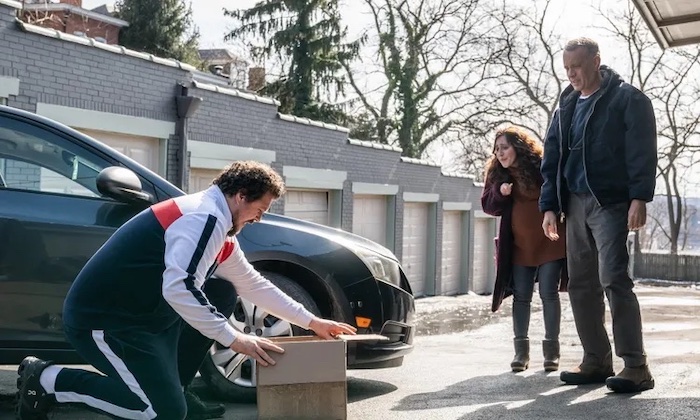
How many men in the U.S. are named Otto? Though it may sound like a trivial question, it kept nagging at the back of my consciousness while watching Marc Foster’s Americanization of the hit Swedish heartwarmer A Man Called Ove, about a curmudgeonly suburban homeowner who terrorizes his neighbors with his fastidiousness. Obvously, a name like Ove was too arcane for a story set in Ohio, but Otto, with its harsh abruptness, is still a shade Teutonic, especially when the character is being played by Tom Hanks. Moreover, Otto’s late wife, played in flashbacks by Rachel Keller, is named Sonya, thus indicating that maybe this particular neck of the rust belt is filled with the children of Scandinavian immigrants, but no such explanation is forthcoming. Yeah, I know, I think too much, but what bothered me is that Foster and his screenwriter, David Magee, wanted to somehow honor their Swedish source, and in doing so just kept inviting comparisons, for which Otto came up short.

The problem isn’t so much Hanks but rather his indelible image as someone who represents all that’s wonderful about America, so that even as he tries to act the asshole, yelling at people who park improperly and lording over HOA meetings like a tyrant, you see Otto’s point and don’t necessarily blame him for his gruffness. In the Swedish version, Ove really was an insufferable bastard, so when the reason for his unpleasantness was revealed, it hit hard. Here, we already suspect that Otto is basically a good person who has somehow been traumatized into a get-off-my-lawn state of mind, and no subsequent revelation is a surprise, especially when, only minutes into the film, we see Otto attempt suicide in a comical way. It’s also obvious because the neighbors he berates don’t react defensively, because they know Otto is suffering to a certain extent, especially Marisol (Mariana Trevino), a Filipino immigrant who has just moved into the condo complex with her family and immediately recognizes in Otto a damaged soul that she can rescue from despair. The rest of the movie is an excavation of the source of that despair, which is effective without being particularly original in concept.

And there are “bad” people in A Man Called Otto, but their sins are those of opportunism, and while that particular attribute isn’t limited to Americans, it’s the kind of triggering character flaw that Hollywood relies on too much. Hanks’ earnestness actually saves the movie from itself, but his participation—not to mention that of his son Truman, as a younger version of Otto in flashbacks—is also something that kept nagging at the back of my consciousness. I knew exactly where this movie was going, and you will, too. 

Opens March 10 in Tokyo at Toho Cinemas Nihonbashi (050-6868-5060), Toho Cinemas Chanter Hibiya (050-6868-5001), Toho Cinemas Shinjuku (050-6868-5063), Cinemart Shinjuku (03-5369-2831), Toho Cinemas Shibuya (050-6868-5002), Toho Cinemas Roppongi Hills (050-6868-5024).

A Man Called Otto home page in Japanese

Posted in Movies | Tagged | Leave a comment

Review: Blacklight

Though they have absolutely nothing in common in terms of approach to craft or onscreen image, Liam Neeson has become the Nic Cage of late boomer movie stars, an actor who seems to take any part offered him regardless of the quality of the film attached. The main difference is that Cage is offered a wide variety of projects, from dumb actioners to out-there provocations to relatively thoughtful but misguided dramas, while Neeson is wanted for only one thing: retaliation stories. And though he’s proven his worth by remaining in-demand—thus implying, at least, that his movies make money—the returns in terms of thrills and surprises have been diminishing for years. When he was still doing the Taken series, his explosive obsession with killing the people who wronged him was exciting because of Leeson’s quietly coiled performance style, but that trademark character distinction requires a considerable measure of suspension of disbelief—and not just because of his age—to make it work, and the movies he’s been doing recently don’t provide that.

Blacklight contains all the Neesom trademarks: He plays a super-skilled federal operative who’s either retired or nearing retirement, with a loved one or two in mortal danger. Director Mark Williams and co-scenarist Nick May try to engage the viewer immediately by juicing the action with proof that they read their news feeds. A nominally left-wing member of congress is murdered in a hit-and-run while Neeson’s Travis Block is charged with extracting an undercover FBI agent from the clutches of a white supremacist organization that may have caught on to who he really is. These two seemingly unrelated events are, of course, shown later to be related when Block is told to convince a rogue agent to come in from the cold, but, of course, the agent’s reasons for bolting, as Block learns, are legitimate, thus placing Block in a difficult situation vis-a-vis his superior, a fellow Vietnam-era veteran named Gabe (Aidan Quinn) who has floated to the top of the organization while Block is still mostly a contract operator (the best to guarantee deniability), but one who, apparently, doesn’t have the option to quit. 

The Neesomism that’s invariably tapped is Block’s main reason for retiring, which is to spend more time with his very young granddaughter, and so he doesn’t really whip himself into a righteous frenzy until he discovers a secret assassination team within the bureau that threatens his family to keep him in line. Though this story is serviceable as far as it goes—it provides Block with the necessary justification for killing at will—it has no substance in terms of realistic motivation. The political ramifications are completely elided and the characters so poorly drawn as to make them interchangeable as bodies to be perforated by bullet or blade. For a Neesom vehicle, it’s pretty boring.

Now playing in Tokyo at Shinjuku Wald 9 (03-5369-4955).

Blacklight home page in Japanese

photo (c) 2021 BL Productions LLC; Allplay Legend Corporation

Posted in Movies | Tagged | Leave a comment

Review: The Fabelmans

It’s interesting to ponder what kind of film Steven Spielberg’s semi-autobiographical The Fabelmans would have been had he made it earlier in his life. Film critics have broadly divided his output between two schools, the entertainments and the nominally serious movies, and I would assume that had Spielberg made The Fabelmans 20 years ago he would have approached it as a serious topic, since it takes into consideration such “adult” themes as connubial satisfaction, racism, and the pursuit of artistic vision. Well into his 70s, however, the director has subjected his story to an inventive scrutiny that transcends its various themes, making it by far his most entertaining work in years. The “seriousness,” if that’s what you want to call it, is all in what you take away from it.

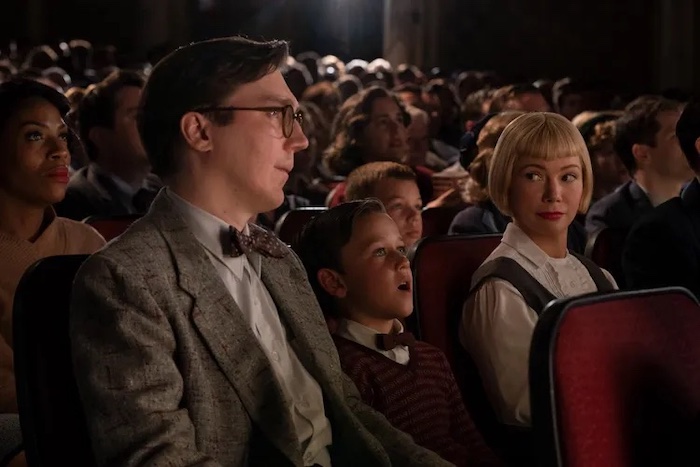
Told through a script by Spielberg and frequent collaborator Tony Kushner, the movie’s story is strictly linear without any tricky sidelines or flashbacks or flash-forwards. Spielberg’s stand-in, Sam Fabelman (Mateo Zoryon Francis-DeFord), is first turned on to the magic of movies while watching The Greatest Show on Earth in Cinerama, paying particularly close attention to the famous train crash sequence, which would inform so much of his visual attitude. Though the scene is meant to instill horror, Sam is filled with awe and the instatiable drive of the autodidact to recreate it, an urge encouraged by his mother, Mitzi (Michelle Williams), a discouraged concert pianist. His engineer father, Burt (Paul Dano), gets into the spirit of things by buying Sam a model train set. Thus the two poles of the Spielberg creative mentality—the poetic and the technical—are established.

As Sam grows older (and is subsequently played by Gabriel LaBelle) his obsession with Super 8 filmmaking only intensifies while his home life gradually erodes. The family moves from New Jersey to Arizona in the early 60s when Burt leaves IBM to take more lucrative and challenging work. The move involves not only the Fabelman family, but Burt’s best friend, Bennie (Seth Rogen), who also has an uncomfortably close relationship with Mitzi, whose insecurities become more acute after she settles in the Southwest. The script does an admirable job of informing Sam’s artistic development with the traumatic aspects of his living arrangement, and as his parents’ marriage slowly unravels and his father becomes less tolerant of his “hobby,” the movie’s serious side comes into its own without making a big deal of it. It is when the family moves again, to Northern California, that the various dramatic lines converge in a stunningly executed sequence wherein Sam reacts to his high school’s overt anti-semitism with a piece of personal filmmaking that captures all of the boy’s conflicting feelings about the life’s path he’s chosen and the material world—with all its prejudices and injustices— he has to navigate to walk that path. It’s the perfect depiction of how Spielberg’s first impulse as an artist is to please an audience. 

But even beyond the writing itself and the usual Spielberg visual magic, it’s the characters that make The Fabelmans the ultimate autobiographical film study. For once, the period setting is honored to a T: there’s no accidental verbal anachronisms (or, at least, none that I caught—and I’m pretty sensitive to films set in the 60s) or strange intrusions of a post-millennial sensibility. Dano and Williams are so vivid as to be heartbreaking in their characters’ lack of compatibility, but two smaller parts really stand out: Judd Hirsch as Sam’s Uncle Boris, whose soliloquy about his stint as a lion tamer is the spot performance of the year; and David Lynch’s cameo comic turn as John Ford, who gives young Sam the kind of advice only Ford could. Everything else is history.

Now playing in Tokyo at Toho Cinemas Nihonbashi (050-6868-5060), Toho Cinemas Hibiya (050-6868-5068), Shinjuku Wald 9 (03-5369-4955), Shinjuku Piccadilly (050-6861-3011), Toho Cinemas Shinjuku (050-6868-5063), Toho Cinemas Shibuya (050-6868-5002), Toho Cinemas Roppongi Hills (050-6868-5024).

The Fabelmans home page in Japanese

photo (c) Storyteller Distribution Co., LLC

Posted in Movies | Tagged , , | Leave a comment

Review: Everything Everywhere All at Once

I know responsible film critics see movies twice, but life is too short, and the reviews you read here are, for the most part, based on single viewings. With this surprise Oscar contender, however, I made a point of returning for a second glance because the first time I couldn’t wrap my head around enough of the details to appreciate fully what the two writer-directors, Daniel Kwan and Daniel Scheinert, were trying to tell me. It was just too exhausting. But on second viewing, the story fell into place, and the details, most of which are just childish jokes, hit their targets without a lot of fuss. More to the point, the emotional contours pulled me in, and while the plot was still too contrived to qualify as something I could identify with on a personal level, I cared a lot for the characters and their situation.

The situation is quotidian to a fault. Our hero, in all senses of the word, Evelyn Wang (Michelle Yeoh), owns and operates a laundromat in what looks like Southern California with her timid husband Waymond (Ke Huy Quan). After they married, the Wangs emigrated to the U.S. against the wishes of Evelyn’s old world father, Gong Gong (James Hong), and eventually had a daughter, Joy (Stephanie Hsu), who, as we join the action, has turned into a college-age adult with a girlfriend, Becky (Tallie Medel), whom Evelyn doesn’t know how to deal with, especially at this particular moment with her ailing father visiting them for his birthday. As it stands, Joy can barely speak Cantonese, so what is Gong Gong going to think when he is introduced to Becky? Added to these anxieties, Waymond is suddenly asking for a divorce and Evelyn is scheduled to undergo an IRS audit for which she is ill-prepared, especially given the woman assigned to her case: Dierdre Beaubeirdre (Jamie Lee Curtis), a dyed-in-the-wool numbers cruncher who sees her job as a righteous calling.

Despite the movie’s overlong running time and ensuing frenzy, the one thing Daniels do very well is pacing. Just as Evelyn is reaching the end of her rope in front of the auditor, the multiverse comes crashing into her consciousness as Waymond switches from his nerdy persona into that of an avenging space jumper with sick martial arts skills. He informs Evelyn that she has been identified as the only person who can save the multiverse from an evil force named Jobu Tupaki. And as Evelyn attempts to carry out, at first reluctantly, the mission she’s been charged with, she realizes that the multiverse is made up of all the situations that would have developed had the various decisions she faced in her life were addressed differently. In other words, she sees her life, and the lives of her loved ones, as a gestalt that contains multitudes. Unlike The Matrix, however, Everything treats the concept as a laff-riot, and Daniels come up with the most ridiculous outcomes, binding them all together by means of a dream logic that actually makes perfect sense. 

My mistake while watching it the first time was blinking, because you miss a lot if you do, in particular the brilliance of the action set pieces and the weirdness of the interstitial shenanigans, which follow physical laws that could have only been thought up by the Marx Brothers. Jumping from one universe to another, for instance, invariably involves a preternaturally silly action, like saying “I love you” to someone you very definitely don’t love (still, I could have done without the paper cut gimmick). But in the end, the innumerable strands, no matter how far out they dangle, get woven together into a tapestry of interpersonal empathy that transcends the movie’s knockabout purposes. Families matter–and antimatter, too.

In English, Cantonese and Mandarin. Opens March 3 in Tokyo at Toho Cinemas Hibiya (050-6868-5068), Toho Cinemas Shinjuku (050-6868-5063), Shinjuku Wald 9 (03-5369-4955), Toho Cinemas Shibuya (050-6868-5002), Toho Cinemas Nihonbashi (050-6868-5060), Toho Cinemas Roppongi Hills (050-6868-5024).

Everything Everywhere All at Once home page in Japanese

photo (c) 2021 A24 Distribution LLC

Posted in Movies | Tagged | Leave a comment

Media watch: Korean tourists celebrate uprising anniversary by patronizing former oppressors

Yahoo News

Today is the 103rd anniversary of the March 1 Independence Movement in South Korea, a national holiday. On March 1, 1919, anti-colonial elements in Korea assembled at various locations to denounce Japanese rule, thus leading to a movement involving 2 million Koreans comprising 1,500 demonstrations over the next month or so. Korean records claim that more than 7,000 people were killed in retaliation by Japanese soldiers and police, with more than 46,000 arrested. Japanese records claim 553 died.

March 1 is obviously a day that Koreans are keen to celebrate and Japanese people are just as keen to ignore, which isn’t to say that the legacy of that day impinges directly on the two countries’ relationship. For sure, Seoul and Tokyo maintain a steadily antagonistic tension based on differing views of their shared history, but that tension doesn’t necessarily apply to commerce. 

A Feb. 27 story by the Yonhap news agency reports that the number of Koreans visiting Japan today will likely set a new record. The three low-cost carriers that operate between South Korea and Japan are reporting near sold out flights from Feb. 25 to March 1, the same scale of traffic you normally would see during the peak summer vacation months. In fact, the rush of Korean tourists to Japan has been extraordinary ever since Japan relaxed its COVID travel curbs in October. During that month alone, 123,000 Koreans visited Japan. The number increased to 315,000 in November and 456,000 in December. In January, the number exceeded half a million, or 37.7 percent of all the foreign visitors to Japan that month. And it just continues to grow.

Continue reading
Posted in Media | Tagged , , | Leave a comment

Media watch: Feminist icon outed as…a wife

Chizuko Ueno (Toyo Keizai)

The March 2 issue of the weekly magazine Bunshun contained a bombshell scoop of a sort. One of the articles is about Chizuko Ueno, a University of Tokyo sociology professor (graduate of Kyoto University) whose specialty is feminist theory, in particular how patriarchal societies like Japan’s systematically discriminate against women and limit their choices. One of her constant themes is that the institution of marriage as it’s conventionally defined in Japan  is “the root of all evil,” so Bunshun’s scoop was noteworthy since it reported that Ueno was married.

The past tense is important here because Ueno’s purported husband died in September 2021 at the age of 96. Ueno is 74 right now. Her husband was Daikichi Irokawa, a renowned historian who chronicled the lives of ordinary Japanese people in the context of “freedom and human rights.” He was also an activist whose experience during World War II prompted him to study how the state wielded control over the Japanese populace. 

Though Bunshun doesn’t actually produce a marriage certificate or family register, the reporter uses other documentary evidence to show how the two scholars were wed, though it’s not clear exactly how long they were wed. Irokawa’s first wife died in 2017, and last June an application to transfer property he owned in Yamanashi Prefecture was carried out. Further investigation revealed that the registration for the land was passed on to Ueno on the date of Irokawa’s death the year before. According to a legal expert interviewed by Bunshun, such a property transfer could not be carried out had the recipient not been related to the deceased, because only an “heir” can receive an “inheritance,” which is how the application was processed. Had Ueno and Irokawa not been married, she would have only been able to receive the property as a “gift” through a will. So that means Ueno was either legally married to Irokawa or had been adopted by him. As the expert put it, being in the same family register as the deceased makes the process of liquidating property very easy. Otherwise, a lot of paperwork would be required, and that doesn’t seem to be the case in this instance. 

Irokawa’s son told Bunshun that he is not concerned about Ueno’s image, only his father’s memory. But the article implies that Irokawa’s previous wife knew about his relationship with Ueno. As for Ueno’s legal name, had she been either Irokawa’s legal wife or legally adopted heir, she would have to have the same name, and there is no indication that Irokawa changed his name to Ueno. However, there is also no evidence of her changing her name since, following a spouse’s or adopted guardian’s death, a person can easily reclaim their previous name. 

Ueno has not commented on the article so far, and certain elements on the internet who find her pronouncements objectionable have been quick to label her a hypocrite by keeping her wedded status a secret even as she rails against the sexist aspects of traditional marriage. But while one could probably make a case that keeping that relationship a secret detracts from Ueno’s reputation as a self-sufficient single person, it by no means detracts from her work, which is centered on the inherent dignity and rights of the individual. In recent years, a subtheme of her writing has been aging and dying alone, whether the individual is a man or a woman, and as it turns out, this was also one of Irokawa’s activist interests in his twilight years. Living in the home he bequeathed to Ueno, Irokawa formed a neighborhood group called Neko no Te Club whose members took care of one another as they grew older, regardless of whether they had family. In the end, it’s nobody’s business but hers if Ueno was married, but from all appearances she practiced in that marriage what she preached in public. 

Posted in Media | Tagged , | Leave a comment

Review: Paper City

One of the salient points that Edward Seidensticker made in his history of Tokyo was that, in the Shitamachi area of the capital—the “low city” where the hoi polloi lived—the carpenters’ guild was congruent with the fire brigade; meaning that the people who built all those wooden structures were the same people who had to put out the fires when they burned, which they did in a big way every decade or so. This cycle of construction-destruction evolved into Tokyo’s infamous scrap-and-build urban development policy, and though Seidensticker doesn’t mention it, it also likely had something to do with Gen. Curtis Lemay’s decision to firebomb the Shitamachi area during World War II, since he knew it contained densely arranged wooden dwellings that would light up like matchsticks, despite the fact that it contained few facilities that were strategically important. The whole point was to create casualties that would “disrupt production.” During the night bombing raid that started just after midnight on March 10, 1945, American B-52s dropped more than 1,500 tons of bombs, destroying one-fourth of the city. About 100,000 civilians died, with another 125,000 wounded. Lemay considered it a great success.

Australian filmmaker Adrian Francis’s documentary, Paper City, is less about the raid itself than about how it has been memorialized. For the most part, only those persons with a direct link to the terrible event have kept its memory alive. As one elderly witness explains, young Japanese today don’t even know that the U.S. was Japan’s enemy during World War II, much less that Americans massacred tens of thousands of men, women, and children indiscriminately in the course of one night. Francis focuses on three people who survived the firebombing and subsequently worked to get the Japanese government to set up a permanent memorial to those who died, though, in truth, what they are after is to get the government simply to acknowledge officially that it happened. Most of the footage was filmed between the 70th anniversary of the raid in 2015, when the memorial association submitted a 300,000-signature petition to the ruling Liberal Democratic Party demanding they create a permanent memorial, and the following year, when the government effectively killed the petition by ignoring it. 

Consequently, the memorial activists have had to set up their own memorials piecemeal, raising money privately to pay for them. As they go about this business, the three principal subjects relate the horrors of that night: How the Sumida River filled with dead bodies and, as children, they were forced by soldiers to pull the bodies out of the water; how all the public parks “from Asakusa to Oshiage” contained “mountains” of charred, unidentifiable corpses; how the residents couldn’t do a thing since the volume of incendiaries was so great it caused firestorms that blew flames through the streets with hurricane force, and yet these residents were prohibited from leaving the area by the military authorities because they were supposed to put the fires out somehow. 

At one point, Francis films a demonstration outside government offices and a sound truck from a rightist organization drives by and scolds the demonstrators for “begging the government for money” when they should be picketing outside the U.S. embassy. In a sense, they are right—the U.S. has never apologized for the wholesale carnage, the same way it has never recognized Hiroshima and Nagasaki as being inherently genocidal military actions—but as one association member puts it, the “pre-war establishment still controls Japan,” which means the government will never acknowledge its own part in the destruction caused by the firebombing until that faction is removed somehow. Getting them to at least recognize the horrors of March 10, 1945, is the only way to begin that process, which, at the moment, is more vital than ever as these establishment forces prepare the country to accept a larger and more offense-oriented military. 

Addendum: A reader has pointed out that Lemay received the First Class Order of Merit of the Grand Cordon of the Rising Sun, one of Japan’s highest honors, in 1964, which only adds insult to injury and further explains why the current government would rather not talk about the Tokyo firebombing.

In Japanese and English with English and Japanese subtitles. Now playing in Tokyo at Theater Image Forum Aoyama (03-5766-0114).

Paper City home page in Japanese and English

photo (c) 2023 Feather Films Pty Ltd.

Posted in Movies | Tagged | Leave a comment