Review: Moneyboys

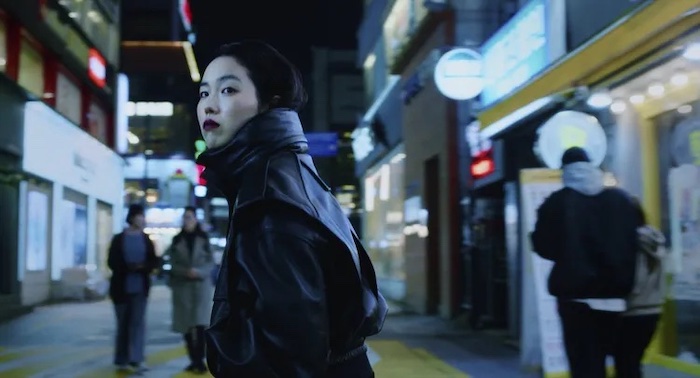
The title of Chinese filmmaker C.B. Yi’s debut feature refers to male hustlers in the industrial south of China who cater to male customers. From the first scene when we’re introduced to the protagonist, Fei (Kai Ko), going to his first gig as one third of a threesome, it’s clear that these moneyboys are gay men who otherwise can’t reveal their sexual preferences, and as the movie develops we see the tight-knit community that forms underground among these men (and their female comrades), thus shining a light not only on gay life in China, but the circumstances surrounding migrant labor from the countryside to the cities. As it turns out, Yi, who studied film in Austria, shot Moneyboys in Taiwan, supposedly for budgetary reasons, though it may also have had something to do with the movie’s theme. 

Like many migrant workers, Fei sends money back to his family in the countryside, though in his case he hides from them the nature of his work. The story is framed by his relationships with two other men, first Xiaolai (JC Lin), a fellow moneyboy who falls in love with Fei and exacts retribution on a john who subjects Fei to a beating during a paid tryst. After Xiaolai is himself subjected to a beating in return, Fei escapes to another city and Yi jumps ahead five years, by which time Fei has become a successful moneyboy with a nice apartment and steady work with high-income clients. Nevertheless, his life isn’t stable, and he’s set up by local police who bust him for prostitution, a charge that somehow is communicated back to his home village. The next time he visits, to see his ailing grandfather, he is practically banished by his extended family, but a childhood friend, Long (Bai Yufan), follows him back to the city, eager to become a moneyboy himself since, as he so pointedly explains, every job he’s ever had involves “selling my body,” so he might as well get paid as much as possible for it.

Yi brings the narrative full circle in a way that’s dramatically satisfying. Fei’s life has rendered his psyche vulnerable to any kind of disapproval, and when he reconnects with Xiaolai while trying to make a home with Long, he loses his equilibrium—or, whatever equilibrium he has managed to manifest under such circumstances. The conflicting emotions of all three men is palpable, and the overall mood and motivations of the characters feel credible to the point of documentary realism. Kai, apparently, was once a popular film star who is making a comeback after some years in the show biz wilderness, and his unsettling portrayal of Fei keeps the viewer off balance, because you never know how he will react to the next obstacle on his carefully navigated road to happiness, developing a through-line of personality that’s recognizable regardless of whether he presents with ecstasy or despair. And though Yi demonstrates a familiar European sensibility in his choices—very little camera movement, with long static shots of inventively blocked tableaux—Moneyboys feels alien enough to convince you it’s honestly depicting a world you know nothing about.

In Mandarin. Opens April 14 in Tokyo at Cinemart Shinjuku (03-5369-2831).

Moneyboys home page in Japanese

photo (c) KGP Filmproduktion, Zorba, Arte France Cinema, Flash Forward Entertainment, La Compagnier Cinematographique & Panache Productions 2021

Posted in Movies | Tagged , | 1 Comment

Review: Holy Spider

More serendipitous timing: This film about a man who murders female prostitutes in Iran’s holy city of Mashhad is being released internationally as Iranian women ramp up their resistance to the fundamentalist regime that has long kept them down. Not surprisingly, the movie was not shot in Iran but in Jordan. Director Ali Abbasi, a native Iranian who now lives and works in Denmark (he is responsible for the curious Danish language body-horror fantasy Border), applied for permission to film in Iran but was refused. It’s easy to understand why, and not just because of the serial killer theme and the attendant sex and violence. The movie takes a sharply negative view of Iran’s treatment of women in general, and never neglects the opportunity to play up the magnitude of misogyny that’s embedded in the country’s laws and cultural attitudes. In that regard, Abbasi gets invaluable help from his lead, Zar Amir-Ebrahimi, who won the Best Actress prize at Cannes for her performance as the headstrong journalist, Arezoo Rahimi, though in some ways her dominant presence makes you wonder if the character she plays is more of a didactic device than a fully inhabited person.

Though Holy Spider, based on a true story, is a credible thriller, it isn’t a mystery, since we know who the killer is right from the first scene, when the middle aged construction worker Saeed (Mehdi Bajestani) stalks an already battered prostitute and then brings her back to his apartment posing as a potential john. He strangles her in the stairway when she starts to get cold feet and then drives out of town with the body and dumps it on the side of a hill. As the movie develops and the murders pile up, we learn that Saeed is married with two children as well as a veteran of the Iran-Iraq War (the movie takes place around 2000-01). The fact that he didn’t die a martyr, as many of his comrades did, has left him guilt-ridden and determined to make his holy mark, and thus he embarks on a crusade to “cleanse the streets” of sinful women who sell their bodies, often to support drug habits. Though Abbasi addresses the origins of these women’s problems, he does it collectively, the result being that the viewer only sees them as victims. Rahimi provides contrast without much depth. She stands up to patronizing officials, including a police officer who demands sex in exchange for intelligence about the murders, and commiserates with the prostitutes, who are afraid to trust her. But between these two extremes of feminine constructs there is only Saeed’s wife, who is positioned to represent the requisite figure of complacency—the nurturer. 

Abbasi falls back on thriller cliches that undermine his aims, and often the audience has to take the motivations depicted at face value. But the final third of the film is bracingly effective in showing the base hypocrisy of the judicial and penal systems, as well as the dogma that props them up. It’s obvious to Rahimi from the beginning that the authorities aren’t so interested in catching the Spider Killer, as he’s referred to in the press, because they think he really is cleaning up the streets, but after she forces their hand they find new ways of covering their asses while making the appropriate noises about justice and purity of purpose. 

In Farsi. Opens April 14 in Tokyo at Shinjuku Cinema Qualite (03-3352-5645), Human Trust Cinema Shibuya (03-5468-5551), Toho Cinemas Chanter Hibiya (050-6868-5001).

Holy Spider home page in Japanese

photo (c) Profile Pictures/One Two Films

Posted in Movies | Tagged , | Leave a comment

Media watch: Adoptive parents still worry how society views their children, and them

Last week, Asahi Shimbun reported on a survey conducted by Jikei Hospital in Kumamoto of parents who had adopted children deposited in the hospital’s famous “stork cradle,” the euphemistically named box where parents can anonymously leave newborn babies they won’t or can’t raise themselves. Such “baby hatches” are not exclusive to Japan, and one was featured in the South Korean movie Broker, which was written and directed by the Japanese filmmaker Hirokazu Kore-eda. Jikei’s is the only baby hatch in Japan, and opened in 2007. As of 2021, 161 infants had been left in the hatch, and Jikei decided to survey the guardians who had subsequently taken in the children, through either “special” adoption (meaning adopting minors as the adopters’ own children, as opposed to adopting adults as heirs), foster care programs, or orphanages. These three outcomes comprised the fate of 80 percent of the 155 baby hatch foundlings that had been left at the hospital through 2019. No mention was made in the article of what had happened to the remaining 20 percent.

The surveys were conducted anonymously as well, and 94 percent of those who received the questionnaire responded. Asahi concentrated on the answers returned by the adoptive parents, of which 67 percent said that they had revealed to their children that they had been adopted. The most common age at which this revelation was made (34 percent) was “around 3 years old.” Among these children, 18 percent had been told specifically that they had been left in the baby hatch, and the most common time they were told this was “before they started elementary school.” Fourteen percent of the parents who have not told their children they are adopted said they don’t plan to ever tell them, while 69 percent said they are still “considering” whether to tell them in the future. 

The hospital staff in charge of the matter told Asahi that the survey results indicate that “we have to do a better job of promoting understanding among the general public [about child adoption] in order to prevent discrimination of adopted children,” the implication being that parents who adopt children as infants with the intention of never telling them their provenance could make it emotionally difficult for their children when they invariably find out. The head of the hospital went further in saying that he didn’t expect that this many parents would have decided not to reveal to their children their adopted situation. 

“We really need to discuss this matter with those involved in order to instill more confidence in adoptive parents,” he said.

Posted in Media | Tagged , | Leave a comment

Brendan Fraser saves The Whale

During his Tokyo press conference on April 6 at the Ritz-Carlton to promote his Oscar-winning performance in Darren Aronofsky’s film, The Whale, Brendan Fraser, making his first trip to Japan in 15 years, used the words “courage” and “empathy” multiple times to describe any number of matters connected to the people who worked on the movie. “It’s about empathy and hard-won hope,” he said in an attempt to encapsulate the movie’s theme. When asked if he had maintained a friendship with former co-star (in one of the Mummy movies) Michelle Yeoh, the female counterpart to his Best Actor award this year, he said, prior to seeing her at the Oscars ceremony, he ran into Yeoh at last year’s Toronto International Film Festival and lauded her as an artist with “a lot of courage.” He used the same noun to describe Aronofsky when he decided to tackle the play from which The Whale was adapted (by the play’s author), as well as his character, Charlie.

It was this last qualification that gave me pause. The comment about Charlie’s courage came during a particularly lyrical description of the character in response to a pointed question about how the film reflected certain uncomfortable truths about American society. Charlie, after all, is morbidly obese, a condition we are led to believe was caused by trauma: Charlie’s ex-lover, a former student of his, killed himself out of shame due to his religious upbringing. Charlie is essentially eating himself to death.

“Having courage—it means acknowledging there’s an obstacle,” Fraser explained in the hushed but clear tones he maintained throughout the press conference. “Charlie is a hero, but not the kind of hero who carries a sword and shield.” What Fraser was trying to say, using awkward psychobabble, was that by recognizing and “owning” his condition, Charlie was doing something heroic, a reading of the character that may mislead people who hadn’t yet seen The Whale to expect something it isn’t. Charlie’s misery is his most salient feature, and Aronofsky has highlighted it with prosthetics that turn Fraser into a mountain of self-disgust. The actor is often called upon to perform fits of gorging—on pizza, on sandwiches, on chocolate—that are meant to horrify the audience. In order to accept Fraser’s characterization of Charlie, you really have to readjust your understanding of the word “courage.”

Continue reading
Posted in Movies | Tagged , | Leave a comment

Review: Air

I’m a sucker for movies set in the business world, be they about finance (The Big Short) or sales (The Founder), as long as they center the drama on the transactional nature of commercial enterprise. This isn’t to say I’m a capital-C capitalist, but rather that the kind of dedication that goes into business dealings, especially when they are totally self-serving, makes for credible tension, and the more technical the dealings the more exciting it is. Ben Affleck’s Air satisfies that craving. It isn’t the first movie about marketing, but it may be the most single-minded. There’s a kind of religious fundamentalism to the way these people approach their jobs, and while often this obsessiveness is played for laughs, in the end it only succeeds when the filmmakers share in that obsessiveness, even to the peril of their own souls.

The story told here is not new, and to basketball freaks it’s probably gospel. In 1984, the running shoe leader Nike, headquartered in cool, green Oregon, trailed Adidas and Converse in the sales of basketball shoes by a wide margin. As with all sports equiipment companies they needed to tie their brand to popular athletes, and were stymied by their CEO Phil Knight’s (Affleck) penny-pinching ways, which usually resulted in hitching their wagon to second- or third-tier figures. Nike’s basketball division marketer, Sonny Vaccaro (Matt Damon), as pure a sport head as you could find, wanted to go bold and spend the entire budget on one guaranteed star, and he saw in Michael Jordan, at the time still a college player who had just decided to drop out and go pro, the future. As it happened, Adidas and Converse also eyed Jordan as a potential asset, and they had more money and street cred, so Vaccaro had his work cut out for him, not only in terms of persuading Jordan to sign with Nike, but in getting Knight to allow him to court Jordan. 

Consequently, Vaccaro went around Knight and Jordan’s vitriolic agent (Chris Messina), talking directly to Jordan’s parents (Viola Davis, Julius Tennon), which was something of an ethical no-no, but that’s how many tough business deals are forged, and Deloris Jordan’s even-tempered, qualified encouragement prompted Vaccaro to go ahead and proceed as if there was a possibility Nike would get the endorsement. He even had their shoe designer (Matthew Maher) make a prototype. As played by Affleck, Knight is something of a false flag, a guy who acts all CEOey (though in a Buddhist sort of way) but in the end bows to the superior minds he hired to make him money, which in this case also included marketing chief Rob Strasser (Jason Bateman), and idea man Howard White (Chris Tucker, in a role that is custom made for his peculiar talents). And when the movie settles in among these guys and their trash-talk meetings over strategy, it hums like a fine-tooled machine. But, of course, it has to be about more than just business, and once Vaccaro goes eyeball-to-eyeball with Deloris—Michael, like the deity he is, is never seen in the movie except from the back—it becomes something of a passion play and loses its spark; or, more precisely, it gets warm and mushy, mainly over matters of fairness. And while that’s a nice thing, if they really wanted to address the problematic side of sports paraphernalia they should talk more about Asian sweatshops, which is only mentioned in passing, as if it were expected but too much of a downer. For business-oriented movies, the vibe is everything. 

Now playing in Tokyo at Toho Cinemas Hibiya (050-6868-5068), Shinjuku Piccadilly (050-6861-3011), Human Trust Cinema Shibuya (03-5468-5551).

Air home page in Japanese

photo (c) Amazon Content Services LLC

Posted in Movies | Tagged , , , , | Leave a comment

Review: Knock at the Cabin

Faith is difficult to convey in a movie if the viewers themselves have to be persuaded of its power. Normally, the apocalypse is depicted as having a grounding in natural phenomenon—climate change, asteroids, shifting tectonic plates—but when the source is supernatural the audience has to already have some kernel of belief in a higher intelligence to find any sort of value in the story. In M. Night Shyamalan’s latest thriller, it takes a while for the particulars of the end-of-the-world scenario to sink in, a strategy that is both a function of the story’s suspense and its ability to make us buy it, but if it fails in that endeavor the movie has no meaning, no matter how skillfully Shyamalan charts out the thrills.

For what it’s worth, his characters make the most of his problematic premise. Eric and Andrew (Jonathon Groff, Ben Aldridge) are a couple who, with their adopted daughter, Wen (Kristen Cui), repair to a rented cabin in the woods for a relaxing vacation. As soon as they arrive, the cabin is invaded by four individuals armed with makeshift weapons who tie them up. The quartet’s leader, the massive Leonard (Dave Bautista), explains in an extremely gentle manner that they have all experienced “visions” of the end, and have somehow been told to seek out this particular family, which must kill one of its members to appease whatever force is bent on destroying the earth. What’s disconcerting about this home invasion is that the perpetrators are not aggressive, but apologetic and pleading: They believe utterly in their mission and beg the two men to make this ultimate sacrifice, since they have to decide to die themselves. The intruders can’t kill them. Naturally, Eric and Andrew don’t believe it, even after Leonard turns on the TV to show them evidence of plagues and disasters.

Most of the movie is a psychological cat-and-mouse game, with Leonard and his three accomplices—none of whom knew one another prior to their visions—using heightened emotions and their own show of self-sacrifice to make their case for the preservation of humanity, while their two captives resort to logic and then pure rage (Eric at first believes they are homophobic psychopaths) to resist their entreaties. What makes the concept difficult to swallow is its arbitrary nature, as if it were thought up by some evil twelve-year-old and then translated into millennial-speak by a scriptwriter. The development is punctuated by some potent bits of violence and intrigue, but the story’s relentless drive toward a binary conclusion—will the world end or won’t it?—drains it of compelling drama if you don’t buy the faith premise in the first place. Because it’s a Shyamalan production, there is always the possibility of a twist, but by the time such a possibility makes itself clear you may have grown tired of the whole psycho-philosophical exercise. 

Opens April 7 in Tokyo at Toho Cinemas Nihonbashi (050-6868-5060), Toho Cinemas Hibiya (050-6868-5068), Shinjuku Wald 9 (03-5369-4955), Shinjuku Piccadilly (050-6861-3011), Toho Cinemas Shinjuku (050-6868-5063), Shibuya Humax Cinema (03-3462-2539), Toho Cinemas Roppongi Hills (050-6868-5024).

Knock at the Cabin home page in Japanese

photo (c) 2022 Universal Studios

Posted in Movies | Tagged , | Leave a comment

Review: Girl Picture

Though high school coming-of-age stories all adhere to a kind of universal vibe built on notions of sexual awakening and the burgeoning responsibilities of adulthood, each one is delineated by a specific socioeconomic milieu that must be carefully navigated to make the requisite conflicts credible. This Finnish feature focuses on three young women in their last year of school who seem to live in a world where they already function as adults, likely thanks to progressive social attitudes that prevail in Finland, and so the drama—as well as the comedy—is derived from the way they succeed or fail in this endeavor. 

Which isn’t to say they don’t suffer from stereotypical teenage angst. The first time we see Mimmi (Aamu Milonoff) she’s barely participating in a field hockey game in gym class out of some inchoate hatred of all the things sports represents, and ends up busting a classmate in the shins out of frustration. Mimmi is thus prefigured as a cynical iconoclast whose bitterness stems from a feeling of abandonment after her mother remarries and has a baby boy who monopolizes her attention. Mimmi’s co-worker at a mall smoothie stand, Ronkko (Eleonoora Kauhanen), is a relatively excellent student whose hormones have gotten the best of her, and when she’s not busting out salacious sex talk at work with Mimmi she’s hitting up boys at parties without really projecting where that will get you. The third wheel is Emma (Linnea Leino), whom Mimmi meets cute at the aforementioned party and eventually gets into bed, despite Emma’s reluctance, which has less to do with sexual caution than with her disciplined life as a competitive figure skater. When Mimmi shows her that there’s more to life than triple lutzes Emma starts to doubt her career goals, which does a number not only on her head but on those of her French mother and her coach, neither of whom can imagine Emma not skating.

Director Alli Haapasalo juggles the three girls’ interactions and personal stories with admirable facility, but there’s not enough character distinction among them to make their material situations interesting. Though each girl does have an overriding emotional aspect, they seem cut from the same middle class, liberal-minded fabric. The dialogue is almost too coherent: This is how young girls talk as imagined by principled adults. Also, everybody drinks a lot and openly, and while alcohol is a common plot device in teen movies there’s no feeling here that it’s forbidden, unless Haapasalo’s intention was to contrast this “mature” content with the girls’ occasionally “innocent” behavior, usually depicted in trite montage segments of them laughing and clowning around. Simplistic psychology is understandable for addressing adolescent anxiety, but in Girl Picture the psychology is a function of the production design rather than the story. 

In Finnish and French. Opens April 7 in Tokyo at Shinjuku Cinema Qualite (03-3352-5645) and Yebisu Garden Cinema (0570-783-715).

Girl Picture home page in Japanese

photo (c) 2022 Citizen Jane Productions

Posted in Movies | Leave a comment

Number 1 Shimbun April

Here is our column for the April 2023 issue of Number 1 Shimbun, which is about NHK’s future as a public broadcaster.

Posted in Media | Tagged , | Leave a comment

Media watch: Impossible to leave without a trace

For years, even decades, the big story surrounding Japan’s aging society is how to pay for people’s twilight years when so many grow old at exactly the same time. That time is upon us right now, and the story is changing. The dankai no sedai, or Japan’s version of the baby boom generation, is shorter in length than it is in other developed countries, technically comprising people born in the late 1940s, since the Japanese government successfully implemented a birth control system in the 1950s to address lingering postwar shortages. So while the bad news was that this huge cohort would all reach their dotage at the same time, once they started dying off, the fiscal challenges would subside.

But now we have another problem, which is that all these people are dying at the same time, and owing the the atomization of Japanese society a good portion of them have not made proper preparations because of poverty, lack of heirs, and no connections to their communities. An article in the March 29 Asahi Shimbun reported on a survey conducted by the interior ministry that found as of October 2021, local governments reported they were in possession of 60,000 sets of remains (i.e., ashes) of people who had died alone and without a will or any immediate contact information for heirs or relatives. Almost all of these remains were being stored in public facilities and had yet to be formally interred. Some were even being kept by private companies hired to clean up the living quarters of people who died alone. The survey report also points out that this number did not represent all the remains that were unclaimed, since ashes that had already been removed to temples or other religious facilities were not included. 

Local governments are thus in a difficult position, and the ministry identifies the problem as being due to “no unified regulation to confirm the desire of relatives [of the deceased] to accept the remains,” and thus local governments don’t know what to do with them if they can’t locate any relatives. According to the law, “relatives” in this case legally extend to the “third degree,” and thus include uncles, aunts, and even great grandchildren. However, even if local governments do contact these relatives, if they don’t respond to the request to claim the remains, the local government can do nothing. And that seems to be happening in quite a few cases. Beyond the 60,000 sets of remains that were in storage, the number of dead individuals that were unclaimed between April 2018 and October 2021 nationwide amounted to 106,000. This translates as a huge burden on local governments, which have to spend money on cremation, storage, and sometimes even funerals. They can ask heirs to reimburse them when those heirs are found, but the heirs cannot be legally compelled to comply. Often, it also costs money just to locate these heirs.

Continue reading
Posted in Media | Tagged | Leave a comment

Review: Tori and Lokita

What has always impressed me about the social-issue films of Belgian brothers Jean-Pierre and Luc Dardenne is the way they incorporate an empathetic take on the lives of people living on the margins into stories that are both credible and dramatically affecting. In some of their most recent films, however, this dynamic has slipped a bit, usually on the side of storytelling. Their latest, about a pair of African refugees struggling to settle into some kind of orderly life in urban Belgium, is their most scathing social indictment in years, which makes the small plot blunders all the more frustrating. 

When we meet the titular characters, one an adolescent boy from Benin (Pablo Schils) who has been provisionally accepted because he is fleeing from terror, the other a young Cameroonian woman (Lokita) who slipped in via a trafficker to work and send money back to her family, they have both already finished what should have been the most arduous and dangerous part of their European journey, the trek from Africa by boat and truck. But danger is still at hand, especially for Lokita, who is trying to convince the authorities that Tori is her brother. For sure, their bond, obviously forged during the journey, is as tight as that of blood siblings, and when Lokita is away from Tori for any length of time she has panic attacks. Nevertheless, immigration doesn’t buy her story, and she more or less hangs in limbo, working as a drug courier for a restaurant chef. Meanwhile, the trafficker, a fellow African who helped her get to the EU, is demanding more money all the time and threatening her. Tori, as resourceful as they come, helps the best he can, and his efforts give Lokita courage under the most demeaning circumstances.

Eventually, Lokita has no choice but to obtain papers illegally, and the chef promises to help her get them if she works for his drug concern tending marijuana plants in an underground warehouse. She’s essentially a prisoner there, with no contact to the outside world, including Tori, who is trying to make a little more money on the side scamming the chef. Obviously, something’s got to give and when it does it hits hard. The bleakness of the turn of events is as believable as it is depressing, but the mechanics of how Tori and Lokita get to that juncture is painfully obvious and sometimes contrived. It’s a problem that’s evident in a lot of current cinema and TV—how exactly do criminal operations work in real life?—but if it’s in service to the thriller genre, then the viewer will cut the filmmakers some slack. The Dardennes are deadly serious about the situation they depict, and while the empathy is as strong as ever, the story is forced to travel a bumpy road. The brothers, it seems, are as liable to fall back on cliches as any action-movie hack might.

In French. Now playing in Tokyo at Human Trust Cinema Yurakucho (03-6259-8608), Shinjuku Musashinokan (03-3354-5670), Shibuya Cine Quinto (03-3477-5905).

Tori and Lokita home page in Japanese

photo (c) Les Films du Fleuve-Archipel 35-Savage Film-France 2 Cinema-VOO et Be tv-Proximus-RTBF (Television blege)

Posted in Movies | Tagged | Leave a comment