
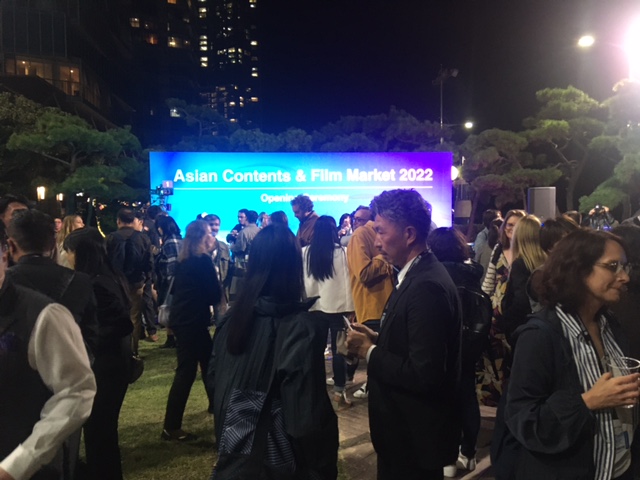
In my daily reports on this blog I reviewed movies I had seen in screenings at the festival, but I also saw other films online and in the Video Library. Here are observations of those movies. Festival section names in parentheses.
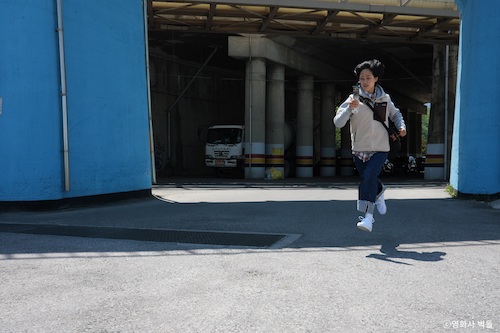
A Wing and a Prayer (Jiseok): This is the first feature I’ve seen by former Hong Sang-soo assistant Lee Kwang-kuk, and while it follows the general Hong template of seemingly aimless conversations that only add up in hindsight, it also has more of a conventional structure. Two female BFFs in their 20s make an impromptu night bus trip to the coastal town of Donghae to watch the sun rise over the sea, only to fall asleep on the beach and miss it. Predictably, the pair bicker and go their separate ways, each making a new friend in the process. Lee trusts his instincts insofar as the resulting action doesn’t go where you might expect it to go, but although I liked the characters and found everything plausible, it didn’t offer enough dramatic substance to make a deep impression, except, that is, for one scene of bullying that really got my blood pressure up. Contrast, or just that Lee really know how to depict cruelty?
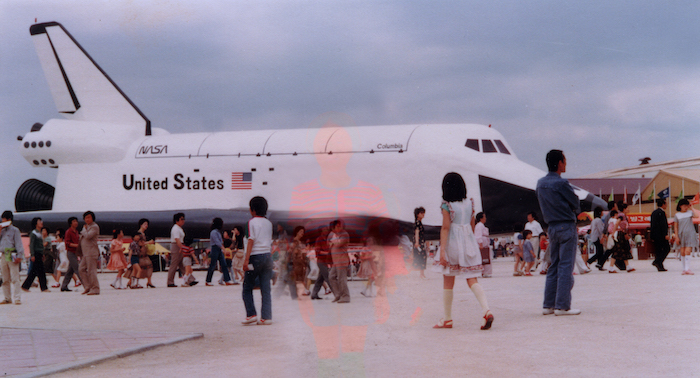
Universe Department Store (Wide Angle: Documentary Showcase): Not so much a documentary as a personal exploration of memory, Wong Tae-woong’s expressionistic film was sparked by the news that a teahouse he’d once frequented had closed because the department store that contained it was being demolished for a redevelopment project. The news revived memories of the Universe Department Story, which stood on the same spot for only three years in the 1980s before the department store with the teahouse was built, but Wong’s recollection of the store (he was in elementary school) are fuzzy to the point where he wondered if it even existed. Soliciting others with memories of the place he finds that most of what he remembered was true, but everyone favors different details—for instance, the “space ship ride” that stood in front of the building seemed to have different functions for different witnesses. Wong also patronizes a hypnotist to better plumb his own brain reserves. In the end, what emerges is a capsule summary of the Korean middle class of that era, but the mystery of the place remains a mystery, if for no other reason than that it’s difficult to believe that there are no records about the store, but Wong does a good job of describing his own feelings about it.
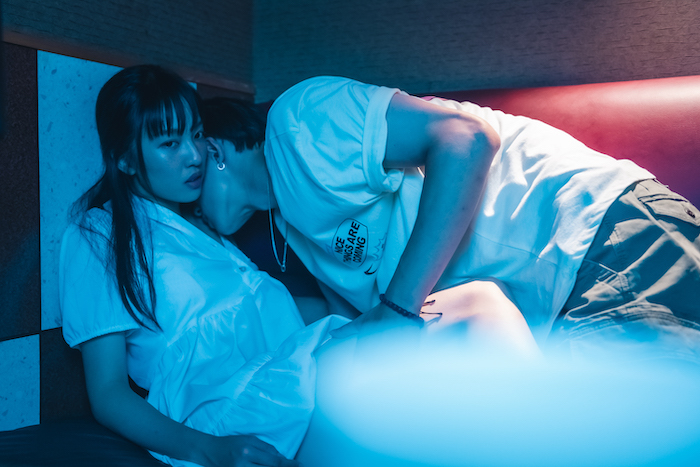
Little Blue (A Window on Asian Cinema): This Taiwanese movie is yet another look at how social media has affected—or, in this case, twisted—young people who seem to have no other outlet for self-expression. Director Lee Yifang conveys it completely through a teenage girl’s awkward and desperate sexual awakening, a risky move that only partially pays off. Xiao Lan is introduced as a model student with a streak of cynicism, especially with regard to friends and acquaintances who are already sexually active. Part of the reason for her attitude is her single mother, a realtor who readily sleeps around, even with clients, though it isn’t apparent in the beginning how much Xiao Lan knows about this. When a popular, somewhat disreputable boy in her class hits on her she eventually gives in and, of course, falls in love, which is not something he’s willing to reciprocate, and as a result she goes off the deep end by sleeping with everyone who swipes her on Tinder (or whatever the dating app they use in Taiwan). Lee depends way too much on coincidence and plot short cuts to make a case. The movie is well made but it seems to describe a situation that could only happen on screen.
Continue reading


 philipbrasor.com