
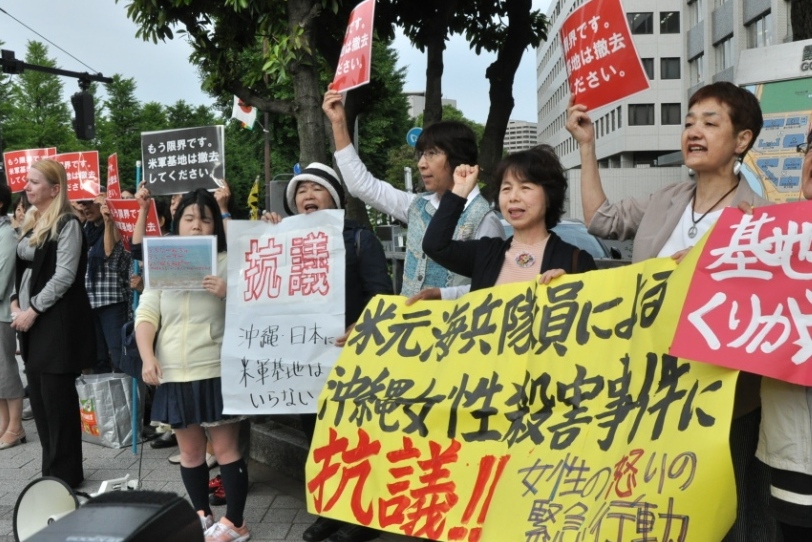
Asahi Shimbun’s regular Koron feature typically asks three experts to contribute short essays on a designated theme. On Aug. 24, the column’s topic was the status of Okinawan women on the 50th anniversary of the prefecture’s reversion to Japanese control after being under U.S. occupation since the end of World War II. Okinawa, which was once a self-contained kingdom, has always been an outlier among Japanese prefectures for various reasons, some of them related to its culture. Consequently, the rest of Japan tends to view Okinawans as being distinct; and, in fact, even Okinawans think this as evidenced by their use of the word “Yamato” when they refer to the rest of Japan. However, the image that most Japanese have of Okinawa is that of a carefree place ideal for sightseeing, what with its tropical climate, and conducive to families with children, since Okinawa’s birthrate is always the highest of all the prefectures.
One of the contributors, Prof. Yoko Uema of the University of the Ryukyus, attempts to dispel this image in her essay, first by pointing out that Okinawa is also perennially the poorest prefecture in Japan and thus would naturally be the most difficult place to raise children. However, prejudices on the main islands prevail and so the reality of children’s and, by extension, women’s lives is not generally known.
As she points out, the reason the birthrate is so high on Okinawa is because birth control, whether utilized before (preventive) or after (abortion) possible conception, is not a facet of everyday life the way it is in the rest of Japan. Another statistic that distinguishes Okinawa is that the average age of women when they give birth for the first time is lower than anywhere else in Japan. And because income levels are also the lowest, not to mention the fact that after-school daycare and child welfare are very difficult to secure, many young mothers cannot afford to raise their children and usually leave such matters to their own mothers or female relatives. In addition, Okinawa has both the highest marriage rate and the highest divorce rate in Japan, as well as the highest portion of residents who remain single their entire lives.
Continue reading





 philipbrasor.com