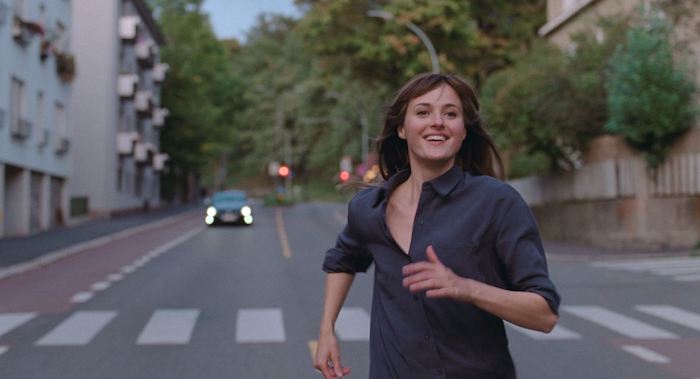
Review: The Worst Person in the World

These days it seems almost counter-intuitive when a male storyteller presumes to make something that takes the purview of a female protagonist. Of course, it wasn’t always that way and shouldn’t be. Some great male artists have given us vivid, credible female characters whose stories were enlightening and edifying. Scandinavians, Bergman and Ibsen immediately come to mind, seem to be better at this sort of thing, so Joachim Trier, a Danish-Norwegian director whose films have covered a wide range of genres and themes, seems at least constitutionally prepared to take on the tale of a young woman who attempts to interrupt her aimless drift in life by anchoring herself to a male partner. The pitfalls are obvious in such a narrative undertaking, and Trier, to his credit, understands this.

In a glib opening montage narrated by a third person, we learn how Julie (Renate Reinsve) has, in the course of her post-secondary school education, moved from pre-med to psychology to photography without really getting much of a handle on any of them, and ends up working in a book shop, which presumably keeps her stimulated intellectually but is really just a port of call while she figures out what she wants. When she hooks up at a party with the older (by about 15 years) Aksel (Anders Danielsen Lie), a former underground comics star famous for his anthropomorphic animal characters’ sexism and crudeness, she endeavors to move in with him, though it seems like yet another way of testing her tolerance of convention. During a weekend spent with Aksel at his parents’ house with friends, all of whom are married with kids, the subject of a long-term relationship comes up amidst the usual connubial dustups, and Julie expresses her disinclination to being a mother, a view informed by her uneasy ties with her divorced parents and which Aksel deems premature, since, as a man with “less time” than her he thinks he has to start a family before it’s too late. This conversation, carefully structured for its evocation of each character’s position, sets the tone for the film in a way that Trier may not have anticipated. From now on, the viewer will evaluate Julie’s choices from her standpoint on the possibility of becoming a mother, and while that is a concern many if not most women have to address, it feels limiting given Julie’s ongoing quest for self-awareness. When she publishes online a provocative essay about sexuality, she’s applauded, especially by Aksel and other male peers, for her frankness and stylistic skills, and you can sense some slight resentment on her part at their patronizing tone.

Inevitably, given her restless temperament, Julie drifts out of her relationship with Aksel, who, by dint of being older seemed resigned to living his life with her, children or no children. She takes up with Eivid (Herbert Nordrum), a barista her own age who is also unmoored—he doesn’t want children either—and coming out of a long-term relationship, but unlike Julie he feels extremely guilty about leaving his former mate. In fact, it is in another glib third-person narrated montage about this process where the titular phrase is evoked (“cheating on her felt like cheating on the planet”). But even if Eivid is very different from Aksel, the quality of Julie’s dissatisfaction with the state of her existence remains unchanged. 

Many have called The Worst Person in the World a romantic comedy, which both shortchanges its peculiar comic charms and underestimates its dramatic thrust. Trier is especially fond of narrative non sequiturs, but the sequences where Julie stops time to rendezvous with Eivid or trips on mushrooms add little cinematic color to the story. And the somewhat maudlin, typical ending indicates that certain ideas about women’s options haven’t changed much since Paul Mazursky allowed Jill Clayburgh to choose bohemian uncertainty over middle class security in An Unmarried Woman. This isn’t to say that Julie’s story should have been told by a woman. She is Trier’s creation and can only be accepted on his terms. 

In Norwegian. Now playing in Tokyo at Bunkamura Le Cinema Shibuya (03-3477-9264), Human Trust Cinema Yurakucho (03-6259-8608), Shinjuku Cinema Qualite (03- 3352-5645)

The Worst Person in the World home page in Japanese

photo (c) 2021 Oslo Pictures-MK Productions-Film I Vast-Snowglobe-B-Reel-Arte France Cinema

Posted in Movies | Leave a comment

Review: Licorice Pizza

The best movies about Los Angeles—Chinatown, The Long Goodbye, Shampoo—were made in the 1970s, even if the times they depicted may have been those of another decade. (And while The Long Goodbye was set in the year it was made, 1973, its hero, Philip Marlowe, was clearly beamed in directly from the 1940s-50s.) Add to this trio Paul Thomas Anderson’s ode to his youth, Licorice Pizza, even though it was made recently. Set in the mid-1970s, mostly in the San Fernando Valley that was the de facto middle class bedroom community of L.A., it has been configured to look as if it was actually made in the 1970s, and is even more meticulous in its period production design than Anderson’s previous 70s Valley jaunt, Boogie Nights. However, the obsessive attention to detail is not a function of Anderson’s nostalgia, but rather an attempt to actually remake that milieu into an idealized version of what he remembers. Genre-wise, Licorice Pizza is a coming-of-age story in which a boy’s crush on an older woman is told the way the viewer would have hoped it turned out. It’s certainly Anderson’s most optimistic work, a pure fantasy that nonetheless feels as if it could have very well happened to someone.

An alternate title could have been A Portrait of the Artist as a Young Con Man. Gary Valentine (Cooper Hoffman) is a soft-bodied 15-year-old high school student living with his single mother (Mary Elizabeth Ellis), who gets him juvenile acting jobs in TV shows and commercials. Gary’s confidence is boundless, but not in the usual annoying way. He knows what he wants, and as the film opens what he wants is Alana Kane (Alana Haim), the 25-year-old assistant to the photographer who has come to Gary’s school to take yearbook photos. For Gary it’s love at first sight. For Alana it’s a flattering acknowledgment of her appeal at a time when she’s still struggling to make sense out of life. The movie charts their relationship, which is passionate in its own way but not physical, over the next year or so, but while Anderson also shows their development away from each other, the complementary frisson is so acute that you can’t imagine them apart. 

The movie is sustained not so much by plot, but by the spirit of adventure that infuses both personalities and which is inseparable from its 70s Valley milieu. Gary, even before he is old enough to graduate high school, moves from one scam to another with the help of his minor celebrity as a kid actor, and Anderson isn’t shy about incorporating real, albeit dead, people in the stories, including unflattering (but hilarious) portraits of Lucille Ball (Christine Ebersole) and Jon Peters (Bradley Cooper, in his most unhinged performance ever). He also includes stand-alone episodes featuring Sean Penn as a drunken, exploitive movie actor-producer and Tom Waits as a lingering, decrepit embodiment of old Hollywood deal-making. Anderson saw the Valley as the proving ground for future movie industry movers and shakers, and while he himself is now part of that community he understands that the modes of self-improvement have not changed substantially since then, but his main vehicle for explaining this is Alana, not Gary, whose ambitions are almost cartoonish. Alana, whose personality and life trajectory is based on that of the woman who plays her, Alana Haim of the rock group Haim, is the self-conscious cognate to Gary’s hustler. While Gary slides slimily from one get-rich-quick scheme to another, Alana, who has to make a living to survive, goes from waitressing to political activism without any ulterior motives. It says something that Anderson uses Haim’s real parents and sisters to play her parents and sisters in the movie. He wasn’t after artifice but rather the recreation of a dynamic that resulted in something admirable. 

Licorice Pizza is certainly Anderson’s loosest, most purely entertaining film, though some viewers may find it a bit too rangey. For sure, he doesn’t gloss over the sexism and racism inherent in the scene he depicts, and some of the characters’ worst impulses are presented as merely funny foibles. But as a love story, it feels exactly right and, yes, nostalgic for anyone who grew up in that era, when social interactions were still dependent on actual personal contact. 

Opens July 1 in Tokyo at Toho Cinemas Chanter Hibiya (050-6868-5001), Toho Cinemas Shinjuku (050-6868-5063), Toho Cinemas Nihonbashi (050-6868-5060), Toho Cinemas Roppongi Hills (050-6868-5024), Shibuya Cine Quinto (03-3477-5905).

Licorice Pizza home page in Japanese

photo (c) 2021 Metro-Goldwyn-Mayer Pictures Inc.

Posted in Movies | Tagged | Leave a comment

Media watch: Putting a lid on the 2020 Tokyo Olympics

(c) 2022 International Olympic Committee

I didn’t see Tokyo 2020 Olympics Side:A, the first half of Naomi Kawase’s official documentary of last year’s games. From talking to others who had seen it, I gathered it contained the athletic footage for which most official Olympic docs are known. The International Olympic Committee obliges hosts to produce these docs as a means of maintaining a visual record of the Games and, as with almost all things Olympic, the IOC itself doesn’t have to pay for it. Usually, they’re pretty boring and no one goes out of their way to see them. In fact, the most famous of them (if we don’t count Leni Reifenstahl’s, which may not have been an official documentary) was the one that Kon Ichikawa directed about the last time the Olympics were held in Tokyo in 1964, mainly because Ichikawa tried to make what many believed was an art film. Like Kawase’s movie, Ichikawa’s chronicled an event that was considered a turning point in the history of the host city. Tokyo 1964 marked Japan’s reentry into the community of nations following its defeat in World War II, and though Ichikawa was careful in carrying out his ecumenical mandate by covering athletes from all over the world, the focus was on the city where it was taking place, and how much it had modernized since its almost total destruction during the war. 

Kawase’s brief is similar but different. Tokyo 2020 was also historically unique but the historical significance was thrust upon it. The games were conducted in the middle of a deadly pandemic that had already caused its postponement for one year, so Kawase rightly figured her movie would have to include how the organizers and others coped with the crisis in order to make sure the games could be pulled off. During the press conference at the Foreign Correspondents Club of Japan following the screening of Tokyo 2020 Olympics Side:B, the second half of the doc, which dealt mostly with the games’ behind-the-scene machinations, Kawase stressed that she wanted to show all sides of the situation, presumably meaning both the side that insisted the games go ahead at any cost and the side who thought it shouldn’t for various reasons—and not all of them related to COVID. Having just sat through the two jam-packed-with-incident hours of Side:B, I found Kawase’s assessment of her accomplishment missing a vital admission. As the official documentarian, she had access—limited to a certain extent, as she said, but access nonetheless—to people directly involved with the games who invariably supported them. On the other hand, the sides that objected to the Olympics—some on principle, others based on circumstances peculiar to these games—could only be accessible through special efforts that no one seemed to have made. Any coverage of these people and their opinions in the film were indirect and incidental: protesters outside the venues clashing with police, individual citizens complaining about the cost. In the end, Side:B couldn’t help  but conclude that the games were a success because almost all of the narrative drama was invested in how much effort was expended to make them happen. Those who objected simply came off as spoilsports.

No one should really expect the tone of the documentary to be otherwise, since it was an “official” record, but Kawase’s self-identified even-handedness felt like a dodge. The film was candid about the internal and existential problems that plagued the effort before and during the games, including the summer heat worries, the loss of volunteers after the postponement due to anxiety over infections, the decision to not allow general spectators into the venues, the issues that led to some staff involved in the opening and closing ceremonies quitting or apologizing for past statements, and the verbal gaffes that lead to Yoshiro Mori’s resignation as president of the organizing committee, but these problems were generally smoothed over through the supporters’ tireless dedication to making it all work. Mori’s sexist remarks were recreated verbatim, but qualified by comments from colleagues and other insiders who mostly commisserated with what he was going through. Had I not lived through these events on a daily news basis, I would have come away from the movie with the idea that Mori was just a guy whose heart was in the right place but was bullied by media who picked apart his old-fashioned way of thinking. And while I did note that someone complained about Dentsu, the advertising goliath, which essentially ran the whole operation for a presumably huge payday, very little was said about the ballooning costs except by protesters who were rightfully resentful they were being forced to pay for it but whose position was, according to the direction of the movie, compromised by an overly emotional attitude. In one uncomfortable scene, IOC head Thomas Bach is confronted by some elderly anti-Olympic demonstrators and he dismisses them with a sharp, clever rebuke. Elsewhere, protesters were characterized as an incoherent rabble. No attempt is made to understand why these people didn’t want the Olympics except the COVID angle, and since it was reported afterwards that the feared clusters of infections didn’t materialize, those objections seemed groundless.

Continue reading
Posted in Media | Tagged | 1 Comment

Review: My Brothers and I

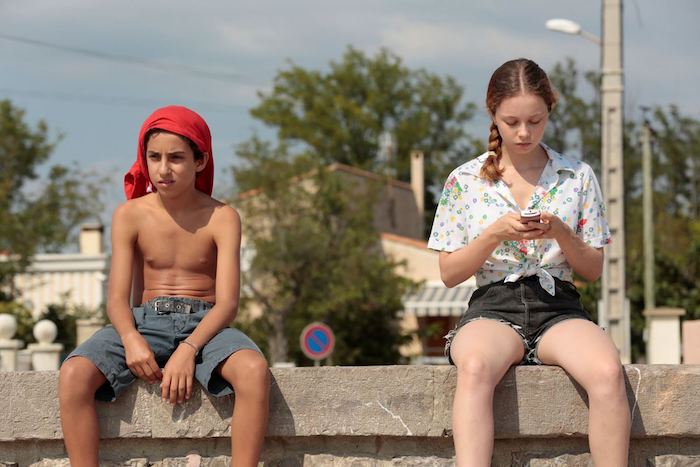
A coming-of-age story that feels cobbled together from countless other coming-of-age stories, Yohan Manca’s film nevertheless has an appealingly relentless momentum that keeps things fresh. Set in a second-rate resort seaside community in the south of France, the film’s titular siblings number four in all, with the “I” being the youngest, Nour (Mael Rouin Berrandou), who at 14 seems at first destined for a life of cynical disappointment. With their father dead and mother in a coma, the brothers are on their own and each one gets by as best he can, so to speak. The eldest, Abel (Dali Bensallah), has to be tough in keeping his unruly brothers in line, while Mo (Sofian Khammes), an occasional male prostitute who solicits both teams, is happy-go-lucky to a fault, drug dealer Hedi (Moncef Farfar) adding the requisite violence as the hot-headed misanthrope and screwup. Nour would just as soon quit school and become a pizza delivery person, but this summer he’s been dragooned into “community service” to paint his school and while doing so stumbles upon a singing class that uses Pavarotti doing Donizetti as a teaching resource, and since his mother loved Pavarotti he’s intrigued.

If you’re expecting another variation on Billy Elliot you’ll be either disappointed or pleasantly surprised. Though Nour joins the class and quickly proves to the opera-loving teacher, Sarah (Judith Chemla), that he has skills, real life never really lets him make good on the praise. The brothers live on the poor side of town where Hedi is constantly in the sights of the police and social services keep showing up to try and take their mother to a hospital, though the boys insist they can take care of her on their own since the mother’s wish was to die at home. Manca tries to balance the hardship with moments of light comedy that often fall flat (Mo’s attempted seduction of a middle aged Dutch tourist is probably not meant to be this revolting), but in Nour he’s hit on a protagonist that is not only endearing but realistic. His love of music may save him to a certain extent, but he doesn’t seem to entertain the possibility that he will be Pavarotti himself someday; which isn’t to say it couldn’t happen, but rather that such a development is outside Manca’s narrative purview. He keeps matters on the ground and local, and that makes all the difference. 

In French. Now playing in Tokyo at Cine Switch Ginza (03-3561-0707), Shinjuku Musashinokan (03-3354-5670).

My Brothers and I home page in Japanese

photo (c) 2021 – Single Man Productions – Ad Vitam – JM Films

Posted in Movies | Leave a comment

Review: Luzzu

The theme of Alex Camilleri’s debut feature is the loss of a traditional trade in the face of the inevitable domination of neoliberalism, not to mention time itself. As it takes place on the island of Malta, the movie offers at least a side order of cultural education, since Malta doesn’t produce many films, and there’s a lot to learn about the fishing trade on the island, even if things tend to be tough all over in the same way. Camilleri follows neo-realist practices, perhaps by necessity, by using non-professional actors and a documentary style of shooting, but the melodrama is scripted and sometimes overwhelms his basic theme rather than reinforce it.

The fisherman protagonist Jesmark (Jesmark Scicluna) has inherited a traditional wooden fishing boat, a luzzu, from his father who, in turn, inherited it from his father. The boat requires extensive repairs, not to mention an elaborately colorful paint job just because that is the tradition. Jesmark is strictly working class, though his wife, Denise (Michela Farrugia), is from a more middle class family, which doesn’t entirely approve of the marriage, especially when EU rules and other economic realities make it difficult for Jesmark to sell his wares. When Denise starts soliciting financial help from her mother, Jesmark’s pride is damaged. The easiest route to solvency, and one that Denise seems to support, is for Jesmark to decommission the boat that has supported his family for generations and give up his fishing license in exchange for a hefty sum of money from the EU, which is trying to cut back on Mediterranean fishing operations due to pressure from both international environmental groups and corporate fishing interests. Instead, Jesmark decides to carry on with fishing, but instead of going the legal route he catches forbidden fish and sells them on the black market without telling Denise.

The drama that blossoms in the second half in contrast to the fairly exposition-heavy first half is informed by added economic difficulties as Jesmark realizes that utilizing the black market is even more difficult than fishing legally under straitened circumstances. To his credit, Camilleri doesn’t demonize the black market operatives, most of whom are just as desperate as Jesmark but have different people to answer to. Moreover, these operatives are wiser about the future of fishing in Malta, which they know is on its last legs, and not only due to overfishing. Climate change is also altering catch sizes and quality. The point is that Jesmark has naively gotten himself into a situation that is worse than what he was going through before, and all for the sake of a tradition he’s too blind to recognize as being regressive.

Though Camilleri could have made his point more effectively with a straight-up documentary, he likely thinks a dramatic retelling is more appreciated, and in many ways it is, but reality is reality and there’s nothing much he can describe here that isn’t shot through with over-determined doom. 

In Maltese and English. Now playing in Tokyo at Shinjuku Musashinokan (03-3354-5670).

Luzzu home page in Japanese

photo (c) 2021 Luzzu Ltd.

Posted in Movies | Leave a comment

Review: The Lost City

Whether one loves or hates Brad Pitt, it’s impossible to deny that the simple fact that he has been cast in a movie means something for that movie, even if, as in this spotty comedy-adventure film, he’s a supporting actor who leaves the proceedings relatively early. Frankly, I missed him once he was gone, since his Navy SEAL-cum-meditation advisor adds just the right touch of Pythonesque absurdity to a script that wears its ridiculousness like a badge of honor but can’t quite generate the yucks that would justify that belief in itself. Pitt obviously took the role as a lark and has a great time with it, but half the fun is in the knowledge that he has no skin in the game.

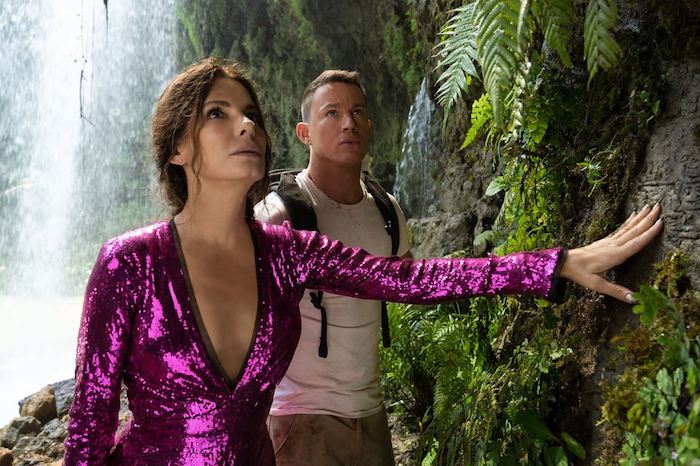
Sandra Bullock and Channing Tatum are the stars who have to do the heavy lifting, and while both are experienced and skilled comedians, they require sturdier material than this to succeed. Bullock plays romance novelist Loretta Sage, who has receded from the public eye after the death of her husband and is suffering from writer’s block. Tatum is the hunky but dim model Alan, who often graces the jacket covers of her books and accompanies her on her tours to provide the kind of excitement that Loretta can’t in person. Consequently, Alan is more of a star than the author is, especially among Loretta’s overwhelmingly middle aged female fans, a facet of their working relationship that has always rubbed her the wrong way. Pitt’s character, Jack, is attached to Alan and after Loretta is kidnapped and brought to a tropical island, it’s Jack who provides the tongue-in-cheek earnest action moves. 

Essentially, the rest of the movie is Tatum trying to live up to this example after Loretta escapes the clutches of the billionaire Fairfax (Daniel Radcliffe, also having a really good time with a character whose eccentricities become quickly tiresome), who needs Loretta to help him find a lost city on the island that contains a treasure. As they try to find a way to escape the island, Loretta and Alan bond in ways that are both predictable and pedestrian, something that the directors, Aaron and Adam Nee, seem to realize since they populate the margins of the film with goofy characters who have no real direct bearing on the central characters, such as the pilot (Oscar Nunez) with a goat sidekick. There is fun to be had here if you are in the right mood, but once Pitt exited I kept wishing he would return somehow.

Now playing in Tokyo at Toho Cinemas Nihonbashi (050-6868-5060), Toho Cinemas Hibiya (050-6868-5068), Shinjuku Piccadilly (050-6861-3011), Toho Cinemas Shinjuku (050-6868-5063), Toho Cinemas Roppongi Hills (050-6868-5024).

The Lost City home page in Japanese

photo (c) 2022 Paramount Pictures

Posted in Movies | Tagged , , | Leave a comment

Review: Broker

It’s understandable why, following his biggest international hit, Shoplifters, which won the Palme d’Or at Cannes in 2018, Hirokazu Kore-eda decided to make two movies outside of Japan. Shoplifters was, relatively speaking, a critical and commercial hit in his native country, but it also drew a cold reaction from certain corners for implying that there were poor people in Japan who resorted to petty crime in order to survive and that so-called traditional Japanese family structures don’t guarantee social cohesion. After going to France and making the surprisingly effective The Truth, Kore-eda made Broker in South Korea, a country that, despite its storied and somewhat justifiable enmity toward Japan, has always appreciated his work. Several years ago the Busan International Film Festival honored him with its Asia Filmmaker of the Year award. Broker centers on baby boxes—compartments installed at hospitals or churches where desperate mothers anonymously deposit newborns they don’t think they can raise—and was originally conceived for Japan, where there is at least one baby box in operation, but after talking to Korean actor Song Kang-ho Kore-eda decided to transplant the story to Korea. It’s obvious that Kore-eda, who has made his mark by exploring all the ramifications of “family,” wants to say something about society’s role in defining the bond between parent and child, and Korean cinema has a more mature and varied attitude toward socially relevant themes and is not afraid to challenge accepted readings of these themes. Except for Kore-eda and a handful of others, Japanese directors still have an awkward time tackling social issues. Their movies are either too squeamish or too earnest.

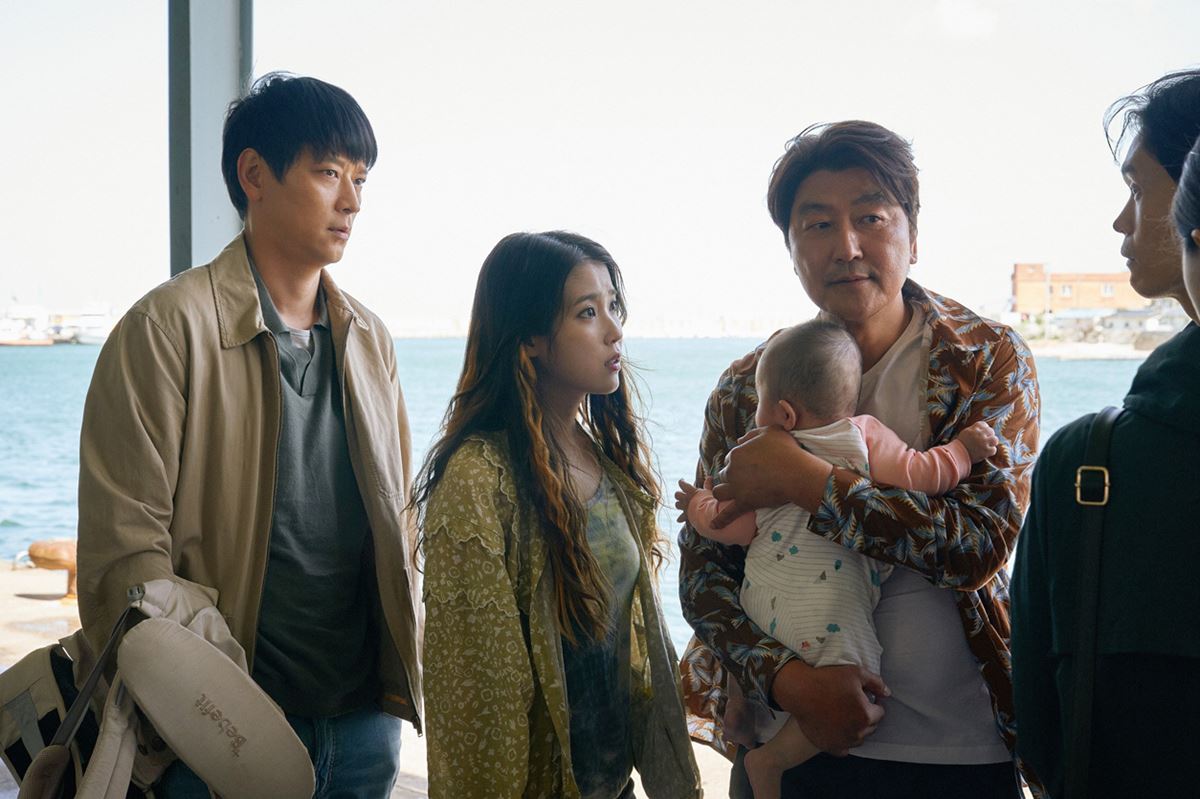
However, the kind of nuanced complexity Kore-eda brought to the matter of margin dwellers in Shoplifters has been diluted in Broker, which operates in a world that feels more like a movie. This may well be Kore-eda’s most plot-driven film. Song plays Sang-hyun, a man who steals infants left in a Seoul church’s baby box and then finds parents who have become frustrated with all the red tape and veiled guilt that comes with legal adoption. Money is his aim, since his dry cleaning business is heavily in debt to loan sharks. His partner in this criminal endeavor is Dong-soo (Gang Dong-won), who works at the church and himself grew up in an orphanage. He knows firsthand how the system treats unwanted children, but after he and Sang-hyun snatch a baby from the box and erase the relevant security camera footage, the baby’s mother, So-young (Lee Ji-eun), has second thoughts and returns to the church for a tour of their daycare facilities. She immediately notices her baby isn’t there and, realizing what happened, confronts Dong-soo and Sang-hyun, who try to convince her that what they are doing will provide a better family for the baby, and though she doesn’t entirely buy their story she accedes, with the condition that she accompany them as they interview prospective parents. A road trip ensues as the quartet, along with a stowaway kid from the facility where Dong-soo grew up, make their way south to Busan, Sang-hyun’s hometown, where his estranged daughter lives. You can envision the Power Point presentation outlining how all these refugees from conventional families recombine into an alternate version.

But there’s even more. Two police officers, Su-jin (Bae Doona) and Eun-joo (Lee Joo-young), have been staking out the baby box and know that Sang-hyun and Dong-soo have taken the child. They decide to follow them on their road trip in order to witness any money changing hands so they can arrest the pair for trafficking. Predictably, as the journey progresses and the party gets bigger and the stakes more complex, the two cops start wondering about what they are observing, and just as everyone in Sang-hyun’s beat-up delivery van has a tragedy in their background, the two police officers are carrying their own familial baggage that makes their mission that much more emotionally fraught. There’s even a murder investigation meticulously woven into the fabric of the story. 

Broker is a typically well-executed mainstream, middle-brow Korean film that successfully elucidates a social issue in an entertaining way, but unlike The Truth, where Kore-eda faithfully adapted his pet themes to a French milieu while maintaining his unique sensibility, Broker could have been made by any world-class director with a flair for contrivance.

In Korean. Now playing in Tokyo at Toho Cinemas Hibiya (050-6868-5068), Toho Cinemas Shinjuku (050-6868-5063), Shinjuku Wald 9 (03-5369-4955), Toho Cinemas Roppongi Hills (050-6868-5024), Toho Cinemas Nihonbashi (050-6868-5060), Shibuya White Cine Quinto (03-6712-7225).

Broker home page in Japanese

photo (c) 2022 Zip Cinema & CJ ENM Co., Ltd.

Posted in Movies | Tagged , , | Leave a comment

Review: Introduction/In Front of Your Face

Introduction

Hong Sang-soo continues his relentless pace without seeming to break a sweat, and here we have two new features opening the same day in Japan, both manageably short enough to qualify as a succinct and stimulating double feature. Hong’s films are so much alike, thematically, stylistically, and formally, that some may find the distinctions between these two academic. One is in B&W, the other in color; one has a strict tripartite structure, the other a linear development; one is minimalist to the point of almost non-existence, while the other explores a weighty existential situation–or maybe it doesn’t.

Introduction, the shorter and less effective of the two, is one of Hong’s exercises in narrative indirection. The first part takes place in an acupuncturist’s office, as the doctor (Kim Young-ho) treats a famous actor (Ki Joo-bong) for a chronic problem while a young man (Shin Seok-ho) sits in the waiting room for what feels like a very long time. The relationships of these three, as well as the young man’s with the receptionist, are teased out until the end of the segment, when the most important one is finally revealed. The second segment focuses on a young woman (Park Mi-so) who is moving to Berlin to study with help from her mother’s friend (Kim Min-hee), a resident of the city, but her discussions with the friend are interrupted when her boyfriend, who turns out to be the young man waiting in the first segment, shows up unexpectedly because he says he misses her. This kind of awkward situation is something Hong is particularly good at, though the viewer’s patience may be strained by the odd dynamic that develops as the lovers try to make sense of their relationship. As in the first section, the young man acts as if he’s being ignored and is hurt by his girlfriend’s move, which he takes personally. The young man shows up again in the third section, which seems to be taking place some years later at a hotel where his mother (Cho Yun-hee) and the actor from the first section are lecturing him, sometimes violently, about his lack of direction in life. Hong may seem to be challenging the viewer to fill in the plot lacunae between the three sections, but each one is filled with false starts and often hilarious non sequiturs so taking the “story” at face value would probably be a mistake. The young man’s rudderless life is more indicated than shown, but that doesn’t make it less compelling. It does, however, make it less believable. It’s as if Hong were challenging himself to say something interesting about a patently boring, annoying character, but he’s done that before, and better.

In Front of Your Face

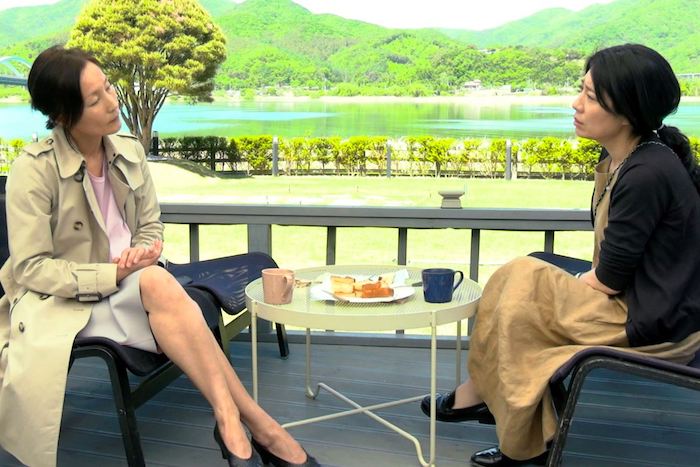
As slyly suggested in the title, the indirection in In Front of Your Face is more cinematically conventional. First of all it takes almost fiften minutes before the viewer realizes that the protagonist, San-gok (Lee Hye-young), is a famous actress who has spent the last several years of her life in the U.S., to which she followed a man she has now left. Presently, temporarily, she is sleeping on the couch in the Seoul high-rise apartment of her sister, Jeon-gok (Cho Yun-hee), with whom she spends a leisurely day drinking coffee in a shop with a breathtaking view, strolling through a park where she is recognized by some young fans, revisiting the house where she grew up, and meeting her nephew (Shin Seok-ho, yes the actors play out the same familial relationship as in Introduction), who runs a successful restaurant. The conversation is quotidian and less voluble than it is in most Hong films. San-gok seems to rue anything that smacks of small talk. Late in the afternoon, however, she meets a movie director (Kwon Hae-hyo) who wants her to be in his new film, which he will write just for her, thus making it clear that she has been out of the game for a while. For once in a Hong film, the dialogue is clearly expository, as the director says he knows her work “intimately” and, in fact, has always had a crush on her. San-gok blithely asks him if he had been planning on sleeping with her, and he frankly replies that, yes, it had crossed his mind. Then San-gok tells him something that changes not only the whole mood, but the whole movie. 

In a sense, the viewer never quite recovers from this revelation, though the movie continues on as if nothing has happened, and I, for one, really wondered if what I was understanding was actually what was going on. In many ways, In Front of Your Face may be Hong’s most emotionally affecting film since it shows how phony cinematic melodrama is when played out in situations that are closer to how we live day to day. Then again, he could be taking the piss. I saw it several weeks ago, and I’m still wondering what hit me.

In Korean. Both films open June 24 in Tokyo at Human Trust Cinema Yurakucho (03-6259-8608), Shinjuku Cinema Qualite (03-3352-5645).  

Introduction and In Front of Your Face home page in Japanese

photos (c) 2020 & (c) 2021 Jeonwonsa Film Co.  

Posted in Movies | Tagged | Leave a comment

Review: 100 Years and Hope

The release of this documentary about the Japanese Communist Party, which, as the title indicates, has been around for a century, is meant to coincide with the Upper House election taking place July 15, and while it does a fair job of presenting the JCP platform its main thrust is conveying a political sensibility that voters may not be familiar with. JCP needs this kind of publicity, since its very name alone is probably its greatest liability. Both the ruling coalition and fellow opposition parties can easily demonize the JCP because they are communists, though they abandoned the aim of world revolution many years ago, and no longer work toward the demise of the emperor system. However, they do see themselves as the party of the people in that they espouse social and economic policies designed to lift those at the bottom, and are strictly anti-militaristic. As one woman explains, she joined the party because her mother has always had a hard time getting by and the JCP was the only party in Japan that understood her mother’s situation. Nevertheless, once she joined and became involved in party activities her mother lamented, “I didn’t think I raised you to be a red.”

The movie’s loose structure focuses on a few individuals and the workings of the party organ, Akahata, which is a legitimate newspaper in that it has an investigative staff that often digs up stories the mainstream press doesn’t. The purpose, of course, is to provide fodder for party members who hold legislative office, whether at the local or the national level. Oddly, the movie doesn’t dwell on the fact that Akahata is almost the sole revenue-producing source for the JCP, which doesn’t take political donations from organizations or even the usual political susbsidies from the government. Perhaps they assume everyone already knows this, but it seems more like a case of refusing to boast about a policy they think every political party should follow.

Director Takashi Nishihara follows two election campaigns. The first is that of Yuichi Ikegawa, a young member of the Tokyo assembly running for reelection, mainly on a platform advocating that “students are citizens.” Though the casual viewer may find his focus on high school students being unfairly punished for their hairstyles rather trivial, Nishihara gets a lot of thematic mileage out of the issue, as it points up the JCP’s insistence that common sense should rule politics. When school officials are asked why a certain haircut is deemed “dangerous,” they can’t really answer. It’s just their feeling. Ikegawa wins, but the other candidate profiled, Saori Ikeuchi, who is running for a Lower House seat in Tokyo, isn’t as fortunate. Ikeuchi’s brief is recognition of rights for women and sexual minorities. She runs a web radio program with the provocative title, “Feminists are Communists,” and attracts a passionate following of mostly young women whose reaction to her defeat is quite devastating. Ikeuchi and Ikegawa were obviously chosen as subjects to highlight JCP’s self-determined image as a party of young people and women, two demographics that traditional Japanese politics has ignored. (The fact that Ikegawa has four kids is probably his strongest claim as someone who deserves to be listened to.) The JCP’s agenda is solidly liberal-progressive, even if some of the planks, like their anti-Olympics stance, seem reflexively so. But the point is that the demonization that has always kept the party down is at the service of a status quo which shuts out a good portion of the Japanese public. The movie tries to show what the JCP stands for, though it’s so low-key in spots you may wonder how much their heart is really into it. Some will call 100 Years and Hope propaganda. If only it strove for that kind of stark effect.

In Japanese. Now playing in Tokyo at Shibuya Eurospace (03-3461-0211).

100 Years and Hope home page in Japanese

photo (c) ML9

Posted in Movies | Tagged | Leave a comment

Media watch: You’re not in Kuroda’s league. You’re not even on the same planet

Japan’s weekly magazines and tabloids may not be bastions of journalistic integrity, but you can definitely count on them to stick it to the elites, especially those who toil in the public sector. On June 6, Bank of Japan Governor Haruhiko Kuroda, who controls the country’s money supply, commented during a lecture on the inflation that has taken over the world this summer. Unlike central banks in other countries, the BOJ has decided not to increase interest rates in order to counter price rises, and he dismissed people’s concerns by saying that Japanese households were capable of “absorbing these price increases.” Though there is apparently some academic-derived statistic used in the BOJ to chart “family-to-price-index tolerance,” the comment caused quite a stir in the media, especially in light of another remark Kuroda made several days earlier during an Upper House budget committee meeting. In response to a question of how he personally viewed these price increases, he admitted that he has had the experience of actually going to a supermarket and purchasing something, “but basically that’s my wife’s job.”

Later he apologized for both comments without denying that they reflected his thinking, thus proving, according to the weekly Josei Jishin, that he doesn’t really care about the Japanese public’s pain. The magazine wanted to know how he turned into such a cold fish, a somewhat academic question given the notion that, while the BOJ is, structurally, an independent entity, the government has indicated that it is very much a member of the team, so to speak, and thus Kuroda could be seen as one of the old boys in the ruling Liberal Democratic Party who thinks they’ve been charged by God to run Japan forever. 

But, in fact, he’s not a member of the team. He’s so much more. According to Josei Jishin, Kuroda was born in 1944, the oldest of three children, to an officer in the coast guard, who moved around a lot to different port towns because of his job. When Kuroda was in 5th grade the family moved permanently to Setagaya Ward in Tokyo. In interviews, his sister has described him as a “calm” child who was not much into sports but good in school. A voracious reader, he allegedly read all 10,000 volumes in his local library. Consequently, he was able to get into a prestigious Tokyo high school whose students could often count on getting accepted to the University of Tokyo, and, in fact, he passed the entrance exam on his first try in 1963.

Continue reading
Posted in Media | Tagged | Leave a comment