Reviews: Annette and Titane

If Cannes is, as its organizers claim, the greatest film festival in the world, it’s probably because the French film industry dutifully treats it as such. In fact, it’s impossible to distinguish the French film industry from the Cannes sensibility—just observe how the relationship is simultaneously honored and skewered throughout the French Netflix comedy Call My Agent. Consequently, you can get a good idea of the business’s self-importance by observing which French films qualify for prime exhibition. Last year’s partial return to normalcy, i.e., in-person audiences, was marked with an opening film by a director, Leos Carax, who puts out only one film a decade, an output that automatically attracts attention, especially given Carax’s reputation as being a creator of sui generis, confounding works. As it happened, he walked away with the director’s prize, even though the movie itself mostly perplexed people who were, by dint of where it was being shown, pre-disposed to appreciate it, if not necessarily like it.

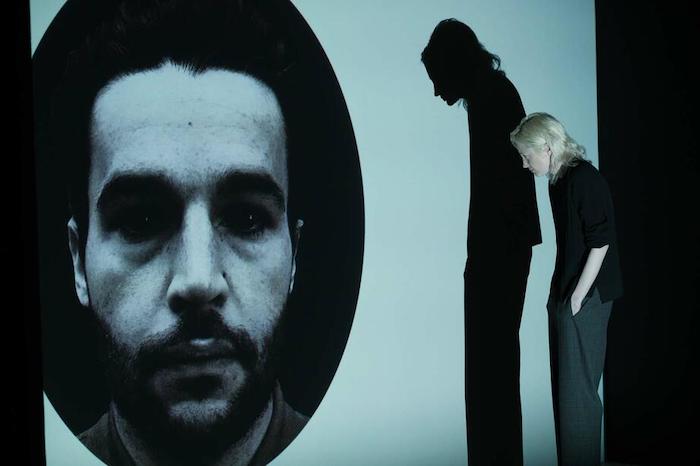
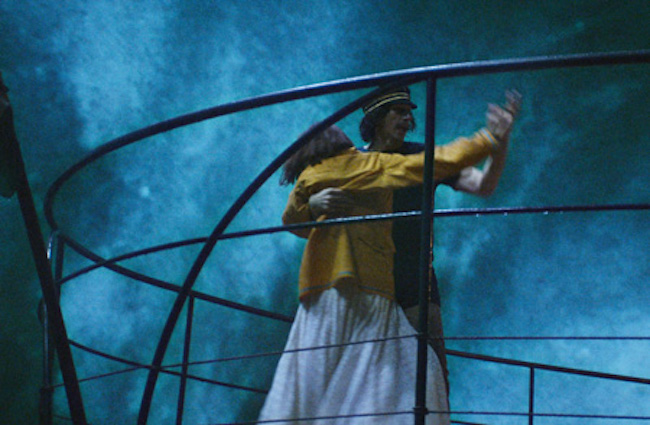
The fact that Annette is Carax’s first movie in English is less momentous than that it is a musical whose book and songs were written by the American brothers Russell and Ron Mael, better known as the rock band Sparks, who have been around screwing with people’s predilections since the early 1970s. Annette is a meta-film in that the music is often used as a comment on itself and the audience is constantly reminded that everyone on screen knows they’re out there. Genre-wise, it’s a romantic tragedy focusing on the marriage of two people who have similar vocations but are otherwise completely wrong for each other. Henry McHenry (Adam Driver) is a confrontational stand-up comedian, though technically he’s more of a monologuist with a chip on his shoulder: he struts the stage in his underwear and a hooded, open bathrobe as if looking for someone to box, insulting his audience or, at least, the idea of an audience that would deign pay money to see him. Naturally, he is a success, at least for a while. His better half is an opera singer, Ann Defrasnoux (Marion Cotillard), who sees her artistic mission as “saving” her listeners. Together, they have a child, the titular girl, who mocks her parents, especially her father, by simply existing. How could two people so obviously unsuited to connubial cohabitation produce and raise an offspring, which is probably why Annette is depicted as a literal puppet.

The above precis, however, is misleading in that the story as envisioned by the Maels and realized by Carax rarely follows anything like a line of development, and most of what’s afffecting about the film is invested in stylized tableaux and production numbers. In that sense the songs work exceptionally well because we can enjoy them as songs rather than as devices to advance the plot or feed into a theme. As the setting is Los Angeles, the Maels’ home town, and not Paris, this feeling of displacement is acute. It’s definitely a Carax film, and he seems to have no proper affinity for the city. It could be taking place anywhere and, thus, nowhere. So as the tragedy takes hold it fails to make an impression, and the only thing that lingers in the memory is Henry’s forceful personality, which is alternately terrifying and endearing. Annette is a hodgepodge of fascinating ideas that don’t add up to anything coherent. I wish I wanted to see it again, but I don’t.

Equally frustrating is the movie that won the Palme D’or at Cannes, Titane. Purposely provocative whereas Annette was pointlessly challenging, the movie was written and directed by Julia Ducournau, whose previous feature, Raw, was a slyly comic take on the vampire genre set in an impossibly competitive veterinary college. Though Titane doesn’t lack for humor, its shocks are all there on the surface, exerting much less power over the viewer’s imagination than Raw did. 

Certainly, the plot is just plain pulp nonsense. Alexia (Agathe Rousselle), who has a metal plate in her head due to a horrible car accident she survived as a child, is a model-dancer in an automobile showroom who likes to get it on, literally, with the merchandise after hours. Ducournau doesn’t bother explaining the biology or, for that matter, the mechanics behind this interaction, but in any case Alexia’s sexual penchant for chrome results in her becoming pregnant with…something. In any case, the nature of her work, which is creating sexual tensions between potential customers and the motorized wares she pleasures, often stimulates those customers in more conventional ways, and one evening she murders a man who stalks her after she leaves work. As in Raw, once this kind of blood lust is activated it becomes uncontrollable, and Alexia embarks on an indiscriminate killing spree that’s as bloody as it is impossible to fathom. Sought by the police, she goes through an equally repulsive physical self-transformation and tries to pass herself off as a young man who has been missing for a number of years in order to reinvent herself. Ridiculously, Vincent (Vincent Lindon), the father of this boy, believes the impersonation and takes Alexia under his wing as his own flesh and blood and whatever. At that point, the story enters the realm of family melodrama, and, thanks almost entirely to Lindon’s performance, often works by the standards of family melodrama. By the time Alexia is about to deliver her baby, Vincent is there for her, and the child. 

The entire appeal of Titane is its hallucinogenic persistence. Ducournau just keeps throwing weird ideas at the screen, hoping that some of them will stick, but as with Annette, what remains in the mind is isolated grotesqueries: Alexia leaking motor oil from various orifices, her brain peaking out from an opening above her ear, Vincent’s obsessive injections of steroids, which create their own kind of mechanized physique. The violence, though exceedingly gory, is so stylized as to be unreal, except for the scene where Alexia transforms her face by propelling the irresistible force of her nose toward the immovable object of a rest room sink. In moments like that, body horror doesn’t get any more tactile. 

Annette opens April 1 in Tokyo at Shibuya Euro Space (03-3461-0211), Kadokawa Cinema Yurakucho (03-6268-0015), Shinjuku Piccadilly (050-6861-3011).

Annette home page in Japanese

Annette photo (c) 2020CG Cinema Internationale/Theo Films/Tribus P Films International/Arte France Cinema/UGC Images/Detailfilm/Eurospace/Scope Pictures/Wrong Men/RTBF/Piano

Titane, in French, opens April 1 in Tokyo at Shinjuku Wald 9 (03-5369-4955), Human Trust Cinema Yurakucho (03-6259-8608), Shibuya Cine Quinto (03-3477-5905).

Titane home page in Japanese

Titane photo (c) Kazak Productions-Frakas Productions-Arte France Cinema-VOO 2020

Posted in Movies | Tagged , , , | Leave a comment

Review: Nightmare Alley

The Hollywood melodramas of the late 40s and early 50s had a discomfiting story-telling quality that seems exclusive to that particular era, meaning right after a war that many deemed “good” but which nevertheless haunted those who had seen it up close. Though we tend to associate this quality with the genre dubbed “noir,” it really permeated almost every script at the time that wasn’t a comedy. As a child I would watch these movies on TV and often became truly disgusted with the human behavior on display. It was much different than my reaction to prewar melodramas, which tended to sympathize with marginalized characters regardless of any extralegal activities they carried out, probably because of the Depression, which turned almost everyone into a victim of some kind. 

Gullermo del Toro is obviously looking to recreate this disgust with Nightmare Alley, a remake of a 1947 melodrama that I haven’t seen but which I imagine delivered the queasiness very effectively. If del Toro’s version doesn’t make the same kind of impression, I suppose you could chalk it up to our 21st century jaded sensibility, not to mention a heightened degree of media literacy that allows us to evaluate texts as we absorb their stories. In any case, the main feeling I got while watching his version of Nightmare Alley wasn’t disgust at the antics on the screen but an impatience with the plot and characters, none of which were credible, and while we don’t demand movies to be realistic—for noirs, in particular, we demand the opposite—capable craft and attention to dramatic detail are necessary to make a fictional universe compelling, and the craft on display, while admirable, is only in the service of surfaces.

The story is a corker. Sometime in the 40s, a drifter named Stanton Carlisle (Bradley Cooper) gets hired as a laborer for a traveling carnival, and over time ingratiates himself with the troupe’s resident mentalist, Zeena (Toni Collette), learning the tricks of the trade through her retired, alcoholic husband, Pete (David Strathairn), plainly showing how Carlisle masters the psychological sleight-of-hand that’s vital to the illusion of claivoyance—more specifically, talking to dead people. After Pete dies under suspicious circumstances, Carlisle leaves the carnival with another, younger performer, Molly (Rooney Mara), who eventually becomes his assistant as he embarks on a successful career as a solo mentalist. However, being an in-demand entertainer isn’t enough, and when a glamorous psychologist, Dr. Ritter (Cate Blanchett), tries to expose his act and is foiled by Carlisle’s ingenuity, she offers to help him scam a millionaire (Richard Jenkins), whom Carlisle helps to communicate with his dead son, the aim being to make a killing off the millionaire. When this scheme is successful, the millionaire offers to introduce Carlisle to another rich individual who might require his services, and, working with Dr. Ritter again, the pair start a romantic relationship that seals Carlisle’s doom.

Since tragedy is built into these kinds of melodramas, the shock precipitated by the action has to be leveraged by the viewer’s identification with the protagonist, and Carlisle isn’t flamboyant enough in his expressiveness to find a purchase on our sympathies. The movie, in fact, has too many characters competing for the viewer’s emotional attention. Zeena and Molly essentially cancel each other out as love foils for Carlisle, and Dr. Ritter, as portrayed by Blanchett, is a stylized femme fatale whose personality is only as deep as her flawless complexion and immaculate coiffure. Most egregiously, the film’s thematic lynchpin, carnival owner Clem (Willem Dafoe), is such a cartoonish distillation of opportunistic evil that the movie’s implied moral lessons never have a chance to engage our understanding. In the end, I was neither disgusted by the behavior on the screen nor particularly moved by it. Just puzzled. 

Now playing in Tokyo at Toho Cinemas Hibiya (050-6868-5068), Toho Cinemas Nihonbashi (050-6868-5060), Toho Cinemas Roppongi Hills (050-6868-5024), Toho Cinemas Shinjuku (050-6868-5063), Shinjuku Wald 9 (03-5369-4955), Shinjuku Piccadilly (050-6861-3011), Toho Cinemas Shibuya (050-6868-5002).

Nightmare Alley home page in Japanese

photo (c) 2021 20th Century Studios

Posted in Movies | Tagged , , , , | Leave a comment

Review: Belfast

Kenneth Branagh’s semi-autobiographical feature isn’t the first movie to depict an historical tragedy through the filter of heartwarming nostalgia, but it definitely feels as if it sets out to be the standard for such depictions. Branagh’s avatar is Buddy (Jude Hill), a 9-year-old boy in short pants living his best life in 1969 Belfast just as the infamous Troubles descended on the city. In the opening scene, Buddy is playacting as some sort of medieval knight in the streets just as a fight breaks out between Catholic residents of the street where Buddy lives and a marauding band of Protestants who demand the Catholics vacate the neighborhood. Branagh skillfully juxtaposes the everyday “business” of a working class community with the intruding violence of interlopers to the point where the two almost seem complementary. Buddy’s playful antics only add to the dissonance.

Buddy’s family is Protestant, and thus Branagh has to present their even-handedness as citizens—they are proud of their heritage but are on good terms with their Catholic neighbors and resent the pressure to align with their tribe—without falling into the trap of seeming as if he’s working from hindsight. And though he manages to pull it off during most of the development, he overcompensates for the family’s good intentions by making all the members, except for Buddy, somewhat generic in niceness. Buddy’s Pa (Jamie Dornan), a tradesman whose main venue for work is booming England, not Northern Ireland, fends off the local Protestant thugs with boilerplate professions of why-can’t-we-all-get-along, but since he’s mostly “over there” working, it’s up to Ma (Caitriona Balfe) to make sure Buddy and his older brother, Will (Lewise McAskie), are not pulled into the conflict. And that proves to be more work than she’s capable of, not so much because the boys are susceptible to the hate-mongering around them, but because they’re boys whose outlook is still governed more by momentary impulses than by intellect. Consequently, much of the Buddy-level action revolves around him getting into trouble with his mates, and you aren’t always sure if he, or the viewer, is meant to glean the political ramifications of his shenanigans. Much clearer in intent is the actions of his grandmother (Judi Dench) and ex-coal miner grandfather (Ciaran Hinds), whose only real focus as far as the movie is concerned is Buddy and each other. Granny shares with Buddy a love of the movies, which is perfectly conveyed in several scenes of the two partaking of Hollywood classics at the local picture show. Less resonant are the lectures that Pop lays on Buddy in a bid to make him more morally resilient to the bad faith at large on the street. In a sense, Branagh is trying to say that Buddy can somehow separate that bad faith from his own life by staying indoors, which sounds rather simplistic. In the end, Buddy and his family, like Branagh, leave Belfast for London, obviating the need for Branagh to take on the Troubles at full force.

Which isn’t to say Branagh fully avoids the hindsight trap. His use of the songs of Van Morrison, also a Belfast native, that were recorded later than the Troubles and which convey a philosophical tone the movie is at pains to replicate, is a distraction; as is the opening and closing shots in color (the part of the movie that takes place in 1969 is black-and-white), which suggest that it’s all in the past and let bygones be bygones. People find Belfast emotionally effective as a product of personal remembrance, but it also feels like a cheat. 

Now playing in Tokyo at Toho Cinemas Chanter Hibiya (050-6868-5001), Toho Cinemas Shinjuku (050-6868-5063), Shibuya Cine Quinto (03-3477-5905), Toho Cinemas Nihonbashi (050-6868-5060), Shibuya Parco White Cine Quinto (03-6712-7225), Toho Cinemas Roppongi Hills (050-6868-5024).

Belfast home page in Japanese

photo (c) 2021 Focus Features LLC

Posted in Movies | Tagged | Leave a comment

Media watch: New children’s agency may not necessarily be there for children

On March 14, the Mainichi Shimbun published an article about an ordinance proposed in the Okayama prefectural assembly to bolster so-called home education in order to “encourage children to become parents in the future.” The proposal received pushback from certain groups who felt that the ordinance promoted the idea that girls would be expected to have babies. The backers of the proposal said that they weren’t trying to impose any values on anyone. Instead, they simply want to assist parents in the raising of their children, and one of the elements of that education is teaching children how to become good parents themselves. 

The ordinance, which has since been passed, brought more attention to the issue of “home education,” which is also being discussed right now at the national level, and just as contentiously. A Feb. 25 article in the Nihon Keizai Shimbun outlined the creation of a new government office that will ostensibly address children’s issues. The office, which is slated to open in April 2023, will have 300 employees and is now called Kodomo-Katei-cho, or, literally, Children-Family Agency. At present, there is a similarly named sub-bureau in the welfare ministry whose functions will all be transfered to the new agency, which will be in charge of welfare matters such as the children’s allowance and measures to reverse the sinking birthrate. It will also take on child abuse, children’s poverty, mother-child health issues, and support for single-parent households. Preschool education will remain the realm of the education ministry and daycare service regulations will continue to be handled by the health ministry. The overall purpose of the new agency, as stated by the Cabinet Office, is to make it easier to raise children with the help of comprehensive government support. Nikkei illustrated what the agency will be up against with statistics: 840,000 births in 2020, a new record low; and a child poverty rate of 13.5 percent as of 2018, which increases to 50 percent in single-parent households. 

The Nikkei article, however, neglected to talk about the controversy surrounding the new agency. A March 7 post on the legal issues website bengoshi.com explains that the name of the agency has been changed twice due to objections from interested parties. It was originally dubbed Kodomo-Katei-cho, but representatives of groups who advocate for victims of child abuse objected, saying that including the world “family” in the name would dilute one of the office’s main purposes, which is to protect children, so the name was changed to simply Kodomo-cho, or Children’s Agency. However, other elements in the government, mostly aligned with the ruling Liberal Democratic Party, lobbied to have the original name restored, and so it was. 

Continue reading
Posted in Media | Tagged | Leave a comment

Review: Sing 2

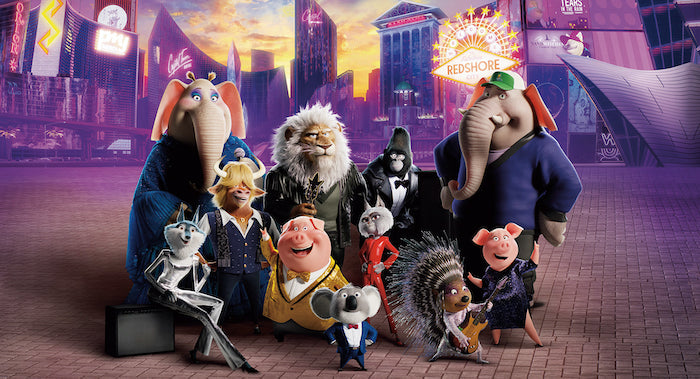
Talking animals have always been a staple—if not the default subjects—of cartoons, their appeal reduced to a confluence of familiar species behaviors and anthropomorphic acting out. This particular credo became even more pronounced as CGI made those behaviors more lifelike, thus throwing into greater comic relief the attributes associated with human emotional reaction, especially those that tend to be exaggerated on film. Animation studio Illumination’s 2016 box office hit Sing took this formula and pumped it up with popular songs that everyone knew and, presumably, loved, and then incorporated it all into a trite tale about a local theater impresario, a koala named Buster Moon, trying to save his dying venue by staging an amateur singing competition and, in the process, discovering all this local talent just bursting with latent star power. Which brings us to the last component of animal-oriented CGI animated features: A-listers doing the voices of these characters, which in this instance meant they also got to show off their singing chops. 

Sing was fine in that it touched all the requisite comedy bases thanks to a screwball approach to dialogue, and while these elements are retained in Sing 2, the basic gimmick no longer has a purchase on the material. If anything, the sequel is even triter and less imaginative than the original. Having saved his theater and made local stars of some residents, Buster (Matthew McConaughey) sets his sights on bringing his show to the big time, which in this universe is a Vegasy metropolis called Red Shore. Being local stars means nothing in the naked city, and much of the movie is given over to contrasting the naive sensibility of Buster’s revue with the super sophisticated (read: utterly cynical) professionalism of the Red Shore stage aesthetic as epitomized by the sensibility of the Mafioso-wolf hotelier Jimmy Crystal (Bobby Cannavale). Desperate to get a chance at putting his group of misfits on Crystal’s stage, Buster desperately promises to secure the services of Clay Calloway, a legendary lion-singer-songwriter who has been MIA for at least a decade. Buster lies and says he knows Calloway and can get him in his show, and Crystal assents with hints of violence if Buster doesn’t come through. Consequently, the movie shuttles between the porcupine punk rocker Ash (Scarlett Johansson) hunting Calloway down and trying to persuade him to come out of retirement, and the antics of her fellow Buster-managed singers trying to get up the nerve and wherewithal to learn a new act (some weird sci-fi-themed musical) that will wow the Red Shore regulars. But whereas the cast of mammals (with a few reptiles and birds thrown in) was kinda cute the first time, here they’re just annoying. The only compelling character is Jimmy’s daughter Porsha, who is promised a central role in Buster’s production because daddy demands it and is talent-challenged though utterly game. As voiced by the pop star Halsey (meaning, not primarily an actor, like almost everyone else), Porsha is a millennial version of all those characters Judy Holliday played in the 1940s and 50s, and she’s a trip. However, this cognitive dissonance has the opposite effect when it comes to another cast member whose day job is singing. Once you realize that it’s Bono doing Clay Calloway, it’s all you can think of. Talk about being driven to distraction. 

Now playing in Tokyo at Toho Cinemas Nihonbashi (050-6868-5060), Toho Cinemas Hibiya (050-6868-5068), Shinjuku Wald 9 (03-5369-4955), Shinjuku PIccadilly (050-6861-3011), Toho Cinemas Shinjuku (050-6868-5063), Toho Cinemas Shibuya (050-6868-5002), Toho Cinemas Roppongi Hills (050-6868-5024).

Sing 2 home page in Japanese

photo (c) 2021 Universal Studios

Posted in Movies | Leave a comment

Review: Stray

What is it about Istanbul and stray animals? In 2016 we had the documentary Kedi, which celebrated the famous stray cats of the city. Now, we have director Elizabeth Lo, who grew up in Hong Kong and studied film in the U.S., taking a knee-level view of stray dogs in the same city, and conveying something very different, something sadder and deeper. In a way, that makes sense, since we tend to think of cats as more independent-natured and thus more resilient to the environmental pressures of living on the streets of a major metropolis. Moreoever, stray cats, by their very nature and appearance, tend to receive more sympathy from the average human, whereas dogs, which are considered needier and more socially minded, evoke stronger emotions, both positive and negative. At the beginning of Lo’s documentary, we’re informed that at one time Istanbul had a policy of rounding up all stray dogs and putting them down, but public opinion was strongly against this policy and now they are allowed to roam free.

Lo’s main subject is the female mutt Zeytin, who acts the part almost too well: melancholy in demeanor, purposeful in behavior, physically robust. As befits such a subject, the narrative (without narration) is random and episodic, a series of encounters with inviduals both two-legged and four- that, in its own way, elucidates Zeytin’s personality, while at the same time through accumulation of detail conveys what life on the streets is like in Istanbul, which means hanging out not only with dogs but with street people, including children, who sniff glue or otherwise make life bearable under these circumstances. This is the film’s main stylistic and thematic difference with Kedi, which mostly focused on the emotional nexus between the city’s working population and its feline underground. In that regard, Lo gets the most dramatic mileage from how Zeytin and her ilk are adored and despised in equal measure, depending on whom the camera is depicting in reaction to the dogs’ various actions. If the denizens of Istanbul seem to like stray cats better than stray dogs it has less to do with these respective species’ appearance or appeal to human feelings than it does with what they do in public. It’s obvious that Lo means to hide nothing, and we see the dogs not only rutting and defecating and rummaging through garbage, but the humans observing these actions, usually in a state of appalled disgust. Consequently, when near the end of the movie Lo juxtaposes this sort or response to the situation regarding homeless immigrants, who are natural allies, as well as defenders, of the stray canines, a point is made that is both powerful and awkwardly exploitative. You can’t help but wonder what Lo’s purpose was at the outset. 

No dialogue (though some Turkish background speaking). Now playing in Tokyo at Human Trust Cinema Shibuya (03-5468-5551).

Stray home page in Japanese

photo (c) 2020 This Was Argos, LLC

Posted in Movies | Leave a comment

Review: Apples

Greek directors have in recent years coopted that species of European ennui that used to be associated with Scandinavia, but filtered through a more mordant sensibility. There’s a fatalism inherent in the work of the most celebrated of these filmmakers, Yorgos Lanthimos, whose former assistant, Christos Nikou, foregoes his ex-boss’s typical black comedy and settles into a kind of droll numbness. Apples‘ premise is high concept, but Nikous doesn’t take sufficient advantage of it. There’s a virus at large in the greyed-out society depicted that renders its victims memoryless, and while amnesia is one of those cinematic cliches, like the forlorn hitman, that’s been wrung dry, here the loss of a recognizable past is complete to the point of erasure. Language is all that remains.

The patient offered for our consideration is Aris (Aris Servetalis), who is stricken while on a bus, and once he falls into the hands of the authorities–he has no ID on him–he is placed in an institution that specializes in his condition. By this point the specialists understand there is no use in trying to recover memories (the title refers to the only thing that Aris knows he “likes”) and thus the “rehabilitation” involves constructing a whole new identity. The comic potential is ripe, and to a certain extent Nikous finds a lot of dry humor in Aris’s situation and his road back to social normality. What’s most interesting about the script is the clinical means that Aris’s doctors use to bring about this transformation—and it is presented as a transformation. Regardless of Aris’s blank slate condition, there is still a personality there, and as a character study of a man without character, Apples works well. Aris’s mission is to relearn everything a modern human being learns to become a functioning member of society, from riding a bicycle to picking up sex partners in a bar, and the fact that all these tasks are documented (with, of all things, a Polaroid camera) emphasizes the conventionality of what we take for human development, which has become yet another function of capitalism.

But Nikous himself is trying to present something conventional as well, and the movie’s wry take on social conditioning eventually gives way to an emotionally fraught melodrama. This change in tone should be startling, but it feels less than consequential since Aris’s default behavior is, by definition, impossible to read. When he becomes sad, it actually seems like an improvement. Nikous is defeated by his own cleverness.

In Greek. Now playing in Tokyo at Human Trust Cinema Yurakucho (03-6259-8608), Shinjuku Musashinokan (03-3354-5670).

Apples home page in Japanese

photo (c) 2020 Boo Productions and Lava Films

Posted in Movies | Leave a comment

Review: Where Is Anne Frank

Moviegoers who approach this animated feature about the famous teenage memoirist because it was written and directed by Ari Folman should be warned that it is very different in tone and substance from his most famous movie, Waltz With Bashir (2008). Bashir was a shocking depiction of wartime memory that was clearly aimed at adult sensibilities, whereas Anne Frank is more or less a children’s (or YA) movie, with an edifying theme and a story that moves adroitly between straightforward melodrama and action scenes. As such, it doesn’t quite pack as much of a visceral punch as Bashir, though it has much to recommend it as a serious reimagining of Frank’s story in the 21st century.

The framing is modern: the Anne Frank Museum in Amsterdam, where tourists line up for hours every morning to look at the recreation of the secret apartments where Anne and her family hid out from the Nazis for two years during World War II. It also contains Anne’s actual diary, displayed in a glass case, which, one morning, is shattered by a fierce storm that hits the city and breaks the windows of the museum. Exposed to the elements, the diary comes to life in the form of Kitty, the imaginary friend in whom Anne invested as an interlocutor, a kind of ideal composite of all her favorite Hollywood stars and her own better angels. Kitty at first does not realize she is not in 1944 any more and watches curiously at the multinational crowds who come through the museum. In a panic, she eventually leaves the building with the diary, and the whole city itself panics because that volume defines Amsterdam’s existence, both spiritually and economically. Kitty the fugitive takes sanctuary with some refugee street kids, and the movie moves back-and-forth between the tale of Anne Frank as related to Kitty in the 1940s and Kitty’s own on-the-lam existence in the present.

Folman’s visual style is rooted in simplification: the Nazis are all identical, silent droogs, impossibly tall and draped in black. And while the city itself is impressively rendered as a believable urban sprawl—half museum piece itself and half neglected municipal everywhere—the characters are all types, including the refugees who are meant to show the (young) viewers that while the kind of fascism that led to the Holocaust may no longer be extant, the displacement of innocent lives by war continues unchecked. Folman, an Israeli, doesn’t try to compare the Jews of World War II to Middle Eastern and African migrants. That said, the current refugee crisis involving Ukrainians gives the movie an added subtext that highlights his potent plot point about how these non-European refugees were refused asylum in one European country after another, including the Netherlands. Basically, Forman just wants to show that the ideas people take away from Anne’s writing are more universal than the way they applied to her own tragedy. More seriously, the Anne “industry” as it’s conveyed in the film is a betrayal of these ideas, but by couching this aspect of the movie’s theme in action cliches (there’s a heart-stopping chase over the city’s rooftops and through its myriad frozen canals) designed to attract young people who, presumably, wouldn’t watch the movie otherwise, it tends to lose some of its power as a result. Folman also assumes most of the viewers know something of Anne’s story, which makes much of the exposition seem heavy-handed, though I suppose he is just covering all his bases. Ideally, he expects young people to either have read Anne’s diary or at least know what it’s about, but that may not be as much of a given as it once was. 

In English. Now playing in Tokyo at Toho Cinemas Chanter Hibiya (050-6868-5001), Toho Cinemas Shinjuku (050-6868-5063).

Where Is Anne Frank home page in Japanese

photo (c) Anne Franks Fonds Basel, Switzerland

Posted in Movies | Tagged | Leave a comment

Media watch: Trans parent throws family court for a loop

Family court

In response to yet another earnest challenge to Japan’s family register (koseki) system, the Tokyo Family Court on Feb. 28 refused to recognize a person as the father of two children despite the fact that this person provided their own sperm to produce the children in question. The donor is not married to the woman who gave birth to the children, and as we’ve mentioned in this space previously, Japanese law prioritizes married couples, which means the husband of the mother is automatically assumed to be the father of the child. And while this protocol would seem to be obvious and unassailable, there are exceptions that test this rule, as when the couple is separated for whatever reason and the mother is in a relationship with another man who impregnates her. Relationships considered unconventional but which produce a child can confuse matters when it comes to registering the child’s birth. These include same sex relationships or mothers who remain single. In other words, if the mother is not in a heterosexual marriage recognized by the state, the family register system is thrown for a loop. Granted, these exceptions are rare in Japan, but they do happen and there are indications that they will increase in the future.

The Feb. 28 decision is tricky, but not because the father is not married to the mother. Though in such circumstances the resulting child is officially designated as being illegitimate in the koseki, the father can still claim paternity as long as they acknowledge the child administratively within the proper timeframe. The problem here is that the father is not a man. The person who is suing to be recognized as the father of the children in question underwent gender reassignment surgery between the time she had her sperm frozen and the time her partner was inseminated with that sperm and then gave birth to the resulting babies, one in 2018 and the other in 2020. There is no doubt that the woman, who is unnamed in the Asahi Shimbun report on the matter and is in her 40s, is the biological father of the children, but that means nothing to the arbiters of the family register because there is nothing in the law that takes such circumstances into account. So while there is a blood relationship between the woman and the children, there is no legal relationship.

It should be noted that the woman officially changed her gender designation on her koseki in 2018 in accordance with a special law that went into effect in 2004. Since then, more than 10,000 Japanese people have legally changed their gender designation, and while this has been seen as progress for the rights of transgender individuals, when children enter the picture matters get complicated. The judge in the Feb. 28 case did recognize the blood relationship between the woman and the two children, but said that the Civil Code does not recognize a parent-child relationship involving a woman who is not the birth mother. Moreover, the court said that the law’s interpretation of paternity is premised on the father being a man, so the plaintiff can be neither the children’s mother nor their father, at which point the law runs out of parental designations. 

Continue reading
Posted in Media | Tagged , , , | Leave a comment

Review: Possessor

Brandon Cronenberg’s sci-fi thriller will be, as one critic whose name escapes me at the moment once said of another film, “strong meat” for a lot of people. Extremely violent and cynical about our present capitalist situation, the movie posits an alternative universe that sees assassination as a viable corporate venture, and while assassins have become a trite commonplace of both popular and art house cinema, the ones in Possessor are particularly difficult to empathize with.

Cronenberg is the son of David Cronenberg, the Canadian filmmaker who has probably done more for the hybrid sci-fi/horror genre than anyone in film history. Brandon is more playful than his father but in treating the assassination scenes as if they were style challenges he ratchets up the disgust factor to a level that transcends the typical body horror David made into an art form. For one thing, the actual assassins are “possessed” by a remote host who controls them, thus they are killing against their will; but Cronenberg adds an extra layer of terror by making the possessor, in this case a young woman named Tasya (Andrea Riseborough), repelled by her task. She is the horror-show equivalent of a corporate tech engineer with a very specific skills set. In the opening scene, a black woman marches into a high-scale restaurant and proceeds to disembowel a rich white man with a steak knife under the supervision of Tasya, who is writhing in agony in a kind of submerged coffin back in her company lair. Even beyond the loaded subtext of a black person murdering a white person at the behest of another white person, the sequence practically normalizes the whole concept of killing by proxy.

But once you get that concept Possessor has no real place to go except into the realm of the macabre. Tasya’s own supervisor (Jennifer Jason Leigh) also has Tasya’s talents but seems much less pained about the moral dimensions of her job. We soon figure out that they work for a corporate entity that carries out elaborate contract killings, the more elaborate the better. A good part of the running time is devoted to the task of inhabiting the mind of Tate (Christopher Abbott), a drug kingpin who is about the marry the daughter of Parse (Sean Bean), a rich data raider, in order to make him kill his future father-in-law so that the relative who is paying for the hit can move up the inheritance list. Explaining this subterfuge while creating a repugnantly impressionistic visualization of Tasya’s struggle for Tate’s mind is somewhat beyond Cronenberg’s own skills set, though he does come up with some wildly surreal ideas about what goes on in the lower depths of the brain. And the scenes where we can recognize Tasya’s “consciousness” steering Tate’s actions are as creepy as anything in Cronenberg pere’s ouevre.
 
Still, the people who will want to see Possessor are those who enjoy the clinical depiction of what violence can do to the human body. The horror elements on display have an emotional component that often feels cold and thus the displacement is doubly terrifying. The movie is a series of visceral nightmares acted out by individuals who are not really themselves, but get to watch themselves do awful things.
 
Now playing in Tokyo at Human Trust Cinema Shibuya (03-5468-5551).

Possessor home page in Japanese

photo (c) 2019 Rhombus Possessor Inc./Rook Films Possessor Ltd.

Posted in Movies | Tagged , , , | Leave a comment