Tokyo International Film Festival 2021

Here are links to the reports I wrote for the website of the 34th TIFF. In passing, I would say it was a better festival than it has been for many years, owing mainly to its change of venue to Hibiya/Ginza and the return of programmer Shozo Ichiyama, who left some years ago to found Filmex, which this year was held in tandem with TIFF. However, while the Competition films covered a broader range of experience, overall the selection sacrificed quality and rigor for representation; which isn’t necessarily a bad thing, but too many were saddled with an old-fashioned notion of thematic importance. But I really liked Hommage, Californie, and the eventual winner, Vera Dreams of the Sea, all of which were original and dramatically compelling. They were also all about women, though only two were directed by women.

Californie

Vera Dreams of the Sea

When Pomegranates Howl

Arisaka

Asian Lounge: Bahman Ghobadi x Ai Hashimoto

The Dawning of the Day

Third Time Lucky

The Other Tom

The Daughter

The Films of Kinuyo Tanaka

Memoria

World Cinema Conference: The Future of the Film Industry

Hommage

Posted in Movies | Tagged | Leave a comment

Media Mix, Nov. 6, 2021

Still from the documentary Fanatic (c) BIFF

Here’s this week’s Media Mix, which is about a Korean documentary I recently saw that explored K-pop fandom from the viewpoint of a real K-pop fan who interrogated her devotion to a certain musician after he was convicted of rape. In the piece I tried to widen the coverage to J-pop and the most serious sin committed by a male idol I can think of now is former TOKIO member Tatsuya Yamaguchi forcibly kissing an underage girl, a misdemeanor that got him ejected from Johnny & Associates, the talent agency that bred and managed TOKIO. It should be noted that Yamaguchi was actually married at the time he committed his crime, though I assume most of TOKIO’s fans knew this, owing to the fact that he was already well into his 40s. But while kissing a minor against her will is certainly a bad thing, it didn’t get him a prison term like the one the singer in the Korean documentary received. And actually his case wasn’t the only one involving a K-pop idol that has been prosecuted. In recent years there have been a number of serious offenses allegedly committed by K-pop stars, including distribution of drugs, solicitation, and embezzlement, that have gone to prosecutors. I don’t know of any idols in Japan who have been accused of that level of criminal activity, but what that means I don’t know.

Maybe nothing, but as I conjectured at the end of the column, the pressure on K-pop stars is probably heavier than it is on J-pop stars owing to the stakes and the money involved. Consequently, the temptations to break away from the restrictions imposed by such a career could be greater, and with that impulse comes a willlingness to break social mores, either because they think their power will allow them to get away with it, or because they want to test those restrictions, one of which is created by the burden of their responsibility to their fans. And as shown in the documentary, K-pop fans demand a lot, and that goes beyond what is euphemistically called “fan service.” They want their idols to defer to them and walk the straight and narrow in both their public and private lives. In return they will honor and defend them to the death. The slightest indication of anything approaching criticism on the part of the media is met with a wall of condemnation, even threats. The positive side of this phenomenon was represented by that situation last year where certain K-pop fans trolled the detractors of the Black Lives Matter movement. On the negative side there was the over-reaction to the British host of an American TV talk show, James Corden, who received a sound online thrashing from Army, the dedicated fans of BTS, after Corden made a joke about BTS’s appearance at the UN; which was ironic because Corden had already had BTS on his show and they got along famously. I myself have been the target of this kind of invective. About 10 years ago I wrote in this column about another K-pop group that had recently split over problems with their management. Some members resented their draconian contract terms and when I offhandedly used obvious hyperbole to describe this relationship I inadvertently offended those fans who still supported the members who remained with management. For a week, my blog was getting some pretty nasty comments that seemed way out of proportion to my supposed sin. I’ve written about J-pop artists in much more critical terms and have never received as much as a questioning glance. Go figure. 

Posted in Uncategorized | Leave a comment

Review: Respect

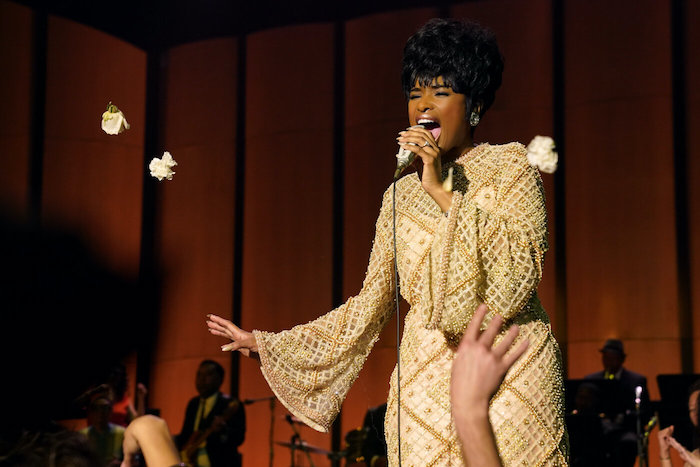
The most common complaint about the standard Hollywood biopic, especially ones about musicians, is that their subjects’ lives are made to conform to a dramatic arc that isn’t realistic, and thus leave out things that are important for understanding a person’s effect on the culture and exaggerate other things that make for exciting viewing but which shortchange the truth. Liesl Tommy’s movie about Aretha Franklin follows this course predictably but at least keeps its head about the music itself. If Aretha (Jennifer Hudson) was, as many claim, the greatest pop singer of the 20th century, it is vital to our understanding of cultural history to see how that happened. It’s not enough to say that she was a genius, because geniuses still need to get their stuff out there, and in that regard, Respect is better than many other musical biopics.

But we’ll probably have to wait longer for a detailed and honest summation of Aretha’s private life, which she successfully hid from public view. The movie’s depiction of her childhood and adolescence contains only the bare minimum of insight into her—for want of a better word—soul. Raised in solid middle class household by her father, the Rev. C.L. Franklin (Forest Whitaker), and various female relatives, she was surrounded by music from infancy, since her father’s church, perhaps the most powerful Black institution in Detroit during the 1950s, helped pioneer the gospel sounds that would dominate the genre nationwide. But the movie also credits Aretha’s estranged mother (Audra MacDonald) with instilling in her daughter a love of the American songbook and jazz. This push and pull between the sacred and the secular would always inform Aretha’s art, and Tommy cannily uses that dynamic to explain what made Aretha such a revolutionary artist. Her father oversaw her transition from gospel prodigy to bland jazz singer, thinking that it suited his own view of respectability—he would never countenance the blues, which suggested moral dissipation. However, as a teenager who already had two children, a seminal fact of her girlhood that the movie is too squeamish to explore, Aretha fell under the sway of a family acquaintance, the entertainment manager Ted White (Marlon Wayans), who decided that Aretha’s talents should be steered toward the newly emerging genre of soul music, and though C.L. objected strongly, once Aretha started recording for Atlantic records under the stewardship of producer Arif Mardin, the results were explosive and undeniable. Aretha wasn’t just a powerhouse singer; she was a star fully formed. 

Though White is credited with ushering Aretha into the spotlight, it’s difficult to believe she wouldn’t have arrived there without him, and the movie spends too much time on his machinations, which eventually took a heavy toll on her psychological well-being and self-esteem. Tommy doesn’t gloss over White’s DV tendencies, and, in fact, suggests that Aretha channeled his abuse into her most affecting music. The scenes where she commandeers the Swampers, the group of white musicians who played at the Muscle Shoals, Alabama, studio where Aretha first decamped to make her debut Atlantic album, perhaps best represents Aretha’s skills as a musical force. She knew she could sing, but she also knew exactly what she wanted from the music, and Tommy deserves credit for working with Hudson and allowing her room to make the session the emotional and thematic centerpiece of the movie.

From there, however, the film alternates between hair-raising musical numbers, many of which are performed by Hudson in their entirety, and boiler plate soap opera exposition. The movie’s biographical purview ends with Aretha’s return to gospel in 1972, and thus leaves us with the diva still on top. It only hints at the personal turmoil she went through, and would continue to go through for the rest of her life. Come to Respect for the legend, and stay for the music. Everything else is filler. 

Opens Nov. 5 in Tokyo at Toho Cinemas Hibiya (050-6868), Toho Cinemas Roppongi Hills (050-6868-5024), Toho Cinemas Shibuya (050-6868-5002), Toho Cinemas Nihonbashi (050-6868-5060), Toho Cinemas Shinjuku (050-6868-5063), Shinjuku Wald 9 (03-5369-4955).

Respect home page in Japanese

photo (c) 2021 Metro-Goldwyn-Mayer Pictures Inc./(c)2020 Metro-Goldwyn Mayer Pictures

Posted in Movies | Tagged , , | Leave a comment

Media Mix, Oct. 30, 2021

Junya Ogawa

Here’s this week’s Media Mix, which is about inherited privilege, especially in politics. Today, of course, is the lower house election, and one of the points that Prof. Doi makes in his Asahi Shimbun interview, and which I didn’t really emphasize, is that he wants young people to vote more proactively. His theories about inherited privilege, and the idea that one’s fate is determined by what sort of family you’re born into, are based on a conventional Japanese viewpoint that things are never going to change—or, if they do, they will change very slowly, because vested interests have a hold on power that is rooted in the past and thus very difficult to deracinate. And as time goes on the tendency for young people to think they have no effect on the larger social picture becomes more difficult to shake, especially during ongoing economic stagnation exemplified by immobile wages and a widening income gap. I’m not sure if the young people he wants to reach read the Asahi, but he seems quite determined to make them understand that their futures really are at stake, even if he declines to go into the politics involved.

So it will be very interesting to see how the race for Kagawa Prefecture District 1 goes. As I mentioned at the end of the column, Arata Oshima directed a fairly popular documentary (meaning popular for a documentary) last year about Junya Ogawa, an idealistic lawmaker who is today challenging incumbent Takuya Hirai for his constituency. Hirai is the epitome of a legacy candidate: he is the third generation of his family to hold the seat for the ruling LDP in a district where his family owns many businesses, including two media companies. As shown in Oshima’s documentary, Ogawa nearly defeated Hirai the last time they fought, owing to his appeal to younger voters, who usually don’t go to the polls. Though he lost to Hirai by a slim margin, he was able to gain a seat in the Diet through proportional representation, but as he clearly pointed out, it’s difficult to get your policies heard, much less enacted, when you’re a proportionally elected lawmaker. Oshima is presently making a new documentary focused entirely on the Kagawa District 1 race, and will release it on December 24. Of course, we’ll know well before then who wins the race, but it could prove to be the most important one in this election, if only because of what it might say about the presumed invincibility of legacy candidates. 

Posted in Media | Leave a comment

Review: Monos

The lack of specificity that runs through Alejandro Landes’ free-form film about a group of teenage commandos living in the South American jungle can be seen as its main stylistic purpose. The viewer never finds out why these kids have joined in what is either a political cause or a criminal enterprise, or whether they were somehow forced to join. Nor do we get much in the way of insight into their own feelings about what they’re doing. All we see is their actions and reactions, which often elicit empathy on our part but not enough to sustain any interest in a particular character, all of whom are tagged with disassociating nicknames anyway (Boom Boom, Dog, Rambo, etc.). The obvious similarities to The Lord of the Flies were probably inescapable to Landes, which is why he gets the matter out of the way by including a scene that focuses on a pig’s head, but the differences are more apparent, and more confounding. Without an idea of the larger world that created both this ragtag group of mini-terrorists and their overlords, the movie never taps into anything significant in the viewer’s mind.

Though the kids live by themselves in the jungle they are ostensibly under the thumb of that unseen organization, whose only representative we see is a short, muscular factotum who shows up and perfunctorily puts the kids through various training exercises and then gives them tasks, which they usually mess up. Early on, they’re provided with a cow, a “gift” from a local, presumably sympathetic farmer, and told to take care of it. However, during a drunken party guns are fired and the cow accidentally killed. Though they know they’ll be in trouble (the cow would, theoretically at least, be returned one day to the farmer) they make the most of the situation and butcher the animal. 

However, the troops’ main charge is an American woman, whom they call “professor” (Julianne Nicholson), put under their care after being kidnapped from what sounds like some kind of environmental expedition. At one point the kids try to make a “proof of life” video with mixed results, and as the movie proceeds and the professor’s fate seems up in the air to both her and her captors the pointlessness of it all becomes acute. She gets moved from a mountaintop to a secluded location in the jungle, an order her captors have a great deal of trouble carrying out because of their inherent lack of coordination. 

Monos isn’t really concerned with kids forced into combat, because there is no “war”; or, at least, none that we can see until very late in the movie when Landes throws in a bit of pursuit intrigue and people finally die. In fact, had Landes gone a more conventional route and played up the thriller aspects of an earnest but inept group of adolescents playing at adult games of brutality, he might have ended up with something more revealing than this study in disaffected teenage ennui. The best you can say about Monos is that it’s a gorgeous film about nothing in particular. 

In Spanish and English. Now playing in Tokyo at Theater Image Forum Aoyama (03-5766-0114).

Monos home page in Japanese

photo (c) Stela Cine, Campo, Lemming Film, Pandora, SnowGlobe, Film i Vast, Pando & Mutante Cine 

Posted in Movies | Leave a comment

Review: The Mauritanian

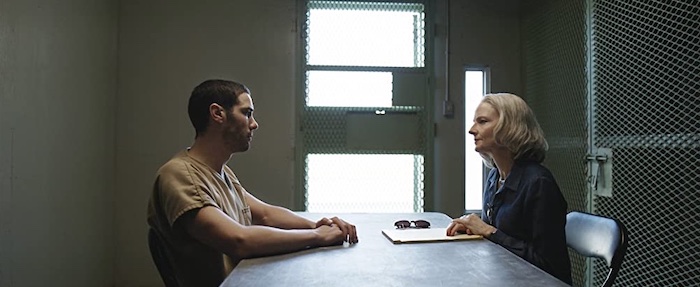
Kevin McDonald’s movie about Mahamedou Ould Slahi, a Mauritanian who was swept up in the capture of suspects for the 911 terrorist attack and sent to the U.S. military prison in Guantanamo Bay, Cuba, seems to assume that the viewer is prepared with a prescribed set of views regarding the overall story. The screenplay is mainly based on Slahi’s diary about his time in the prison, and thus has a limited purview regarding the war on terror that put him there. There’s not a lot of suspense inherent in such a story, unless, of course, the viewer hasn’t read a newspaper for the past 20 years, so McDonald’s various attempts to squeeze extra drama from a situation that is terrifying to begin with ends up having the opposite effect: the movie is strikingly unmotivated. 

The main problem seems to be the decision to divide the narrative among three POVs: Slahi’s (Tahir Rahim), his defense attorney, Nancy Hollander’s (Jodie Foster), and the US Marine Colonel Stu Couch’s (Benedict Cumberbatch, sporting a passable good ol’ boy accent), who is tasked by the government in Washington to secure the death penalty for Slahi. Essentially, Hollander and Couch, though they begin as nominal adversaries, end up in the same place once they realize that Slahi’s confession, in which he admits that he did, indeed, recruit the principals involved in the highjackings of the four airplanes that caused so much death and destruction on Sept. 11, 2001, was coerced through torture. They, of course, get to this destination via different routes, but the stories are so similar in tone and particulars that they feel redundant. Meanwhile, we see Slahi, both in so-called real time and flashbacks, experiencing the horrors explained in the super-classifed documents that both lawyers have to go to great lengths to attain, thus adding another superfluous layer to the development. Too much of the drama is based on people sitting in windowless rooms reading papers with furrowed brows. 

There’s obviously a gripping cautionary tale here that could have made a good movie, but not a lot of thought was put into the best way to tell it. (Maybe a TV series would have been better.) But that doesn’t mean it isn’t worth seeing. Rahim does an extraordinary job of bringing Slahi’s story and personality to vivid life, creating a distinctive human being whose past directly informs the person he became in prison. At the end, he’s given the requisite heart-stirring speech about how people living in repressive societies always look to the U.S. legal system with envy and desire, because they see it as an ideal worth striving for. The speech doesn’t sound trite and phony because Rahim has shown how Slahi’s own native intelligence and, yes, wit have kept him alive through an enormous amount of physical and mental abuse. He teaches himself English while at Guantanamo by mimicking the profanities of his captors! The point is, he’s so much better than the Americans he professes to admire. The movie should have been about him and him only.

Now playing in Tokyo at Toho Cinemas Nihonbashi (050-6868-5060), Toho Cinemas Hibiya (050-6868-5068), Toho Cinemas Shinjuku (050-6868-5063), Toho Cinemas Roppongi Hills (050-6868-5024).

The Mauritanian home page in Japanese

photo (c) 2020 Eros International, PLC

Posted in Movies | Tagged , | Leave a comment

Review: Sweet Thing

New York indie standard bearer Alexandre Rockwell is mainly known for giving Steve Buscemi his first leading man role in the 1992 underground hit In the Soup, which also happened to be Rockwell’s debut. Since then he’s maintained a career with the same formula—bittersweet black-and-white studies of people living on the margins—but diminishing returns. His latest has the feel of something that was influenced by many other low-budget movies, though Rockwell has been at this for so long that it could very well be he’s plagiarizing his own work. He’s certainly picking from his own tree: the two main protagonists are his own children, and their mother is played by their own mother and Rockwell’s wife.

Adolescent Billie (Lana Rockwell) is raising her younger brother Nico (Nico Rockwell) in a broken down apartment in New Bedford, Massachusetts. Though they live with their father, Adam (Will Patton), he’s drunk most of the time and only occasionally employed. Adam loves his kids and they return the affection, but he seems unable to cope with anything approaching responsibility. One day he’s arrested for vagrancy and sent off to hospital rehab, thus forcing Billie and Nico to move in with their estranged mother, Eve (Karyn Parsons), and her boyfriend, Beaux (ML Josepher), neither of whom really wants them there. Eve puts on the airs of a caring mother but is more interested in her stalled career as a singer and her wine. Constantly distracted, she doesn’t seem concerned so much with Beaux’s abuse, which eventually comes to bear on the children. Eve gets defensive when Billie hints at Beaux’s sexual predilections toward her, but seems more threatened by Billie as a rival (“you’re not going to ruin the good thing I got”) than horrified by the possibility of her teenage daughter being raped. In any case, when Billie and Nico make friends with an indigent kid named Malik (Jabari Watkins), the three decide to steal a car and make their way to Florida.

Rockwell’s obvious affection for people who can’t afford what we now take for granted as the bare necessities (cell phones, internet, takeout food) lends his movies a kind of timelessness that’s difficult to believe but easy to like. And while his portrayal of the effects of alcohol on the impoverished is riddled with stereotypes and cliches, he makes up for them with subtle emotional indicators. More to the point, he allows his young actors plenty of freedom to explore their characters (reportedly, much of the dialogue was improvised) and the result is more honest and affecting than your average indie study of homelessness and broken families. Though it’s not likely to win Rockwell the same measure of acclaim and exposure as the woolier, funnier In the Soup, it will at least maintain his track record as probably the most dedicated indie filmmaker of his generation. 

Opens Oct. 29 in Tokyo at Human Trust Cinema Shibuya (03-5468-5551), Shinjuku Cinema Qualite (03-3352-5645). 

Sweet Thing home page in Japanese

photo (c) 2019 Black Horse Productions

Posted in Movies | Tagged | Leave a comment

Media Mix, Oct. 23, 2021

Here’s this week’s Media Mix, which is about excessive overtime work for Kasumigaseki bureaucrats. As pointed out in the column, many civil servants have to stay late at the office in order to draft responses to questions from opposition lawmakers during committee debates in the Diet. Takao Komine, a former career-track bureaucrat mentioned in the column, wrote an article in which he detailed how the ministers and other ruling party lawmakers are verbally briefed by the relevant bureaucrats about the topic being discussed. The way Komine describes it, it’s an involved and time-consuming process, which means not only do the bureaucrats have to stay up at night doing research and then writing documents that the lawmakers will refer to during debate, they have to meet with the lawmakers before the debate and essentially coach them in how to answer the questions, presumably to prepare them for followup questions. It seems like a lot of work just for the purpose of creating some kind of illusion that the lawmaker knows what he’s talking about, because even Komine admits that the politicians who are appointed to head ministries and agencies usually don’t know much about what those ministries and agencies do. Consequently, it would save a lot of time and resources if the knowledgeable bureaucrats themselves answered the questions in person during the debate, and, on occasion, they do, but that, apparently, is not the ideal situation, since debates are political in nature and the ruling party lawmakers also have to defend policies under certain circumstances. In any case, there’s always a relevant bureaucrat on hand during debate. You’ll often see them whispering in the ears of ministers, who then just parrot what they heard.

All this work seems doubly wasteful since it is presumably being done for the sake of the media and, by extension, the public. The media, of course, is obliged to show up and report what is said during debates, but I have doubts if the average person pays much attention. Diet debates are notoriously boring (partially because they are scripted) and, in fact, don’t happen very often. The Diet is only in session for less than half the year*, so maybe the overtime issue isn’t as bad a problem as some people are making it out to be, but if they really wanted to solve it they should just have the bureaucrats do all the talking. Who needs politicians anyway?

*Corrected Oct. 24

Posted in Media | Leave a comment

Review: I Am Greta

As the title suggests, Nathan Grossman’s documentary about teen climate crisis activist Greta Thunberg is more about the person than the activist, though, with someone like Greta, the distinction may be moot. Consequently, the viewer often gets the feeling that Grossman doesn’t know which direction to take, and while Greta herself doesn’t really seem to mind his camera being around all the time, she rarely treats it or Grossman with undue attention. She’s essentially saying to us, “This is what you get,” but that may be more than she thinks.

The movie covers about a year in time, from Greta’s first brush with notoriety, when she went on a solo school strike in Stockholm at the age of 15 to draw attention to global warming in August 2018 and get her native Sweden to join the Paris Accords, until September 2019 when she gave a withering speech blasting world leaders at the UN for their failure to initiate any meaningful action to address climate change. What’s clear from the very beginning is that Greta takes it all very personally. Her dour, scolding attitude springs from an acute realization that her generation will bear the brunt of the climate crisis while those who now exacerbate it in the name of growth and progress will be dead sooner than later. This is, of course, what her dectractors fail to grasp about her. They think her attitude is a function of her Asperger’s (a Fox News pundit calls her a “child with a mental illness”) and makes her out to be malleable to left-wing adults who want to push their alarmist, anti-capitalist agenda, but one thing the movie makes clear is that Greta defies manipulation. Her own father, Svante, who tends to be the only adult she listens to with any deference, says outright that it was Greta who changed his own mind about global warming through the force of her considerable will, and while he necessarily has to chaperone her and make sure she doesn’t collapse psychologically under the weight of all she’s taken on, he knows his own limits as a parent and guardian. There are a number of tense scenes where father and daughter square off over some matter of protocol or safety.

Certainly, too much will be assigned to the Asperger’s, but Greta’s savant tendencies certainly work to her advantage in terms of the work she’s taken on. She’s got a photographic memory, and her stubborn streak means she can’t be swayed by sentimentality or material temptations. Like many young people of her particular temperament, she gets along with animals better than with people, and her veganism, not to mention her disregard for consumerism, are not things she even thinks twice about. For sure, when she embarks on her trip to New York from Europe on a sailboat, because flying would give her opponents ammunition, she is reluctant, mainly because she will be separated from her beloved dogs and horses for so long, but also because the isolation and deprivation will be a trial. She, more than anyone, understands that she comes from a position of privilege, and, in a way, the sea voyage can be seen as Greta testing her own resolve, which may explain why her speech at the UN right after she finished the voyage was so vociferous. 

Grossman perhaps overdoes the nerdy teen thing. “I don’t care about being popular,” Greta says at one point about the disparagement directed at her by trolls and climate change deniers, but the director frames it as the statement of purpose of a contrarian adolescent toward the cool kids in class. If Greta the climate firebrand seems inseparable from Greta the moody teenager it only plays up her integrity as a lightning rod for others her age who are similarly distressed about their futures. She doesn’t do things by half-measures because she knows definitively that half-measures will not save the planet. She’s as honest with herself as she is about the world. 

In Swedish and English. Opens Oct. 22 in Tokyo at Shinjuku Piccadilly (050-6861-3011), Human Trust Cinema Shibuya (03-5468-5551).

I Am Greta home page in Japanese

photo (c) 2020 B-Reel Films AB

Posted in Movies | Tagged | Leave a comment

An interview with Todd Haynes, 2008

The following is a transcript of a telephone conversation I had with director Todd Haynes in 2008 about his movie, I’m Not There, a kind of fantasia about Bob Dylan. It was done for the Asahi Shimbun’s English language edition and, thus, has never been made available online. The article itself was much shorter and contained only a few brief quotes. (I have appended it to the transcript) With the recent release of Haynes’ Velvet Underground documentary, I thought people might be interested in reading what he had to say about Dylan. But, in any case, if you haven’t seen the movie you should. It really is a trip.

-How have you felt about the reception so far?

I’m happy. It’s received good notices amidst a crowded and generally high-quality movie season.

-Was that helped in any way by Dylan’s own resurgence as an artist?

There’s no question. The general interest in Dylan never goes away, but it’s compounded by the quality of work he’s put out recently, starting with his last three releases, and then the book and the radio show. He’s been conveying a crazy generosity in the quality of his work. It’s the radio show and the book to me, indicating the Dylan who is there to stand for the history of American popular music in all its various forms, and as somebody who still wants to act as a link to the earliest traditional music and even contemporary music.

-We can’t hear the radio show in Japan.

That’s too bad. The songs are so great and it’s so cool how much time he’s obviously put in, with a staff of writers, and his own taste, and how much time he’s put into talking between and setting up the songs and sharing really cool kernels of wisdom and stories about each artist. And it’s yet another character: this droll, witty old-timer. [mimics Dylan’s voice introducing Leadbelly and Blur].

-I’m sure he’s riffing on the DJs he listened to as a kid, too.

Exactly.

-What was your first impression of Dylan?

I don’t really remember a first time of actually hearing his voice. Those songs were in the culture of the American Jewish Community Center in Los Angeles where I grew up. I remember “Blowing in the Wind” being played in a circle alongside “Silver and Gold” and falling into that great tradition of American folk songs that became part of the new left of the 60s and was already making its way into places like that. But it was high school where I discovered the singer and the artist, and fell in love with his music and his whole persona and character and style. One of my best friends in high school was Elizabeth McGovern, the actress, and we were soulmates. And I remember her saying once, If you could look like anybody other than yourself, who would it be? And I remember picking Dylan. Because that was a cool look, even in the mid-70s.

-How did your feelings about him change over the years?

I kind of stopped listening to his music for about 20 years. I didn’t stay on top of his releases through the 80s and 90s. I never outright rejected him. I was just moving on to different kinds of music and different genres. It’s what made this strange season at the end of the 90s, at the end of the millennium so interesting and surprising, when I found myself craving him deeply, and needing to hear that music. And I know now how much that was an indicator of changes in my life that would materialize shortly thereafter. A need for a real radical change in my life and a break from my 15 years in New York City. I drove cross-country at the very beginning of 2000 to get away from New York, to go to Portland where my sister lived, just to get away to write. I was writing my last film, Far From Heaven. But my daily, hourly obsession was Dylan, and it kept growing and involving reading biographies again and discovering interviews I’d never read before. And discovering all that amazing music that had never been officially released. And it was in that new climate that I latched on to this idea of him as a shape-shifting artist, and suddenly had this craving to make a film about it, and to address that practice of constant defining change in the concept of these multiple characters.

-How much of that was pure nostalgia?

I don’t think it was nostalgia at all, unless it was nostalgia for my own adolescence. There’s something about Dylan’s fearlessness as an artist and creator that defines even his best studio recordings that there were very few examples of and which condoned a sense of change as a positive thing. And I needed that much more in my later years, when change is no longer simply the definition of your future as a young person but actually as something scary because it’s an uprooting of all that you’ve done to define yourself. I needed an uprooting and I went to somebody who’d been doing it so well for so long.

-When did you come up with the concept of the movie?

It was during that time, but I can’t put my finger on a eureka moment. My conceptual centerpiece of the film is almost banal, this idea of Dylan as someone who is always changing, particularly in the 60s and the 70s. And when you think about it, even the things for those people who don’t know much about him at all, what they do know are these events that are events of radical change and disappointment, like plugging in electric. These are the myths that never die around him, but they come from an actual practice that he was exploring in every possible way. So when you really look at it I don’t feel like I was inventing anything, let alone imposing something on his story or his biography. Just trying to get something core about him as a person.

-It’s interesting in that regard to compare your movie to this whole slew of musical biopics right now, which attempt to provide some verisimilitude.

In fact, the reason those kinds of films receive a lot of criticism, especially from critics and also from filmgoers who still go to see them, like myself, but who groan at the conventions, is that it isn’t verisimilitude at all.

Continue reading
Posted in Movies | Tagged , | Leave a comment