
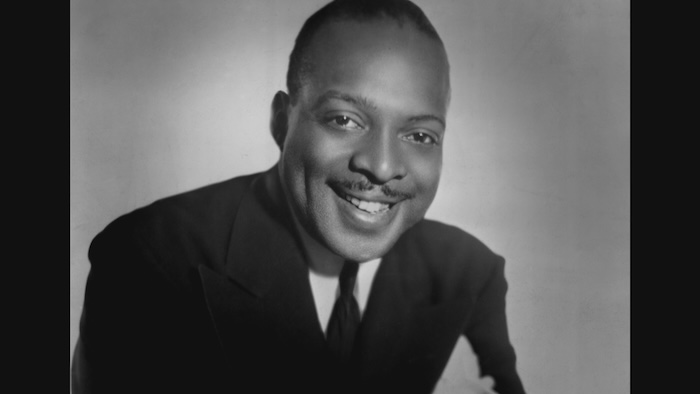
This documentary purports to reveal a more intimate side of the legendary pianist and big band leader through “private correspondence and home movies” that, supposedly, have never been made public before. Most of these documents seem to consist of letters he wrote home from the road, notes he was making for a memoir, and genuine home movies. However, as the narration, spoken by actor Clarke Peters, says more than once, Basie was a man of few words who wasn’t fond of talking about himself, and these personal materials are actually much less revealing than the requisite talking head interviews, which in this case include noted jazz critics like Gary Giddins and Will Friedwald, former band members like John C. Williams and collaborators like Quincy Jones, as well as relatives and family friends. In the end, the only real new information I gleaned from the doc had to do with Basie’s daughter, Diane, who was born with cerebral palsy.
The chronology is maddeningly inconsistent, often jumping from one timeframe to another in order to follow a theme and, in doing so, running over the same incidents (and using the same visuals) without adding anything fresh. Basie’s development as a pianist is shortchanged by the filmmakers. He goes from accompanying carnival acts and vaudeville productions in Red Hook, New Jersey, to hustling gigs in Harlem in the 1920s without any mention of how he got to that point professionally except to say that he greatly admired Fats Waller. And while Basie was an excellent stride pianist, it wasn’t what made him unique as an instrumentalist in the long run. More time is given over to the founding of his big band in Kansas City in the 30s and how he then brought that particular sound back east, where his reputation for “swinging the blues” made him more popular as a dance act than any other swing era ensemble The fact that he was not celebrated at the time with as much general fanfare as those other big bands was, of course, due to racism, a matter covered extensively throughout the film, as it should be, though Basie himself never complained that much being the kind of closed-off personality that he was. The doc finally comes into its own when it charts the band’s rise as a jazz institution in the 50s and 60s, mainly because of the available footage of the band and the man in action.
Occasionally, the narrative does get into areas that might have been ripe for their own dedicated documentaries, such as the Nazis’ secret obsession with African-American jazz or how the militant Black movement of the late 60s resented older successful artists like Basie for having made their peace, and their fortunes, with white patronage. If you know nothing about him, this is a good enough primer, especially about how influential his spare piano style and super syncopated rhythms were on all the jazz music that followed in his wake, but given how meticulous a professional William Basie was, the overall documentary is quite disheveled.
Opens July 3 in Tokyo at Yebisu Garden Cinema (0570-783-715), Shinjuku Musashinokan (03-3354-5670).
Home page in Japanese
photo (c) Eagle Rock Entertainment Ltd.
 philipbrasor.com