

Dentsu executives
Happy new year. Here’s this week’s Media Mix, the usual year-end roundup. Due to space issues I didn’t mention one major player this year that deserves all the notoriety it received: Dentsu. I have nothing really to add to the coverage of the advertising giant’s crimes with regard to overworking its employees, but I don’t think enough attention was paid to the general harm it does to the media climate. The suicide of one of its young staff only a year ago gave the mass media an excuse to look at the company’s culture and describe it for what it is: oppressive and demanding. But that myopic view doesn’t take in the totality of Dentsu’s evils, which are mainly manifested in the way it controls a press that relies on advertising to keep it solvent as a profitable enterprise. Interestingly, it was Shukan Economist, a business magazine, that published the only really thorough expose of Dentsu’s malign operations this year, explaining its stranglehold on television and print advertising and the fear it strikes in the hearts of editors, only to negate the whole purport of the article by claiming at the end of the series that much of the insider criticism of the company amounts to urban legend. Dentsu’s imperious handling of the Olympics is notorious overseas but hardly mentioned by the local press. It deserved the infamous Black Kigyo Award it received last week as the year’s worst employer, but Dentsu’s venality goes beyond staff persecution. No single entity is more responsible for the Japanese media’s habit of “omitting” inconvenient facts than Dentsu, simply because any time a potential advertiser is caught up in scandal or criminality, the press report around it, afraid to challenge Dentsu’s primal check on their bottom line.
 Here’s
 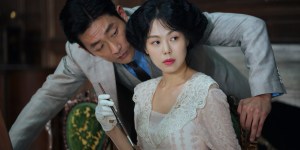 As everyone has already noted many times, it was a pretty terrible year all around. As far as movies go, it’s difficult to tell if it was any worse or any better than average. Since I didn’t see as many films as I did during my heyday as a critic (1995-2010) I can’t say anything definite in that regard, though I did make a concerted attempt to see the movies that seemed to matter, and probably because of that effort my list isn’t going to surprise anyone. The usual subjects are present and accounted for. However, because the year was so fraught with drama with respect to international and local news, I derived more than my usual level of enjoyment from the Busan International Film Festival in October, which tends to occupy a kind of oasis in my year free from quotidian cares. The 2016 version benefited from a touch more cognitive dissonance, since the festival itself was hit by a partial boycott owing to the city of Busan’s suit against various festival honchos as political retribution for their showing a movie in 2014 that the mayor didn’t like. BIFF was supposed to be a bust this year, but I had a better time than I’d had there in ages, and mainly because of the quality of the films I saw. I especially loved The Handmaiden, Park Chan-wook’s lurid sexual melodrama set during Japan’s colonial rule of Korea, one of the purest cinema experiences I’ve enjoyed in some time. But several other Korean films at the festival were also among the best of my year, and so should show up on this list 12 months from now since they are scheduled to be released in Japan sometime during that time period. It is something to look forward to, and that’s an important notion to keep in mind during these dark times. Let’s just hope I’m still reviewing movies in December 2017. At this point, I can’t say for sure.
 Warm on a Cold Night
 A Bigger Splash
 Here’s
  philipbrasor.com