Media Mix, Sept. 6, 2015

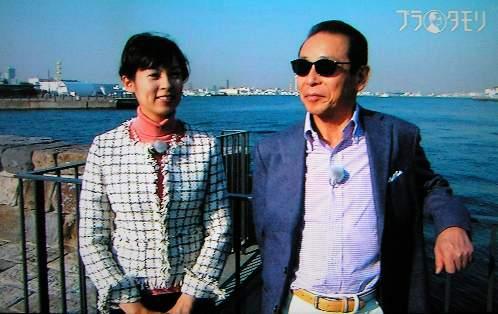
NHK announcer and Tamori on "Buratamori"

NHK announcer and Tamori on “Buratamori”

Here’s this week’s Media Mix, which is about the not-so-subtle sexism behind a lot of media-related work, especially with regard to teenage girls. In the column I discussed a new NHK show, Muchimuchi, which may or may not turn into a series (so far, they’ve only shown one episode, and that was on Aug. 20) but which has attracted a fair amount of criticism for its suggestions of sex and the stereotype of high school girls as being frivolous and ignorant. However, within those complaints in a deeper distrust of TV production techniques, the kind that manipulate reality in order to create a semblance of spontaneity. Among the Tweets that writer Chika Igaya cited in her Huffington Post article about the show was one that mentioned the “whole staged feeling” of the presentation, that the entire setup of the show was suspiciously artificial, which made the viewer also question the truthfulness of the girls’ reactions and responses.

This Tweet illustrates a significant aspect of media literacy, the ability of the receiver of information to sense how that information has been filtered by the medium itself. Japanese TV, and NHK in particular, has perfected this ability to the point where people know that what they’re watching is fake but have somehow been conditioned to accept it as part of the presentation and adjust their comprehension accordingly. The example that comes to mind immediately is NHK’s travel show, Buratamori, in which veteran TV talent Tamori goes to a neighborhood in Tokyo or some other city and explores the history of that place using old maps and existing landmarks. During the show, Tamori and a female announcer walk around the area and inevitably bump into some local expert, who then answers their specific questions. This narrative device is borrowed from Tamori’s other show, the very long-running Tamori Club on TV Asahi, where Tamori always just happens upon a group of comedians on the street who help him address that week’s funny theme. No one, of course, thinks these meetings are spontaneous. If anything, Tamori plays them for laughs, but it says something about the way TV producers’ minds work that everyone copies it, and it follows that they probably have no problem faking or manipulating other things, like the girls’ responses on Muchimuchi, which means that the sexism on display is intentional. I’m not saying that high school girls are all erudite and sexually self-possessed, only that their complexities are necessarily flattened by the prejudices of producers. And as anyone who watches NHK knows, the people there hate surprises.

Posted in Media | Tagged , , | Leave a comment

September 2015 albums

Here are the album reviews I wrote for the September issue of EL Magazine, which was distributed in Tokyo last week.

galactic15hiatusInto the Deep
-Galactic (P-Vine)
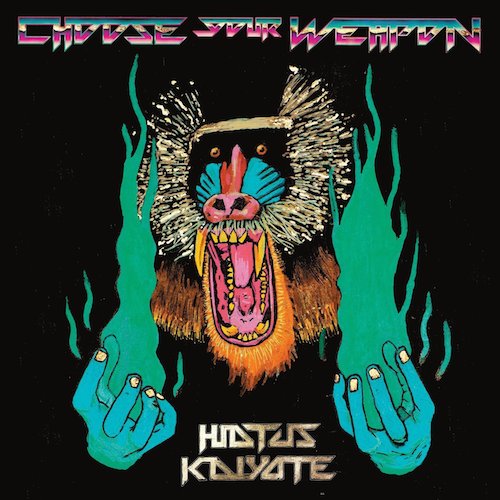
Choose Your Weapon
-Hiatus Kaiyote (Sony)
It says something about the territory Galactic covers musically that their recent Field of Heaven headlining stint at Fuji Rock hardly touched their new album. Though regularly touted as a funk/jam band, the New Orleans collective not only runs the entire R&B spectrum, but also soul music north and south and a respectable corner of the jazz realm. Though Into the Deep isn’t significantly different from past albums in that it samples the group’s tastes liberally and takes advantage of their biz connections with a large and wide variety of guest vocalists, there’s something more intense about it. The opening Mardi Gras raveup, “Sugar Doosie,” lays out their myriad skills in a compact 4 minutes: tight horn harmonies and a greasy rhythmic undercarriage that buoys the beat. What’s especially thrilling is the way the group pulls the old verities into the 21st century. JJ Grey’s frantic reading of “Higher and Higher” hardens its Stax/Volt vibe with crisper keyboards and a fuzz bass that gives it an edge. Macy Gray complements the Band-like country funk of the title song with a vocal that’s alternatingly meditative and desperate. And while Mavis Staples doesn’t sound like the right match for the Caribbean-flavored “Does It Really Make a Difference,” the old girl proved a long time ago she can sing pretty much anything short of Wagner and give you what for, and as the song builds you lose track of the elements and fall right into the toughest groove on the album. “Chicken in the Corn,” a collaboration with Brushy One String, brings the orchestral funk of Isaac Hayes into the computer age. But the record really comes into its own on the instrumentals, which reference New Orleans without being overly reverent to the city’s sonic traditions. They’re not merely the heirs to a legacy any more. They’re one of the most forward-looking bands in America. One might say the same about Hiatus Kaiyote in relation to their native Australia. Smaller and more experimental than Galactic, the quartet is steeped in the kind of avant-funk that George Clinton perfected, but seem less determined to get listeners dancing than questioning their understanding of what funk entails, which, for the most part, means linear structures that work on the booty. Much of the group’s appeal, not to mention its uniqueness, is built around guitarist-vocalist Nai Palm’s personal engagement with the songwriting, which takes in everything from family tragedy to essays on the supernatural. Like Galactic, Hiatus is capable of a wide range of styles, though often they demonstrate this talent in the course of one song. This is a long album, too, 18 tracks and full of so many ideas that it might take years to process them all. I find it kind of daunting, which doesn’t mean it won’t show up on my best-of-year list in January. I just need to give it the attention it deserves. Continue reading

Posted in Music | Tagged , , , , , , , , , , , , , | Leave a comment

September 2015 movies

Here are the movie reviews I wrote for the September issue of EL magazine, which was distributed in Tokyo last week.

assassinThe Assassin
Hou Hsiao-hsien’s first attempt at an “action” movie retains the narrative distinctions peculiar to all his features, which means fans of the genre will likely be baffled and disappointed. Though the plot, which is based on an old novel, has conventional storylines and develops its characters accordingly, Hou’s spare use of dialogue and tendency to elide anything that doesn’t serve his aesthetic aims means it doesn’t make as much of an impression as it would in others’ hands. Nevertheless, the film has a rigorous visual integrity that evokes its own story. Shu Qi is Nie Yinniang, raised in ninth century China as an assassin by a nun who uses her to dispatch corrupt officials on behalf of the emperor. When Yinniang fails to complete one particular assignment after seeing the target spend time with his family, the nun realizes she isn’t emotionally mature enough to be a real assassin and sends her to her hometown to kill an official (Chen Chang) to whom she was once betrothed, the purpose being to toughen her resolve and rid her of material sentimentality. Though presented as a kind of test, the mission is complicated by unforeseen developments taking place within the official’s court and which involve his concubine and his wife. Hou doesn’t clarify these developments since they are mostly conveyed through third person, offstage exposition, but the upshot is that Yinniang is compelled to use her skills to both protect her ex-lover from the machinations of his underlings and somehow see her mission through, ends that would seem to be contradictory by definition. What’s striking about the fight scenes isn’t their bloodless grace, but rather how their economy of movement actually adds to the naturalism of the movie as a whole. Death has real meaning, and while Hou spares us gore he drives home the idea that killing is not an easy act, even for the highly skilled. The contrast between the austerity of the action and the sumptuousness of the production design makes it one of Hou’s most beautiful films. If it takes more than one viewing to absorb its dramatic dimension, then all the better, I say. In Mandarin (photo: Spot Films Metropole Organisation Ltd. Central Motion Picture International Corp.) Continue reading

Posted in Movies | Tagged , , , , , , , , , | Leave a comment

Media Mix, Aug. 16, 2015

Into the fire

Into the fire

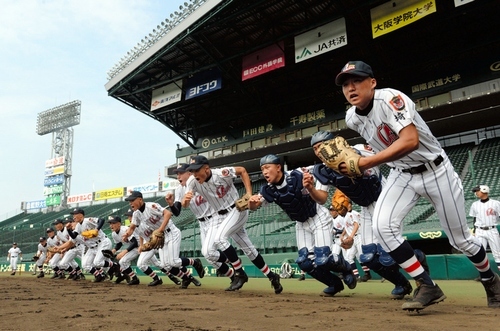
Here’s this week’s Media Mix about summertime energy needs. As mentioned near the beginning, the summer National High School Baseball Tournament is one long expression of gaman (patience) since it takes place during the hottest time of the year. There’s also a high school baseball tournament in the spring, which I’ve never quite understood–why two?–but in any case the summer contest is much more popular. However, my partner recently read somewhere that the tournament isn’t quite as gaman as it makes itself out to be. Apparently, the dugouts are air conditioned, thus providing some relief to players when they aren’t on the field. She happens to have a friend who works at the tournament on a contract basis and she asked her if this is true. The friend was quite shocked and assumed it was just a rumor devised to denigrate the tournament, but she agreed to ask around and, apparently, it is true, though the organizers and sponsors want to keep it a secret since it would spoil some of the drama that’s so integral to the spectators’ appreciation of the games.

Posted in Media | Tagged | Leave a comment

August 2015 albums

Here are the album reviews I wrote for the August issue of EL Magazine, which was distributed in Tokyo last week.

Ezra Furman / Perpetual Motion People (jake-sya)(HSE-38014)drewfordPerpetual Motion People
-Ezra Furman (Bella Union/Hostess)
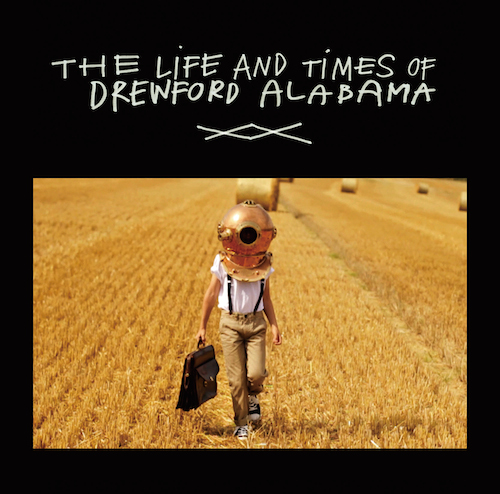
The Life and Times of Drewford Alabama
-Drewford Alabama (P-Vine)
Few millennial purveyors of pure rock’n roll go about their mission with as much purpose and instinctual passion as Ezra Furman, a Jewish gender-bender from Chicago. The fact that he plays harmonica along with his guitar is mostly gravy, but it aligns appropriately with his street-level sociopolitical outlook, which he doesn’t indulge as forthrightly here as he has on previous albums. Though his themes mostly revolve around his struggles with mental illness and suicide, he isn’t so inner-directed that he can’t disassociate his feelings from his thoughts and relate them to the larger world, and he often steps out of the persona he assumes for a particular song and comments on the moment, as when he professes to being “sick of this record already.” If fear of ennui qualifies as a psychological disorder, than Furman is ready for serious therapy, but rock therapy is obviously just what the doctor ordered in Furman’s case, and the rest of us benefit as well, since the energy level rarely flags. Per the title, the kinetic power of Furman’s music feels pre-ordained, organic, a natural phenomenon. And while the R&B and folk forms get worked on relentlessly, there’s nothing reverent about the way Furman wields them. In other words, he has no use for the 60s—or the 90s, for that matter. He’s the busker with nothing to lose, the guy on the audition tape who doesn’t give a damn who’s listening but hopes whoever it is can keep up with him. Jamie Morrison used to be in a band, the Noisettes, that was famous for its own peculiar brand of energy, and as a drummer Morrison even moonlighted with the Stereophonics. Neither band qualifies as Americana, but Morrison’s new project, Drewford Alabama, does in a sort of piss-takey way. Still, don’t expect Father John Misty. Reportedly, several years ago Morrison found a notebook filled with hundreds of lyrics written in the middle of the last century by a guy named Drewford Alabama. He claims to have seen the light, but since he fields the singing chores out to friends and acquaintances, the project has an ad hoc vibe to it, as if the spirit of Drewford Alabama were simply hovering above. The songs have a pleasingly dusty ambience but they don’t deliver the piquant wierdness that great folk music does when it’s being made by a true original. Since Morrison says he was inspired by Alabama’s lyrics (he even taught himself the guitar just so that he could sing them), the listener wants to be inspired as well, but there’s often so much going on in the song that whatever it was about the words that drew Morrison to them is buried under a lot of disparate business. And that’s the difference between a force of nature like Furman and a man who “plays” music like Morrison. One doesn’t need inspiration because the music is already there. All others have to search it out. Continue reading

Posted in Music | Tagged , , , , , , , , | Leave a comment

August 2015 movies

Here are the movie reviews I wrote for the August issue of EL Magazine, which was distributed in Tokyo last week.

confessionConfession
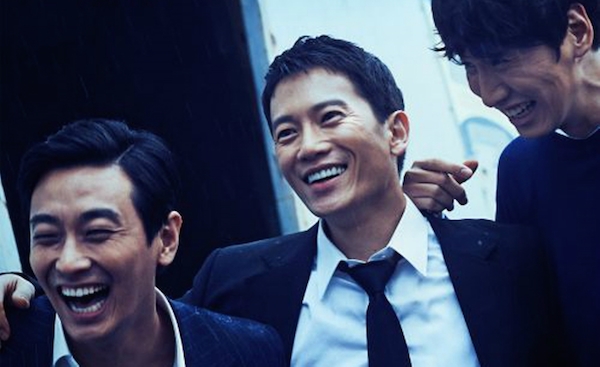
Lee Do-yun’s feature debut is like a primer in mass-appeal Korean cinema of the moment. It’s got a bit of criminal mischief, some class-conscious social observation, and a lot of betrayal-induced guilt among characters who think of themselves as friends. This latter theme is central to the story, since it involves three men who have been close since a near-fatal adolescent jaunt bonded them for life. Of the three, Hyun-tae (Ji Seong) has ended up the most grounded, married and working as a paramedic. In-cheol (Joo Ji-hoon) is an insurance agent living beyond his means who sometimes resorts to scams to make extra money. And Min-soo (Lee Gwang-soo) is the requisite full-time loser, a lonely drunk living on the margins. After In-cheol talks Min-soo into helping him torch a building for insurance money at the bequest of Hyun-tae’s estranged, debt-ridden mother and the scheme goes south, the friendships unravel, though probably not as fast as they would if such an unlikely incident actually happened. Lee knows how to stage all the cliches but he can’t make them anything other than cliches. In Korean. (photo: Opus Pictures) Continue reading

Posted in Movies | Tagged , , , , , , , | Leave a comment

Media Mix, July 19, 2015

NHK reporting on identifying minors in criminal cases

NHK reporting on identifying minors in criminal cases

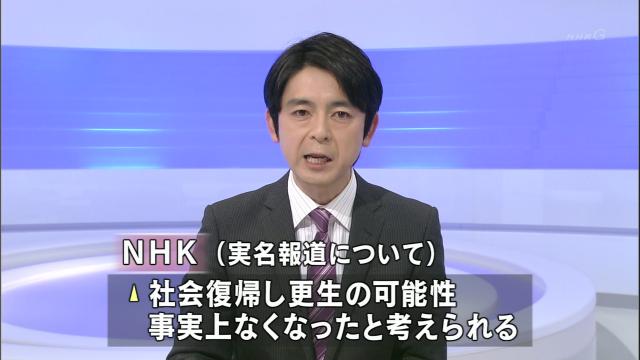
Here’s this week’s Media Mix about the government’s proposal to lower the age for criminal trials from 20 to 18, presumably as a sop to the public and the media, which think that brutality among youth is on the increase and should be addressed in a serious manner. In the column I referred to a radio discussion with TV announcer and right wing pundit Jiro Shinbo, who wants tougher sentences for juvenile offenders and thinks the media should be allowed to cover such crimes openly. He somehow believes that Japan is the only country in the world where reporters are banned from identifying minor suspects, which isn’t true but nevertheless brings up the question of why some countries, like the United States, which supposedly forced this rule on Japan during the postwar occupation, allows the media to identify youth offenders and Japan still doesn’t. The reasons seem to have less to do with legal limitations than with popular demand. According to Amnesty International, the U.S. is the only country where minors can be sentenced to life imprisonment without parole. For the record, America doesn’t sentence children to death, but that’s only because the Supreme Court abolished the death penalty for minors in 2005. In that decision, one justice wrote that juveniles are “categorically less culpable” than adults when it comes to committing crimes, but somehow life imprisonment is still a possibility for them. Consequently, there doesn’t seem to be much reason to prevent the media from reporting openly on youth crime and attendant trials since rehabilitation is obviously not the main purpose, punishment is.

What’s different about the Japanese situation isn’t the sensibility at play—like Americans, Japanese people think the punishment should fit the crime regardless of age. The difference is in the legal framework. The American system doesn’t distinguish between minors and adults when it comes to serious crimes, whereas the Japanese system does. That’s why the government wants to lower the age of majority. Instead of changing the Juvenile Act, which limits reporting, it simply wants to increase the number of people who can be tried as adults. This gambit will probably only satisfy the tabloid media for a little while. Whenever there is a serious crime committed by a person younger than 18, they will feel shut out of the process. They obviously look with envy at the American system, where crime is reported pretty much openly and suspects can be named and, potentially, vilified even before their guilt is established. Call me a “liberal” (Shinbo would), but I think the Japanese system is better. Youth offenders should be given a second chance, even those who have committed murder. However, I also believe that American society, despite a frank outlook that often drifts into rabid Manichaeism when it comes to crime, is better prepared to debate the usefulness of prosecuting minors and perhaps fairer in its treatment of them. In other words, while juveniles aren’t protected from adult-level punishment and exposure, America’s penchant for contentiousness makes it possible for them to receive more equitable judgment overall, at least in the public realm. It isn’t the same in Japan, mainly because the media itself isn’t as mature or self-conscious enough about its responsibility. Here the Juvenile Act is necessary. Otherwise, youthful offenders would just get buried.

Posted in Media | Tagged | Leave a comment

July 2015 albums

Here are the album reviews I wrote for the July issue of EL Magazine, which was distributed in Tokyo last week.

Jamie xx / In Colour (jake-sya)(BGJ-10235)yjyIn Colour
-Jamie xx (Young Turks/Hostess)
Animation
-Young Juvenile Youth (Beat)
Though Jamie xx’s solo album has been anticipated for almost five years now—ever since he remixed Gil-Scott Heron’s last album We’re New Here into something quite different from the original—the record is still startling, if only because of how dissimilar it is to the work of his group The xx. In some ways this is a good thing. The xx’s second album was much less interesting than its debut, and it’s easy to surmise that Jamie, the producer, was already outgrowing the song-based predilections of his mates by the time Coexist was recorded. Removing the need to write original tunes with conventional meaning—no matter how abstract they tried to make it—obviously freed Jamie to explore what he could only do on his own, i.e., sample sounds and music that meant more to him than any personal verbal expression. Significantly, the casting off of normal structure has made his work more musical. The songs on In Colour still have that melancholy cast that made The xx’s tunes so indelible, but at the service of a wider range of fundamental emotions, which is probably what the album title is all about. Jamie is not going to tell his audience how to feel, but he will insist that there’s more than one feeling to feel here. His use of old doo-wop and ragga rhythms never seems gratuitous, and he’s careful to loop beats and melody snippets for maximum tension-and-release. You can almost hear the intent coming at you. Since this is unabashedly club music, made to be played (and danced to) in the presence of many people, it’s by definition more limiting in style than whatever it was The xx was trying to accomplish, but within those parameters it takes advantage of more resources than The xx ever did. It’s the most democratic dance music imaginable. Producer Jemapur (Toshiaki Ooi) has less pressing concerns in his new project with pop vocalist Yuki Matsuda. He surrounds her breathy, languorous vocals, in both English and Japanese, with the kind of spare beats that highlight those vocals rather than compete with or even complement them. His pop mission statement is more forthright than Jamie xx’s, but Jamie’s songs are closer in effect to what we enjoy about pop—its immediacy, its lack of guile. In interviews, Matsuda implies that there is no longer an “underground” market, and thus her vision of pop music cuts across all lines of taste and style. She obviously sees Young Juvenile Youth’s music as being more of a challenge to local consumers, which is probably why she sings mostly in English. Apparently, it was she who went to Jemapur and not the other way around, and she seems to control the message. That may explain why YJY sounds less like an organic partnership than two people struggling to find common ground, which is fine. Struggle can be entertaining, too. Continue reading

Posted in Music | Tagged , , , , , , , , , , , , | Leave a comment

Media Mix, June 28, 2015

Richard Armitage

Richard Armitage

Here’s this week’s Media Mix about the mainstream press reaction to Okinawan Governor Takeshi Onaga’s trip to the United States to explain his opposition to the U.S. Marine base at Henoko. In the piece, I mention that former State Department official Richard Armitage gets a lot of traction in the Japanese press and is often the go-to person on the American side for a quote about the base issue, even if those quotes tend to be selective. Apparently, his quotes are used selectively for other security related issues. During the same discussion on DemocraTV where lawyer Sayo Saruta explained how Washington works, other journalists talked about the security bills that the Liberal Democratic Party are now trying to ram through the Diet. The LDP’s reasoning for passing the bills, which would allow Japan’s Self-defense Forces to participate in collective defense even though the Constitution limits such actions, is that interpretation of the Constitution should adapt to changing times. The only scenario that the LDP side has put forth as an illustration of how the SDF could participate in collective defense is a possible blockade of the Hormuz Straits by Iran. Such a blockade would “threaten Japan” because much of the country’s oil comes through the straits, so Japan should help its allies, presumably the U.S., in preventing such a blockade, probably through mine-sweeping activities. The journalists found this reasoning laughable, since Iran is desperate to sell oil right now and would never blockade the Hormuz Straits, but Prime Minister Shinzo Abe can’t come up with another example of how Japan could lend a hand because almost every other scenario would sound like war. And the LDP got this scenario from Armitage, who suggested some years ago that Japan could help by carrying out mindsweeping activities in the Hormuz Straits, but he made that statement at the height of the Iranian oil embargo. In other words, Abe’s illustration confounds the reasoning behind the constitutionality of the bills: Times have changed, and there’s little chance of a blockade of the Hormuz Straits. But he can’t find another illustration to justify the bills, which is why the opposition is accusing him of being vague as to what collective defense really means.

But more significantly, the journalists blasted the LDP for conflating the protection of Japan’s economic interests—securing oil—with safeguarding “Japanese lives,” which is the only reason put forth by the new bills for engaging in collective self-defense. As one reporter pointed out, if you accept that reasoning then the government should be condemned for cutting social security and funding for education—two economic decisions that affect citizens negatively—in order to pay for weapon systems demanded by the new security arrangement, at least according to the U.S., which still seems to be calling the tune because they’re the ones who want to sell Japan those weapon systems.

Posted in Media | Tagged , | Leave a comment

July 2015 movies

Here are the movie reviews I wrote for the June issue of EL Magazine, which was distributed in Tokyo last Thursday.

Avengers2Avengers: Age of Ultron
Just as the huge box office success of this second installment in the Marvel superhero collective franchise seems the result of the multiplier effect of having so much star power on the screen at one time, the movie’s over-stuffed plot and almost incomprehensible dialogue structure feels like an attempt to give each iconic character his or her due, as if the producers were contractually mandated to treat everyone equally. In the end, Avengers: Age of Ultron proves to be a sufficiently entertaining film while you are watching it and totally forgettable once you aren’t. Should theaters be obligated to hand out plot precis to make sure people get it all? Or is that something only critics care about? As a director, Joss Whedon has earned a reputation for making action set pieces coherent and exciting at the same time, and since he alone is responsible for the script, he has obviously gone to great pains to make the story compelling on its own merits. But some things are just unachievable. At the center is Ultron, a robot overloard voiced by James Spader that is the result of an AI program designed by Tony Stark aka Iron Man (Robert Downey Jr.) and Bruce Banner aka The Hulk (Mark Ruffalo). Ultron is supposed to one day replace the Avengers as the planet’s last defense against extra-terrestrial evil, and of course the program becomes full of itself and decides it would rather destroy the Avengers just to see if it can. That’s as good a premise as you’re going to get in a superhero movie, but each character has to have a personal dramatic arc, and if those arcs intersect, so much the better. So Banner and Natasha Romanoff aka Black Widow (Scarlett Johansson) are given a romantic subplot that never reaches its natural conclusion, while Stark, Steve Rogers aka Captain America (Chris Evans), and Thor aka Thor (Chris Hemsworth) engage in macho pissing contests presumably underwritten by Ultron and his familiars. On the margins is Clint Barton aka Hawkeye (Jeremy Renner), whose superhero particulars have never been sufficiently explained, and the only principal character with a family to speak of. In fact, the movie takes a rather leisurely detour to visit that family in all its model American normalness, as if Whedon were afraid we’d forget these people are really human (well, except Thor). But with all the self-deprecating jokes, wielded mainly by Downey (he calls one particularly trying day “Eugene O’Neill long”), and furrowed brows, the heroes’ humanity is never at issue, only their relevance as characters. The set pieces are thus a relief, since they provide the viewer with a break from making sense of the plot, which becomes even more convoluted with the late entrance of Nick Fury (Samuel L. Jackson) and the constant reappearance of twin beings (Elizabeth Olson, Aaron Taylor-Johnson) whose super powers are practically X-Men level in their arbitrariness. When your budget is limitless, you can hire anyone for any reason. (photo: Marvel) Continue reading

Posted in Movies | Tagged , , , , , , , , | Leave a comment