Media Mix, June 21, 2015

Backpackers in Sanya

Backpackers in Sanya

Here’s this week’s Media Mix, which is about the fires in Kawasaki in May that killed 10 people living in a kanishuku hakujo. Though I mentioned it only in passing, the day lodgings in Sanya tend to be made of concrete, which means they’re safer than the wooden ones that burned in Kawasaki. I don’t know if this has to do with stricter enforcement of fire codes in Tokyo, but it should be noted that kanishuku hokujo in Sanya are now patronized by more than just day laborers. As I pointed out, some now house incapacitated seniors, many of whom used to be day laborers but are unable to work any more. I saw a documentary on NHK last year that described how some of these lodgings are used as hospices: men on welfare who are in the terminal stages of illness being supported by NPOs who try to make them as comfortable as possible in their last days.

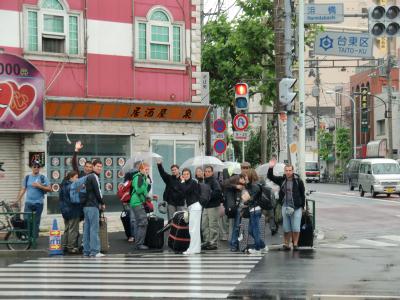
But another demographic that uses these lodgings is foreign tourists, specifically backpackers. When I lived in the area and Minami Senju was the closest train station to my home I often encountered young travelers from Europe and Asia who would ask me for directions to this or that facility, and all were in the kanishuku hokujo style, meaning small rooms with communal toilets and baths. Some had even upgraded and started serving breakfast just to attract more foreign tourists. The appeal was multifold. Mainly, the places were really cheap, so backpackers could stay in Tokyo for a long time and use it as a base. But they also liked the rough demeanor of the accommodations and the neighborhood, which to them represented Japan in a more genuine way. The Japanese media have reported on this phenomenon in depth and at length, since it shows an appeal for foreigners that most Japanese people would not expect. Few of the reports I’ve seen, however, mention the core clientele of these lodgings, the day laborers, and maybe they’re being priced out. I moved out of the area in 2011 and haven’t been back since.


Posted in Media | Tagged , , | Leave a comment

Media Mix, June 14, 2015

Japanese-Brazilians protesting official employment and education policies in Ginza

Here’s this week’s Media Mix, about Japan’s very qualified response to the idea of allowing more immigrant workers into Japan to alleviate the labor shortage. Of course, the last time the government tried to import laborers without actually giving them work visas was in the early 90s, when it approved a special residency permit for South Americans of Japanese ancestry. Encouraged by the thought that they could make a lot of money, they flocked to Japan, and by 2007 there were 320,000 Brazilians alone living in Japan. Then the Lehman Brothers-led recession hit the economy, and many of these immigrants lost their jobs. The government, desperate to get rid of them since they were seen as a burden on the welfare system, bribed them into returning to Brazil, offering them cash to leave with the condition they wouldn’t come back to Japan for a certain number of years. Over the next three years, more than 100,000 did, taking the skills they acquired in Japan with them. By the end of 2014, 180,000 remained.

The Brazilian experiment is the perfect example of the government’s safety valve approach to labor shortages. The Brazilians were not given work visas, they were given residency permits that allowed them to look for work. That way the government could say they weren’t importing laborers, though that, in fact, is what they were doing. It’s the same thing with the trainee program described in the column. These people are not here to make a living. They’re here to learn skills, though in most cases they do repetitive work.

The distinction has become moot as Japanese industries now require more workers. The government tries to cover its ass by extending the “training period” for foreign trainees, but its the Brazilian experiment that really shows the failure of this policy. According to Asahi Shimbun brokers and “temporary employment agencies” in Brazil are receiving many requests from Japanese companies for Brazilians of Japanese ancestry, since the special residency permit is still available. One agent says he gets requests for about 200 workers a month. In the early 90s, when Brazil’s economy was very bad and Japan was thought of as a very desirable place to live and work, it would have been very easy for him to find those workers, but not any more. At most he can find about 30 people a month. The Japanese companies’ desperation is apparent in the lack of conditions they impose. In the 90s, they would insist the workers speak at least some Japanese. Now, they say they will take anyone, “even people with tattoos,” says the broker. And it’s not as if there aren’t Japanese-Brazilians looking for work. It’s just that they have a “wait and see” attitude now. They were burned once before, encouraged to immigrate to Japan, even bring their families, and then treated as second-class members of society and “cheap labor.” They’d rather take their chances in Brazil, which is, after all, home.

Posted in Media | Tagged , | 2 Comments

June 2015 albums

Here are the album reviews I wrote for the June issue of EL Magazine, which was distributed in Tokyo last week.

blur15palmaThe Magic Whip
-Blur (Parlophone/Warner)
Danger in the Club
-Palma Violets (Rough Trade/Hostess)
You have to hand it to Damon Albarn. For all his fuss-budget musical machinations, he rarely is unserious about the work he does, and I don’t mean that as a backhanded compliment. Beneath—and often on top of—his catchy melodies and deliberate arrangements are ideas that bear close scrutiny, and not just about amorphous generalizations like love and life; but about class struggle and the quest for individuality in a world increasingly flattened by technology. The Magic Whip is the first collection of new Blur material since 2003, and none of the many interesting things that Albarn has done since seems half as consequential as the songs here, and it’s not just because the band that knows him best is on board again. Reportedly, the songs were created and developed during a short spell of downtime two years ago when the band found themselves stuck in Hong Kong. The album isn’t so much Asian as it is cosmopolitan the way a seasoned traveler is cosmopolitan. Some critics have noticed that this record was put together at about the same time as Albarn’s bona fide solo debut, Everyday Robots, and if you take that tack it’s a clear corrective in comparison: broad where Robots was restricted, extroverted where the former was contemplative. “Ong Ong” and the emboldening “Lonesome Street” reconsiders the rock song afresh, as if Albarn and co. hadn’t played any rock for years and suddenly felt the urge to revisit the old school. And while I still consider Albarn’s Brit inflectives an acquired taste I haven’t acquired, his jaunty Weltschmertz fits this material well. And ironically it sounds fresher than the new album by the Palma Violets who are some twenty years younger than Albarn. One of the myriad indie rock bands to be labeled the next big thing by the Brit music press, PV have preempted any potential backlash by downplaying their skills and native appeal in interviews. Tongue in cheek by design, the band has fallen back on what it calls “pre-punk” rock, meaning the kind of R&B that Dr. Feelgood reheated for pub-goers in the 70s, and it’s as unstimulating as it sounds; the energy that pub rock was supposed to deliver undercut by sour attitudes and willful sloppiness. Some will say this sort of contempt for proper form is in a grand tradition. Look at what it did for the Replacements, or, closer to home, the Libertines. The difference is that Pete Doherty was at least inspired by his screw-ups, whereas PV is only inspired by the need to keep moving forward. Their topics are personal without being insightful—girls are always disappointing, it seems, a worthy theme for someone willing to doubt his qualities as a lover but not for someone who couldn’t care less in the first place. Yes, it’s better to burn out than it is to fade away, but this isn’t burning. It’s fizzling. Continue reading

Posted in Music | Tagged , , , , , , , , , , , | Leave a comment

June 2015 movies

Here are the movie reviews I wrote for the June issue of EL Magazine, which was distributed in Tokyo last week.

congress_mainThe Congress
Ari Folman was obviously hard put to follow up his stunning 2008 tour de force, Waltz With Bashir, and this adaptation of a Stanislav Lem story reeks of ambition, but while Folman takes his live-action-to-animation style further, he can’t deliver his concept. Robin Wright plays herself, an actress in middle age whose most indelible role, The Princess Bride, is way behind her. A “studio” wants to preserve that image and offers her a huge payday to “sell” them the exclusive rights to it. This means that Wright becomes a virtual star who has nothing to do with the movies that use this image. The first half of The Congress involves much ethical gnashing of teeth, and Wright wrestles with the concept as she frets over her emotionally troubled son. The second half takes place at the titular congress, a meeting of individuals who have taken the next step and become virtual beings. The Matrix-like conceit is so politically charged that it loses its power as an emotional device, even if the animation is often stunning. (photo: Bridgit Folman Film Gang, Pandora Film, Entre Chien et Loup, Paul Thiltges Distributions, Opus Film, ARP) Continue reading

Posted in Movies | Tagged , , , , , , , , , , , , , | Leave a comment

Yen For Living, May 24, 2015

Exif_JPEG_PICTURE

It’s probably obvious that most of the posts for our Yen For Living blog, which since April has morphed into a twice monthly column in the Japan Times, originated with our own experiences as consumers. This week’s piece, about mobile phone plans, is really an attempt to understand the ridiculously Byzantine process of setting up such a plan, and I’m not entirely sure the article is that successful. For sure, it doesn’t come close to conveying the frustration many people must feel when trying to get straight answers from salespeople and other representatives of the various carriers who want your business. For one thing, there isn’t enough space to discuss the problems involved, so it might be helpful if I relate how our own search went.

At the end of the article I mentioned how we asked Y!Mobile about switching our Docomo keitai plan to one of their smart phone plans without mentioning that they have more than a few options. When we went directly to Docomo with the same idea there was only one smartphone plan given to us, and since it involved data services we weren’t going to use we didn’t see the point in paying for it. Later, after we had filed the article and checked out a few more companies we went back to Y!Mobile to look at their cheaper plans because we already subscribe to their pocket WiFi plan and thought maybe we could get a special deal if we added a smart phone. As it turned out, they were in the middle of a campaign to boost their smartphone sales. They have three plans with different monthly data limits, and each plan would be about ¥500 less a month if we signed a two-year contract before a certain date, though the fee would go up ¥1,000 after the contract expired and we didn’t expressly inform them we didn’t want it renewed. This re-up strategy is used by all the carriers and is notorious. Continue reading

Posted in Money | Tagged , , | 1 Comment

Media Mix, May 17, 2015

JCP chairman Kazuo Shii

JCP chairman Kazuo Shii

Here’s this week’s Media Mix about the improved fortunes of the Japan Communist Party in recent elections. As stated in the article, the media generally doesn’t take the party seriously, even though they are paying closer attention. Maybe that sounds contradictory, but there is an important distinction. As far as elections go, since the 1970s the JCP’s role has been seen as nothing more than that of a spoiler, a party that siphons votes away from other, more “deserving” opposition forces. What its success in the general election last December and the local elections last month seem to indicate is that the JCP is now drawing not only liberal-minded voters away from other nominally liberal parties, but also attracting people who might not have voted otherwise.

The press has picked up on this, but it still can’t quite get past its queasiness regarding the JCP. In the Tokyo Shimbun article I cited, the writer refers to the “allergy” that many people have towards Komeito, the LDP’s coalition partner, which traditionally has been aligned with peace-themed issues and thus would seem to be more liberal or maybe progressive in outlook. However, the electorate’s negative reaction to Komeito has nothing to do with its politics and everything to do with its structure, which derives much of its influence from a close association with the Soka Gakkai, even though party members deny that the religious organization and its charismatic leader, Daisaku Ikeda, have any say in Komeito’s policies or direction. However, everyone assumes, probably correctly, that Soka Gakkai’s members are all Komeito members, as well, and the party can always count on their vote. In much the same way, the public and the press think that the JCP relies for its continued existence on the support of a dedicated base that does anything the party says. And there are some similarities in effect. Over the years, my Japanese partner has had several friends and acquaintances who belong to Soka Gakkai, and while they are not fanatical about it, they always invite her to organizational functions and campaign for Komeito candidates. Recently, when she expressed interest in JCP’s organ, Akahata, because it often covers current affairs with more complexity than the national dailies do (full disclosure: she does much of the research for Media Mix), the paper’s local distributor kept calling and emailing, trying to get a subscription out of her. I wouldn’t call the Komeito or JCP tactics in these regards proselytizing, but they are pushy and focused, and so I think many people, including those in the press, confuse them with each other. As far as the JCP goes, it has less to do with “communism” in the philosophical sense of the term and more to do with “groupism” as a Japanese person would understand it. Shedding that image is half the JCP’s problem if it wants the press to treat it as an equal with the other parties.

Posted in Media | Tagged , , | Leave a comment

May 2015 albums

Here are the album reviews I wrote for the May issue of EL Magazine, which was distributed in Tokyo last week.

Courtney Barnett_Jé  largesexsmithSometimes I Sit and Think, and Sometimes I Just Sit
-Courtney Barnett (Milk!/Traffic)
Carousel One
-Ron Sexsmith (Cooking Vinyl/Imperial)
Courtney Barnett, a young Australian singer-songwriter whose lack of guile has made her an indie darling among the cognoscenti, is the kind of lyricist who doesn’t sound as if she gets her own jokes. Her songs are all definitely about something, but her free-associative methodology reels in off-kilter references and non sequiturs that have a way of cracking you up even when you can’t quite locate the irony. She’s not as pointedly sarcastic as Loudon Wainwright III or John Prine, but she often ends up with the same results. Like Wainwright, she’s even written a swimming song, though the purpose seems to be to debunk the older musician’s notion that it’s a profound pastime. “I had goggles on,” she sings, “they were getting foggy/I much prefer swimming to jogging.” And she’s not a folkie. Though Barnett rarely works up a head of steam, she bangs her tunes out to jerry-built garage rock arangements that call attention to her non-melodic vocal style, which is delivered in an accent whose natural offhandedness gives the songs more relevance than she probably intends. She’s obviously not someone who means to tell you about herself, but she wants you to know where she’s from, geographically and emotionally. When she does sad, as on the haunting “Depreston” and the quirky “Boxing Day Blues,” you actually want to know more. For some reason, I doubt she even realizes she reveals as much as she does, even in her clever song titles, the best of which is “Nobody Really Cares If You Don’t Go to the Party.” I know exactly what she’s talking about. Usually I know what Ron Sexsmith is talking about, too, since he’s one of the most reliably transparent songwriters ever to wield a guitar, and this time the guitar is as often electric as not. His 14th LP is essentially more of the same, meaning it’s never content to pass the time. The melodies are sure, the rhymes natural, the themes comprehensible and compelling. What makes it a little better than usual is the attention to detail. For the first time in a number of years he’s assisted by a host of excellent studio hands, and the production, by Jim Scott, is attentive and on the nail, allowing Sexsmith to vary the tone and style widely from song to song without losing touch with his muse. There’s more buoyant pop in this collection, testifying to a resurgent interest in the creative process and maybe even in life itself. It’s much closer in mood and texture to his early albums, which were made when he was still a blessed discovery his label was willing to spend money on. It didn’t work out the way they hoped it would, but it worked out the way those of us who appreciate Sexsmith’s witty turn-of-phrase and self-deprecating demeanor wanted. He’s still around making great, meaningful music, which is more than you can say for Ryan Adams. Continue reading

Posted in Music | Tagged , , , , , , , , , , | Leave a comment

May 2015 movies

Here are the movie reviews I wrote for the May issue of EL Magazine, which was distributed in Tokyo last week.

akahamaAkahama Rock’n Roll
Haruko Konishi’s documentary about the town of Otsuchi in Iwate Prefecture has already attracted some controversy even before its release, mainly because it evinced the sympathies of Akie Abe, the prime minister’s wife. Otsuchi was devastated in the tsunami of 2011, in particular the district of Akahama. One-tenth of the residents are dead or missing. Moreover the area’s vital fishing industry has yet to recover. The central government has promised to rebuild the area, but part of the package is a 14.5-meter high seawall that the residents say they can do without. Apparently, it’s too late, since once the relevant ministry gets it into its head to build something, it takes a directive from God to reverse it. The film spends less time on the mechanics of the resistance than on the way the residents of Akahama are getting their lives back together, and Konishi wisely focuses on two fishermen brothers who went back to work days after the quake, an example that did more to encourage their neighbors than any act of charity or commisseration. In Japanese. (photo: So-Net Entertainment Co. Ltd.) Continue reading

Posted in Movies | Tagged , , , , , , , , , , | Leave a comment

Media Mix, April 26, 2015

Still from "Akahama Rock'n Roll"

Still from “Akahama Rock’n Roll”

Here’s this week’s Media Mix about a town in Iwate Prefecture that is struggling with the central government over a proposed seawall. Yesterday, several media reported that the government will definitely ask Iwate, Miyagi, and Fukushima Prefectures to take on part of the burden for reconstruction after the initial five-year budget is up in 2016. Apparently, the government was going to implement another tax increase to pay for further reconstruction but has decided not to. In reality, the portion that local governments will bear isn’t much–only 2.5 percent. Under normal circumstances, as with highway construction, the local burden is usually about a third. But the total budget in this case is ¥5.8 trillion, which is bound to increase in the future, and even a fraction of that could prove to be too expensive for prefectures and municipalities, which are already spending their own meager funds on reconstruction.

Some media speculate that faced with the extra burden, local governments will invariably cut back on their respective reconstruction projects, especially with the ongoing shortage of construction materials and labor, which is being exacerbated by the 2020 Tokyo Olympics. The thing is, many of the bigger projects were initiated by the central government, like the seawall discussed in the documentary Akahama Rock’n Roll, and it isn’t clear if localities are expected to assume part of those costs as well. As shown in the movie, certain localities don’t like some of the projects in the first place, so making them pay for them doesn’t make sense. Of course, prefectural and municipal governments depend a great deal on money from Tokyo to keep their operations running and the proper wheels greased, and there isn’t always a great deal of thought given to whether or not certain projects are actually necessary. But in this case, whole communities need to be rebuilt, so it’s doubly important that the money be spent wisely and in line with residents’ needs. As it stands, it sounds as if the central government offered the regions affected by the disaster lots of help without fully figuring out each area’s specific requirements, and now they are going to stick them with a bill.

Posted in Media | Tagged | Leave a comment

Media Mix, April 19, 2015

Build it and they will come

Build it and they will come

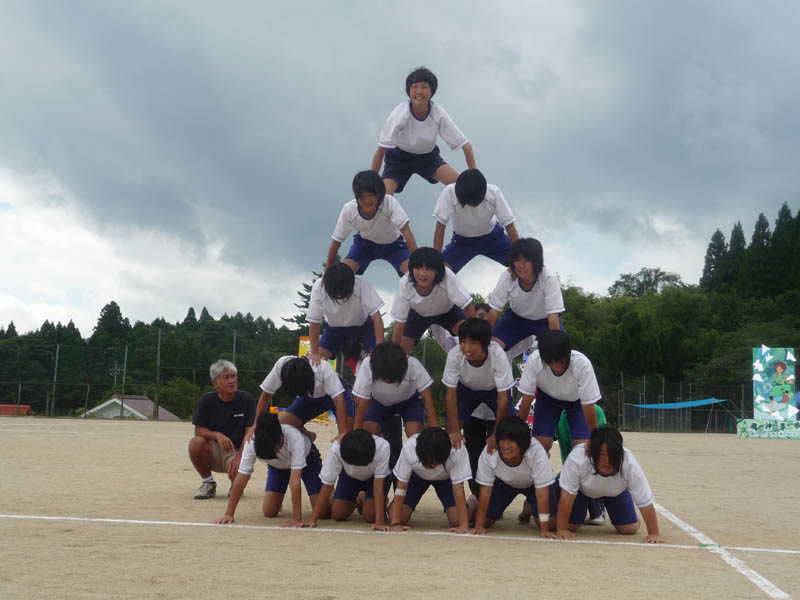
Here’s this week’s Media Mix about changing attitudes toward school athletics. If there’s a central theme to the piece, it’s probably the idea that sports is all about appearances. It’s not a novel or original idea, but it is one that runs counter to our ideal of what sports represents. “Performance” is a malleable word, but what school sports has become in Japan–maybe even the world–is a kind of contract between athlete and observer. As sports fans we evaluate the performances of players both as individuals and as members of teams, and those evaluations eventually have meaning. At the end of the column I cite survey results that say many adults didn’t really enjoy playing sports until after they leave school, which implies that the pressure to “perform” diminished the essence of sport, i.e., competing physically with others as well as with one’s own capacity. Take away the observer, the fan, and sports comes closer to this essence. Many athletes, especially those who make a living from sports, will say there’s no difference, that they would “perform” the same way whether there was an audience or not. If you’re going to play a sport, you should play it well. But that reasoning only makes sense in a world where sports is viewed primarily as entertainment. Sure, when you play you want to do your best for your team, if not for your own self-regard, but without a critical gaze it has no social value.

Thus the cultivation of “spirit,” though ostensibly an endeavor that benefits the individual and the team, is really a means of enhancing performance in the entertainment sense of the word. The athlete must be seen to be suffering, to be working beyond his or her innate capabilities. So high school pitchers keep throwing the full nine innings, even if their arms are giving out. In one of the Asahi articles, Prof. Sakaue says that sports in other countries is treated “as a kind of culture,” implying that it isn’t thought of that way in Japan. I’m not really sure what he’s trying to say, though I think he means that sports in Japan is a function of social engineering, which seems to me an over-simplification. One of the hoariest cliches attached to athletics is the dynamic between enjoyment and winning, as if the relationship between the two were inviolable. In Japan, the dynamic is broader: it’s not between enjoyment and winning, it’s between pain and performance. You will perform better if you go through a lot of pain beforehand. This is, of course, a stereotype, which is probably why people are starting to question the significance of athletics in the educational process.

Posted in Media | Tagged , | Leave a comment