BIFF Day 3

Supposedly a typhoon is on its way. It’s been windy and overcast since yesterday morning, but strangely warm, too; warm enough for T-shirts. And last night there was a brief squall, but luckily I was inside at the time. Though the festival is not exactly a well-oiled machine, it would seriously be disrupted by a major weather front.

“Ceylon,” which I saw yesterday morning at a press screening, is about the Sri Lankan civil war of 2009. It’s one of those well-meaning films that doesn’t take a side, per se (though the government soldiers come off much worse than the rebels), but condemns war in general. It was directed by Santosh Sivan, an Indian, who made “Malli,” one of the best films I’ve ever seen about terrorism. That was a fairly internal film, diving into the mind of the girl who was selected to be a suicide bomber. Since then Sivan has become more commercial, so to speak, though he continues in the same vein. “Ceylon” tries to take in too much while offering something that can also be considered entertaining. It takes place on a beautiful island where a bunch of young people orphaned by the civil war live in a commune run by a kind but strict middle aged woman. Eventually, the war comes to the island with terrible consequences, but it’s not particularly affecting. Sivan seems enamored of Terrence Malick, or maybe it’s just that any movie shot on a tropical island beset by war looks like “The Thin Red Line.” Continue reading

Posted in Movies | Tagged , , , | Leave a comment

BIFF Day 2

CIMG2806The festival put me in the Seacloud Hotel this year rather than the Grand, where I usually stay. I stayed at the Seacloud once when it first opened and liked its efficiency rooms with a sink, stovetop, and even a washer. I also liked the wood floors and the somewhat antiseptic decor–the bathroom was a frosted-glass cubicle sitting in the middle of an enormous space. Times have changed. The room I got this time is much smaller and the efficiency functions are turned off unless you ask them to turn them on. More discouraging is that the area where the Seacloud is located has been built up, so the view out my window is the wall of the building next door, about three meters away. I miss the Grand, not only its more conventional “luxury” features, but its convenience (most of the press functions are there), though the Seacloud is closer to the subway station and the Megabox multiplex. Continue reading

Posted in Movies | Tagged , , | Leave a comment

BIFF Day 1

CIMG2801I arrived in Busan for the film festival earlier than I usually do. Delta has stopped direct flights from Narita to Busan, and their daily round trip arrived at Gimhae Airport in the evening. I booked on Busan Air, which I didn’t even know about until I did a random web search for cheap flights to Busan. I got a round trip for only ¥25,000, including tax and fuel surcharge. It left on time and we even got a meal and coffee. The flight arrived at 4 p.m., which gave me plenty of time to get to my hotel and then to the opening ceremony, which I usually miss.

I was more interested in the opening film, but that wasn’t the case with the majority of people at the Busan Cinema Center, a huge outdoor space with a kind of floating roof above it in the middle of Centum City, a retail and commercial district on the edge of the Haeundae resort area. There is plenty of room around the BCC for rubber neckers to watch the goings-on, and with each big Korean star on the red carpet there was a high-pitched effusion that seemed to come from everywhere. Though some of the names were familiar to me, everyone was so gussied up it was difficult to tell one person from another, especially the women. Odagiri Jo made something of a spectacle of himself, sporting a huge bushy afro topped by little hat. It reminded me of that line from “Leopard Skin Pillbox Hat.”

The movie, “Vara: A Blessing,” was better than I expected, though there were a lot of distractions in the open air venue, what with people moving about in the aisles. It’s a Bhutanese movie, directed by Khyentse Norbu, an actual Buddhist priest, though it seems to take place in India. It’s also a markedly international production, and the English dialogue was sometimes a distraction since it seemed written by someone who watches a lot of Western TV. The story is about a young dancer who is pursued by two young men in her village–the rich but shy landlord and a low-born outcast who has a talent for sculpture. The latter talks the dancer into modeling for him while the former pines for her from afar, and after a scandal erupts involving these three the resolution is not what I expected, which is saying something since the movie’s plot is melodramatic in a soap operatic kind of way. The actors try too hard and the spiritual elements are overwhelmed by the practical ones. It should be more contemplative.

At the opening party afterwards some people were talking about the movie, specifically why this one was chosen as the opener. It’s hard to say. BIFF hasn’t had the chance to premiere a really major Asian film in years, losing out to the big Western festivals, so the consensus is that the programmers want to draw attention to how much attention they are paying to cinema from smaller countries. But “Vara” was pretty lightweight, and while it got the attention it deserved here, I don’t think it will get much anywhere else.

Posted in Uncategorized | Leave a comment

The Selector playlist, Sept. 26, 2013

Here is the playlist of songs I programmed for the Sept. 26 edition of InterFM’s show, The Selector.

Defiance & Doubt: songs I think would sound good on the radio (2)

1. “New Wave,” Against Me!
When she recorded this song in 2007, Laura Jane Grace was Tom Gabel, the leader of a punk band whose political music is fist-pumping yet thought-provoking, verbose but incisive. Her “debut” album is tentatively titled Transgender Dysphoria Blues. [Live]

2. “Booster,” Hal From Apollo 69
Idols are never defiant, but Hal, the singer in this 90s industrial rock duo, took idol vocal mannerisms and made them sound both cute and intimidating, but not as intimidating as that guitar. [official video]

3. “Ven Hacia Mi,” The Mavericks
Raul Malo’s love of Roy Orbison is fully realized on the new reunion album by his old band, which made its fortunes as a country act. Some people think Orbison was a country act, but not me, which is why I chose to include the Spanish version of their song “Come Unto Me.” [English language version]

4. “Old Jim Crow,” Nina Simone
Probably the most ornery personality in the history of pop, Nina Simone was the perfect protest singer during the civil rights era: fearless, sardonic, soulful, and mad as hell. [Lizz Wright tribute]

5. “Boyz,” M.I.A.
Mathangi “Maya” Arulgragasam, the daughter of an alleged Tamil terrorist she has mixed feelings about, is today’s Nina Simone. “How many no-money boyz are rowdy,” she chants during the chorus. “How many start a war?” [Official video]

6. “Love Or Let Me Be Lonely,” Friends of Distinction
This 70s vocal group had bigger hits, but none as interesting. I count at least three distinct melodies here, each of which could have propelled a Top 40 song on its own. Is that wasteful or innovative? [TV lip-sync thing]

7. “Slut Like You,” P!nk
Early on, Alecia “P!nk” Moore defied show biz handlers who were grooming her to be the next Britney Spears. She’s now bigger than Spears, and she’s done it her way, in the process becoming a role model for teenage girls, though most parents probably don’t want their kids to hear this song. Actually, the sooner they find out the truth about sexual transactions, the better. Besides, it’s funny. [Live in L.A.]

8. “Man’s World,” Ice Cube & Yo-Yo
At one time Cube was the most hated man in pop, though I thought it was all an act. Sure enough, he’s now one of the most successful actors in Hollywood. On this song from his first solo album, the sexual bravado of his cartoon gangsta character is challenged by female rapper Yo-Yo. Every gangsta can learn something from the exchange. Besides, it’s funny. [Live in Rotterdam]

9. “I’m Against It,” The Ramones
The Ramones are acknowledged as the original punk band, but they weren’t by nature defiant the way punks are supposed to be defiant. They just wanted to be stars, but if success meant acting as if they were against everything, well, they could do that, too. [Live]

10. “A Long Jump,” Vladimir Vysotsky
Russian folk singers, even if they’re singing about the beloved Fatherland, sound defiant. It’s the aural quality of the language, and none sounded more Russian than Vladimir Vysotsky, a genuine thorn in the Soviet authorities’ side until he died in 1980 at the age of 42 from too much involvement in life.

11. “A Goodbye Rye,” Richard Buckner
A dreamy, poetic songwriter, this Northern California country troubador can get annoying with all the convoluted language. But he is also a gifted melody-maker who can turn emotional uncertainty into vivid romantic commentary. [“Lil Wallet Picture“]

12. “One in a Million,” The Brains
Tom Gray, the leader of this Atlanta New Wave band, will probably be able to retire on the royalties he’s earned for writing Cyndi Lauper’s hit “Money Changes Everything.” All his songs have the same pessimistic tone, though the use of the title phrase in this one points to something more ambiguous. Is that “one in a million” as in “someone special” or as in “just another loser”? [the song]

13. “High Pressure Days,” The Units
The premiere San Francisco synth-punk band, the Units offered a darker gloss on the dehumanizing theme that made their contemporaries, Devo, stars. The fact that the Units didn’t become stars only proves that a lot of music fans, not to mention record labels, prefer their dehumanization to be ironic. [the song]

14. “These Are the Things,” The Pale Fountains
I get nervous when I listen to Michael Head, who always sounds as if he’s about to run out of the room. This is one of his most agitated songs. The trick is to translate pure anxiety into something that’s musically appealing. [the song]

15. “It’s Gonna Take a Miracle,” Laura Nyro & Labelle
If I prefer Laura Nyro’s 1971 version of this soul classic to the Royalettes’ 1964 original or Deniece Williams’ hit 1980 remake it’s because Nyro sings as if she knows for sure she will never love anyone EVER AGAIN. It just tears me up, as it does Labelle, who would save her if they could, but they can’t. [the song]

16. “Where the Colors Don’t Go,” Sam Phillips
When she was singer-songwriter Leslie Phillips, she sang Christian pop songs of faith and longing. As singer-songwriter Sam Phillips she now sings conventional pop songs of doubt and longing. The difference is huge. [the song]


Posted in Music | Tagged , , , , , , , , , , , | Leave a comment

October 2013 albums

Here are the album reviews I wrote for the October issue of EL Magazine, which was distributed in Tokyo yesterday.

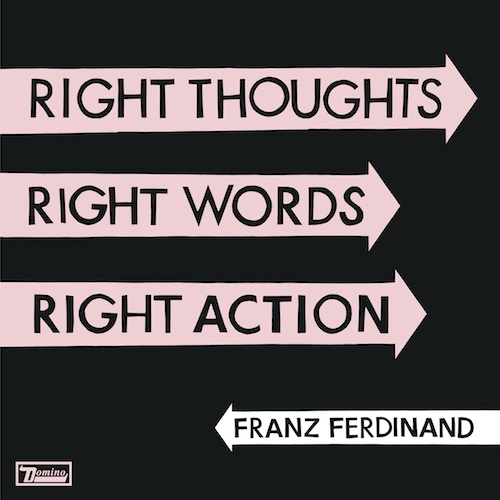
nineinch13franz13Hesitation Marks
-Nine Inch Nails (Polydor/Universal)
Right Thoughts Right Words Right Action
-Franz Ferdinand (Domino/Hostess)
There’s not much to say about Trent Reznor’s reviving the NIN brand after a four-year hiatus since he tended to average five years between releases anyway. But the fact is, he hasn’t released a real NIN album since 2005’s With Teeth. Whatever Reznor has done in the meantime has been qualified by either new marketing schemes or the kind of ambient experimentation that won him an Academy Award. So Hesitation Marks not only returns him to a major label, it also revives the industrial clank and angst of his classic period, though at a somewhat lower pitch. If the various labels (Columbia in the U.S., Universal elsewhere) feel they got their money’s worth, it’s probably because this is the most pop-friendly collection of songs Reznor has ever composed, even as he provokes the media with his usual contrarian sentiments. That means he’s paying closer attention to his funk inclinations, and if any 80s artist seems dominant on the record it isn’t the usual suspects like Depeche Mode, but rather someone like Prince, whose minimal approach to hard rhythm Reznor takes to heart. “I am just a copy of a copy,” he sings on the opening track, daring you to find something wrong with that. Songs like “Satellite” and the lead single, “Came Back Haunted,” drive the point musically rather than verbally, and for once Reznor’s rote misanthropy doesn’t distract you from the visceral excitement, mainly because it’s not what commands your attention. Even when he dials it down he maintains the parameters of a song. Consquently, Hesitation Marks affects you like a real album, one that dips and peaks not in terms of quality but in terms of emotional response. If that sounds more like commercial calculation than artistic growth, shoot me for liking pop for what it is; which is why Franz Ferdinand’s return to old forms is less satisfying. Their style and outlook was always closer to the pop norm. Lead track “Right Action” hits you where you live immediately with its disco strum and arch lyric—the exact same combination that made FF stand out from their nu-Britpop rivals ten years ago. Now that the competition has all but vanished by rights FF can leverage their still potent popularity to monopolize the somewhat moribund field of dance rock, and while there’s plenty here to dance to there isn’t much that’s engaging on any other level. Producers Bjorn Yttling and Todd Terje brighten the sound to the point of tinniness and make Alex Kapranos sound disembodied from the rest of the band, whose workmanlike cohesion is reduced to only what’s necessary. On ballads like “Fresh Strawberries” and “The Universe Expands” the players sounds superfluous since the electronics make more of a racket. It’s strange that as FF tries to recapture their primal effect, their producers point them the other way. Sometimes, you need a major label to steer you right. Continue reading

Posted in Music | Tagged , , , , , , , , , , , | Leave a comment

October 2013 movies

Here are the movie reviews I wrote for the October issue of EL Magazine, which was distributed in Tokyo today.

brokencityBroken City
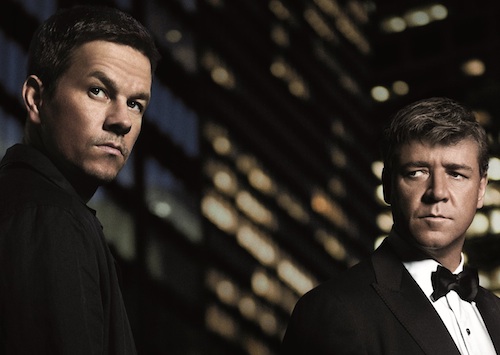
The kind of movie that Sidney Lumet turned into a cottage industry, this crime drama suffers a bit from New York’s emergence in recent headlines as one of the safest big cities on the planet. The “broken” in the title refers to New York’s politics, though director Allen Hughes and screenwriter Brian Tucker expect the audience to bring to the theater prejudices that are mostly outmoded and characteristic of an era when movies set in New York came with their own special baggage. Consequently, when police detective Billy Taggert (Mark Wahlberg) is laid off following his acquittal for the wrongful death of a man he was following, we’re supposed to think it has something to do with “corruption,” though on the surface it just looks like Taggert really is racist and trigger-happy. The mayor (Russell Crowe) personally congratulates Taggert because the man he killed was a known rapist-murderer who was on the streets due to a legal technicality, but the police chief (Jeffrey Wright) knows of evidence that was not introduced into Taggert’s court trial and talks the policeman into quitting before such evidence comes to light. Fade to seven years later, when Taggert is a private eye spending more time strong-arming clients to pay their bills than on actual cases. He is summoned by the mayor to tail his wife (Catherine Zeta-Jones), who he believes is cheating on him. Since the mayor pays up front, Taggert takes the case more than willingly, and while it turns out to be a cinch to carry out, what he uncovers is problematic because it appears that the man the mayor’s wife is seeing is the campaign manager of his opponent (Barry Pepper) in the upcoming election. At first, the implied corruption is not what it seems, but actually it turns out be exactly what it seems, which makes most of the emotional motivation on display suspect, Taggert’s in particular. The ex-cop is a confounding amalgam of macho swagger and professional naivete. He’s down with gay folk but can’t countenance his actress girlfriend’s love scenes in the “indie movie” she appears in; and while he can’t trust the greasy mayor as far as he can throw him, he does exactly that for the longest time and pays the price in a way that makes you wonder how anyone would rely on him as an investigator. The mayor is such a straw man that Crowe abandons any attempt at subtlety early on and just draws him as a flaming asshole with the biggest ego this side of Newt Gingrich. In other words, it’s the kind of lazy thriller where plot twists are delivered not once, but twice by means of secretly recorded conversations. Is Lumet laughing or spinning? (photo: Georgia Film Fund Seven LLC and Monarch Enterprises) Continue reading

Posted in Movies | Tagged , , , , , , , , , , , , , , | Leave a comment

Media Mix, Sept. 22, 2013

tumblr_mt1xm0Ie4m1ql0h9vo1_400Here’s this week’s Media Mix, which is a survey of negative reactions in the media to Tokyo’s winning bid for the 2020 Olympic Games. One of the more interesting pieces of information I came across while researching the column had to do with the aborted 1940 Olympics, which was supposed to take place in Tokyo. Though I was aware that it was cancelled because of the Japanese Imperial Army’s “adventure” in China, I did not know that the games were canceled by Japan itself. Interestingly, the IOC awarded the games to Tokyo as a means of strengthening Japan’s diplomatic power following its alienation from the League of Nations over the Mukden Incident of 1931, which was staged by the Japanese military as a premise for invading Manchuria. The IOC and government of Tokyo were behind the bid, but the Japanese national government, already controlled by the military, was never very supportive, and when war broke out between Japan and China in 1937 the military requested that the Tokyo Olympics be forfeited. The IOC and local boosters persisted until July 1938 when the Diet formally gave up the Olympics, and the IOC transferred the games to Helsinki. Of course, they weren’t held there, either, because of the outbreak of World War II in 1939, but it’s interesting to ponder what would have happened if the Japanese government hadn’t canceled the Tokyo games, which would have taken place during the last week of Sept. and first week of Oct. 1940, a full 15 months before Pearl Harbor. Though it’s likely international pressure might have come to bear on the IOC to cancel the Tokyo games in light of Japan’s imperialistic forays into Asia (not to mention a paucity of countries participating since they would be busy fighting Nazis), it’s not entirely clear that the IOC, which seemed determined to bring Asia into the Olympics in a more formal way, would have bowed to such pressure. Then again, the 1936 Olympics in Berlin already showed the world the public face of fascism, so it might not have had the stomach for another possible nationalistic display. For strictly academic reasons, it would be interesting to see what kind of show Tokyo might have put on in 1940. Since one of the hallmarks of wartime Japan was its anti-West stance (not counting ally Germany, at least formally), would Tokyo have been as welcoming of foreigners in Sept. 1940, when the propaganda machine had already been warmed up? And would any other Asian countries have even attended–not so much because they may not have trusted Japan’s intentions, but because at the time many were still under European colonial rule? Also, it should be noted that the term hikokumin (non-citizen), which is now being used by nationalists against any Japanese person who has objected to the 2020 Tokyo Olympics, is closely identified with this period, since it came into common use to describe people whom the Japanese military police persecuted for not showing sufficient patriotic fervor.

Posted in Media | Tagged , , , | Leave a comment

September 2013 albums

Here are the album reviews I wrote for the September issue of EL Magazine, which was distributed in Tokyo on Sunday.

SaraB_3rdGabrielleAplin-ERThe Blessed Unrest
-Sara Bareilles (Epic/Sony)
English Rain
-Gabrielle Aplin (Parlophone/Warner)
It’s easy to make the assessment that Sara Bareilles’ success after her last album, Kaleidoscope Heart, was of the old-fashioned kind: singer-songwriter plugs away for six years and three well-received but modestly sold albums before hitting it big commercially on her own terms. But Bareilles’ original appeal was always centered on her potential. Though a gifted tunesmith and a bold performer, she impressed the same sort of people who thought Vanessa Carlton would one day outgrow her adolescent longings (and never did). Bareilles was not going to turn into Fiona Apple, as proven by her willingness to host a network singing show after she rose to number one. What’s surprising about The Blessed Unrest is the deliberateness of its mood. Bareilles’ penchant for histrionic arrangements and symphonic feelings are detoured into darker, more introspective territory, as if all the recording were done at night. As adult contemporary music goes, it is better than its purplish poetry would have you believe if all you did was read the lyrics in the CD booklet, but that’s true of Apple, too. When she boosts the energy level, as on the soaring opener “Brave” and the witty and catchy “Little Black Dress,” Bareilles proves that moodiness doesn’t mean depressiveness or self-dramatization. It simply means that some topics deserve to be taken seriously, though the seriousness always follows a certain hackneyed pattern. Every song features a chorus custom made for the ending credits of a Nicholas Sparks adaptation. If she demonstrated more of a sense of humor she’d be one of the prime pop singer-songwriters on the planet, but some artistic priorities are non-negotiable. Being a newcomer, British songbird Gabrielle Aplin has yet to sort out her own priorities, but since she garnered a hit right off the blocks her handlers may already have sorted them out for her. Unfortunately, that hit, a version of Frankie Goes to Hollywood’s “The Power of Love,” isn’t characteristic of her quieter English folk sound, which, as with her contemporaries in Mumford & Sons, can tend toward bombast when given the chance, and her producers provide plenty of chances. Unlike Bareilles, Aplin doesn’t have the brassy vocal cords to handle the big arrangements that are built up around her and she often sounds buried beneath the architecture. Like Bareilles, she has a gift for melody that comes through on her second single, “Panic Cord,” and the subtly effective “Please Don’t Say You Love Me.” Given that she attracted her initial fan base through her own YouTube channel with nothing more than an acoustic guitar and her sunny disposition, it seems like a lost opportunity, but when you bypass the indie middle ground as Bareilles and Aplin do what often happens is you end up sacrificing the heartful character of your music without even knowing it. Fiona Apple managed to avoid that right from the start, but Mumford & Sons didn’t. They have a lot to answer for. Continue reading

Posted in Music | Tagged , , , , , , , , , , , | Leave a comment

September 2013 movies

Here are the movie reviews I wrote for the Sept. issue of EL Magazine, which was distributed in Tokyo on Sunday.

Matt DamonElysium
It says something about Neill Blomkamp’s big budget studio followup to his excellent science fiction thriller District 9 that star Matt Damon doesn’t figure deeply in one’s enjoyment of the film. Though the reliable actor is as strong as always, almost anyone his age could have played this part without detracting from the movie’s overall quality. Damon has proven to be one of the only movie stars of his generation worth the money he’s paid, but Blomkamp’s story conception and vision of an entire future world is so stunningly integrated that the characters and, by extension, the actors seem almost beside the point. If Elysium isn’t as satisfying as District 9 it’s because it doesn’t take its amazing premise far enough. Damon is Max, an ex-con in the mid-22nd century who lives in the slumland of greater Los Angeles. In fact, all of earth, denuded of green and bereft of non-human life, is a slum, while what we now call the 1% live in a rotating gated community in the sky called Elysium. The defense secretary of that colony, a cold, efficient, ambitious woman named Delacourt (Jodie Foster), shoots down in cold blood the “illegal aliens” who attempt to reach her “habitat,” actions that perturb the president. Feeling threatened, Delacourt sets in motion a coup involving the biggest industrialist (William Fichtner) on or off the planet. The industrialist agrees to help with the takeover by sabotaging the data frame of the colony and handing it over to Delacourt. He holds this data in his own brain, and on his way to deliver it to Elysium his craft is hijacked by Max, who used to work for him in his factory until an accident rendered him irradiated and terminally sick. He needs Elysium’s exclusive medical technology to survive and a local crime lord offers to get him there if he kidnaps the industrialist, or rather the contents of his grey matter. That’s a lot of plot for the first half and Blomkamp complicates matters even more in the second with a leukemia-stricken child, Max’s childhood sweetheart (Alice Braga), a sadistic mercenary (Sharlto Copley), and more twists than an episode of Dr. Who. Amazingly, he keeps it all coherent and exciting, and thanks to a plot device involving Max being fitted with an exoskeleton to facilitate his task the action sequences are the best you will see this summer, but in the end Blomkamp’s soft spot for melodrama and the big humanitarian gesture undermines the film’s more serious subtext. Elysium seems satisfied to be a great science fiction adventure story though its attention to socioeconomic detail and projection of where we’re headed show the potential for a speculative ride that could have been sublime. More nuanced characters might have pushed it over into the realm of literature. Continue reading

Posted in Movies | Tagged , , , , , , , , , , , , , | Leave a comment

Media Mix, Aug. 18, 2013

917364639Here’s this week’s Media Mix, which is about discussions surrounding Japan’s collective self-defense capabilities. At the end of the column I express doubt that the Japanese public really agrees with the government’s plan to join such collective military activities, but since writing the piece I wonder if that’s a correct assessment. On Thursday, NHK aired a live debate about Japan’s military capabilities and mentioned a recent survey that found 61 percent of respondents thought Japan’s current status with regard to its security arrangements was enough, meaning they didn’t feel it was necessary to change anything. This portion is less than it was three years ago by about five percentage points, which isn’t much and probably reflects the resurgence of the Liberal Democratic Party, who wants to do away with war-renouncing Article 9. However, when set against some of the comments made on the program, it could indicate a change in public opinion. Though NHK is famous for trying to present every view on a given topic equally, the views offered by lay people were clear. One 80-year-old woman expressed palpable alarm at the anti-Japan rhetoric coming out of China and North Korea and believed Japan should prepare itself in any way possible, including full-scale remilitarization. Usually, it’s the generation that experienced World War II directly who is most against rearming, so the woman’s comment was significant.

Then again, it’s not clear as to whether the Japanese public really understands what’s at stake. Oliver Stone has berated the Japanese media for failing to check militaristic tendencies among Japanese politicians, and by extension you could say that the media has also failed to make the public understand what collective self-defense really entails. Last night, the Fuji TV variety show Real Scope Hyper dedicated a whole hour to the Self-Defense Forces, hyping it as a fun career choice by showing all the interesting things that fighter pilots do and the cool ways that tanks move across the landscape. One 15-minute segment focused on female infantry members, showing how tough basic training was but also that just because you had to crawl through the mud for a few hours this week it didn’t mean you couldn’t dress up in your frilliest frocks for a date on the weekend. (The show also implied that the SDF is a great place to meet potential husbands) The celebrities in the studio oohed and aahed over the neat equipment and uniforms, clearly impressed. There was absolutely no mention made of the end purpose of all this training and spending (prices of equipment were clearly explained); no references to what combat actually means. In the U.S., the military promotes recruitment by boosting training aspects (“learn a skill”) and self-improvement (“be all you can be”). Here, it’s like a video game you can play 24/7, or a big cosplay event.

Posted in Media | Tagged , , | Leave a comment