Media Mix, Aug. 4, 2013

Yohei Miyake

Yohei Miyake

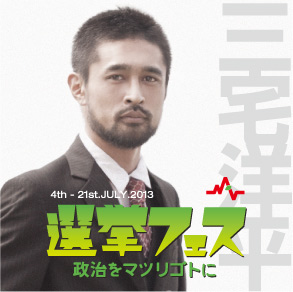
Here’s this week’s Media Mix, which is about the LDP’s lack of a popular mandate despite its overwhelming victory in the recent Upper House election. Regardless of the numbers—whether we’re talking ballots counted or voter turnout—the tone of the campaigns and the public’s reaction to those campaigns show how out-of-touch the electorate is with the political world, and vice versa. The two LDP-related videos I cited in the column are informed by cynicism on the part of the ruling party and fierce resentment on the part of its supporters. When the security goons take that Fukushima woman’s placard away at the Abe rally, they are basically telling her that her opinion means nothing, and she should have known that before she showed up. The frenzied anti-media chanting at the Abe rally in Akihabara demonstrates that the politics of antagonism is one of the LDP’s most potent methods for attracting support: Exploit negative feelings to your advantage. In contrast, the rally in Shibuya is characterized by a desire to move beyond antagonism toward dialogue. Skeptics may find Green Party candidate Yohei Miyake’s speech naive, but what he’s saying is that the atmosphere created by the LDP’s political gamesmanship makes their opponents reluctant to engage them on the issues. “We shouldn’t be afraid to express our opinions,” he says during his speech. “Let’s tell those guys who are crazy about war how great it is to be crazy about peace.” Though the weeklies and tabloids haven’t been very helpful in this regard, mostly deriding people like Miyake (who lost) and anti-nuclear advocate Taro Yamamoto (who won) in a reactionary anti-leftist manner, they can’t help but notice that the election didn’t bode well for a healthy democracy. Gendai despaired over the realization that Abe and Co. would be able to “do anything they wanted” from now on, and in a bullying, privileged manner. The only antidote to this situation is a media that questions the adversarial model, but unfortunately the media thrives on it, because they think it provides drama and drama is what draws viewers and readers. In her Tokyo Shimbun column, Minako Saito described the Akihabara rally as being dominated by “jeers and abusive language,” not against the people on the sound truck, but against those people’s opponents, who were imagined as being legion. This is nothing but paranoia, which the LDP exploits. I mean, NHK is the enemy of the status quo? The Asahi Shimbun is going to sell the country out to the Chinese and the Koreans? Conservatives and so-called “realists” always accuse left-leaning people of living in a fantasy world, but unmediated anger (against anything) can have the same effect. Believing that everybody is out to get you is the most dangerous fantasy of all.
Posted in Media | Tagged , , , | Leave a comment

August 2013 albums

Here are the album reviews I wrote for the August issue of EL Magazine, which was distributed in Tokyo on July 25.

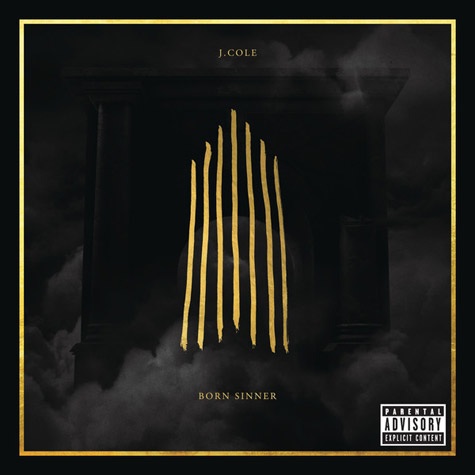
j.cole13kanye13Born Sinner
-J. Cole (Roc Nation/Sony)
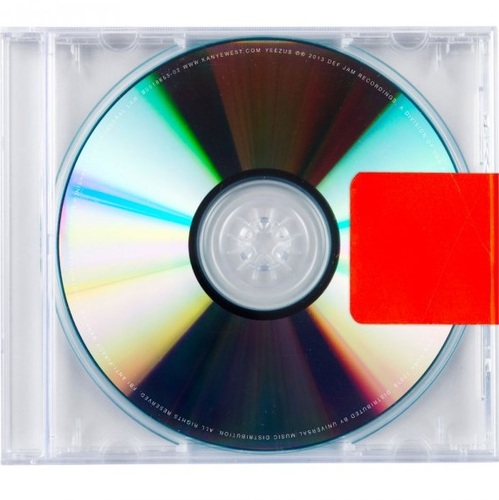
Yeezus
-Kanye West (Def Jam/Universal)
All rappers release mix tapes, but former Sean Carter acolyte J. Cole has turned the practice into a constructive pastime. The two short free download collections that preceded his bona fide second long-player don’t contain anything that ended up on the commercial release. In fact, they don’t sound very much like it, but they are obviously the work of the same person. There’s the same suspicion that love is the answer, the same conviction that fame and money won’t solve his problems, the same need to justify his existence as a person rather than a personality. The difference is the music. You won’t find a choir like the one that dominates “Trouble” on the mixtapes, and if the guests and interludes point up Cole’s obsession with the conventions of soul and gospel, they also emphasize his determination to give the listener his money’s worth. Commercial calculation drives hip-hop even more than soul and gospel, and as Cole races through his narratives as if sprinting for the toilet, emptying his mind of all the painful impulses that make him a sinner, the production acts as a balm, a calming breeze after the violent storm. Given the harder, colder textures that have come to dominate hip-hop lately, Cole’s organic formulations effectively sell his redemptive raps, even when they’re incoherent and borderline offensive. When he ponders how deeply his woman understands his screwed up ways he sounds positively confused, a dramatic mode that is as rare in hip-hop as oboe arpeggios. And since he produces himself, there’s a continuity to both the music and the themes that keeps you intrigued. You really do worry about his spirit, and where it’s headed in the long run. Released on the same day, Kanye West’s Yeezus aims for something similar but approaches it from the opposite direction. Harsh and discordant, the album interprets Kanye’s usual self-loathing as caustic misanthropy. The industrial rock mode of “Black Skinhead” appropriates a party-hearty vibe to deliver a dis against the reactionary elements of hip-hop, of which Kanye always seemed like a card-carrying member. The God-like tendencies are taken for granted, which is why he needs to sound like a metal kid. It’s the only pop music form that projects supernatural power automatically, so when he makes demands for his massage and his croissants and his instant sex you take them as threats instead of what they really are—the petulant effusions of an egocentric adolescent; and I imagine that’s the point, since Kanye’s whole career has been a response to needs he knows aren’t nice. But if he had Cole’s presence of mind, he’d also understand how to make his confessions mean something more than just acceptable carriers for rote provocations. There’s nothing wrong with being provocative, but it’s the default mode for hip-hop and sometimes you just want a rapper to explain himself. Enough with the armor of insult. Continue reading

Posted in Music | Tagged , , , , , , , , , , | Leave a comment

August 2013 movies

Here are the movie reviews I wrote for the August issue of EL Magazine, which was distributed in Tokyo on July 25.

EMPEROREmperor
Though most scholars think that Hirohito was more responsible for the Pacific War than is traditionally believed, his vague position as the ceremonial head of Imperial Japan, not to mention his status as a “living god,” has made such a historical position difficult for the average world citizen to understand. Whatever his weaknesses and prejudices, he was not a charismatic leader like Hitler. Consequently, the conventional idea that he was more a puppet than an instigator of the war has prevailed over time even as evidence comes to light that he had a central role in its prosecution. This expensive American-Japanese production attempts to reinforce convention by means of stale thriller devices. When Gen. Douglas MacArthur (Tommy Lee Jones, looking and sounding too much like Tommy Lee Jones to be effective as one of the most important Americans of the 20th century) arrives in a devastated Tokyo to oversee the Occupation in 1945, one of his most pressing tasks is to determine the culpability of the emperor, and he assigns the foot work to Gen. Bonner Fellers (Matthew Fox), an expert on psychological warfare. Fellers’ work is complicated by his reunion with a Japanese woman, Maya (Eriko Hatsune), whom he knew in college when she was an exchange student. Their budding romance gives Fellers extra insight into the Japanese mindset, which is constantly described to him as being more nuanced than he could imagine. MacArthur holds the position that his job would be easier if Hirohito remained emperor since he believes that without a figure of permanence, the Japanese people will turn into zombies or lemmings or whatever. However, he’s under immense pressure from Washington to hang the emperor. So while the movie contrives to present Fellers with a seemingly impossible mission, it also sets up the obvious without actually interrogating the Japanese people’s true feelings about the emperor. (There is some research that shows many Japanese at the time would have gotten over the emperor’s removal without much trauma) Most of Fellers’ sentimental education is provided by Maya’s uncle (Toshiyuki Nishida), an officer and member of the nobility who regrets the war and explains Japanese behavior in bite-sized nuggets of received wisdom. The character, like Maya, is a fictional construct and thus functions as a convenient plot stabilizer. The parade of real Japanese figures, from a silent Tojo (Shohei Hino) to an awkwardly voluble Fumimaro Konoe (Masatoshi Nakamura), are just as convenient stick figures whose only purpose is to make Fellers’ job harder. And since true love is as difficult to obtain in this environment as the truth, the romance, which never took place, is seen as being just as compelling as the fate of the Japanese polity. That’s what makes the movie unreliable from the start. (photo: Fellers Film LLC) Continue reading

Posted in Movies | Tagged , , , , , , , , , , , , , | Leave a comment

Paul McCartney, Tokyo Dome 2002

Y2M9MDAwMDAwJnNyYz0lMkZpbWFnZXMlMkZmdWxsJTJGZDM4YjRhNjEyMGZmNmJjZTEwMGYyYTM5MWQxN2QyNmRjMGViY2U5OS5qcGcmdz05MjAmaHM9YTJmMQPaul McCartney just announced that he will play five concerts in Japan this November, three of them at Tokyo Dome. The last time he was here for a concert was 2002, and I wrote about it for The Japan Times. The review is no longer on the web, it seems, so for those who  want a preview of what could go down, here it is.

Three tunes into his two-hour-and-thirty-minute extravaganza at the Tokyo Dome on Nov. 11, Paul McCartney introduced a “song that’s never been played live until this year. The thing is, if you don’t tour, then when you record a song, that’s the last time you ever sing it.” He then played the simple but unmistakable opening chords of “Getting Better.”

Until the death of John Lennon, a sizable portion of the world’s population expected a Beatles reunion eventually, and even after Lennon’s murder there were many who thought the three remaining mop-tops would, pardon the mixed metaphor, bury the hatchet and hit the road. They didn’t stop dreaming until a year ago, when George Harrison died.

I never gave it a second thought. But hearing “Getting Better,” which lost none of its punchy charm in the cavernous Dome, I realized what the Beatles missed when they stopped touring in 1966. As a live act, they predated the “rock concert.” They were a club band who morphed instantly into a phenomenon, and in either mode concerts were never more than a dozen songs rattled off in rapid succession. Legend has it that the group quit playing live because the members could no longer hear one another and were deteriorating as instrumentalists as a result. Continue reading

Posted in Music | Tagged , | Leave a comment

The family register, ca. 1996

While researching this week’s Media Mix about figure skater Miki Ando and the upcoming Supreme Court decision on the constitutionality of the Inheritance Law as it applies to children born out of wedlock, we tried to find out if writer Bunmei Sato had written anything on the subject since he’s probably Japan’s most informed expert on the koseki, or family register system. We were shocked to learn that Sato died in early 2011. We interviewed him once for an article we wrote about the koseki system for Japan Quarterly in 1996, and even afterwards whenever we covered the topic we would contact him for clarifications.

Here is the article in question, which should provide ample background for next week’s Media Mix. Actually, not much has changed since the article was written, though it seems likely that the Supreme Court will find the institutionalized discrimination of illegitimate children unconstitutional when they make their ruling this fall.

The Value of a Family
by Masako Tsubuku & Philip Brasor
(from the July-September 1996 issue of Japan Quarterly)

On Christmas Eve 1990, Yukimi Akiyama gave birth to a daughter, whom she and her partner, Akihito Yawata, named Moyu. Shortly thereafter they reported the birth to their local government office so that Moyu could receive health insurance and other services. They did not, however, record the child’s name in a family register, which is normally done at the same time, because they are opposed to Japan’s family registration system, called the koseki. Although Akiyama and Yawata had exchanged vows in a Christian ceremony, they had never reported their union to the authorities, since all marriages in Japan are recorded in family registers.

In 1992, Akiyama and 12 other women whose children did not have koseki applied for passports for their children at the Tokyo Metropolitan Passport Office. The office rejected the applications, saying that koseki were required as it was the document they used to confirm Japanese nationality. When the parents protested, the officials said they were only following the Passport Law, which is administered by the Ministry of Foreign Affairs. Continue reading

Posted in Miscellaneous | Tagged , , , , , , , | Leave a comment

The “placard” video

 I heard about this video last week, when it had only received about 400 hits. Then Tokyo Shimbun ran an article about it and the number of views went up considerably. At the time of this writing the number of views is more than 57,000. It is a hidden camera recording of a confrontation between Liberal Democratic Party security and a female observer at a rally for Prime Minister Shinzo Abe in Fukushima. The recording was made by the woman. She was carrying a placard that asked Abe his stance on nuclear power. The security team took the placard away from her saying that it is “not a place for protests. It is a place for listening.” She answers that she is not protesting. She just wants Abe to answer the question. They ask for her name and address, which the video beeps out. Later, they sent the placard to her work place, though reportedly she gave them her home address. A group of lawyers has  lodged a formal complaint with election officials.

Posted in Media | Tagged , | Leave a comment

Media Mix, July 7, 2013

Doing it Rola style

Doing it Rola style

Here’s this week’s Media Mix, which is about TV personality Rola. When the story of her father’s alleged crimes broke I noticed at least one person on Facebook question the Japanese media’s obsession with Rola’s mixed-blood heritage. For the record, her father is Bangladeshi and her Japanese mother one-fourth Russian, which technically makes her three-eighths Japanese, and thus not a hafu (half), as Japanese parlance has it. From what I understand, though Rola was born in Japan her parents were divorced when she was young and, in any case, she lived in Bangladesh from 3 to 9 years old. Her father remarried a woman of Chinese background and attended junior high school and high school in Japan. She doesn’t seem to have much, if any, contact with her birth mother; which makes that commercial she did for a certain online stock-trading company where she talks to her mother on the phone a strict violation of truth-in-advertising, but no matter. The point is that regardless of whether or not her on-air character is a put-on, her life experience qualifies as that of a non-Japanese as far as the media is concerned. Her tameguchi manner—the way she talks casually even to older persons and those who are supposed to be her social superiors—pegs her as a gaijin, who tend to be given a pass in such matters. There are plenty of NJ or hafu talent on TV who compensate for their birth situation by being overly polite in their language and over-solicitous in their manners. My feeling is that average Japanese viewers appreciate Rola not because of her cute tics, which tend to drive most non-Japanese crazy, but because she isn’t solicitous at all and doesn’t seem to care. In the Asahi Geino article I cited in the column, the reporter said that many of TV’s biggest comedian-hosts like Rola for this reason because it’s easier to make fun of her, and in the process they don’t look as cruel as they might look. Though people think she’s strange, they also typically refer to her as being nikumenai (“difficult to dislike”). The problem a lot of non-Japanese seem to have with Rola is that they think she’s setting the cause of non-Japanese acceptance back a generation or so with her airhead act, but I don’t really think so. First of all, most Japanese people don’t believe that the world represented by TV variety shows has anything to do with the real world, and second I think they envy Rola her dispensation for not being expected to suck up to her Japanese interlocutors. The matter of her father’s alleged crime has nothing to do with any of this, of course, but it probably made people think about it.

Posted in Media | Tagged , , | Leave a comment

Media Mix, June 30, 2013

Toshimichi Yoshida

Toshimichi Yoshida

Here’s this week’s Media Mix, about the documentary Tous Cobayes? and the twin controversies of nuclear power and genetically modified organisms, though mostly the latter since it hasn’t received much attention in the Japanese media. Last winter I wrote a related column about heirloom seeds and how the Trans-Pacific Partnership could pave the way for more GM agriculture. Though I’m sure farmers are worried about this aspect of global commerce, they have been so focused on “protection” in the form of tariffs that keep out cheaper foreign products that the more insidious matter of GM seeds has been given less coverage. However, a more open acceptance of alternative farming methods seems to be a trend in the media now, as exemplified by a recent article in Aera about a method of vegetable farming that takes advantage of bacteria in the soil to ward off pests, thus making it unnecessary to use agrichemicals for that purpose. The method has even been given a cute name–kinchan cultivation, “kinchan” describing the bacteria in an endearing fashion. The method was developed by Toshimichi Yoshida, a former employee of the Nagasaki Prefecture Agricultural Association. Yoshida was in charge of promoting new forms of farming and he always felt uncomfortable pushing agrichemicals in his work, so he eventually quit and became an organic farmer. Through a trial-and-error process over a number of years he found that vegetables grown in soil that was filled with fermented bacteria naturally repelled destructive insects, which tended to eat only over-ripe vegetables. Moreover, he thought the resulting produce tasted better, so he’s dedicated his life to spreading the method, and established a non-profit organization, Daichi no Inochi no Kai, to that end. In essence, the method is simply a variation on the composting idea, and thus is more easily adopted by lay persons with small gardens. They keep their household organic waste in one place and mix it with soil to create bacteria and then use that soil for planting. Yoshida spends all his time traveling the country, lecturing on his method. Consequently, kinchan cultivation is mostly practiced on the community level rather than on a large commercial level, but the article says that some local governments are looking at it from a waste disposal perspective since it could cut reduce incineration costs. Obviously, this sort of alternative agriculture would take hold literally from the ground up, and large-scale farmers will probably think it’s too much trouble to use Yoshida’s method, but the point about alternatives is that the more people who come to believe them the more mainstream they are. As I said in the column, GMOs need to be discussed more fully and openly, because they can become mainstream without anyone looking, given the financial momentum behind them. Unfortunately, the idea that organic is more demonstrably safer and produces better quality food is less pertinent than the fact that fewer people can make money off of it.

Posted in Media | Tagged , | 1 Comment

July 2013 albums

Here are the album reviews I wrote for the July issue of EL Magazine, which was distributed in Tokyo on Tuesday.

Unknownboards13Random Access Memories
-Daft Punk (Sony)
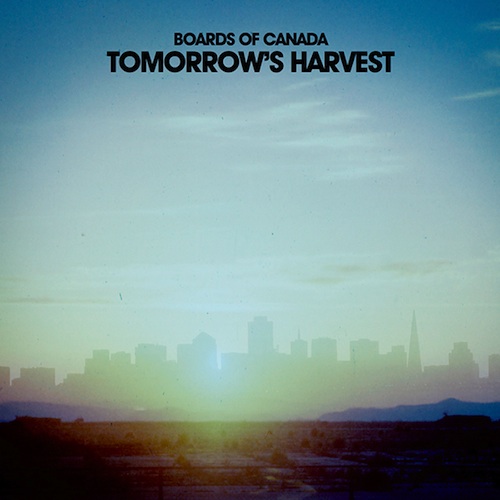
Tomorrow’s Harvest
-Boards of Canada (Warp/Beat)
Given their influence on current dance music, it seems odd that Random Access Memories is only Daft Punk’s fourth studio album since its two members, Thomas Bangalter and Guy-Manuel de Homem-Christo, first acquired their moniker in 1994, but then dance music has always downplayed creative endeavors in favor of making the moment intense, a credo Daft Punk has followed to the letter. RAM is, in fact, exactly the kind of creative endeavor the pair has avoided, a collection of original music mostly played on real instruments, presumably live in the studio. Moreover, it’s pure old-school disco, meaning the kind of music they sampled for their previous concoctions. So as not to give the impression they’re trying to fool anyone they even include a song called “Giorgio by Moroder” that features the titular Europop producer reciting a short autobiography. What follows is Moroder music in its purest form: repetitive, catchy, jazzy, unchallenging. Is the album’s regressive aim a joke or an acknowledgement of Daft Punk’s limitations? Actually, it’s both, because mediocrity is central to its charm. The real question, and one that’s informed by the idea of not making records as a matter of principle, is why Daft Punk took five years and a whole lot of money to produce this 75-minute opus. And the only answer is that they could. They are the biggest techno act in the world and have to do something to indicate they are growing as artists. (I doubt their record company insisted they make such an album, though I’m sure it’s delighted they did) They could also afford a wide range of big name guests, from Nile Rodgers to Pharrell to Omar Rakim—even Paul Williams, whose 70s soft rock hits, written for others, have more to do with Daft Punk’s melodic component than the disco songs that were their contemporaries. So rejoice, Daft Punk fans. They’ve gotten their pop album out of the way and can return to what they do better. The Scottish techno duo Boards of Canada have also made a living with less, but since they are not considered a club act the justification for the slight output is curious. Nevertheless, they seem to have gotten more out of it in that their distinctively moody synth-based sound has been cited as the prime influence for chillwave. On their first album in eight years, Michael Sandison and Marcus Eoin don’t exactly reinvent the wheel, but they move forward at a brisker pace than Daft Punk ever did, despite the time lag. Though darker than anything else they’ve done, Tomorrow’s Harvest is also more absorbing, inviting even. If the basic appeal of non-vocal ambient music is its hypnotic hold, the album is the genre’s Sgt. Pepper, irresistible in its power to draw the listener in, delightful in its range of textures and harmonic ideas. It does for the mind what RAM purportedly does for the booty, but the booty can be overrated sometimes. Continue reading

Posted in Music | Tagged , , , , , , , , , , , , , , | Leave a comment

July 2013 movies

Here are the movie reviews I wrote for the July issue of EL Magazine, which was distributed in Tokyo today.

1108146 - After EarthAfter Earth
At the press conference for After Earth last month, producer-star-story creator Will Smith bragged about talking M. Night Shyamalan into directing the movie and it was difficult not to smirk. Given Shyamalan’s track record lately, it doesn’t sound like something you would boast about, but besides being Hollywood’s strongest stalwart after Tom Cruise, Smith is also something of a naif. To give credit where credit is due, After Earth isn’t as bad as  Shyamalan’s last several movies, probably because it started out as Smith’s project and is thus fairly simple in design and theme. Its main purpose is to showcase him and son Jaden as a bankable box office team, though in the long run the aim is to position Jaden as a star on his own, which is why he gets billed over Dad. And while Shyamalan earns a writing credit, rumor has it that all he contributed was the concept of “ghosting,” a new agey warrior skill that is central to the plot but more or less a gimmick in the patented Shyamalan style. Basically, After Earth is a bonding story. Set a thousand years into the future, when earth has been long abandoned by the humans who spoiled it, the movie presents Smith as Cypher, a general of the elite Rangers who protects the human race from a different species called Ursa and whose son, Kitai (Jaden), is trying to emulate his father but without much success. Kitai feels responsible for the death of his sister, who was killed by an Ursa as he watched helplessly, an incident that Shyamalan keeps referring to in flashback. Understanding that the boy needs some sort of practical experience to bolster his bid to be a soldier, Cypher takes him on a routine mission to dispose of a living Ursa and on the way the ship is damaged by an asteroid shower and crash lands on, of all places, earth, where the local fauna has somehow developed an instinctive urge to kill anything human, as if resentment for man’s folly was built into their DNA. Only Cypher and Kitai survive the crash, but Cypher is disabled and thus Kitai has to travel alone to retrieve a beacon device in the other part of the ship that landed far away. As Kitai performs his Walkabout as a Ranger, Cypher directs him remotely from the ship and, predictably, father-son conflicts that have been simmering boil over. It’s a good plot device as far as it goes but Shyamalan has an annoying tendency to break the development with flashbacks and concentrated masses of exposition that focus your attention on the acting, which is pretty bad. The elder Smith, feigning seriousness, looks constipated, while the younger can’t quite make Kitai’s desperation look like anything more than petulance. (photo: Sony Pictures Entertainment) Continue reading

Posted in Movies | Tagged , , , , , , , , , , , | Leave a comment