Media Mix, July 1, 2012

Argo Pictures

Here’s this week’s Media Mix, which is about the documentary Lonesome Sparrows. In the column, I mainly discuss the nature of Japan’s immigration policy and use examples provided by the movie to show that immigrants, while hardly invisible, are forced to the margins of society because they are perceived as being nothing more than components of the economy. They are not expected to participate in society and thus can only relate to one another, even if they were born and raised in Japan. What should be pointed out, however, is that while the Brazilian immigrants and their children featured in the film express frustration at being marginalized, they understand their position perfectly and to a certain extent accept it. For me, this was the most confusing aspect of the movie because I wanted the filmmakers to investigate this seeming paradox. Though all the subjects were discouraged, some to the point of anger, that they were being indirectly forced to leave Japan after the economic downturn of 2008 and move to a country, Brazil, they knew of only secondhand, they didn’t blame anyone specifically, not even the faceless authorities who carry out the policy from a remove. However cold and implacable these authorities are, and however uninterested the Japanese populace is in their situation, these young people are, for want of a better term, “Japanese” enough to know that they have little recourse. The situation also speaks to the basic civility of Japan, a word that may sound strange when talking about such a mercenary social dynamic, but it’s what the majority of non-Japanese find attractive about Japan. Several of the subjects in the film have run-ins with the law–off-camera, of course–and therefore their amiable demeanor on-camera, bolstered by the use of polite Japanese, is probably at least partially a front, a means of evoking sympathy. But it’s also in their nature because they’ve grown up in Japan and understand that interpersonal dynamics are not the same as social ones. Japan’s social dynamics force them to associate almost exclusively with other Brazilians, but Japan’s interpersonal dynamics persuade them to be decent to one another and treat even people they don’t know with a certain degree of deference. When the gangbanger Yuri talks about not getting enough respect while attending public school, he’s talking about the social dynamic, but it’s obvious from his deferential attitude that he knows how the system works, and, deep down, it’s a system that he appreciates. If he caused problems it was because he wasn’t accepted by society; the stealing that landed him in a juvenile corrections institute had less to do with rebelling than with getting caught up in the only lifestyle where he could find companionship. Once you understand this paradox, the situation of immigrants becomes even more perplexing. Here are young people who not only understand Japanese society, but appreciate what’s special about it, and the fact that they are not appreciated in return seems a tragedy. Not to be too mercenary about it, but to me the saddest revelation of Lonesome Sparrows isn’t so much the marginalization, which as a foreigner I have some direct experience with (though, being white and American, that experience is vastly more positive than these young Brazilians’), but rather the idea that these young people could contribute so much to Japan. If they are really just economic tools, then they are also a wasted resource.

Posted in Media | Tagged , | 2 Comments

July 2012 albums

Here are the album reviews I wrote for the July issue of EL Magazine, which was distributed in Tokyo last Monday.

Trespassing
-Adam Lambert (Sony)
Magic Hour
-Scissor Sisters (Polydor/Universal)
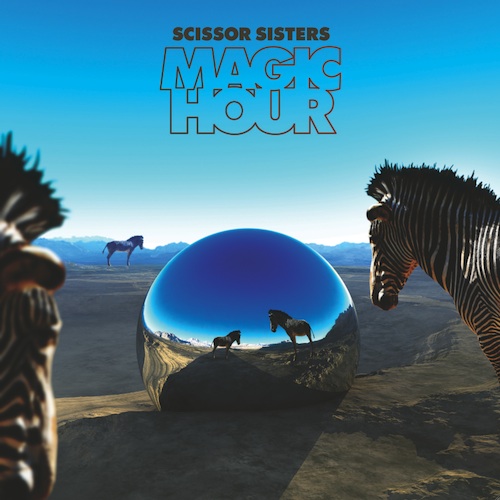
Asking Paul Rodgers to fill in on vocal duties was a terrible idea from the surviving members of Queen. By the same token, the group’s recent decision to ask young Adam Lambert to fill Freddie Mercury’s glitter sneakers was genius. Rodgers may be one of rock’s most indelible singers, but he’s not gay. Lambert is. That may sound like a patronizing distinction, but even if Mercury spent his career hiding his homosexuality, his vision of rock’n roll was informed by the same campy regard for flamboyance that characterizes most gay-identified pop culture. It’s what made Queen’s brand of rock unique, and during his American Idol appearances and on his first album Lambert demonstrated the same theatrical flair in his own approach to rock. He’s also a technically better singer than Mercury ever was, so it’s disappointing that his sophomore album leans so heavily on production. Now that he can afford the best knob-twiddlers Sony can buy, Lambert has somehow attracted talent who don’t have much experience in rock and seem to think they aren’t doing their job unless all the rough edges in Lambert’s voice are smoothed over through overdubs and equalization. Even Pharell Williams, who knows a good rock song when he plays it, positions Lambert in front of a bank of synths that could have been shipped over from the last Ke$ha session without being reprogrammed. I like Ke$ha as much as the next pop sycophant, but we don’t really need another major label generic dance pop artist. Thanks to Nile Rodgers’ disco-dipping bar chords and diphthong-dripping backing vocals, “Shady” delivers more of what radio rock fans should expect from Lambert, but it’s such a throwaway performance it could have been an outtake. Much of Trespassing tries to turn Lambert into a funk artist, a vocation he’s not built for. Queen is correct to groom him as Mercury’s successor. After all, Prince is still with us. Pharell also contributes to the Scissor Sisters’ new album, which has a more classic rock feel to it even if the songs are more diverse. Due to his omnivorous love of everything popular in the late 70s leader Jake Shears has as much of a claim on Mercury’s legacy as anyone, but while he can be as flamboyant as Lambert and is more demonstrative about his sexuality he’s part of a group whose members all like to act out. Scissor Sisters have done more than any contemporary act to fuse disco and rock in a way that doesn’t condescend to fans of either, and if Magic Hour fails to reach the giddy glammy heights of their best material it’s due to Shears’ desire to forge an identity all his own. The rock on “Inevitable” is progressively dull in nature, while the Grace Jones disco of “Let’s Have a Kiki” lacks oomph. In between are mostly ballads, a form Mercury made his own, but he would never have countenanced compositions this shapeless. Continue reading

Posted in Music | Tagged , , , , , , , , , , , , , | 6 Comments

July 2012 movies

Except for The Amazing Spider-Man, here are the movie reviews I wrote for the July issue of EL Magazine, which was distributed in Tokyo on Monday.

The Amazing Spider-Man
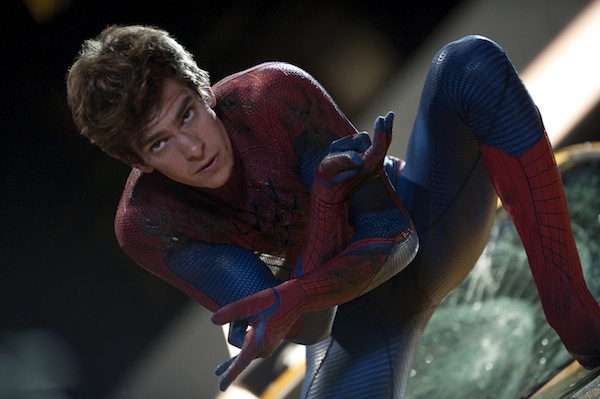
The gratuitousness of rebooting Marvel’s most indiosyncratic character will certainly be discounted by all the money it will make, but those idiosyncrasies were never fully exploited in Sam Raimi’s trilogy so there’s at least that to look forward to. Moreover, Andrew Garfield, with his more hyper take on teenage nerdiness, skews closer to the image I have of Peter Parker than did Tobey Maguire, whose laid-back sensitivity seemed too self-conscious for what was basically a high school soap opera that aspired to grand opera. Marc Webb’s movie delves deeper and more carefully into the source material by centering the plot on Peter’s dead parents. Were Webb more adept at the exigenicies of pulp storytelling he might have made the mystery of Richard Parker’s (Campbell Scott) flight into the night and subsequent fatal accident actually compelling, but the solution, put off too long and with too much business in between, seems secondary to so much other stuff. And Webb’s supposed strong suit, his facility with young-love stories, is undermined by the scriptwriters’ use of the hoariest romantic cliches when mapping out Peter’s crush on and eventually winning of the brainy beauty Gwen Stacy (Emma Stone). Webb finds his footing in the relationship between Peter and his Aunt May (Sally Field) and Uncle Ben (Martin Sheen). Personally, it was Peter’s hormonally charged interactions with adults that made me a fan of the comics way back when; the way his secret superhero status exacerbated the usual pitfalls of adolescence and thus made his suffering all the more poignant. Garfield nails this dramatic counterpoint, alternating the emotional highs attendant to his discovery of his new powers with the self-hatred attendant to his lapses of responsibility. When Spider-Man, full of himself, taunts a petty thief holding a knife, one feels the full impact of stupid, giddy youth that the original comic was so good at conveying. Likewise, when he realizes the pain his erratic behavior is causing his aunt he punishes himself with exaggerated ferocity. The punishment he metes out to the nominal villain, Dr. Curt Connors (Rhys Ifans), isn’t nearly as potent but we have CG for that, and even though Webb has more sophisticated technology at his disposal than Raimi had, the action set pieces don’t cohere. When the big finish wraps up you may wonder what the outcome really is, and then have to contend with the usual wait-til-the-next-installment implications. The fact that Peter Parker is much more interesting than Spider-Man makes The Amazing Spider-Man better than your average superhero blockbuster, but unfortunately Spider-Man is still the main draw. (photo: Sony Pictures Entertainment and Marvel Comics) Continue reading

Posted in Movies | Tagged , , , , , , , , , , , , , , | Leave a comment

Media Mix, June 24, 2012

Don’t call me cute, biped!

Here’s this week’s Media Mix, which is about wild animals escaping from captivity and the excitement such stories cause in the media. Though most people will likely see nothing strange about the coverage, unless the escape has safety ramifications, such as those initially associated with the bear incident, the stories are inherently childish as long as they dwell on the whole adventure aspect. As pointed out in the column, escaped animals are simply following their instinctual impulses to be free, and by anthropomorphizing them into rebels or criminals we say more about ourselves as their self-appointed masters than we do about their behavior, which is perfectly natural. One can take this line of thinking too far, I know, especially since much of the coverage has an underlying tone of self-awareness that becomes more obvious as the story becomes more trivial. The squirrel escape from the Inokashira Park Zoo is the best example, since it’s quite likely Inokashira Park is already home to a lot of wild squirrels. What wasn’t mentioned in the reports–and which may have added something significantly newsworthy to the story–is whether the zookeepers were afraid that the escaped squirrels, all belonging to a species indigenous to Japan, would run up against the invader American species of squirrel, which, like all Americans, are larger and more aggressive. Such a story could have been a jumping off point for a discussion about invasive species and the dangers they pose. It could have even provided some sort of justification for putting squirrels in cages in the first place, i.e., to protect the purity of the species, which is one of the purposes of a zoo. But that would spoil the core entertainment component of the story, because the media doesn’t really think people want to know anything more about animals that they already think are cute. It’s why there’s no consistency to coverage of animal-related stories; no connection made between Japan’s lethal whale research policy and dramatic stories of people trying to save stranded or beached whales; no relationship between the anachronistic slaughter of dolphins in Taiji and sentimental stories about dolphin “therapy,” wherein people interact with marine mammals to achieve some degree of “healing.” And while this has a tangential bearing on Japanese people’s ability to compartmentalize anything they consume–cows and pigs can be simultaneously adorable and delicious–it mainly has to do with avoiding truths that might make viewers and readers uncomfortable. With regard to human relations, bears can be cute but most of the time they’re dangerous, so there’s no problem in reporting that the six escapees from the Hachimantai Bear Farm were shot and not question whether the bears really deserved to die, even if they killed two humans. The justification is too plain: Nobody can take chances with such unpredictable and vicious creatures. But that should give rise to another question: Why was this “farm” allowed to keep 38 bears in captivity in the first place, especially since its purposes were completely commercial and not conservatory? Like I said, when it comes to animals, it’s better not to get too complicated.

Update June 27: This morning the Asahi reported that Akita Prefectural officials are worried about the “image” of the prefecture if they go ahead and kill the remaining 27 bears in Hachimantai. Apparently, they think such adverse publicity will harm tourism. The article also says that prior to his arrest, the owner of the farm suggested a solution for the caretaking problem: reduce the food for the bears by one-third and let them fight it out amongst themselves “through natural selection.” Then the bears that survive will just starve to death in two weeks if they aren’t fed.

Posted in Media | Tagged , , , | Leave a comment

June 2012 albums

Here are the album reviews I wrote for the June issue of EL Magazine, which was distributed in Tokyo last Friday.

Blunderbuss
-Jack White (Third Man/Sony)
Boys & Girls
-Alabama Shakes (Rough Trade/Hostess)
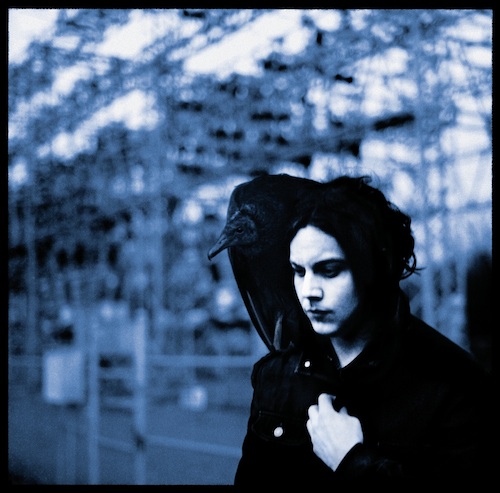
Jack White is the premier rock star of our age, and though he’s a slippery personality by design he more or less acknowledged the honor when he appeared in the documentary It Might Get Loud with two certified rock stars of earlier eras, Jimmy Page and The Edge. The main difference is that both of those rockers are guitarists who don’t sing, while White is a singer-songwriter who happens to play fierce guitar. His first genuine solo album not only includes a cover of a U2 song (as a bonus track) but generally sounds more like a Led Zeppelin LP than any White Stripes record did. It’s mostly there in the vocals, which resemble Robert Plant’s in timber and attitude. It all goes to show that some models are eternal: rock stars still adhere to a certain type of image, which is probably why White is so cagey about his history and opinions. Befitting his talent and outsize imagination Blunderbuss ranges far and wide stylistically and the emotions never settle for less than full exegesis. The teenage rant “Sixteen Saltines” is like an attempt to recapture the first flush of sexual ardor, while the cover of Little Willie John’s feverish “I’m Shakin’,” complete with a female chorus egging him on, sounds as if it were squeezed out through a pinhole. A lot of the lyrics express a desire for physical pain, though it’s not always clear to what end. Unlike his idol Bob Dylan, White isn’t capable of indirection: everything comes straight from his soul and seems to end up back there as well. As rock goes this is the genuine article, meaning its familiarity is part of its immediate appeal, and while I suspect much of the record is calibrated to make you feel before you think, he makes you feel it real good. The hot young band Alabama Shakes makes you feel it, too, on their debut album, which impressed White enough that he asked them to open for him. AS’s classic rock sound is more delineated by Southern soul and within that bailiwick manages to sound less derivative than you’d imagine. Guitarist-songwriter Brittany Howard sings in a raw blues style that has become the band’s most celebrated element, and her equally raw playing is complementary enough to make the impression stick. The desperation that informs love songs like “Be Mine” and “Heartbreaker” is more genuine-sounding than anything on Blunderbuss, but that may be due to Howard’s relative youth. You get the idea she’s more in love with her feelings than with the actual object of her attentions. The band’s two-guitar configuration and affection for conventional song structures, complete with solo instrumental bridges, clarifies their classic rock constitution so their inexperience in terms of delivery and production is more pronounced. Reports claim they’re dynamite live, but despite the genuine talent on display the record is uniformly even-tempered. Maybe Jack will give them some pointers. Continue reading

Posted in Music | Tagged , , , , , , , , , , , , , | Leave a comment

June 2012 movies

Here are the movie reviews I wrote for the June issue of EL Magazine, which was distributed in Tokyo on May 25.

Attack the Block
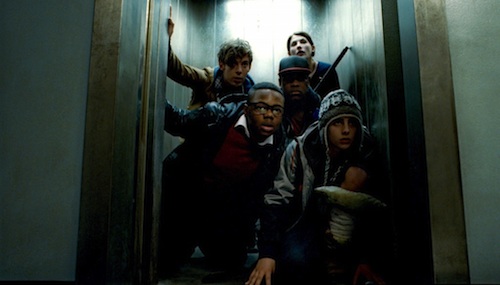
If you have to see only one alien invasion movie this summer, see Attack the Block. Though not a masterpiece, it’s a movie that juxtaposes gritty social realism with farfetched horror-science fiction in a way that satisfies both sides of the entertainment divide. The opening scene may initially repel viewers, since it presents the ostensible heroes of the story in a frightfully bad light. A young woman walks from a tube station to her apartment in a poor South London neighborhood at night and is soon surrounded by hoodie-wearing teens who threaten her with knives and take her purse. It’s a scary sequence, but rather than follow the viewer’s sympathies and stick with the woman, director Joe Cornish follows the gang members as they roll off on their bikes and are themselves attacked by a streaking ball of flame. Considering what we’ve witnessed it’s as close to a purely visual non sequitur as you’re likely to get in a movie; but in a way it isn’t, because Cornish dives right into the sci-fi story without changing gears or losing the urban tone he’s established. When the flame disgorges a disgusting creature, ringleader Moses (John Boyega) snuffs the slimy ET and, puffed up with victory, carries it around like a trophy. That act of bravado will soon come back to bite the gang in their collective ass and lay waste to the dank, graffiti-covered public housing estate where they live with whatever family members haven’t succumbed to drugs or fled their responsibilities. As we get to know the gang, we see their predicament and the dead-end lives they lead, and even when the young woman, Sam (Jodie Whittaker), reappears with police in tow to arrest her muggers, they save her from the aliens; which doesn’t redeem them in her eyes but does force her to consider their circumstances a little more closely. This is all running subtext, because on the surface Attack the Block is a fast-moving, suspenseful monster movie of the stalk-and-grab type, and the grimy, shadowy housing block provides the perfect setting for an invasion of aliens who are as inky black as a starless night (only their nasty teeth are visible). Along the way, we meet other denizens of the neighborhood, including its top gangsta (Jumayn Hunter), whose face-to-face encounter with the aliens doesn’t make him any less tolerant of these upstart punks; a loser white pothead (Luke Treadaway) whose book-learning comes in handy; and the estate’s local drug dealer (Nick Frost). But it’s Moses’s crew of barely adolescents who steal the movie, an Our Gang collection of wiseacre brats whose unavoidable immersion in pop culture has prepared them for this apocalypse without their knowing it. (photo: Studio Canal/UK Film Council/Channel Four TV Corp.) Continue reading

Posted in Movies | Tagged , , , , , , , , , , , , , , , , , , | Leave a comment

Media Mix, May 20, 2012

Remember 3D TV?

Here’s this week’s Media Mix about the slow, agonizing death of TV as we’ve always known it. To many people, if not most, this will seem like a non-story because TV has been dying a slow death for years now. It’s a fairly common theme among media critics, though what they usually talk about is the medium of television, which has had to readapt many times over the years to keep up with technological developments and different business models. When I was growing up in the U.S. in the 60s and early 70s, there was only one model: broadcast TV, which was presented either by national networks or local independent stations. In the mid-70s, when I was in college, cable television added “pay” features to the standard fare and became more widespread, but I didn’t own a TV at that time (sort of ironic since broadcasting was my major). Cable TV became the norm in the 1980s, challenging network dominance but not destroying it. That pattern persisted until the late 90s, when Internet usage became ubiquitous. It was at this point that the need for a TV set became, for the first time in its history, less of a compelling social indicator. If people still bought TVs it was simply as a monitor. Movies and even regular TV shows could be downloaded on demand. The advertising and TV program production businesses had to adapt to these realities and they did, often in spectacular fashion. American TV dramas are now much, much better than they were when I was growing up because in many cases they have to measure up to viewers’ direct expectations. People pay to see them, which, in turn, means nominally “free” network fare has to measure up as well. Continue reading

Posted in Media | Tagged , , , | Leave a comment

Media Mix, May 13, 2012

Serving and protecting

Here’s this week’s Media Mix, which is about road safety and the lack of discussion in the media about the role of infrastructure in the recent series of deadly accidents. Though I address briefly the notion that the media has certain interests it may want to safeguard by avoiding the subject, the problem is also exacerbated by a mindset that sees motor traffic as the norm in modern life. Last week a 60-year-old man wrote a letter to the Tokyo Shimbun expressing some of the same points I did about the media in my column but for a completely different purpose. He believes the media does not stress how responsible pedestrians are for many traffic-related accidents. He complains about people “crossing the street both in front and in back” of moving vehicles. “As a driver it scares me,” he writes. “Cars can’t stop quickly, though pedestrians think they can. Pedestrians should pay attention to manners.” Apparently, I wasn’t the only reader bothered by the letter’s patronizing tone. Several days later a 52-year-old man replied in the same space, saying that often he sees pedestrians walking across streets on painted crosswalks where there are no traffic signals. According to traffic laws, the pedestrian has the right of way in such a situation, but most of the time drivers don’t even decelerate. They just assume that since they are in a car and there is no traffic light they can keep going. “This is even more dangerous,” he writes, implying that, whatever anxiety the previous writer feels about people crossing the street, the pedestrian will always suffer worse in an accident than a motorist. Continue reading

Posted in Media | Tagged , , | Leave a comment

Media Mix, May 6, 2012

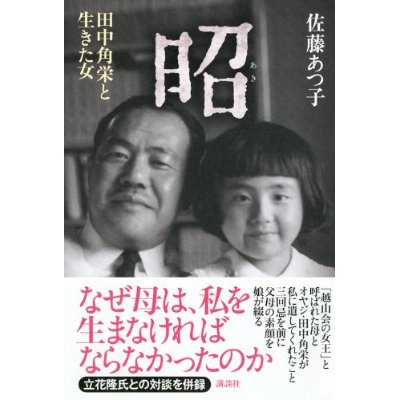
The cover of Atsuko’s book, “Aki: The Woman Who Lived With Kakuei Tanaka”

Here’s this week’s Media Mix, which is about a supposedly “hidden child” that Ichiro Ozawa fathered two decades ago. As explained in the column, kakushigo is a fairly popular subject for tabloid and even not-so-tabloid journalists. Consequently, some stories become so freely reported that “hidden” seems the wrong adjective. Coincident with the Bunshun story about Ozawa’s kid is the publication of a book by Atsuko Sato about her late mother, Aki, who was the consort of Ozawa’s mentor, Kakuei Tanaka, probably Japan’s most powerful postwar prime minister and the master of the sort of money-politics that still dominates the Diet. Continue reading

Posted in Media | Tagged , , , , , | Leave a comment

Beastie Boys, Yokohama Arena, 1999

This is a review I wrote about a Beastie Boys concert at Yokohama Arena in 1999 for the Japan Times.

Sean Lennon opened the Beastie Boys concert at Yokohama Arena on February 6 with a 30-minute set that was sharper than the one I saw him play last September. The band appears to have honed its songs to a finer edge over the past several months. What’s more, Sean seemed amazingly focused for someone playing to such a huge audience. He thanked everyone for coming out to see “the Sean Lennon experience,” and playfully exhorted them to buy his T-shirts and paraphernalia in the lobby between sets, and, of course, to purchase his CD if they hadn’t already. “You’ll be the coolest kid in Japan.” He also graciously thanked the Beasties for asking him to open for them, adding that “they started my career.”

Actually, all the Beasties did was give Sean a recording contract. For all intents and purposes, his “career” started when one of John Lennon’s sperm entered Yoko Ono’s ovum. But it’s obvious that he’s learned about the work of contemporary pop very well — and quickly, too. And for that, he should thank the Beasties, who not only perfected the notion of careerism in indie rock but made it respectable. Continue reading

Posted in Music | Tagged , | Leave a comment